
Trees
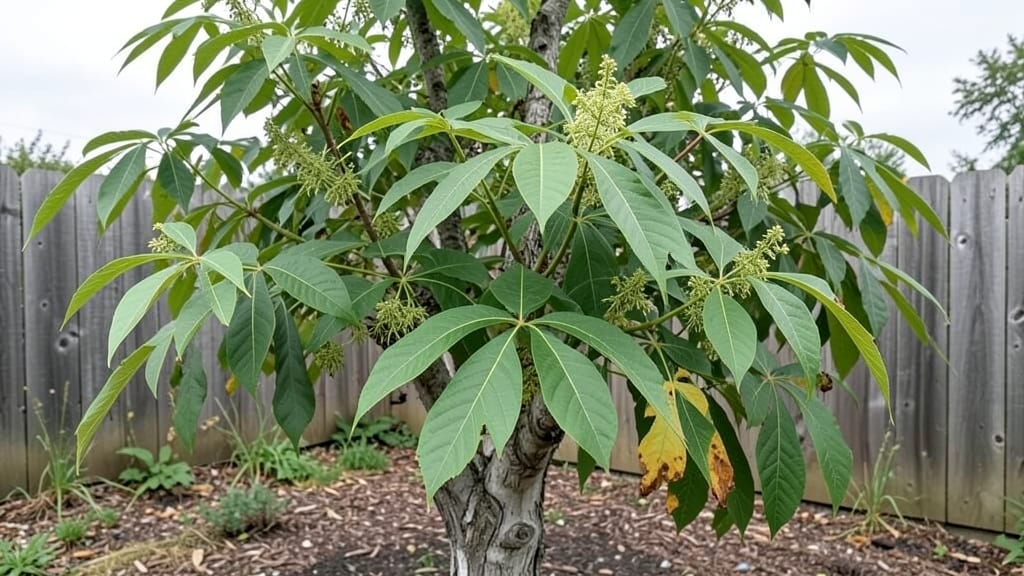
Ailanthus altissima—the tree-of-heaven—can transform your property into a privacy screen in half the time most trees take. I planted mine five years ago, and it now towers over my backyard fence, blocking neighbors' views without the usual decade-long wait. The trade-off? This fast grower demands respect for its invasive tendencies.
This tree thrives in poor soil, full sun, and even urban conditions, making it ideal for neglected spaces or tight budgets. It tolerates drought once established and handles heat like a champ—perfect for hot climates or forgotten corners of the yard.
Just be warned: its roots spread aggressively, so containment is key if you don’t want it taking over.
By midsummer, you’ll see 10-foot-tall stems with compound leaves that smell like burnt rubber when crushed (a quirky trait that actually helps identify it). The foliage turns golden in fall, adding seasonal interest before the seeds rain down—yes, they’re prolific.
With proper spacing and occasional pruning, you’ll enjoy rapid shade and privacy without the hassle of slow-growing alternatives.
If you’re in Zones 4-9 and willing to manage its spread, this tree delivers unmatched speed for privacy. Just plan for long-term control—it’s not called "tree-of-heaven" for nothing. Ready to grow one that outpaces expectations?
📚 In This Guide
- What you need
- Instructions
- Tips and common mistakes
- Wrapping up and next steps
What you need
- ● Tree-of-Heaven saplings: 5–10 healthy, 1–2 ft tall plants (check roots for vigor).
- ● Shovel or trenching tool: A sturdy 10–12" wide shovel for digging.
- ● Garden gloves: Heavy-duty, water-resistant (to protect your hands!).
- ● Compost or well-aged manure: 2–3 gallons per plant (for nutrient boost).
- ● Mulch (wood chips or straw): 2–3 inches thick, covering a 3 ft radius around each tree.
- ● Watering can or hose with nozzle: For deep, slow watering (aim for 1–2 gallons per plant).
- ○ Tree stakes (optional but helpful): 4–6 ft bamboo stakes + soft ties if planting in windy areas.
- ● Pruning shears: Sharp, clean pair for trimming dead branches (sterilize with rubbing alcohol).
- ● Soil test kit: Check pH (Tree-of-Heaven thrives in pH 5.0–7.0; amend if needed).
- ● Slow-release fertilizer (10-10-10): 1 lb per plant at planting time.
- ● Weed barrier fabric: To suppress weeds while young trees establish.
- ● Drip irrigation system: For automated watering (lifesaver in dry spells!).
- ● Planting grid or measuring tape: For spacing plants 15–20 ft apart in rows.
Instructions for planting and establishing Ailanthus altissima as a privacy screen
This aggressive but effective tree delivers rapid vertical growth—here’s how to harness its speed without losing control.
🌱 Step 1: Select and Prepare Planting Sites for Maximum Growth
Choose locations with full sun to partial shade—the tree thrives in urban environments where other species struggle. Ailanthus tolerates poor, compacted soil but grows fastest in well-drained, slightly acidic conditions with a pH between 6.0 and 7.5. Test your soil first; amending with compost improves early establishment.
Dig holes twice as wide as the root ball but only as deep as the container’s base. This prevents root suffocation while encouraging lateral spread. Space saplings 20-30 feet apart for a dense screen in 5 years. Closer spacing (15 feet) yields faster coverage but requires more pruning later. I’ve seen neighbors regret tight spacing—they end up with a tangled mess instead of a tidy hedge.
💧 Step 2: Plant and Water for Rapid Establishment
Remove the tree from its container and loosen any circling roots with your fingers—this prevents girdling as the trunk thickens. Place the root ball in the hole, backfill with native soil, and tamp gently to eliminate air pockets. The top of the root ball should sit 1-2 inches below ground level to encourage strong trunk development.
Water immediately after planting with 5 gallons per tree to settle the soil. Keep the root zone consistently moist for the first 30 days—not soggy, but never allowed to dry out. You’ll know moisture is right when the soil 1 inch below the surface feels damp but not saturated. Mulch with 3 inches of wood chips within a 2-foot radius to retain moisture and suppress weeds. Avoid piling mulch against the trunk; this invites rot.
☀️ Step 3: Prune Strategically to Shape and Control Growth
The key to managing Ailanthus is pruning in late winter or early spring before new growth begins. Remove 1/3 of the tallest branches each year to encourage bushier growth and prevent the tree from developing a single dominant leader. Use clean, sharp pruners to make cuts just above outward-facing buds. I always sanitize my tools with rubbing alcohol between cuts—this invasive tree carries diseases that can jump to other plants.
Watch for suckers at the base; these drain energy from your screen. Snip them off at ground level within 2 weeks of emergence. If left unchecked, suckers create a dense thicket that’s harder to manage than the main canopy. In the first growing season, expect 6-10 feet of vertical growth—that’s why this tree earns its reputation for speed.
✂️ Step 4: Maintain Through the First Five Critical Years
Fertilize annually in early spring with a balanced 10-10-10 formula applied at ½ pound per 100 square feet of canopy. Ailanthus grows quickly but benefits from phosphorus and potassium to support its aggressive habit. Water deeply once a week during dry spells, aiming for 1-2 inches of moisture per week. Drought stress slows growth and makes the tree more susceptible to pests like spider mites.
Monitor for aphids or scale insects—common pests on young trees. A strong spray of water usually dislodges them, but severe infestations may require neem oil applied in the evening when bees are less active. I’ve found that healthy, fast-growing Ailanthus resists most pests better than slower-growing alternatives. The trade-off? Its allelopathic roots suppress nearby plants, so keep it away from flower beds or lawns.
Tips & tricks for fast-growing Ailanthus altissima privacy screens
Here's what I've learned after working with this aggressive but brilliant tree—these tricks will help you maximize its speed while keeping it under control.
Soil pH Matters: While Ailanthus tolerates a wide range of conditions, it truly thrives when your soil pH is between 6.0 and 7.5. Test your soil before planting and amend with compost if needed—the difference in growth rate is noticeable. I've seen trees in unamended urban soil grow 30% slower than those with compost. For faster establishment, mix a handful of compost into the backfill soil when planting.
Root Ball Positioning: The instructions specify placing the root ball 1-2 inches below ground level, but here's the key: make sure the top of the root ball is level with the surrounding soil after settling. I've found that burying it too deeply can cause rot at the stem base, while leaving it too high creates stress. Gently tamp the soil in layers as you backfill to prevent air pockets that could stunt early growth.
Watering Wisdom: Those first 30 days are critical for root establishment. I recommend checking soil moisture every 2-3 days rather than relying on a schedule—stick your finger 1 inch down. If it feels dry, water deeply. Overwatering can be just as harmful as underwatering, especially in heavy clay soils where Ailanthus often thrives. A moisture meter can be a worthwhile investment for precise monitoring.
Pruning Strategy: When removing 1/3 of the tallest branches each year in Step 3, focus on branches that are growing toward your desired screen shape. I've found that making cuts just above outward-facing buds encourages bushier growth. For larger screens, consider using a pole pruner to reach higher branches safely. Remember that Ailanthus grows quickly—what seems like a small cut now will be filled in by next season.
Pro Tips for Ailanthus Altissima Tree-Of-Heaven
- Here's what I've learned after working with this aggressive but brilliant tree—these tricks will help you maximize its speed while keeping it under control.
- Soil pH Matters: While Ailanthus tolerates a wide range of conditions, it truly thrives when your soil pH is between 6.0 and 7.5.
- Root Ball Positioning: The instructions specify placing the root ball 1-2 inches below ground level, but here's the key: make sure the top of the root ball is level with the surrounding soil after settling.
Frequently asked questions
about the Ailanthus altissima (Tree-of-Heaven) can help clarify its benefits, challenges, and best practices. Here are some common queries:Is the Tree-of-Heaven invasive, and how do I control it?
The Tree-of-Heaven is highly invasive —it spreads aggressively via seeds and roots, crowding out native plants. To control it, remove small trees by hand or use a stump grinder for larger ones. Apply herbicide (glyphosate) to cut stumps or surrounding soil, and monitor regrowth for 2+ years.
How fast does it really grow, and when can I expect full privacy?
This tree grows 3–5 feet per year under ideal conditions, reaching 50–60 feet tall in 10–15 years. For a full privacy screen (15+ feet tall), expect 5–7 years with proper care. Early pruning encourages bushier growth.
Can I prune it to shape it like other trees, or does it have quirks?
Pruning is easier than with many trees—it tolerates heavy cuts well! Trim in late winter/early spring to shape it. Avoid over-pruning in summer, as it may stress the tree. Its fast regrowth means you’ll see results quickly, but wear gloves—its sap can irritate skin!
Are there better non-invasive alternatives for a quick privacy screen?
Yes! Consider fast-growing, less aggressive options like:
- Leyland Cypress (12–36" per year, evergreen)
- Green Giant Arborvitae (3–5' per year, deer-resistant)
- Thuja (Western Red Cedar) (2–3' per year, drought-tolerant)
Does it attract pests, and how do I keep them away?
The Tree-of-Heaven is resistant to most pests, but its seeds attract starlings , and its roots may host spider mites in drought. To deter pests:
- Keep the tree well-watered (1–2" per week).
- Remove seed pods before they mature.
- Use neem oil if spider mites appear.
Wrapping up and next steps
The Ailanthus altissima, or Tree-of-Heaven, is a powerhouse for anyone seeking a fast, lush privacy screen in just five years—without the decades-long wait! 🌿 With its rapid growth, hardiness, and minimal upkeep, it’s a game-changer for landscapes, urban spaces, and even eco-friendly projects.
Whether you’re tackling an invasive species or simply craving a vibrant green barrier, this tree delivers results you’ll love.
Ready to transform your space? Start by gathering your supplies and reviewing key tips—then roll up your sleeves and plant with confidence! Your future privacy haven awaits. 🌱