
Pruning
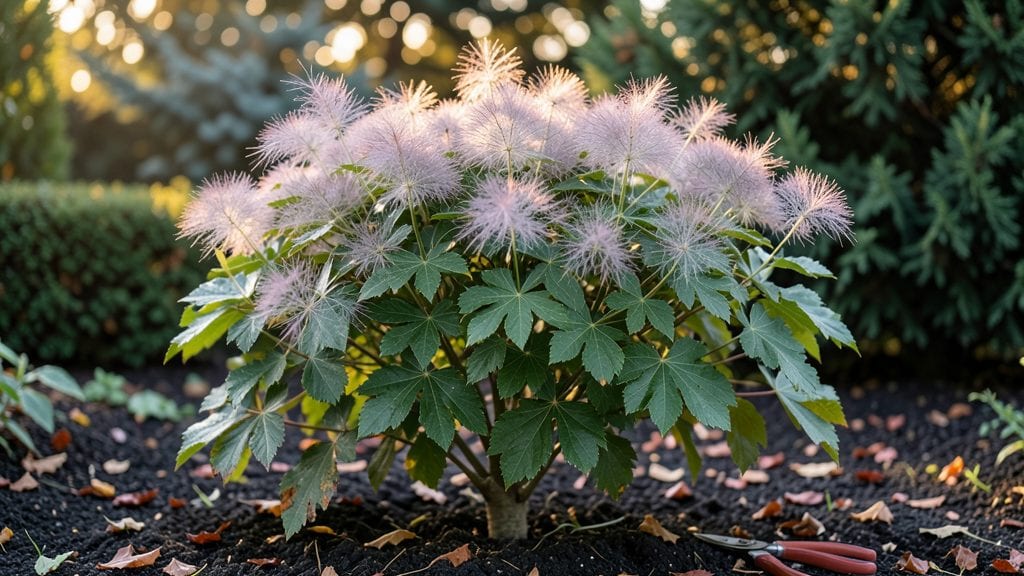
Your smoke tree care starts with a single cut that changes everything—turning floppy growth into a showstopping cloud of foliage. 🌿 I’ve pruned mine every season for five years, and the difference between a scraggly shrub and a velvety, multi-colored masterpiece comes down to timing, technique, and a little boldness.
Most gardeners wait until spring, but the real magic happens in late winter when the plant is dormant and ready to respond.
The secret isn’t complicated: remove 1/3 of old growth each year to encourage fresh, vibrant shoots. Use clean, sharp pruners to cut just above a bud or branch junction—never leave stubs.
For dramatic color, prune back to bare wood in early spring, and watch those smoky purple plumes emerge like clockwork. Even in Zone 3, my smoke tree thrives with this approach, proving cold-hardy doesn’t mean low-maintenance.
What you’ll end up with is a year-round focal point—silver-blue foliage in summer, fiery reds and oranges in fall, and even winter interest if you leave some seed heads.
The pruning itself takes under 30 minutes, and the payoff is a plant that looks like it belongs in a botanical garden, not just your backyard. Let’s get those shears sharp and transform your smoke tree into the star of the season.
This method works for all Cotinus varieties, whether you’ve got ‘Royal Purple,’ ‘Grace,’ or a less common type. Just adjust the pruning intensity based on your climate—southern gardeners can prune a little later, while northern growers should tackle it early.
The key is consistency, and once you see the results, you’ll never go back to neglecting this easy-care shrub.
📚 In This Guide
- What you need
- Instructions
- Tips and common mistakes
- Wrapping up and next steps
What you need
- ● Pruning shears: Bypass pruners (sharp, dull-free) for small branches (1/4"–3/4" diameter). Example: Felco F-2 or Corona Classic.
- ● Loppers: For thicker branches (3/4"–2" diameter). Example: Fiskars X7 or Corona XL.
- ● Pruning saw: For stubborn, larger branches (2"+ diameter). Example: Fiskars PowerGear or Bahco.
- ● Gloves: Heavy-duty, cut-resistant gloves (e.g., Mechanix or Wolverine) to protect hands from thorns.
- ● Disinfectant: 70% isopropyl alcohol or a pruning sealant (e.g., Tanglefoot Tree Wound Pruning Seal) to prevent disease spread.
- ● Ladder or step stool: For reaching higher branches (ensure it’s stable and rated for your weight).
- ● Trash bags or bucket: For collecting pruned branches (5–10 gallons, depending on tree size).
- ● Rake: A sturdy leaf rake to clear debris post-pruning.
- ● Hand pruners with ratcheting mechanism: For easier cutting (e.g., Corona Ratchet Pruner).
- ● Pruning rope or zip ties: To temporarily secure branches during shaping.
- ● Garden kneeler/pad: For comfort when working close to the ground.
- ● Camera or phone: To document your tree’s progress before/after pruning!
- ● Know your smoke tree’s variety (e.g., Cotinus coggygria or C. obovatus)—some respond better to certain pruning styles.
- ● Check the weather: Prune on a dry, overcast day to reduce stress on the tree.
- ● Have a plan: Sketch or mentally map out which branches to remove (aim for 1/3 of the tree’s volume max per pruning session).
Step-by-Step pruning guide for smoke trees
Here's how to keep your smoke tree thriving through all four seasons.
✂️ Step 1: Late Winter Pruning for Shape and Airflow
Start in late winter (just before buds swell) when the tree is still dormant. Remove any dead, damaged, or crossing branches first—these are easy to spot because they're brown or growing inward. I use sharp, clean pruners to make cuts at a 45-degree angle, about ¼ inch above a bud facing outward.
Next, thin out crowded branches to improve airflow. Smoke trees can get leggy, so I look for branches that are growing too close together or rubbing against each other. Cut these back to a strong lateral branch or the main trunk. You'll see new growth emerge from those lateral buds in spring, giving your tree a fuller shape.
Here's the thing—don't remove more than 25% of the tree's foliage in one season. Smoke trees are resilient, but aggressive pruning can stress them, especially in their first few years. If you're unsure, err on the side of caution and prune lightly.
🌿 Step 2: Light Summer Trimming for Bushier Growth
In early summer, after the tree has finished flowering, do a light trim to encourage bushier growth. Look for branches that are growing too long or leggy—these are the ones that stretch out without much foliage. Cut them back by about ⅓ of their length to a leaf node where new growth will sprout.
This is also the time to shape the tree if needed. Smoke trees have a natural, airy habit, but if yours is getting too tall or one-sided, now's the time to guide it. I like to step back and look at the tree from all angles to spot uneven growth. A few strategic cuts here will keep it balanced.
Real talk: Avoid heavy pruning in summer. It can stimulate too much new growth that won't harden off before winter. Just a light touch keeps the tree healthy without overstimulating it.
🌱 Step 3: Fall Cleanup for Winter Readiness
In fall, after the leaves have turned but before the first hard frost, do a final cleanup. Remove any diseased or pest-infested branches immediately—bag and dispose of them to prevent spreading issues. Smoke trees are generally pest-resistant, but an occasional spider mite or aphid can show up, and removing affected branches early stops the problem.
Next, thin out any branches that are growing too close to the ground or rubbing against the trunk. These can create entry points for pests or disease. Make your cuts at the branch collar (the swollen area where the branch meets the trunk) to ensure the wound heals properly.
Here's what I do: I spray the tree with a copper fungicide (if needed) after pruning to protect any fresh cuts from fungal infections. This is especially important if your area gets wet winters—smoke trees hate soggy roots.
⏰ Step 4: Minimal Winter Maintenance
Winter is the easiest time to care for smoke trees—just leave them alone! If you notice any broken branches from ice or snow, remove them in early spring (before buds break) to prevent disease. Avoid heavy pruning in winter, as the tree is dormant and won't heal well.
I like to check for any lingering dead branches in late winter, just before the pruning season starts. A quick shake of the tree can reveal hidden damage—if branches snap off easily, they were already dead and should be removed. Fresh cuts heal faster in early spring when the tree starts to wake up.
This is the moment that matters: If you've been pruning correctly, your smoke tree should have a strong, open structure by winter. That means better airflow, fewer pest issues, and a tree that's ready to burst into growth as soon as spring arrives.
Tips & tricks for pruning smoke trees
These simple strategies will help you keep your smoke tree looking its best while promoting healthy growth year after year.
Seasonal Timing Matters: The late winter timing in Step 1 is crucial because it allows the tree to heal completely before spring growth begins. I've found that pruning just before buds swell gives the tree the best chance to recover. If you miss this window, wait until early spring when buds start to show, but avoid pruning after new growth appears—it can stress the tree.
Cutting Technique That Changed Everything: When making cuts in Step 1, always look for the branch collar—the swollen area where the branch meets the trunk. Cutting just outside this collar (about ¼ inch above a bud) promotes faster healing. I use sharp pruners to make clean cuts at a 45-degree angle—this prevents tearing and reduces the risk of disease entering the wound.
Visual Cues for Pruning Success: In Step 2, when trimming for bushier growth, look for branches that are growing outward at a 45-degree angle from the main trunk. These are the ones that will produce the most foliage. If you're unsure which branches to cut, perform the "branch shake test"—gently shake each branch. If it snaps off easily, it's already dead and should be removed.
Pest Prevention Strategy: After completing the fall cleanup in Step 3, I always inspect the tree for spider mites or aphids by looking for webbing or sticky residue on the leaves. If you find any, treat immediately with insecticidal soap or neem oil. The copper fungicide application is especially important if your area gets wet winters—it creates a protective barrier against fungal infections that can enter through fresh cuts.
Pro Tips for Smoke Tree Care
- These simple strategies will help you keep your smoke tree looking its best while promoting healthy growth year after year.
- Seasonal Timing Matters: The late winter timing in Step 1 is crucial because it allows the tree to heal completely before spring growth begins.
- Cutting Technique That Changed Everything: When making cuts in Step 1, always look for the branch collar—the swollen area where the branch meets the trunk.
Frequently asked questions
Got questions about keeping your smoke tree thriving? Here are some of the most common concerns—plus quick answers to keep your plant happy and healthy year-round.
When is the best time to prune a smoke tree?
Prune your smoke tree in late winter or early spring (before new growth starts) to encourage strong, cold-hardy branches. You can also do light shaping in summer after flowering, but avoid heavy cuts then. Never prune in fall—it stresses the tree before winter.
Can smoke trees survive harsh winters?
Smoke trees are extremely cold-hardy (USDA Zones 4–9) and handle frost, snow, and even sub-zero temps. Just avoid pruning in late fall—wait until dormancy ends in spring. Mulch lightly around the base for extra protection in extreme climates.
How much can I trim back a smoke tree?
You can heavily prune smoke trees—up to ⅓ of the foliage—without harming them. They’re fast-growing and bounce back well. For dramatic shaping, prune in stages over 2–3 years. Never remove more than ⅓ in one season to avoid stress.
Why are my smoke tree leaves turning yellow or brown?
Yellowing leaves often mean overwatering or poor drainage. Brown tips? Likely underwatering or salt buildup from tap water. Check soil moisture (it should be dry 1–2 inches down) and ensure pots have drainage holes. Fertilize lightly in spring if growth is slow.
Are there dwarf varieties of smoke trees for small spaces?
Yes! Look for ‘James Roof’ (3–5 ft tall) or ‘Little Spire’ (4–6 ft). These compact varieties work great in containers or tight landscapes. Just prune them regularly to maintain shape—they respond well to light trims. Full-size smoke trees (10–15 ft) need more space.
Wrapping up and next steps
Caring for your smoke tree is all about patience and precision—especially when it comes to year-round pruning to keep it thriving in cold climates! 🌳 With the right tools, timing, and techniques, you’ll enjoy a stunning, cold-hardy tree that flourishes for years.
Remember, healthy growth starts with consistent care, so don’t hesitate to revisit your pruning routine seasonally.
Ready to take the next step? Grab your pruners, mark your calendar for seasonal checks, and watch your smoke tree shine brighter than ever! 🌟