
Pruning
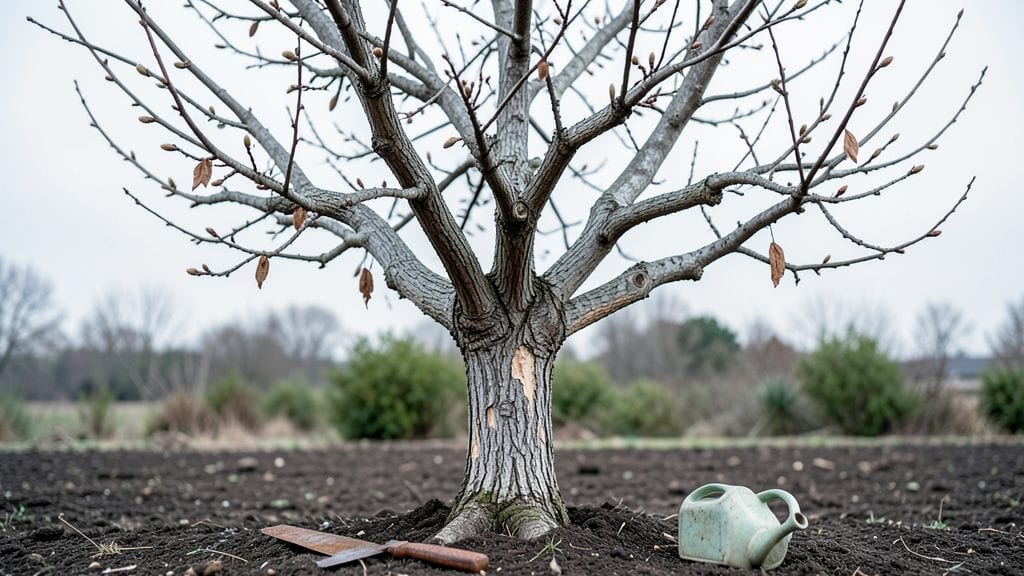
When almond tree winter care begins, you’re shaping next year’s harvest before the first bloom. ✨ The key isn’t just trimming branches—it’s creating an open, frost-resistant structure that lets sunlight and air circulate where it matters most.
I learned this the hard way after a late winter freeze took out half my tree’s potential yield.
Start by pruning in late winter—right after the last hard frost but before buds swell—when the tree’s dormant but the weather’s still predictable. You’ll need sharp bypass pruners, a ladder (for taller trees), and a clear day to avoid spreading disease.
The goal is to remove dead wood, cross branches, and thin out crowded areas to let light reach the center.
What you’ll end up with is a tree that resists frost damage better, produces stronger limbs, and bears more nuts. The open shape prevents snow buildup that can snap branches, and the increased airflow reduces fungal risks.
Mulch heavily around the base with straw or wood chips to insulate roots, and give it a deep watering before the ground freezes.
This method works for both backyard trees and orchard varieties, though timing shifts slightly in warmer climates—prune when daytime temps stay above 40°F consistently. The payoff? A tree that recovers faster from winter stress and delivers a more reliable harvest year after year.
📚 In This Guide
- What you need
- Instructions
- Tips and common mistakes
- Wrapping up and next steps
What you need
- ● Pruning shears: Bypass pruners (for cuts up to ½ inch thick) – 1 pair (look for sharp, stainless-steel blades for clean cuts).
- ● Loppers: Bypass or anvil type (for branches ½ to 1½ inches thick) – 1 pair (pivoting loppers reduce hand strain).
- ● Pruning saw: Curved-tooth or folding (for branches thicker than 1½ inches) – 1 saw (avoid cheap saws—they dull quickly!).
- ● Gloves: Heavy-duty, cut-resistant (to protect hands from thorns and sharp tools) – 1 pair (waterproof gloves are a bonus!).
- ● Disinfectant: 70% rubbing alcohol or bleach solution (1 part bleach to 9 parts water) – small spray bottle (prevents disease spread between cuts).
- ● Rope or twine: Natural jute or plastic-coated – 50+ feet (for temporary support if needed).
- ○ Sharpie or pruning sealant: Optional but helpful – 1 marker or small tube (mark branches to remove or seal large cuts).
- ● Ladder: Sturdy, extendable (if your tree is over 6 feet tall) – 1 ladder (aluminum or fiberglass for safety).
- ● Work boots: Steel-toe or sturdy hiking boots (for stability on uneven ground).
- ● Safety glasses: ANSI-rated (to protect eyes from debris).
- ○ Tree wound dressing: Optional for large cuts – small tube (only use if cuts are jagged or over ½ inch wide).
- ● Notebook & pen: (to sketch your tree’s structure before pruning).
Step-by-Step guide to pruning almond trees in winter
Winter's the perfect time to shape your almond tree—here's how to do it right.
✂️ Step 1: Assess the Tree's Structure and Health
Start by examining your almond tree for dead, diseased, or crossing branches. Grab your pruning shears and look for branches that are brown inside when cut (dead wood) or show signs of fungal spots. I always begin at the top and work my way down—this helps me spot hidden problems in the canopy.
Next, identify branches that are rubbing against each other. These create wounds that invite pests and disease. Mark them with a piece of tape or a small flag so you remember which ones to remove. The goal here is to open up the center of the tree to improve airflow and sunlight penetration—critical for preventing winter rot.
✂️ Step 2: Remove Dead, Diseased, and Problem Branches
Make your first cuts on dead or diseased branches by cutting just outside the branch collar—the swollen area where the branch meets the trunk. This ensures the tree can seal the wound properly. I angle my cuts slightly away from the trunk to prevent water from pooling and causing rot.
For crossing branches, remove the smaller of the two or the one growing inward. If both are equal in size, prune the one that’s growing upward to maintain an open center. Always cut back to a lateral branch or bud, never leaving a stub. This encourages new growth in the right direction.
✂️ Step 3: Thin the Canopy for Better Airflow
Almond trees need good airflow to stay healthy, especially in winter. Step back and look at the tree’s overall shape—you’re aiming for a vase-like form with a wide base that narrows toward the top. Remove any branches that are growing straight upward (called "water sprouts") or those that are too dense.
Focus on thinning out the outer canopy first. Cut back branches that are growing too close together, leaving space between them. A good rule of thumb is to remove about 20-30% of the tree’s total branches during winter pruning. This reduces stress on the tree while still maintaining its structure.
✂️ Step 4: Shape the Tree for Frost Resistance
Almond trees are sensitive to frost damage, so shaping them to reduce winter stress is key. Start by pruning any branches that are too low to the ground—these are more likely to suffer from late frosts. Cut them back to a strong lateral branch or bud that’s at least 12-18 inches above the ground.
Next, focus on the tree’s overall balance. If one side is heavier than the other, prune back branches on the heavier side to even things out. This helps the tree distribute its energy evenly, which is especially important during the dormant winter months. Avoid over-pruning—you want to leave enough foliage to support photosynthesis once spring arrives.
⏰ Step 5: Clean Up and Protect the Tree
After pruning, gather all the cut branches and dispose of them properly. If any branches show signs of disease, bag them and throw them away to prevent spreading spores. I like to sterilize my pruning tools with rubbing alcohol between cuts to keep everything clean.
Finally, apply a layer of 2-3 inches of mulch around the base of the tree (but keep it a few inches away from the trunk). This helps insulate the roots and retain moisture. Water the tree deeply before the first hard frost to ensure it’s hydrated for the winter ahead. Your tree is now ready to face the cold with a strong, frost-proof shape!
Tips & tricks for perfect almond tree winter pruning
Winter pruning transforms your almond tree into a frost-resistant powerhouse—here's how to avoid common mistakes and maximize results.
Tool Prep: Sterilize your pruning shears with rubbing alcohol before you start—this prevents spreading disease between cuts. I also recommend sharpening your blades first; dull tools crush branches instead of making clean cuts, which stresses the tree. For larger branches, use loppers or a pruning saw to avoid tearing the bark.
Visual Cues for Step 1: When assessing branches in Step 1, look for these telltale signs: dead wood will snap easily and look brown inside, while healthy wood will bend slightly. For crossing branches, imagine drawing a straight line through the trunk—any branch that crosses this line needs removal. This simple visualization helps maintain that open center shape.
Pruning Balance: In Step 4, when shaping for frost resistance, aim to remove branches that are growing downward—these collect snow and ice, increasing frost damage risk. Also, avoid creating "widowmaker" branches (long, unsupported limbs) by always cutting back to strong lateral branches or buds. This creates a more stable structure that can better withstand winter storms.
Mulch Application: The 2-3 inch mulch layer in Step 5 should extend outward from the trunk but stop about 2 inches away—this prevents "volcano mulching" which can suffocate the trunk. I like to use wood chips or straw mulch because they break down slowly and improve soil structure over time. Water the tree deeply after mulching to help settle the mulch layer.
Pro Tips for Almond Tree Winter
- Winter pruning transforms your almond tree into a frost-resistant powerhouse—here's how to avoid common mistakes and maximize results.
- Tool Prep: Sterilize your pruning shears with rubbing alcohol before you start—this prevents spreading disease between cuts.
- Visual Cues for Step 1: When assessing branches in Step 1, look for these telltale signs: dead wood will snap easily and look brown inside, while healthy wood will bend slightly.
Frequently asked questions
Got questions about winter pruning your almond tree? You’re not alone! Here are some common concerns—and expert answers—to help you prep for a thriving harvest.
When is the exact best time to prune an almond tree in winter?
The ideal window is late winter (January–February in most U.S. zones), when the tree is dormant but the coldest snaps have passed. Prune after frost risk drops below -10°F to avoid stressing the tree. Pro tip: Check your local last-frost date—pruning too early can expose fresh cuts to cold damage!
How much can I trim back an almond tree in one winter?
Aim to remove no more than 25% of the canopy in a single session. Over-pruning stresses the tree and reduces next year’s nut production. Focus on dead, diseased, or crossing branches first, then thin out crowded areas to improve airflow. Goal: Open the center for sunlight and reduce frost pockets.
What if my almond tree gets frost damage after pruning?
Frost can harm fresh cuts, but don’t panic! If you see blackened or mushy wood, prune those branches back to healthy tissue. Apply a dormant oil spray (like horticultural oil) to protect against pests that thrive on stressed trees. Key: Avoid pruning if a hard freeze is forecasted.
Can I prune an almond tree in early spring instead?
Spring pruning is risky because it encourages new growth that’s vulnerable to late frosts. However, if you missed winter, prune lightly in late March–early April (after bloom) to remove only water sprouts or damaged limbs. Avoid heavy cuts—wait until next winter for major shaping.
Do I need to seal pruning cuts on an almond tree?
No! Unlike fruit trees (like apples), almond trees don’t need wound sealants. Their bark naturally heals faster. Just use clean, sharp tools to make cuts at a <45° angle just outside the branch collar. Bonus: Sterilize your pruners with rubbing alcohol between cuts to prevent disease spread.
What’s the easiest way to tell if a branch is dead vs. dormant?
Scratch the bark with your fingernail:
Green underneath? It’s dormant (leave it alone!).
Brown/dry? It’s dead—prune it out.
Soft or mushy? Likely frost-damaged (cut back to healthy wood).
Pro move: Tap branches—dead wood makes a hollow sound.Wrapping up and next steps
Winter is the perfect time to shape your almond tree for a bountiful harvest—and with the right pruning techniques, you’re setting the stage for years of success! 🌱 By removing dead wood, thinning crowded branches, and promoting airflow, you’ll strengthen your tree’s resilience against frost while maximizing fruit production. Your patience now will pay off in sweet rewards later!
Ready to take action? Grab your pruners and schedule your pruning session before the first buds appear—typically in late winter (January–February, depending on your climate). Start planning your winter pruning checklist today, and watch your almond tree thrive! 🌿✨