
Pruning
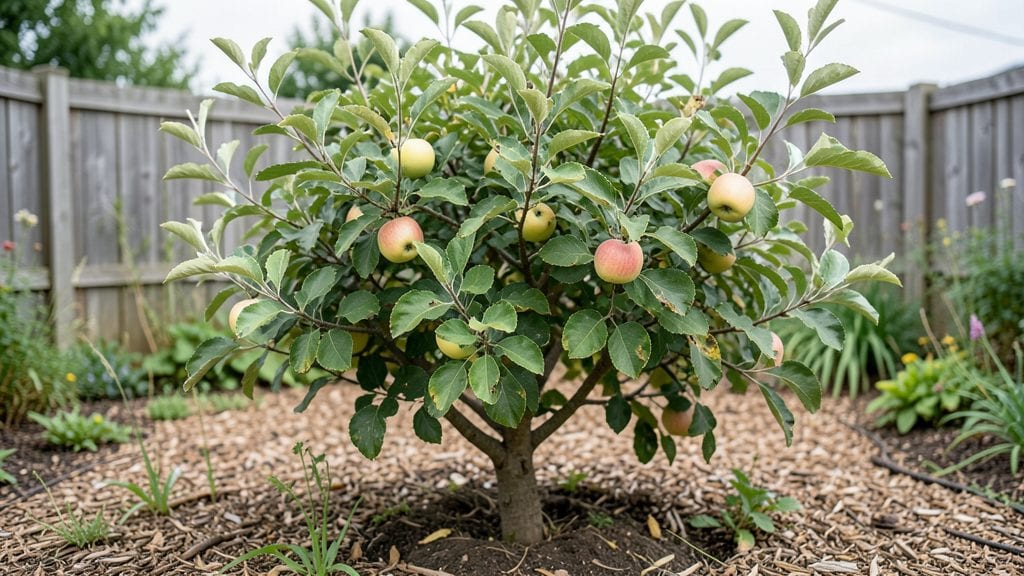
Planting a cocktail apple tree means bringing both beauty and bounty to your Pacific Northwest garden. 🌿 These trees aren’t just fruit producers—they’re pollinator magnets with striking seasonal interest, from delicate spring blossoms to vibrant fall foliage.
My first one transformed a bare corner into a four-season showpiece, and the apples? Perfect for fresh eating, baking, or crafting cocktails.
The secret to their success lies in the right conditions: 6+ hours of sunlight daily, well-draining soil rich in organic matter, and regular watering during their first two years.
Unlike traditional apple trees, cocktail varieties thrive in cooler climates and produce smaller, intensely flavored fruit—ideal for small spaces or urban yards. Pruning in late winter keeps them compact while encouraging abundant blooms.
You’ll harvest your first crop in 3-4 years, but the real magic happens year-round. Spring brings clouds of pollinators, summer offers shade and shade-tolerant ground cover, and fall delivers a harvest of crisp, sweet apples.
Even winter has its charm with their sturdy branches and persistent fruit that birds adore.
Common challenges like fruit drop or winter dieback are easily managed with proper care—think mulching, winter protection, and consistent pruning. These trees reward patience with low-maintenance beauty and a harvest that’s as rewarding as it is delicious.
Ready to grow one that does double duty as both a garden star and a kitchen staple?
📚 In This Guide
- What you need
- Instructions
- Tips and common mistakes
- Wrapping up and next steps
What you need
- ● Pruning shears: Bypass pruners (sharp, 6–8" blades) for clean cuts on small branches.
- ● Loppers: 18–24" bypass loppers for thicker branches (up to 2" diameter).
- ● Pruning saw: Curved-tooth saw for branches over 2" in diameter.
- ● Gloves: Heavy-duty gardening gloves (cut-resistant for safety).
- ● Disinfectant: 70% isopropyl alcohol or bleach solution (1 part bleach to 9 parts water) to sterilize tools between cuts.
- ○ Pruning sealant (optional): Tree wound sealant (like Tanglefoot) for large cuts to prevent disease.
- ● Ladder or step stool: Sturdy, extendable ladder (if tree is over 6–8 feet tall).
- ● Trash bags: Heavy-duty bags (2–3) for collecting pruned branches.
- ● Timing: Prune during dormant season (late winter/early spring) or immediately after harvest (fall). Avoid pruning when the tree is blooming!
- ● Weather: Choose a dry, overcast day to reduce stress on the tree and prevent fungal spread.
- ○ Safety gear (optional but recommended): Safety glasses (to protect from debris).
- ● Long sleeves/pants (to avoid scratches or thorns).
- ○ Tree map or sketch (optional): A quick sketch of the tree’s structure to plan cuts before you start.
How to plant and care for a cocktail apple tree in the Pacific Northwest
Here’s the method I’ve used to grow thriving, pollinator-friendly apple trees that produce fruit perfect for craft cocktails.
🌱 Step 1: Choose the Right Location and Planting Time
Cocktail apple trees thrive in full sun to partial shade—at least 6-8 hours of direct sunlight daily. In the Pacific Northwest’s mild climate, plant in early spring (March-April) or early fall (September-October) to avoid summer heat stress. Avoid low spots where cold air pools, as this can damage roots.
Test your soil’s drainage by digging a 12-inch hole—if water pools after 30 minutes, amend with 2-3 inches of compost or plant on a slight mound. The tree’s shallow roots need well-draining soil to prevent rot, especially in the PNW’s wet winters. I always dig a 12-inch-wide planting hole—twice as wide as the root ball—to encourage root spread.
🪴 Step 2: Prepare the Planting Hole and Transplant
Loosen the root ball gently if it’s tightly bound, then place the tree in the hole so the graft union (the swollen area near the base) sits 2-3 inches above soil level. This prevents water from sitting on the graft and rotting it. Backfill with native soil mixed with 1 gallon of compost, tamping lightly to remove air pockets.
Water deeply immediately after planting—5 gallons total—to settle the soil and eliminate air gaps. The root ball should absorb water like a sponge, not puddle. Mulch with 3-4 inches of wood chips or straw, keeping it 6 inches away from the trunk to prevent moisture buildup against the bark. This mimics the forest floor’s natural protection in the PNW.
☀️ Step 3: Water and Fertilize for Strong Growth
Water once a week for the first month, then taper to every 2-3 weeks once established—unless you’re in a drought. The tree’s roots should reach 12-18 inches deep by late summer, so deep watering encourages downward growth. You’ll know it’s time to water when the top 2-3 inches of soil feel dry to the touch.
Fertilize in early spring with a balanced 10-10-10 fertilizer (use ½ cup per tree), then again in mid-summer with a low-nitrogen, high-phosphorus blend (like 5-10-10) to support flowering. Avoid high-nitrogen fertilizers—they promote leafy growth at the expense of fruit. I also side-dress with 1 cup of compost in spring to boost organic matter.
✂️ Step 4: Prune for Structure and Pollination
Prune in late winter (before buds swell) to remove dead, crossing, or inward-growing branches. Open the tree’s center to improve airflow and sunlight penetration—this reduces disease risk and encourages even fruit set. Aim for a vase-like shape with a strong central leader and well-spaced branches.
Thin fruit in late spring to 6-8 inches apart—this ensures larger, cocktail-worthy apples. Remove water sprouts (fast-growing vertical shoots) as they appear, as they divert energy from fruit production. A well-pruned tree in the PNW will produce 50-100 apples per season, perfect for fermenting or fresh cocktails.
🌿 Step 5: Protect Against PNW-Specific Pests and Diseases
Monitor for apple maggots and codling moths—common in the PNW. Use row covers in early summer or apply organic sprays like neem oil every 2 weeks during bloom. Avoid chemical sprays after flowering, as they can harm pollinators like bees and hoverflies, which are critical for fruit set.
Watch for apple scab, a fungal disease common in wet climates. Prune for airflow and apply copper fungicide in early spring if you’ve had issues before. Mulching with wood chips (not fresh bark) helps suppress soil-borne diseases by maintaining even moisture and temperature.
Tips & tricks for perfect cocktail apple trees in the Pacific Northwest
Between us, these tricks will help you grow a thriving cocktail apple tree that thrives in our unique climate. The Pacific Northwest’s conditions demand special attention—here’s how to give your tree the best start.
Sunlight Strategy: While 6-8 hours of sunlight is ideal, I’ve found that morning sun paired with afternoon shade works best in hotter PNW summers. If your tree gets intense afternoon sun, consider partial shade cloth during peak heat hours to prevent stress. The goal is to mimic the dappled light of a forest understory, which is what these trees evolved to love.
Soil Test First: Before planting, grab a soil test kit from your local extension office—it’s worth the $15. The PNW’s acidic soils often need lime adjustments, and knowing your pH (aim for 6.0-7.0) prevents future problems. I’ve seen trees struggle for years because their soil was too acidic; a simple test could’ve saved them. The 12-inch hole test is great, but a full soil analysis gives you the complete picture.
Watering Wisdom: Those first 5 gallons after planting should be spread over 30 minutes to avoid shocking the roots. Think of it like giving your tree a slow drink of water—not a sudden downpour. In summer droughts, I water deeply every 7-10 days rather than frequent shallow watering, which encourages roots to stay near the surface where they’ll dry out faster.
Fertilizer Timing: The early spring 10-10-10 application is non-negotiable, but I’ve learned that mid-summer fertilization should happen right after you’ve thinned fruit. This ensures the tree’s energy goes toward root development rather than supporting a heavy crop. The ½ cup per tree measurement is precise—don’t eyeball it, or you’ll end up with leafy growth at the expense of fruit.
Pro Tips for Cocktail Apple Tree
- Between us, these tricks will help you grow a thriving cocktail apple tree that thrives in our unique climate.
- Sunlight Strategy: While 6-8 hours of sunlight is ideal, I’ve found that morning sun paired with afternoon shade works best in hotter PNW summers.
- Soil Test First: Before planting, grab a soil test kit from your local extension office—it’s worth the $15.
Frequently asked questions
Got questions about growing a cocktail apple tree in the Pacific Northwest? You’re not alone! Here are answers to the most common queries—from planting tips to troubleshooting—to help you cultivate a thriving, pollinator-friendly tree.
What’s the best time to plant a cocktail apple tree in the PNW?
Plant in early spring (March–April) or fall (September–October) when soil is workable but not frozen. Avoid extreme heat—root systems need time to establish before summer stress sets in. Pro tip: PNW’s mild winters mean fall planting works well, but spring gives roots a head start for summer blooms!
How do I ensure my cocktail apple tree gets pollinated?
These trees are self-pollinating, but planting a second variety nearby (like ‘Liberty’ or ‘Honeycrisp’) boosts fruit set. Attract pollinators by adding native flowers (e.g., Pacific dogwood or Oregon grape) within 50 feet. Avoid pesticides—bees and butterflies are your best friends!
When and how should I prune my cocktail apple tree?
Prune in late winter (February) before buds swell, focusing on:
- Removing dead/diseased branches (sterilize tools with rubbing alcohol).
- Thinning crossing branches to improve airflow.
- Shaping for sunlight access (open center, 6–8 ft high).
Why aren’t my cocktail apples ripening evenly?
Uneven ripening often stems from:
- Sun exposure: Move trees to full sun (6+ hours daily)—PNW shade can delay ripening.
- Water stress: Deep water 1–2x weekly (drought slows fruit development).
- Nutrient gaps: Test soil; amend with compost or a balanced fertilizer (10-10-10) in early spring.
What’s a good alternative if I don’t have space for a full-size tree?
Consider dwarf or columnar varieties like ‘Columnar Apple’ or ‘Patio Pear’ (yes, pears work too!). These stay under 8 ft tall and thrive in containers. For cocktail-style flavors, look for ‘Ciderella’ or ‘Pink Pearl’—both pollinator-friendly and compact!
How do I protect my tree from PNW-specific pests like codling moths?
Use organic defenses:
- Apply kaolin clay (Surround WP) to trunks/fruit to deter moths.
- Hang pheromone traps in spring to disrupt mating.
- Encourage beneficial insects (ladybugs, lacewings) with dill or fennel plants nearby.
Wrapping up and next steps
Growing a cocktail apple tree in the Pacific Northwest isn’t just about harvesting delicious fruit—it’s about nurturing a thriving ecosystem that benefits pollinators and your garden alike. 🌿 With the right pruning techniques, you’ll ensure strong growth, abundant blooms, and a bountiful harvest year after year.
Now that you’re armed with the knowledge, there’s no time like the present to grab those shears and get pruning!
Start small—even a single cut can make a difference. Happy pruning, and may your orchard be as lively as a PNW sunset! 🍏✨