
Trees
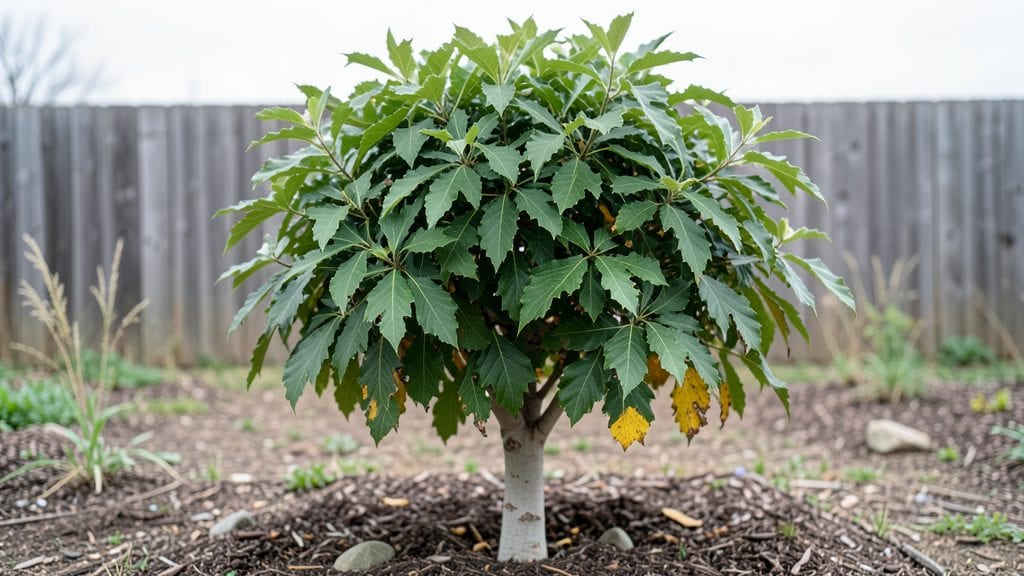
Growing dwarf pecan trees in your backyard means crunchy, buttery nuts without needing an orchard. 🌱 I planted mine last spring, and now they’re thriving in a spot where nothing else would fit—proof that great things come in small packages.
The key is choosing the right variety and giving them space to stretch their branches while keeping their roots contained.
You’ll need well-draining soil rich in organic matter, at least 6 hours of sunlight daily, and a spot protected from strong winds. Dwarf varieties like ‘Wichita’ or ‘Cheyenne’ stay under 15 feet tall, making them perfect for small yards or large containers.
Just avoid heavy clay soils—they’ll stunt your tree’s growth faster than you can say “pecan pie.”
By late summer, you’ll see those familiar long catkins turn into golf-ball-sized nuts by fall. The first harvest might be modest, but with proper care—regular watering, annual pruning, and a little patience—you’ll get a steady crop in just 3-5 years.
That’s years faster than full-sized trees, and without the space requirements.
Container growing works too, but only for younger trees—once they outgrow their pots, they’ll need permanent ground space. The payoff? Fresh pecans picked straight from your yard, no grocery store in sight. Ready to grow your own? Let’s get those roots in the ground.
📚 In This Guide
- What you need
- Instructions
- Tips and common mistakes
- Wrapping up and next steps
What you need
- ● Dwarf pecan tree saplings: 1–3 (choose grafted varieties like 'Desirable,' 'Schley,' or 'Pawnee' for reliability).
- ● Well-draining soil: A mix of native soil, compost (50% organic matter), and sand or perlite (20–30%) for aeration.
- ● 5-gallon pots or nursery containers: 1–3 (with drainage holes) for young trees.
- ● Balanced fertilizer (10-10-10 or 8-3-9): 1 lb per tree (apply in early spring and summer).
- ● Mulch (wood chips or straw): 2–3 inches to retain moisture and suppress weeds.
- ○ Drip irrigation system or soaker hose: Optional but highly recommended for consistent watering.
- ● Garden trowel or shovel: For planting and soil prep.
- ● Pruning shears: Sharp, clean pair for shaping and maintenance.
- ● Gloves and knee pads: For comfort during planting.
- ● pH testing kit: To ensure soil pH is between 6.0–7.0 (ideal for pecans).
- ○ Stakes and ties (optional): For young trees in windy areas.
- ● A sunny location with at least 6–8 hours of direct sunlight daily.
- ● Space: 10–15 feet between trees (or container depth of 18+ inches).
- ● Patience: Dwarf pecans take 3–5 years to bear nuts!
Step-by-Step guide to planting and caring for dwarf pecan trees
Here's how to grow these small-space wonders from start to nut-producing maturity.
🌱 Step 1: Choose the Right Location and Planting Time
Dwarf pecan trees thrive in full sun—at least 8 hours daily—and need space to spread their roots. I always plant mine in late winter or early spring before new growth begins. This gives roots time to establish before summer heat arrives.
Dig a hole twice as wide as the root ball but only as deep—the top of the root ball should sit 1-2 inches above ground level. This prevents water from pooling around the trunk. Amend the native soil with 2-3 inches of compost mixed into the bottom of the hole for better drainage.
💧 Step 2: Water Deeply and Mulch for Retention
After planting, water deeply—about 5 gallons—to settle the soil around roots. You'll know it's enough when water runs out the drainage holes. Let the top 2 inches of soil dry between waterings for the first month, then gradually extend to 3-4 inches dry as the tree matures.
Spread 3 inches of mulch (wood chips or bark) in a 3-foot diameter circle around the base, keeping it 6 inches away from the trunk. Mulch locks in moisture and regulates soil temperature. Replenish as it breaks down—never let it pile against the trunk, or it'll trap moisture and cause rot.
☀️ Step 3: Prune for Shape and Airflow in Early Spring
Prune before buds swell in early spring to remove dead, crossing, or inward-growing branches. Use clean, sharp pruners to make cuts just outside the branch collar. I never remove more than 25% of the tree's canopy in one year—this keeps it healthy and productive.
Open the center of the tree slightly to improve airflow, which reduces disease risk. Watch for sucker growth (shoots at the base) and remove them immediately—they drain energy from nut production. Thin out crowded branches to leave 6-8 inches between limbs for airflow.
⏰ Step 4: Fertilize and Monitor for Nut Production
Apply a balanced, slow-release fertilizer (10-10-10) in early spring when new growth appears. Use ½ cup per tree for the first year, then increase to 1 cup annually as the tree matures. Avoid high-nitrogen fertilizers—they promote leafy growth at the expense of nuts.
Dwarf pecan trees take 3-5 years to produce nuts, but you'll see male and female flowers in spring. Female flowers appear on older wood (last year's growth), while male flowers grow on new shoots. Hand-pollinate by gently shaking branches when flowers open to spread pollen.
Tips & tricks for perfect dwarf pecan tree care
Here's what I wish I knew before planting my first dwarf pecan tree—these details make all the difference for happy, productive trees.
Sunlight Strategy: Those 8 hours of daily sun are non-negotiable, but here's the thing: morning sun is more important than afternoon. Position your tree to catch east-facing sunlight first—it helps prevent afternoon heat stress, especially in hot climates. I've seen trees struggle in full afternoon sun even with plenty of hours.
Planting Depth Secret: That 1-2 inch elevation above ground level isn't just about drainage—it's about preventing girdling. The root flare (where roots meet trunk) should be clearly visible above the soil. If you bury it too deep, the tree can't develop properly and may even suffocate. Use a level to check as you plant.
Watering Wisdom: The 5-gallon initial watering is crucial, but don't stop there. After planting, I water every 2-3 days for the first month, checking that water penetrates 6-8 inches deep. You'll know you're doing it right when the soil stays moist but not soggy at that depth—this encourages deep root growth instead of shallow surface roots.
Pruning Precision: When you're removing those crossing branches in Step 3, aim to make cuts just outside the branch collar but never into the trunk. I use a small paint mark to visualize where the cut should be before making it—this prevents unsightly stubs. And remember, those 6-8 inches between limbs isn't just for looks; it's what allows air to circulate and keeps pests away.
Pro Tips for Dwarf Pecan Trees
- Here's what I wish I knew before planting my first dwarf pecan tree—these details make all the difference for happy, productive trees.
- Sunlight Strategy: Those 8 hours of daily sun are non-negotiable, but here's the thing: morning sun is more important than afternoon.
- Planting Depth Secret: That 1-2 inch elevation above ground level isn't just about drainage—it's about preventing girdling.
Frequently asked questions
Got questions about growing dwarf pecan trees?
You’re not alone! Here are answers to the most common queries to help you get started with confidence.
How long does it take for a dwarf pecan tree to produce nuts?
A dwarf pecan tree typically takes 3–5 years to bear its first harvest, though some varieties may produce nuts earlier. Patience is key—proper care (like consistent watering and fertilization) speeds up the process. Once established, they can yield reliable crops for decades!
Can dwarf pecan trees grow in containers or small yards?
Dwarf varieties thrive in 5-gallon containers or larger (at least 18–24 inches deep) and do well in small yards with 6–8 feet of space. Just ensure they get full sun (6+ hours daily) and well-draining soil. Containers need regular watering and may require winter protection in cold climates.
Are dwarf pecan trees cold-hardy? What zones do they tolerate?
Most dwarf pecan trees handle USDA Zones 6–9, though they’re tender in extreme cold (below 0°F). Young trees benefit from winter mulch or frost cloth. Choose cold-hardy varieties like ‘Pawnee’ or ‘Western Scholar’ for better resilience in cooler regions.
What pests or diseases should I watch for with dwarf pecan trees?
Common issues include aphids, pecan weevils, and fungal diseases like scab or powdery mildew. Preventative care helps: Prune for airflow, use neem oil for pests, and avoid overhead watering. Monitor leaves for discoloration or holes—early action keeps your tree healthy!
Can I graft dwarf pecan trees for better yields or varieties?
Yes! Grafting lets you combine desirable traits (e.g., disease resistance + high yield). Use a whip-and-tongue graft in late winter/early spring on a compatible rootstock. Sterilize tools, keep the graft moist, and wrap with grafting tape for success. Pro tip: Start with a healthy, disease-free scion!
Wrapping up and next steps
Dwarf pecan trees are a game-changer for small yards, urban gardens, and even containers—proving that great things (and delicious nuts!) come in compact sizes. 🌱 Whether you’re drawn to their space-saving growth, early production, or low-maintenance care, these trees offer a rewarding way to grow your own pecans without sacrificing precious real estate.
Ready to crunch into the adventure? Start by researching local nurseries or reputable online sellers to find the perfect dwarf variety for your climate. Then, roll up your sleeves—your future pecan harvest (and bragging rights) are just a few seasons away! 🌟