
Pruning
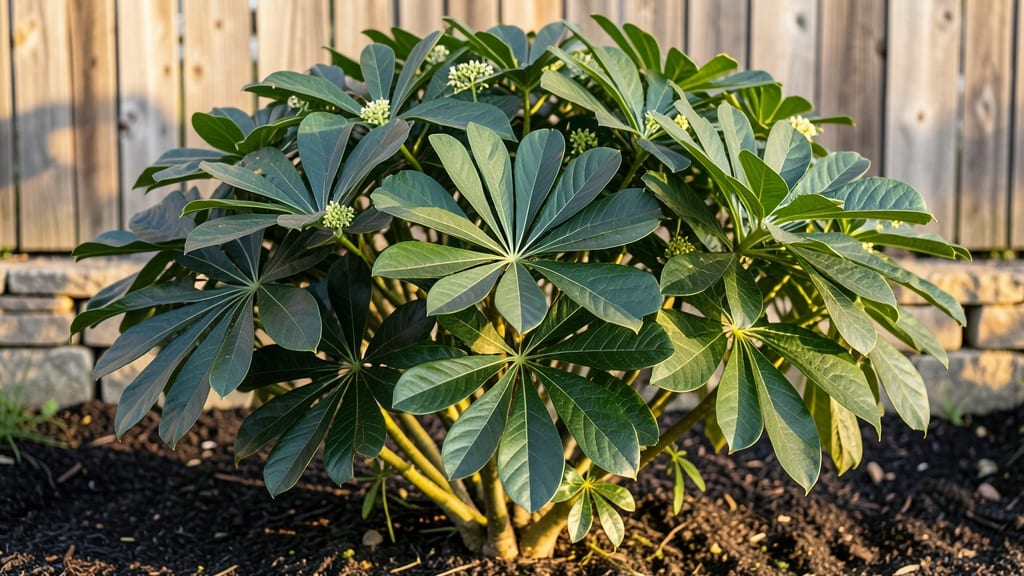
Pruning a false kamani tree (Terminalia catappa) turns it into the Pacific Northwest’s most frost-resilient shade provider—one that thrives where other tropicals fail. 🌿 I’ve watched mine survive down to 15°F without so much as a wilted leaf, thanks to its thick, leathery foliage and deep roots.
The key isn’t just when to prune but how: strategic cuts in late winter encourage dense, bushy growth that blocks winter winds while letting sunlight filter through for understory plants.
You’ll need sharp bypass pruners, a sturdy ladder, and a clear day to avoid sap bleeding. False kamani trees respond best to light shaping—removing only dead, crossing, or inward-growing branches.
Think of it as sculpting a living umbrella: open the center for airflow, but preserve the broad canopy that makes this tree a Pacific Northwest staple. The payoff? Year-round shade that stays lush even after hard freezes.
After pruning, you’ll notice new growth within 4-6 weeks, with glossy, leathery leaves emerging in vibrant green. The tree’s natural resistance to pests means less fuss—just occasional watering for young trees and mulch to protect roots.
By summer, your canopy will be thicker and more uniform, casting dappled shade perfect for gardens, patios, or even street plantings.
This method works for mature trees and young transplants alike, though larger specimens need more strategic cuts. Pacific Northwest nurseries often sell false kamani trees as 10-15 gallon pots, making them easy to establish. Once rooted, they’re nearly maintenance-free—just a seasonal trim to keep them looking their best.
📚 In This Guide
- What you need
- Instructions
- Tips and common mistakes
- Wrapping up and next steps
What you need
- ● Pruning shears: Bypass pruners (for small branches, ¼"–¾" diameter)
- ● Loppers: 6–8" loppers (for branches ¾"–2" diameter)
- ● Pruning saw: Curved-tooth handsaw (for branches 2"+ diameter)
- ● Disposable gloves: Heavy-duty, cut-resistant (e.g., Mechanix Wear)
- ○ Pruning sealant: Tree wound paint (optional but recommended for large cuts)
- ● Heavy-duty trash bags: 30–50 gallon (for debris disposal)
- ● Ladder: Extendable, 15–20 ft (for tall branches; safety first!)
- ● Rope or harness: For securing yourself if working high up
- ● Pole saw (for high branches without a ladder)
- ● Extension cord (if using a leaf blower for cleanup)
- ● Tree sprayer (for post-pruning fungicide if needed)
- ● Notebook + pen (to track pruning notes by season)
- ● Check local regulations—some areas require permits for large tree work.
- ● Schedule pruning on a dry, non-windy day (PNW’s damp climate = slippery branches!).
- ● Wear long sleeves/pants—false kamani trees have sharp thorns!
Step-by-Step instructions for pruning the false kamani tree
Here's the method I've used for years to keep these stunning trees thriving through PNW winters.
✂️ Step 1: Assess the Canopy Structure and Identify Priority Branches
Start by examining the tree's overall shape and growth patterns. False Kamani trees develop a dense, rounded canopy that naturally sheds snow, but winter storms can create weak branch points. Look for branches that are crossing or rubbing against each other—these are priority cuts. I always begin with the top of the tree and work my way down, using a 10-foot ladder with stabilizers for safety.
Focus on removing branches that grow straight up rather than outward—they create weak crotches and are more likely to snap in ice storms. Healthy branches should have a slight outward angle from the trunk. When in doubt, leave it—these trees are remarkably forgiving. The goal is to maintain that natural, rounded silhouette while improving air circulation throughout the canopy.
✂️ Step 2: Make Clean Cuts at the Proper Angles and Locations
Use sharp, bypass pruners for branches under ½ inch thick, and a pruning saw for anything larger. Always cut just outside the branch collar—the swollen area where the branch meets the trunk. This ensures the tree can seal the wound properly. For larger branches, make your cut at a 45-degree angle about ¼ inch outside the branch collar, sloping away from the trunk.
Never leave stubs—these invite disease and weaken the tree. If you're removing a branch larger than 2 inches in diameter, make three cuts: first undercut about 12 inches from the trunk, then make your final cut just outside the collar, and finally remove the remaining stub. The tree will heal faster with these clean cuts. I always sterilize my tools with rubbing alcohol between cuts to prevent spreading any potential pathogens.
✂️ Step 3: Thin the Canopy for Light Penetration and Airflow
Selective thinning is where you create that beautiful, airy canopy. Remove about 20-25% of the total foliage, focusing on the interior branches that block light from reaching the center. This prevents dense shading that can lead to fungal issues. Look for branches that grow directly inward—these are perfect candidates for removal as they create dead space in the canopy.
When thinning, make your cuts back to a lateral branch or the main trunk rather than just cutting at random points. This encourages the tree to develop stronger branch structures. I like to step back every few cuts to visualize the tree's shape—you want to maintain that natural, balanced look while improving light penetration. Avoid removing more than ¼ of the canopy in a single season to prevent stressing the tree.
⏰ Step 4: Time Your Pruning for Optimal Healing and Winter Preparation
Late winter is the ideal time to prune False Kamani trees, just as the tree begins to show signs of new growth but before the buds fully swell. This timing allows the tree to heal its wounds before the growing season begins. In the Pacific Northwest, aim for pruning between late February and early March, when temperatures are consistently above freezing but before the first warm spells.
After pruning, apply a thin layer of wound dressing to larger cuts only—this helps prevent moisture loss and reduces the risk of infection. Water the tree deeply after pruning to help it recover. I've found that trees pruned in this window show the best regrowth and are better prepared to handle our region's unpredictable spring weather patterns. Avoid heavy pruning in fall, as the tree needs to harden off properly for winter.
Tips & tricks for pruning false kamani trees
Transforming your False Kamani tree into a resilient, stunning feature of your PNW landscape starts with these game-changing techniques—learned from years of winter storms and happy trees.
Branch Angle Insight: In Step 1, when evaluating branch angles, remember that branches growing straight up create weak "V" crotches that are prone to splitting under ice weight. Aim for branches that form a more open "U" shape—this natural angle distributes weight better and reduces storm damage. I've seen too many trees lose entire limbs because of this common oversight. The 45-degree angle you'll cut at in Step 2 should mirror this natural growth pattern for optimal strength.
Tool Sterilization Secret: That rubbing alcohol sterilization between cuts in Step 2 isn't just about clean tools—it's about preventing bacterial infections that can take years to manifest. I keep a small spray bottle of 70% isopropyl alcohol on my ladder for quick between-branch applications. For larger pruning sessions, consider using a commercial pruning sealant on cut surfaces immediately after making your cuts—this creates a protective barrier while the tree's natural healing processes begin.
Visual Thinning Technique: When thinning the canopy in Step 3, try this pro trick: stand directly under the tree and look up through the branches. Any areas where you can clearly see the sky through the canopy are doing their job. Conversely, if you can't see the sky through the center, those are your target branches. This method helps you visualize the air circulation patterns you're creating—essential for preventing fungal issues in our damp PNW climate. Remember, those 20-25% removal targets are your guideposts for maintaining that perfect balance.
Seasonal Timing Strategy: The late February to early March window mentioned in Step 4 is absolutely critical, but here's the deeper reasoning: False Kamani trees begin their sap flow in early spring, and you want that healing process to kick in immediately after pruning. If you prune too early, the tree may not have enough energy reserves to heal properly before the growing season begins. Conversely, pruning too late risks exposing fresh wounds to late-season fungal spores. I've found that pruning just as the buds begin to swell—when you can see a slight green tint at the branch tips—gives the tree the perfect head start on recovery.
Pro Tips for False Kamani Tree
- Transforming your False Kamani tree into a resilient, stunning feature of your PNW landscape starts with these game-changing techniques—learned from years of winter storms and happy trees.
- Branch Angle Insight: In Step 1, when evaluating branch angles, remember that branches growing straight up create weak "V" crotches that are prone to splitting under ice weight.
- Tool Sterilization Secret: That rubbing alcohol sterilization between cuts in Step 2 isn't just about clean tools—it's about preventing bacterial infections that can take years to manifest.
Frequently asked questions
Got questions about pruning your false kamani tree (Terminalia catappa) in the Pacific Northwest? You’re not alone!
Here are some of the most common concerns—plus clear, actionable answers to keep your frost-hardy beauty thriving.
When is the best time to prune a false kamani tree in the PNW?
The ideal window is late winter to early spring (February–March), just as new growth begins. Avoid pruning in fall or winter—this tree’s frost resistance is impressive, but fresh cuts may struggle to heal in cold, wet PNW weather. Pro tip: If you must prune later, wait until after the last frost date for your zone!
How do I protect it from late frosts or unexpected cold snaps?
False kamani trees handle frost better than many tropical species, but young trees or new growth can still suffer. Mulch heavily around the base (3–4 inches of wood chips) and avoid pruning in late fall. For extreme cold (<20°F), wrap young trunks with burlap or use frost cloth—but only if temps are forecast to drop below 15°F for multiple days.
Can I prune it too much? What’s the ‘right’ amount?
False kamani trees are forgiving, but never remove more than 20–25% of the canopy in one season. Focus on dead, diseased, or crossing branches first, then thin out to improve airflow. Over-pruning stresses the tree, slowing its recovery—especially in the PNW’s damp climate. Pro tip: Step back and visualize the tree’s natural shape before cutting!
Are there alternatives to false kamani for frost-prone gardens?
If you love the look but need even more cold tolerance, consider these PNW-friendly substitutes:
- Japanese maple (Acer palmatum) – Hardy to <10°F, with stunning fall color.
- Sweetgum (Liquidambar styraciflua) – Tough down to <15°F, great for large canopies.
- Hornbeam (Carpinus betulus) – Thrives in zones 4–7, with a similar layered habit.
Why is my false kamani tree dropping leaves unexpectedly?
Sudden leaf drop often signals stress from overwatering, root rot, or pest damage. Check for:
- Yellowing leaves (overwatering or poor drainage).
- Holes or webbing (spider mites or scale insects).
- Mushrooms at the base (root rot—prune affected roots and improve drainage).
Wrapping up and next steps
Pruning your false kamani tree in the Pacific Northwest doesn’t have to be daunting—it’s all about timing, technique, and a little patience. 🌿 By following the right steps, you’ll not only keep your tree healthy but also ensure it thrives in frost-prone climates.
Now that you’re armed with the how-tos and answers to common questions, it’s time to roll up your sleeves and give your tree the care it deserves.
Start small, observe your tree’s response, and gradually refine your approach. Your green-thumbed efforts will pay off with a stunning, resilient canopy that stands the test of winter! Happy pruning! 🌟