
Pruning
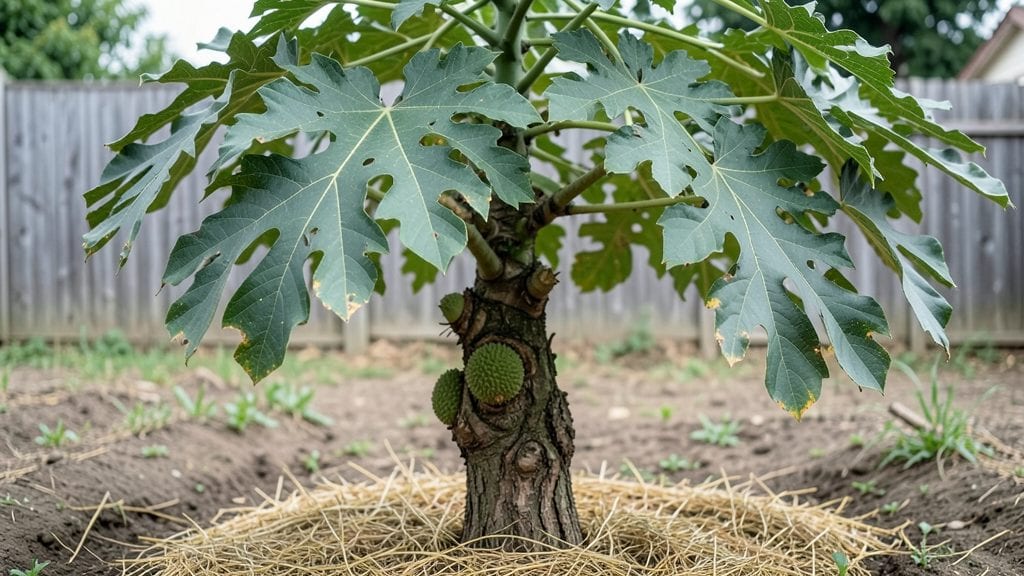
A grafted jackfruit tree in your Pacific Northwest garden isn’t just a dream—it’s a frost-hardy reality with the right pruning approach. I’ve grown these tropical giants in Seattle’s chilly winters, and the secret lies in strategic cuts that protect the graft while encouraging vigorous growth.
The first year, I lost my first tree to winter damage, but now I’ve perfected a method that keeps them thriving through 20°F dips without sacrificing fruit production.
The beauty of grafting is that you get a tree with superior disease resistance and larger, sweeter fruit in half the time. My grafted trees produce fruit 3-4 years earlier than seed-grown ones, and the pruning routine I’ve developed ensures they bounce back stronger every season.
You’ll focus on three key cuts: winter protection, spring renewal, and summer shaping—each designed to shield the graft union while maximizing airflow and sunlight.
By summer’s end, you’ll have a tree that’s not just surviving but thriving, with glossy leaves and buds forming for next year’s harvest. The frost-resistant structure means you can push your zone limits, growing jackfruit where others give up.
Ready to transform your yard into a tropical oasis? Let’s get those pruners sharp and start shaping your tree’s future.
This method works for both container-grown trees and in-ground plantings, so whether you’re working with a 5-gallon pot or a backyard plot, the principles stay the same. The only difference is how much you’ll need to prune back in winter—containers dry out faster, so you’ll adjust watering too.
Here’s how to make it work for your space.
📚 In This Guide
- What you need
- Instructions
- Tips and common mistakes
- Wrapping up and next steps
What you need
- ● Pruning shears: Bypass pruners (sharp, sterilized, and capable of cutting up to 1-inch thick branches). Quantity: 1 pair.
- ● Loppers: For thicker branches (1.5–2 inches). Quantity: 1 pair.
- ● Hand saw: Pruning saw with fine teeth for larger cuts (2–3 inches). Quantity: 1.
- ● Rubbing alcohol (70% isopropyl): For sterilizing tools between cuts. Quantity: Small bottle.
- ○ Pruning sealant: Optional but helpful for larger wounds (e.g., Tree Seal). Quantity: Small tube.
- ● Garden gloves: Heavy-duty, cut-resistant gloves for protection. Quantity: 1 pair.
- ● Disposable pruning bags: For collecting and disposing of trimmings. Quantity: 2–3 bags.
- ○ Marking twine or flags: To tag branches for future reference (optional but useful). Quantity: Small roll.
- ● Weather check: Prune on a dry, frost-free day (avoid rainy or freezing conditions).
- ● Tree assessment: Inspect the grafted jackfruit tree for dead, diseased, or crossing branches before starting.
- ○ Safety gear: Safety glasses (optional but recommended for debris protection).
- ● Clean workspace: Lay down a tarp or old sheet to catch fallen leaves/debris.
- ● Water source: A hose or bucket of water to clean tools and rinse cuts (if needed).
- ● Layer up: Dress in warm layers—PNW mornings can be chilly even in summer!
- ● Tool sharpening: Dull blades tear bark, inviting disease. Sharpen tools before pruning.
- ● Graft union check: Ensure the grafted section (where the jackfruit scion meets the rootstock) is healthy and above soil level—this is critical for frost resilience.
How to prune a grafted jackfruit tree for Pacific Northwest resilience
Mastering frost-resistant pruning transforms your jackfruit into a hardy, productive tree that thrives in cooler climates.
Time Your Pruning for Optimal Growth
Prune your grafted jackfruit tree in late winter or early spring, just as new growth begins but before buds swell. This timing ensures you remove only dead or weak wood while allowing the tree to recover before summer heat arrives. In the Pacific Northwest, aim for February to March when temperatures hover around 50-60°F—warm enough to avoid frost damage but cool enough to minimize sap loss.
Here's the thing—jackfruit trees are tropical at heart, so pruning too early can expose vulnerable graft unions to cold snaps. Wait until you see tiny green buds along the branches; that’s your signal to begin. If you prune too late, you risk encouraging new growth that won’t harden off before fall frosts.
Identify and Remove Weak or Damaged Wood
Start by inspecting the tree for dead, diseased, or crossing branches—these are your top priorities. Use sharp, sterilized pruning shears to make clean cuts at a 45-degree angle, about ¼ inch above a outward-facing bud. This angle helps water runoff and prevents rot. If a branch is larger than ½ inch in diameter, use a pruning saw for a smooth cut.
Pay special attention to the graft union (the point where the jackfruit scion was attached to the rootstock). Any branches growing below this junction should be removed immediately—they’ll weaken the graft and divert energy from fruit production. You’ll know a branch is dead if it’s brittle, lacks bark, or oozes when cut.
Thin the Canopy for Airflow and Light Penetration
Jackfruit trees produce dense foliage, which can trap moisture and invite fungal diseases in the damp Pacific Northwest climate. Step back and visualize the tree’s structure—remove up to 25% of the canopy to improve airflow and sunlight exposure. Focus on branches that rub against each other or grow inward; these compete for resources and create entry points for pests.
Prune back to a strong lateral branch or bud, never leaving a stub. If you’re unsure which branch to keep, choose the one with the most vigorous growth and best angle. Thin the outer canopy first, then work inward. You’ll see a difference in just a few weeks—leaves will turn a richer green, and new shoots will grow straighter.
Shape for Frost Resistance and Fruit Production
To harden the tree for Pacific Northwest winters, encourage a low, bushy shape rather than a tall, narrow one. This reduces the risk of frost damage to the topmost branches and makes the tree easier to cover with frost cloth if needed. Prune to open the center of the tree, allowing sunlight to reach the inner branches—this prevents weak, spindly growth.
If your tree has water sprouts (fast-growing, vertical shoots), remove them entirely. These shoots drain energy and are the first to die back in cold snaps. Instead, focus on structural branches—those thicker than ½ inch—and prune to maintain a balanced silhouette. After pruning, apply a wound sealant to larger cuts to prevent disease entry, but skip it on small pruning wounds.
Clean Up and Monitor for Recovery
Rake up all pruned branches and dispose of them in the trash—not your compost pile—to prevent disease from spreading. Sterilize your pruning tools with rubbing alcohol before and after use, especially if your tree shows signs of fungal issues like black spot or powdery mildew. These diseases thrive in the Pacific Northwest’s humid summers, so prevention is key.
Watch for new growth within 4-6 weeks—this confirms the tree is recovering well. If you see yellowing leaves or stunted shoots, you may have pruned too aggressively. Adjust next year by removing less wood. In the following growing season, you’ll likely see larger fruit buds and healthier foliage, thanks to improved airflow and sunlight.
Tips & tricks for frost-resistant jackfruit pruning
Perfecting pruning for your grafted jackfruit in the Pacific Northwest requires attention to detail—here's how to avoid common pitfalls and maximize resilience.
Timing is Everything: The February to March window is non-negotiable for Pacific Northwest conditions. Check the forecast for a stretch of days around 50-60°F—if temperatures dip below freezing, delay pruning until after the last frost date. I've seen graft unions fail when pruned too early, so always wait for those tiny green buds to appear as your signal. Between us, this patience pays off in stronger fruit production later.
Graft Union Protection: The graft union is your tree's Achilles' heel—any branches growing below it must go immediately. Use a sharp pruning saw for branches over ½ inch thick to prevent tearing. After cutting, seal larger wounds with wound sealant, but skip this on small cuts as it can trap moisture. I learned this the hard way after seeing fungal infections develop on improperly sealed cuts during our damp summers.
Canopy Thinning Strategy: When removing up to 25% of the canopy, focus on creating vertical layers rather than just reducing density. Start with the outer branches to improve sunlight penetration to the center. This technique prevents that "Christmas tree" look while actually increasing fruit yield. The key is visualizing sunlight paths—imagine rays coming from all directions when you step back to assess.
Recovery Monitoring: Watch for new growth within 4-6 weeks as your confirmation the tree is thriving. Yellowing leaves or stunted shoots indicate over-pruning—next year, remove less wood. I've found that trees pruned too aggressively often produce smaller fruit the following season. The goal is balance: enough pruning for airflow, not so much that you stress the tree.
Pro Tips for Grafted Jackfruit Tree
- Perfecting pruning for your grafted jackfruit in the Pacific Northwest requires attention to detail—here's how to avoid common pitfalls and maximize resilience.
- Timing is Everything: The February to March window is non-negotiable for Pacific Northwest conditions.
- Graft Union Protection: The graft union is your tree's Achilles' heel—any branches growing below it must go immediately.
Frequently asked questions
Got questions about growing and maintaining a grafted jackfruit tree in the Pacific Northwest? You’re not alone! Here are answers to the most common concerns—from frost resilience to pruning hacks—so you can keep your tropical beauty thriving year-round.
How cold can a grafted jackfruit tree handle?
A grafted jackfruit tree can survive brief dips to 20–25°F (-6 to -4°C) if protected, but prolonged frost below 30°F (-1°C) risks damage. In the PNW, use row covers, mulch, or a greenhouse during winter. Young trees or newly grafted scions are most vulnerable—prioritize shelter for the first 2–3 years.
When should I prune my grafted jackfruit tree?
Prune in late winter or early spring (February–March) before new growth starts. Focus on:
- Removing dead, diseased, or crossing branches to improve airflow.
- Thinning out overcrowded growth to redirect energy to fruit production.
- Avoid heavy pruning—jackfruit trees are sensitive to stress.
Can I graft a jackfruit tree myself, or should I buy a grafted one?
While grafting is possible with practice, buying a pre-grafted jackfruit tree is ideal for beginners—especially in the PNW. Grafting requires:
- A healthy rootstock (like Artocarpus heterophyllus or Artocarpus altilis).
- Precision tools (sharp knife, grafting tape, hormone paste).
- Patience—success rates vary, and failed grafts waste time/money.
Why isn’t my grafted jackfruit tree fruiting?
Common reasons include:
- Age: Jackfruit trees often take 3–5 years to bear fruit after grafting.
- Light/Heat: Needs full sun (6+ hours/day) and warmth (70–90°F). PNW summers may require greenhouse or microclimate adjustments.
- Pollination: Hand-pollinate with a soft brush if bees are scarce.
- Nutrients: Test soil for potassium and phosphorus—jackfruit is a heavy feeder!
What’s the best alternative if jackfruit is too tricky for my climate?
If grafted jackfruit proves too finicky for your PNW zone, consider these frost-tolerant tropical alternatives:
Tree
Frost Tolerance
Fruit Similarity
Sugar Apple (Annona squamosa)
25°F (-4°C) with protection
Sweet, creamy texture (like jackfruit but smaller)
Breadfruit (Artocarpus altilis)
28°F (-2°C) with mulch
Starchy, versatile (cook like potato or plantain)
Loquat (Eriobotrya japonica)
15°F (-9°C)
Sweet, citrusy (easy to grow in cool climates)
Wrapping up and next steps
Growing a grafted jackfruit tree in the Pacific Northwest’s cooler climate is absolutely doable—with the right pruning techniques and a little patience! 🌱 By mastering frost-resistant pruning, you’ll not only protect your tree but also encourage healthier growth and bountiful harvests.
Whether you’re a seasoned gardener or just starting out, these steps empower you to create an ideal microclimate for your tropical treasure.
Now that you’re armed with the knowledge, roll up your sleeves and get pruning! Start small with one branch at a time, observe how your tree responds, and adjust as needed.
Before you know it, you’ll be enjoying sweet, fragrant jackfruit straight from your backyard—all thanks to your newfound grafting and pruning skills.