Container Gardens
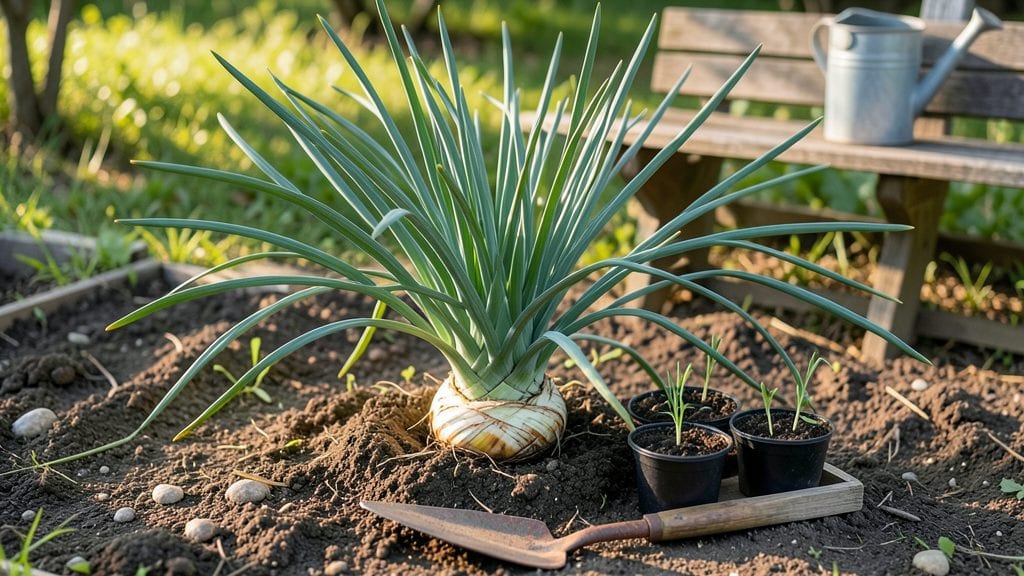
Growing tree onions in containers delivers year-round harvests of mild, onion-like greens that keep producing even when most gardens are dormant. 🌱 I’ve watched mine regrow from the same clump for three straight winters, cutting the grocery bill while adding fresh flavor to meals.
The secret lies in their hardiness—these aren’t your typical onions, but a perennial relative that thrives in pots with minimal fuss.
You’ll need 5-gallon containers with drainage, well-draining potting mix, and a sunny spot (at least 6 hours of light daily). Tree onions tolerate cooler temps better than most vegetables, making them perfect for early spring or late fall harvests.
Plant the bulbs 2 inches deep, spacing them 4-6 inches apart—they’ll form dense clumps over time. Water when the top inch of soil dries, but avoid soggy roots.
Harvest begins 8-10 weeks after planting, when greens reach 6-8 inches tall. Simply snip the outer stalks, leaving the center to regrow—this ensures continuous production. In winter, move containers to a garage or cold frame if temps drop below 20°F, and they’ll bounce back in spring.
The flavor? Mild, slightly sweet, and perfect for salads or cooking.
Common mistakes include overwatering (they hate soggy roots) or crowding (they need airflow). If leaves yellow, it’s usually too much water—let the soil dry slightly between waterings.
With proper care, a single container can yield harvests for years, making it one of the most rewarding container crops. Ready to try?
📚 In This Guide
- What you need
- Instructions
- Tips and common mistakes
- Wrapping up and next steps
What you need
- ● Tree onion bulbs – 3–5 bulbs per container (choose healthy, firm bulbs with green shoots).
- ● Container – Minimum 12-inch diameter and depth (deeper is better for root growth). Ensure it has drainage holes.
- ● Well-draining potting mix – 1–2 bags (1–2 cubic feet) (use a blend for vegetables or add perlite/sand for extra drainage).
- ○ Compost or organic fertilizer – 1 cup per container (optional but boosts growth).
- ● Watering can or spray bottle – For gentle, even moisture.
- ● Gloves – To protect hands while handling soil.
- ● Trowel or small shovel – For planting and soil adjustments.
- ○ Mulch (optional) – Straw or shredded leaves to retain moisture and suppress weeds.
- ○ Balcony planter tray (optional) – If growing in a windy area, secures containers.
- ○ Liquid fertilizer (optional) – Balanced 10-10-10 or fish emulsion for mid-season feeding.
- ● Sunlight – 6+ hours of direct sun daily (south-facing windows or balcony ideal).
- ● Temperature – 50–85°F (10–29°C) (tree onions tolerate a wide range but thrive in warmth).
- ● Patience – Harvest in 6–8 weeks, but green tops can be snipped earlier!
Step-by-step guide to cultivating tree onions in containers
Here's how I grow these hardy perennials for continuous harvests—no garden bed required.
🌱 Step 1: Select and Prepare the Containers
Choose containers with at least 6-inch depth and drainage holes—tree onions despise soggy roots. I use unglazed clay pots because they wick moisture away naturally, but any 5-gallon container with drainage works. Place a 2-inch layer of gravel at the bottom before adding soil to prevent root rot.
Tree onions multiply aggressively, so one 5-gallon pot per plant gives each bulb room to establish. If using shallower containers, space plants 8 inches apart. The key is ensuring roots have space to spread—crowding leads to small, weak bulbs. I always add a 1-inch layer of coarse sand above the gravel to improve drainage further.
🌿 Step 2: Plant the Tree Onion Sets
Tree onions grow from small bulb sets (not seeds). Plant them 2 inches deep, with the pointed end facing up. Space them 4-6 inches apart—this spacing ensures airflow and prevents fungal diseases. I like to plant 4-6 sets per 5-gallon container for a full harvest.
Use well-draining potting mix (never garden soil—it compacts and suffocates roots). Press the soil gently around each set to eliminate air pockets but don’t pack it down. Water immediately after planting to settle the soil and remove any air gaps. The soil should feel moist but not soggy—you’ll see the first green shoots emerge in 7-10 days if conditions are right.
☀️ Step 3: Provide Light and Water Consistently
Tree onions thrive in full sun (6+ hours daily) but tolerate partial shade if temperatures exceed 85°F. Place containers where they get morning sun and afternoon shade in hot climates. If growing indoors, use a grow light positioned 6-12 inches above the plants for 12-14 hours daily—they won’t bolt without proper light.
Water when the top 1-2 inches of soil feel dry. Tree onions are drought-tolerant once established, but young plants need consistent moisture. I water at the base, avoiding the leaves to prevent fungal issues. Overwatering is the fastest way to kill them—yellowing leaves signal either too much water or poor drainage.
✂️ Step 4: Harvest and Maintain for Year-Round Growth
Start harvesting green onions when they reach 6-8 inches tall by cutting the stems 1 inch above the base. This encourages regrowth—you’ll get multiple harvests per season from the same plant. For bulb onions, wait until the tops yellow and flop over, then pull and cure them in a dry, shaded area for 2 weeks before storing.
After harvest, trim the foliage back to 2 inches to stimulate new growth. Tree onions are perennial, so they’ll regrow year after year if protected from frost. In cold climates, move containers indoors to a cool (40-50°F), bright spot over winter. They’ll go dormant but sprout again in spring—no replanting needed.
🪴 Step 5: Divide and Refresh the Plants Annually
Every 2-3 years, tree onions form dense clumps. In early spring, lift the bulbs, separate them, and replant the largest ones. This rejuvenates growth and prevents overcrowding. I divide mine in March before new shoots appear—it’s easier to see the individual bulbs when the soil is still cool.
Discard any small or diseased bulbs during division. The remaining healthy sets can be replanted immediately in fresh potting mix. This step keeps your harvests abundant and disease-free for years. With proper care, one container can produce enough green onions to last a family all year.
Tips & tricks for perfect tree onion cultivation
Here's what I've learned after years of growing these resilient perennials—avoid these common pitfalls for the best results.
Container Selection: Unglazed clay pots are ideal, but if you choose plastic, add extra drainage holes—they can trap moisture and lead to root rot. I've seen growers use old buckets with holes drilled in the bottom, and they work perfectly. Just make sure that 2-inch gravel layer is non-negotiable for preventing waterlogging at the roots.
Planting Depth and Spacing: The 2-inch planting depth might seem shallow, but tree onions need room to spread their roots horizontally. I've tried planting them deeper, and while they survive, the bulbs become smaller and less flavorful. For spacing, think of it like a traffic system—4-6 inches apart ensures each plant gets enough airflow to prevent fungal diseases that cause yellowing leaves.
Light Management: That 6-12 inch grow light distance is crucial. Too close and you'll burn the leaves; too far and they'll stretch toward the light (bolting). I place my lights on a timer for those 12-14 hours daily—consistency is key. In summer heat above 85°F, I move containers to partial shade during afternoon hours to prevent stress that can make them bolt prematurely.
Harvesting Technique: When cutting green onions, always leave that 1-inch base—it's where the regrowth happens. I use clean, sharp scissors to avoid damaging the plant. For bulb onions, the 2-week curing period is essential for storage life. I hang them in a mesh bag in a dark, well-ventilated area where they can dry completely without touching each other.
Pro Tips for Growing Tree Onions
- Here's what I've learned after years of growing these resilient perennials—avoid these common pitfalls for the best results.
- Container Selection: Unglazed clay pots are ideal, but if you choose plastic, add extra drainage holes—they can trap moisture and lead to root rot.
- Planting Depth and Spacing: The 2-inch planting depth might seem shallow, but tree onions need room to spread their roots horizontally.
Frequently asked questions
Got questions about growing tree onions? You’re not alone! Here are answers to the most common queries to help you succeed with your container garden.
How long does it take for tree onions to mature and produce green onions?
Tree onions typically take 60–90 days to mature from seed. Once established, they’ll produce continuous harvests of green onions for 1–2 years—sometimes longer! The key is patience: snip leaves as needed, and the plant will keep regrowing. Pro tip: If you’re in a cooler climate, expect a slightly longer timeline.
Can I grow tree onions year-round in containers?
Yes! Tree onions are perennial in mild climates (Zones 5–10) and can thrive year-round in containers. In colder areas, move pots indoors near a sunny window or use a grow light during winter. Hard freeze? Mulch heavily or overwinter in a garage (keep temps above 30°F). With care, they’ll bounce back in spring!
What can I do if my tree onions bolt or flower too early?
Boling (sending up flowers) happens when tree onions sense long daylight or heat stress. To prevent it:
- Use shade cloth (30–50%) in peak summer.
- Harvest leaves regularly to encourage bushier growth.
- Choose slow-bolting varieties like ‘Everlasting’ or ‘Perpetual.’
- Avoid over-fertilizing with high-nitrogen feeds.
Are tree onions different from regular green onions? How do I use them?
Tree onions are hardier and more productive than green onions (scallions). They grow in a clumping habit (like chives) and regrow from the base. Use them like green onions:
- Raw: Chop for salads, garnishes, or stir-fries.
- Cooked: Sauté, grill, or braise for a milder onion flavor.
- Bulbs: Roast or pickle whole bulbs for a unique twist!
Where can I buy tree onion seeds or plants?
Tree onion seeds are widely available from:
- Online seed banks: Baker Creek, Johnny’s Selected Seeds, or True Leaf Market.
- Local nurseries: Ask for “tree onions” or “perpetual onions.”
- Garden centers: Look for “everbearing” or “multiplier” onion varieties.
Why are my tree onions turning yellow or mushy?
Yellowing or mushy leaves usually signal overwatering, rot, or poor drainage. Fix it by:
- Ensuring pots have drainage holes and use well-draining soil (mix in perlite or sand).
- Watering only when the top inch of soil is dry—tree onions hate soggy roots!
- Check for pests like onion flies (use row covers or neem oil if needed).
Wrapping up and next steps
Growing tree onions in containers is a rewarding way to enjoy fresh, flavorful greens year-round—no green thumb required! 🌱 With just a few simple steps, you’ll have a thriving harvest that’s perfect for soups, salads, or garnishes.
Start small, experiment with varieties, and soon you’ll be the proud gardener of a kitchen staple that’s both easy and delicious.
Ready to take the next step? Plant your first batch today and watch your container garden transform into a green machine! 🚀 Need inspiration? Try swapping out a few greens in your favorite recipes—your taste buds will thank you.