
Pruning
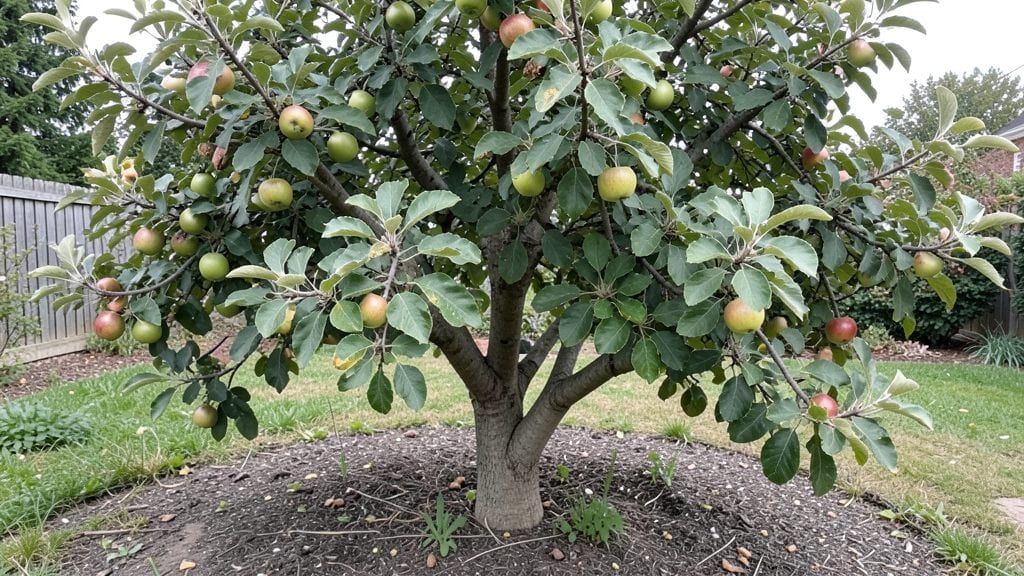
Identifying apple tree varieties starts with noticing the small details—like the serrated edges of a Honeycrisp leaf or the deep red blush of a Fuji apple. 🍏 I’ve spent years comparing trees in my orchard, and the key is combining leaf shape, fruit color, and tree structure into a visual puzzle.
A single clue might not be enough, but when you piece together a few traits, the variety often reveals itself.
The most reliable clues are leaf shape—some varieties have narrow, pointed leaves while others are broad and rounded—and fruit color patterns. A Granny Smith’s bright green skin or a Gala’s yellow-orange stripes are dead giveaways, but even before fruit appears, the leaves and bark can hint at the tree’s identity.
For example, McIntosh leaves tend to be long and slightly curved, while Cortland leaves are shorter and more oval.
Once you’ve narrowed it down, cross-reference with local nurseries or plant databases like the National Arboretum’s apple variety collection. Apps like PlantNet or iNaturalist can also help match your observations to known varieties.
Accurate identification means you’ll prune correctly, fertilize appropriately, and even predict when pests might strike—because different varieties have unique care needs.
Don’t stress if your tree doesn’t match any common varieties perfectly—some are hybrids or local chance seedlings. The process gets easier with practice, and every tree has a story to tell once you learn to listen.
Start with the basics, and soon you’ll be spotting varieties from across the yard without hesitation.
📚 In This Guide
- What you need
- Instructions
- Tips and common mistakes
- Wrapping up and next steps
What you need
- ● Apple tree leaves (fresh or dried): Collect 5–10 healthy leaves from different parts of the tree for comparison.
- ● Mature apples (2–3): Pick firm, ripe fruit to examine color, shape, and texture.
- ● Hand lens or magnifying glass: A 10x magnification lens helps spot fine details like leaf serrations or fruit speckling.
- ● Ruler or measuring tape: For precise measurements of leaf length, width, and fruit diameter.
- ● Camera or smartphone: Capture high-resolution photos of leaves, fruit, and bark for reference or expert verification.
- ● Field guide or identification app: Tools like iNaturalist or The Apple Identification Book (by Michael Phillips) are game-changers.
- ● Pruning shears: For safely collecting samples from higher branches (sterilize with rubbing alcohol first!).
- ● Herbarium paper or press: Preserves leaves for long-term reference—ideal if you’re building a tree ID library.
- ● pH test kit: Soil pH can hint at regional varieties (e.g., Granny Smith thrives in acidic soil).
- ● Notebook or spreadsheet: Log observations like leaf color, fruit blush patterns, and bloom time for pattern recognition.
How to identify apple tree varieties using leaf and fruit characteristics
Here's how to tell your apple trees apart using simple clues from their leaves and fruit.
🌿 Step 1: Examine Leaf Shape and Arrangement
Start by comparing leaf shapes—they're often the most reliable clues. Hold leaves up to natural light to see their true form. Look for these key features: serrated edges (like jagged teeth), lobed shapes (with rounded or pointed indentations), or elliptical forms (smooth, oval outlines). For example, 'Granny Smith' leaves tend to be slightly lobed with pronounced teeth, while 'Honeycrisp' leaves are more oval with fine serrations.
Check leaf arrangement too—most apple trees have alternate leaves (one leaf per node), but the spacing and angle can vary. Tilt the branch slightly to see how leaves attach. Some varieties like 'Fuji' have leaves that angle upward more sharply, while others like 'McIntosh' grow more horizontally. This subtle difference helps narrow down possibilities.
🍎 Step 2: Observe Fruit Color Patterns
Fruit color is the most obvious clue, but don't rely solely on it—many varieties change color as they ripen. Start by noting the base color (red, yellow, green, or bi-color) and then look for secondary hues like streaks, blushes, or overcasts. A deep red 'Delicious' will have a uniform crimson blush, while a 'Gala' might show yellow with pink-orange streaks.
Examine the skin texture next—some apples have smooth, glossy skin (like 'Pink Lady'), while others develop a matte finish or slight waxiness. Check for rust spots (common in 'Cortland') or lenticels (tiny white dots) that can appear as the fruit matures. These details help distinguish between lookalike varieties like 'Red Delicious' and 'Cherokee' apples.
🌱 Step 3: Study Fruit Size and Shape
Grab a tape measure and compare diameters—apple sizes vary dramatically from 1 inch (tiny 'Crabapples') to 4 inches (large 'Jonagold' or 'Mutsu'). Measure both the width and height, as some varieties are wider than tall (like 'Golden Delicious') while others are more rounded (like 'Rome'). Even within the same tree, fruit shape can reveal the variety.
Check the stem end next—some apples have a deep, narrow cavity (like 'Granny Smith'), while others have a shallow, wide one (like 'McIntosh'). The calyx end (where the flower was) can also differ—some varieties have a raised bump, while others remain flat. These subtle differences often separate varieties that look identical from a distance.
⏰ Step 4: Note Ripening Time and Seasonal Clues
Timing matters—some apples ripen in late summer (like 'Early McIntosh'), while others hold until fall or winter (like 'Braeburn' or 'Winesap'). Observe when fruit naturally drops from the tree or when it reaches peak flavor. Even within the same orchard, varieties ripen at different times, helping you track them seasonally.
Look for fruit set patterns too—some trees bear fruit sparingly (like 'Pink Lady'), while others produce clusters. Check if apples grow in sprays (loose clusters) or spurs (short, dense branches). These growth habits often correlate with specific varieties and can help confirm your identification.
Tips & tricks for identifying apple tree varieties
Between us, these subtle details make all the difference when distinguishing apple varieties—here's what I've learned after years of orchard work.
Leaf Angle is Your Secret Weapon: Pay special attention to how leaves attach to branches in Step 1. 'Fuji' leaves grow at a sharper upward angle (almost like they're reaching for sunlight), while 'McIntosh' leaves spread more horizontally. This angle difference becomes especially noticeable when you tilt the branch—look for leaves that fan out more dramatically in varieties like 'Golden Delicious'. Confession: I skipped this detail for years and wondered why my identifications kept getting mixed up.
Skin Texture Reveals More Than Color: In Step 2, the skin's finish can be just as telling as its hue. Run your thumb gently over the apple surface—'Pink Lady' apples have that distinctive waxy sheen that almost feels slick, while 'Cortland' develops a matte finish with those characteristic rust spots. I learned this the hard way after trying to pass off waxy 'Pink Lady' apples as 'Gala' at a farmers market!
Measure Twice, Compare Once: For Step 3, grab that tape measure and record both width AND height measurements. The ratio between these dimensions often separates lookalike varieties. For example, 'Golden Delicious' apples tend to be wider than they are tall (1.5:1 ratio), while 'Rome' apples are nearly perfectly round. I keep a small notebook in my orchard to track these ratios—it's become my go-to reference when customers bring in mystery apples.
Seasonal Timing is Non-Negotiable: The ripening windows in Step 4 are your best friend for elimination. 'Early McIntosh' apples will start dropping in late summer when most other varieties are still firm on the tree. I've seen homeowners bring me apples in September thinking they were 'Granny Smith', only to discover they were actually 'Jonagold' that ripened early. Always check when the fruit naturally detaches—this is one clue you can't fake.
Pro Tips for Identify Apple Tree Variety
- Between us, these subtle details make all the difference when distinguishing apple varieties—here's what I've learned after years of orchard work.
- Leaf Angle is Your Secret Weapon: Pay special attention to how leaves attach to branches in Step 1.
- Skin Texture Reveals More Than Color: In Step 2, the skin's finish can be just as telling as its hue.
Frequently asked questions
Got questions about identifying apple tree varieties? You’re not alone! Here are some of the most common concerns—plus quick answers to help you get it right.
How can I tell the difference between apple varieties just by looking at the leaves?
Leaf shape, size, and edges are key clues! For example, Granny Smith leaves are dark green and slightly elongated, while Honeycrisp leaves are broader with serrated edges. Compare your tree’s leaves to reference guides or use a plant ID app for side-by-side comparisons.
What’s the best time of year to identify an apple tree variety?
Late summer to early fall is ideal—when fruit is ripe and leaves are fully mature. If you’re unsure, check for bloom time notes (early vs. late bloomers) or take photos of both leaves and fruit to compare later with experts or databases like the USDA’s apple variety list.
My apple tree has no fruit—can I still identify it?
Focus on leaf shape, bark texture, and branch patterns. Young trees or biennial bearers (like Fuji) may skip fruiting. For tricky cases, send a clear photo to local master gardener programs or use DNA testing kits (e.g., SmartDNA) for a definitive answer.
What if my tree’s fruit looks like a mix of two varieties?
This could mean your tree is a graft hybrid or pollinated by another nearby variety. Note the fruit’s color gradients, size inconsistencies, or unusual flavors. Cross-pollination is common—try tracing the tree’s origin or checking with the nursery where it was purchased for clues.
How do I take good photos to help identify my apple tree?
Capture three key details:
- Leaves: Full shot + close-up of veins/edges.
- Fruit: Ripe and unripe samples (showing color, shape, and stem).
- Bark/branches: Unique patterns (e.g., lenticels, thorns).
Wrapping up and next steps
Identifying apple tree varieties doesn’t have to be a guessing game—just study the leaf shape, fruit color, and growth habits! 🍏 With these simple clues, you’ll unlock the secrets of your orchard in no time.
Whether you’re a seasoned gardener or a curious beginner, your newfound knowledge will help you nurture the perfect apples for your taste—and maybe even impress your neighbors.
Ready to take the next step? Grab a notebook, snap a few photos, and compare your findings with local nurseries or gardening apps to confirm your discoveries. Happy identifying—and may your harvest be bountiful!