Pruning
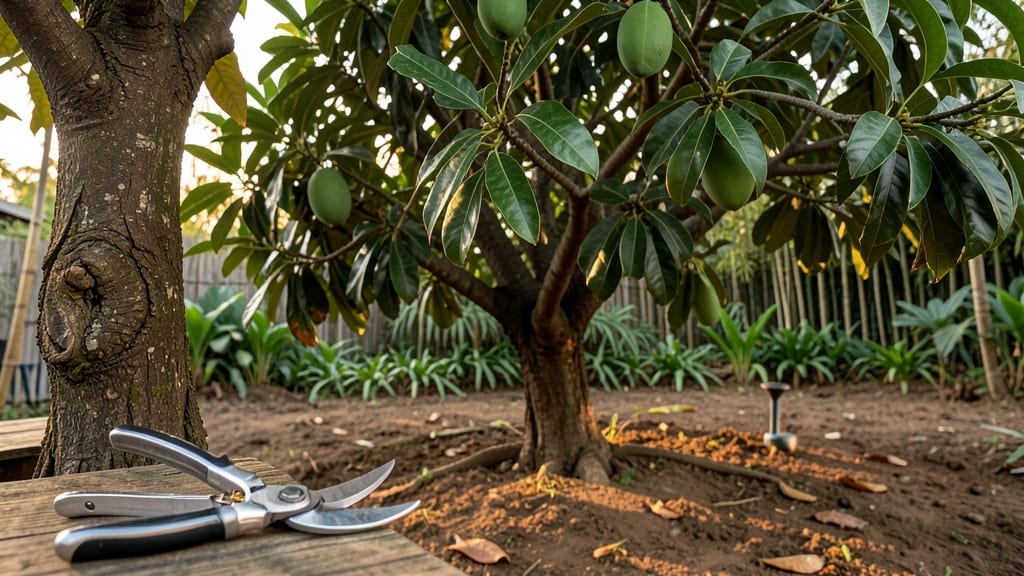
Pruning a mango tree for fruit isn’t just about cutting branches—it’s about unlocking that sweet, juicy harvest you’ve been dreaming of. 🌱 I’ve watched my own mango tree go from scraggly to productive after learning the right timing and techniques.
The key? Pruning when the tree is dormant or just before flowering, not during fruit production.
You’ll need sharp pruners, a ladder (for taller trees), and a clear day to work. Focus on three main tasks: removing dead or crossing branches first, then shaping the tree to let light reach the center, and finally thinning out dense growth to improve airflow.
Most home gardeners overlook the airflow part—that’s where fruit quality suffers.
After pruning, you’ll notice new growth within weeks, and by next season, your tree will reward you with clusters of vibrant, sun-ripened mangoes. The best part? Proper pruning extends the tree’s life, so you’re setting yourself up for decades of harvests. Let’s get those branches trimmed the right way.
This method works for container-grown mangoes too, just scale down the tools. Whether you’re in a warm climate or a frost-prone zone, the principles stay the same—timing is everything. Ready to turn your mango tree into a fruit-producing powerhouse?
📚 In This Guide
- What you need
- Instructions
- Tips and common mistakes
- Wrapping up and next steps
What you need
- ● Pruning shears (bypass or anvil type): Choose sharp, sterilized shears with a 3- to 5-inch blade for clean cuts on smaller branches.
- ● Loppers: For thicker branches (up to 2 inches in diameter), opt for bypass loppers with a 6- to 8-inch handle for leverage.
- ● Pruning saw: A curved-tooth saw (like a bow saw) for branches 2+ inches thick. Look for a 7- to 10-inch blade for precision.
- ● Gloves: Wear cut-resistant gloves (e.g., leather or heavy-duty fabric) to protect against thorns and rough bark.
- ● Ladder or step stool: A stable, extendable ladder (or a 3-step stool) for safe access to higher branches.
- ● Disinfectant (70% isopropyl alcohol or bleach solution): Clean tools before and after use to prevent disease spread.
- ● Pruning sealant: A tree wound sealant (e.g., Tanglefoot or pruning paste) to coat large cuts and reduce infection risk.
- ● Marking twine or flags: Use bright-colored twine or small flags to tag branches slated for removal (helps avoid mistakes!).
- ● Work boots or closed-toe shoes: Protect your feet from thorns and uneven terrain.
- ● Safety glasses: Shields your eyes from debris, especially when sawing thick branches.
- ● Trash bags or bucket: Collect pruned branches for composting or disposal.
- ● Know your mango tree’s age: Young trees (3–5 years old) need light pruning to shape growth, while mature trees benefit from structural thinning.
- ● Check the season: Prune during the dry season (winter) in tropical climates or late winter/early spring in temperate zones.
- ● Weather conditions: Choose a clear, calm day to avoid wet tools or slippery ladders.
- ● Water and snacks: Stay hydrated—pruning can be a sweaty job!
Step-by-step guide to pruning a mango tree for maximum fruit production
Here's the proven method I use to turn wild, tangled mango growth into a structured, fruit-bearing powerhouse.
✂️ Step 1: Identify and Remove Dead or Diseased Branches First
Start by inspecting the tree from top to bottom. Look for branches that are brown, brittle, or oozing sap—these are dead or infected and need immediate removal. Use sharp, clean pruning shears to cut just outside the branch collar where it meets the trunk. This ensures clean wounds that heal faster.
I always prune these first because diseased wood can spread pathogens to healthy branches. If a branch is only partially dead, cut back to the last healthy growth point. You'll know a branch is healthy when the wood is firm and green underneath the bark.
✂️ Step 2: Thin Out Crossing or Rubbing Branches
Next, focus on branches that cross each other or rub together. These create wounds where pests and diseases can enter, and they compete for energy that could go toward fruit production. Use your pruners to remove one of the crossing branches at its point of origin—never leave a stub.
Here's the thing—mango trees naturally grow with a lot of competing branches. I like to leave the stronger, more vertical branch and remove the weaker one. You'll see the stronger branch has thicker wood and more leaf growth. Always make cuts at a 45-degree angle just above an outward-facing bud to encourage proper regrowth.
☀️ Step 3: Open the Canopy for Better Airflow and Sunlight
Mango trees need good airflow to prevent fungal diseases. Step back and look at the tree's overall shape. Remove any branches that grow inward or block sunlight from reaching the center. Aim to create an open vase shape that allows light to penetrate to the inner branches.
I usually remove about 20-30% of the tree's foliage in this step. You'll notice the inner branches often have smaller leaves and less fruit—this is your signal they need more light. Never remove more than one-third of the tree's canopy in a single pruning session, or you'll stress the tree.
🌱 Step 4: Prune for Fruit Production by Encouraging Flowering Branches
Mango trees produce fruit on new growth, so focus on branches that are 2-4 years old. These are your "fruit wood" branches. Cut back any overly vigorous new growth that's growing straight up—these often produce leaves but little fruit. Instead, encourage horizontal branches by pruning just above a bud that grows outward.
I like to make these cuts in late winter or early spring, just before the tree starts new growth. You'll see these branches have more leaf scars and smaller leaves compared to the vigorous new growth. This is where your fruit will develop, so handle these branches with care.
⏰ Step 5: Clean Up and Apply Wound Treatment
After pruning, gather all the debris and remove it from the area to prevent disease. Wipe your pruning tools with rubbing alcohol between cuts to prevent spreading pathogens. For larger cuts (over ½ inch in diameter), apply a thin layer of pruning sealant to protect the wound and prevent disease entry.
I always finish by giving the tree a deep watering to help it recover from the pruning stress. Watch the tree closely in the weeks following pruning—you'll see new growth emerge from the buds you left behind. This is your sign that the pruning was successful and the tree is putting energy into productive growth.
Tips & tricks for perfect mango tree pruning
Turn your mango tree into a fruit-producing machine with these game-changing pruning insights.
Timing is Everything: Late winter or early spring is the ideal time to prune—just before new growth begins. This timing aligns perfectly with the tree's natural cycle, allowing it to direct energy toward fruit production rather than healing wounds. If you're in a warmer climate, aim for the dry season when the tree is dormant but not yet pushing new growth. I've seen trees that were pruned at the wrong time struggle to produce fruit the following season.
Branch Selection Strategy: When choosing which branches to keep during Step 2 and Step 4, focus on those with a slight upward angle rather than straight-up growth. These branches will naturally develop into sturdy scaffolds that support fruit. Look for branches with multiple leaf scars—these indicate older, more established wood that's more likely to bear fruit. Remember, you're not just pruning for shape; you're creating a framework for future harvests.
Pruning Tool Essentials: Invest in a good pair of bypass pruners for clean cuts on branches up to ½ inch in diameter. For thicker branches, use a pruning saw with a fine-toothed blade to avoid tearing the bark. I always keep a small bottle of rubbing alcohol handy to sterilize my tools between cuts—this simple step prevents the spread of disease from one branch to another. Sharp tools make precise cuts that heal faster, which is crucial for fruit production.
Post-Pruning Care: After you've finished pruning, monitor the tree closely for the first few weeks. New growth should appear within 2-4 weeks from the buds you left behind. If you notice any yellowing leaves or wilting, it could be a sign of stress—give the tree a deep watering and consider applying a balanced fertilizer. The deep watering you do after pruning isn't just symbolic; it helps the tree recover and establish new roots for better fruit production.
Pro Tips for Prune A Mango Tree For Fruit
- Turn your mango tree into a fruit-producing machine with these game-changing pruning insights.
- Timing is Everything: Late winter or early spring is the ideal time to prune—just before new growth begins.
- Branch Selection Strategy: When choosing which branches to keep during Step 2 and Step 4, focus on those with a slight upward angle rather than straight-up growth.
Frequently asked questions
about pruning a mango tree can help clear up doubts and ensure your tree thrives! Here are some common queries with straightforward answers to guide you through the process.When is the best time to prune a mango tree for fruit?
The ideal time to prune is during the dormant season—late winter or early spring (before new growth starts). Avoid pruning during flowering or fruiting, as this can reduce yield. For tropical climates, prune after the rainy season when the tree is less stressed.
How much should I trim back my mango tree?
Remove 20-30% of the tree’s canopy in one session to balance growth and fruit production. Focus on dead, diseased, or crossing branches first. Avoid over-pruning, as mango trees are sensitive to excessive cuts—this can stress the tree and reduce fruit set.
Will pruning a mango tree increase fruit size?
Pruning doesn’t directly make individual fruits larger, but it improves overall fruit quality by enhancing airflow and sunlight penetration. Thinning out dense branches reduces competition for nutrients, leading to healthier, more uniform fruit. Pair pruning with proper fertilization for best results!
What should I do if my mango tree doesn’t produce fruit after pruning?
If your tree isn’t fruiting, check these factors:
- Age: Young trees (under 3-5 years) may need time to mature.
- Pollination: Mangoes often need cross-pollination—plant a second variety nearby if possible.
- Nutrients: Test soil for deficiencies (e.g., zinc or boron) and fertilize accordingly.
- Climate: Mangoes thrive in warm, tropical conditions—ensure your tree gets enough sun and heat.
Can I prune a mango tree without sharp tools?
No—always use clean, sharp pruners or a saw to make precise cuts. Dull tools crush branches, increasing the risk of disease. Sterilize your tools with rubbing alcohol or bleach between cuts to prevent bacterial or fungal infections. For larger branches, use a pruning saw for cleaner cuts.
Wrapping up and next steps
Pruning your mango tree is like giving it a health spa day—it boosts airflow, shapes growth, and sets the stage for a juicy, abundant harvest! 🌳 By following seasonal tips, using the right tools, and avoiding common mistakes, you’ll turn your tree into a fruit-bearing powerhouse.
Now that you’re armed with knowledge, grab those shears and get pruning—your future mango feast starts with this first step!
Ready for more? Next, check out our guide on identifying the best mango varieties for your climate to maximize your tree’s potential!