How To
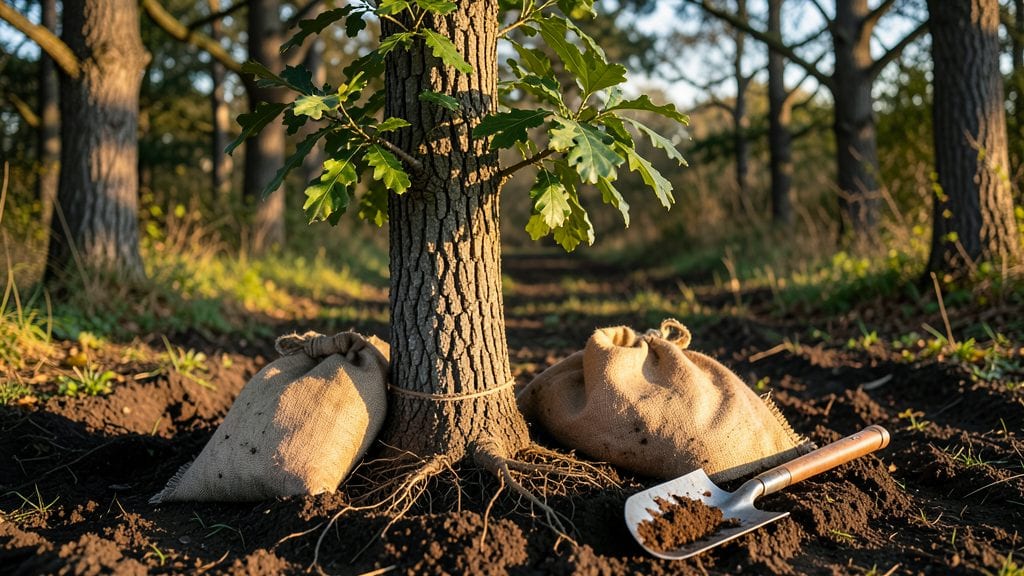
Transplanting a 12-foot oak tree isn’t just gardening—it’s a high-stakes balancing act between patience and precision. I’ve watched oaks recover from moves that looked impossible, but I’ve also seen them decline when timing or technique faltered.
The difference often comes down to understanding when to dig, how to protect those hidden roots, and what to do in the weeks after the move.
This isn’t a project for impulsive weekend warriors. You’ll need the right tools—a sharp spade, burlap, root stimulator, and a wheelbarrow for hauling soil—plus a clear plan for the tree’s new home. The soil must match the oak’s needs, and the timing?
Late fall or early spring, when the tree is dormant but not stressed by heat or cold. Skip these steps, and even a sturdy oak can struggle to bounce back.
📚 In This Guide
- What you need
- Instructions
- Tips and common mistakes
- Wrapping up and next steps
What you need
- ● Shovel or spade: A heavy-duty digging shovel (24–30 inches wide) for excavating the root ball.
- ● Pruning shears or loppers: Bypass pruners (for fine cuts) and loppers (20+ inches) (for thicker branches).
- ● Root pruning saw: A hand saw with a fine-tooth blade (for trimming stubborn roots).
- ● Wheelbarrow or tarp: A large-capacity wheelbarrow (or sturdy tarp) to transport soil and the root ball.
- ● Burlap or root ball wrap: 100% natural jute burlap (4–6 feet wide) to secure the root ball.
- ● Stakes and strong twine: 4–6 wooden or metal stakes (3–4 feet tall) and 100+ feet of twine for temporary support.
- ● Hose with nozzle: A soaker hose or adjustable nozzle for deep watering.
- ● Garden fork: For loosening compacted soil around the new planting hole.
- ● Gloves and safety gear: Heavy-duty work gloves, safety goggles, and closed-toe shoes.
- ● Root stimulator: A mycorrhizal inoculant or rooting hormone gel to boost survival.
- ● Mulch: 3–4 inches of organic mulch (wood chips or straw) to retain moisture.
- ● Tree strap or nylon rope: For lifting the root ball if it’s too heavy.
- ● Soil amendment: Compost or peat moss to improve drainage in the new hole.
- ● Tree spray (fungicide): Copper-based fungicide to prevent disease post-transplant.
Step-by-step instructions for transplanting a 12-Foot oak tree
Transplanting a young oak isn't just possible—it's rewarding with the right prep.
Dig the New Hole and Prepare the Site
Choose a location with similar sunlight and soil conditions as the original site. The new hole should be twice as wide as the oak's root ball but only as deep as the root system—not deeper. I always dig the hole a few days ahead to let the soil settle and eliminate air pockets.
Test the soil pH with a kit—oaks prefer slightly acidic to neutral (6.0-7.5). If your soil is heavy clay, mix in 2-3 inches of compost over the bottom of the hole to improve drainage. Avoid fresh manure or rich soil, which can burn roots and encourage top-heavy growth.
Dig Around the Root Ball and Lift the Tree
Start digging a circular trench around the tree, 12-18 inches away from the trunk, using a sharp spade or trenching tool. Go deeper as you near the roots—you want to cut a clean, vertical slice through the soil. For a 12-foot oak, this means a root ball at least 2 feet in diameter at the base.
Once you’ve encircled the tree, carefully insert a tree spade (or a flat shovel) under the root ball and lift gently. If the root ball resists, wiggle the spade side to side to loosen it. Wrap the root ball in burlap or a tree transplant sack to protect roots during transport. Keep the tree upright and water the root ball lightly every 30 minutes during transport to prevent drying.
Position and Plant the Oak Tree
Lower the oak into the prepared hole, ensuring the top of the root ball sits 2-3 inches above ground level. This prevents soil from settling and smothering the trunk. Use a level to check that the tree stands upright—oaks grow straight, and tilting now creates structural weaknesses later.
Backfill the hole with the native soil you removed, tamping down every 6 inches to eliminate air pockets. Avoid compacting too firmly, as this restricts root growth. Once the hole is 80% filled, create a berm (small mound) of soil around the base to direct water toward the roots during watering.
Water and Mulch for Recovery
Water the tree deeply immediately after planting—10-15 gallons for a 12-foot oak—to settle the soil and eliminate air gaps. Continue watering every other day for the first two weeks, then twice weekly for the next month, providing 5-10 gallons per watering. You’ll know it’s enough when water drains 6-8 inches deep into the soil.
Apply 3-4 inches of mulch (wood chips or shredded bark) over the root zone, keeping it 6 inches away from the trunk to prevent rot. Mulch retains moisture, regulates soil temperature, and suppresses weeds. Replenish mulch annually to maintain coverage.
Stake and Protect for Long-Term Stability
Use two sturdy stakes, placed opposite each other about 18 inches from the trunk, and secure the tree with soft tree ties (not wire or nylon). The goal is to allow some movement—no more than 1-2 inches—so the tree strengthens its own trunk. Check ties monthly and loosen as the tree stabilizes over 12-18 months.
Install a tree guard (metal or plastic) around the base to deter rodents and protect the trunk from lawn equipment. If transplanting in late spring or summer, apply anti-transpirant spray to reduce stress. Monitor the tree closely for the first season—yellowing leaves or wilting are signs of overwatering or poor drainage.
Tips & tricks for transplanting a 12-Foot oak tree
A few strategic moves will make all the difference when moving a mature oak. These are the lessons I learned after watching several trees struggle—and thrive—after transplanting.
Timing is Everything: The best time to transplant is during the tree's dormant season—late fall or early spring. This gives roots time to establish before the stress of new growth. If you must transplant in summer, do it on an overcast day to reduce water loss. I once transplanted in July and lost a tree because the roots couldn't keep up with the heat demand.
Root Ball Protection: The 2-foot diameter root ball is critical—don't skimp on size. Use a tree spade to cut cleanly and avoid tearing roots. After lifting, wrap the root ball in burlap or a transplant sack, then secure it with rope. This keeps roots intact and prevents drying during transport. I've seen root balls collapse when not properly supported, which can kill the tree.
Soil Preparation Matters: In Step 1, when mixing 2-3 inches of compost into heavy clay, consider adding a handful of perlite or coarse sand to improve drainage further. Oak roots need oxygen, and compacted soil suffocates them. I've had better survival rates when I pre-moisten the amended soil before planting—it helps roots establish faster.
Watering Strategy: The 10-15 gallons of water immediately after planting isn't just about settling soil—it's about signaling to roots that it's safe to start growing. For the first two weeks, water every other day, but check soil moisture by sticking your finger 6 inches deep. If it's dry, water more frequently. I've seen trees wilt because people assumed "every other day" meant exactly 48 hours—soil conditions vary wildly.
Pro Tips for Transplant A 12 Foot Oak Tree
- A few strategic moves will make all the difference when moving a mature oak.
- Timing is Everything: The best time to transplant is during the tree's dormant season—late fall or early spring.
- Root Ball Protection: The 2-foot diameter root ball is critical—don't skimp on size.
Frequently asked questions
Got questions about transplanting a 12-foot oak tree? You’re not alone—this process can feel overwhelming! Below, we’ve answered the most common concerns to help you feel confident before diving in.
When is the best time of year to transplant a 12-foot oak tree?
The ideal window is late fall or early spring (November–March in most climates). Avoid transplanting during extreme heat, drought, or frost, as these stress the tree. Oaks are particularly sensitive—never transplant in summer, as the risk of transplant shock skyrockets. If you must move it outside this window, prioritize a consistent watering schedule and shade protection.
Can I transplant a 12-foot oak tree myself, or should I hire a pro?
Transplanting a tree this size is physically demanding and requires precision. If you’re comfortable with heavy lifting, digging, and operating machinery (like a skid-steer loader), you can DIY—but hire professionals if:
- The tree is near power lines, foundations, or slopes.
- You lack experience with root ball handling or pruning.
- Your oak is mature (over 20 years old) or valued at $1,000+.
Pros also have access to specialized tools (e.g., root pruning saws, air spades) that improve survival rates.
How often should I water my oak tree after transplanting?
Water deeply 2–3 times per week for the first year, soaking the root ball (1–2 inches of water per application). After that, taper to once a week in dry spells. Use a soaker hose or drip irrigation to avoid wetting leaves (which promotes disease). Mulch heavily (3–4 inches) to retain moisture—just keep mulch 6 inches away from the trunk.
Will my oak tree survive the transplant, or should I consider alternatives?
Survival rates drop with size—expect 60–80% success for a 12-foot oak if done correctly. If the tree is not critical (e.g., it’s blocking a driveway but isn’t a heritage specimen), consider:
- Root pruning first: Gradually trim roots over 2–3 years to reduce stress before moving.
- Removal and replacement: Plant a smaller oak sapling in the new location and let it grow.
- Consult an arborist: They can assess if the tree’s health or location makes transplanting risky.
Oaks are resilient, but patience is key—don’t expect full recovery for 2–3 years.
What are the signs my transplanted oak tree isn’t recovering?
Watch for these red flags in the first 6–12 months:
| Symptom | Likely Cause | Action |
|---|---|---|
| Yellowing leaves (chlorosis) | Nutrient deficiency or root damage | Test soil pH; fertilize with iron or chelated iron. |
| Wilting or drooping branches | Underwatering or transplant shock | Water immediately; check for root rot. |
| No new growth by spring | Severe root trauma or disease | Consult an arborist—tree may need corrective pruning. |
If you spot these issues, act fast—oaks can decline rapidly if stressed.
Wrapping up and next steps
Transplanting a 12-foot oak tree is a rewarding challenge that requires patience, preparation, and care—but with the right steps, your tree can thrive in its new home! 🌳 Remember, the key is timing, proper root care, and post-transplant support to give your oak the best shot at survival.
Now that you’re armed with knowledge, take that next step: schedule your transplant on a cool, cloudy day and gather your tools. Your green thumb is ready—let’s make it happen!