
Pruning
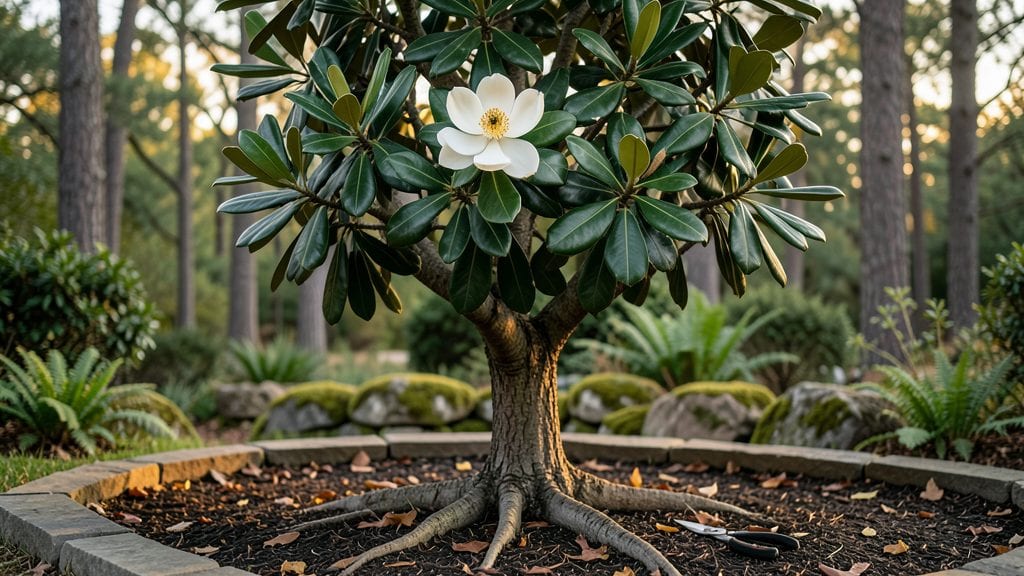
Mastering the magnolia tree growth you crave—through frost and scorching summers—begins with the right conditions, and I’ve learned which mistakes to sidestep. My first Southern magnolia nearly died from overwatering, but now it’s a 12-foot showstopper with glossy leaves and fragrant blooms that last from spring to summer.
The secret lies in mimicking its native habitat: well-draining soil, morning sun, and a spot where roots stay cool but leaves bask in warmth.
You’ll need acidic, loamy soil (think pine needles mixed with compost), a location with at least 6 hours of sunlight, and patience—these trees grow 1-2 feet per year when happy. Star magnolias are frost-hardier and bloom earlier, while Southern magnolias tolerate humidity but need winter protection in colder zones.
Prune only after flowering to avoid removing next year’s buds, and mulch heavily to shield roots from temperature swings.
By summer, you’ll see deep green, leathery leaves and the first hints of those iconic blooms—either cup-shaped Southern magnolia flowers or star-shaped Star magnolia blossoms. The real magic happens in winter when other trees shed, but your magnolia stands tall, its evergreen foliage providing year-round structure.
With the right care, it’ll outlive you and become a neighborhood landmark.
Works for USDA Zones 4-9, though Southern magnolias prefer Zones 7-10. Here’s how to troubleshoot slow growth or yellowing leaves—because even the toughest trees need a little help sometimes.
📚 In This Guide
- What you need
- Instructions
- Tips and common mistakes
- Wrapping up and next steps
What you need
- ● Magnolia tree: Choose a frost-resistant variety (e.g., Magnolia × soulangeana, Magnolia grandiflora, or Magnolia stellata).
- ● Size: Bare-root (1–3 gallons) or container-grown (5–15 gallons) for mature trees.
- ● Planting supplies: High-quality well-draining soil mix (50% native soil + 50% compost or peat moss).
- ● Organic mulch (3–4 inches of pine bark, wood chips, or shredded leaves).
- ● Slow-release fertilizer (10-10-10 or 8-3-9 ratio, 1 lb per 100 sq ft).
- ● Pruning tools: Sharp bypass pruners (for small branches, ¼–¾ inch diameter).
- ● Loppers (for medium branches, ¾–2 inches diameter).
- ● Pruning saw (for thick branches, 2+ inches diameter).
- ● Disinfectant (70% isopropyl alcohol or bleach solution to sterilize tools).
- ● Safety gear: Gloves (gardening or heavy-duty for thorns).
- ● Safety glasses (to protect from debris).
- ● Tree stakes (for young trees in windy areas, 2–3 stakes per tree).
- ● Tree ties (soft fabric or rubber to secure stakes without damaging bark).
- ● Frost cloth (for young trees in Zone 6 or colder during late spring/early fall).
- ● Soil moisture meter (to monitor watering needs, especially in drought-prone areas).
- ● Epsom salt (1 tbsp per gallon of water, monthly in spring for magnesium boost).
Step-by-step guide to cultivating a thriving magnolia tree
Here's how to nurture a magnolia's natural resilience and stunning seasonal displays.
Select the Right Location for Planting
Magnolias thrive in partial shade to full sun, but their frost resistance improves with morning sunlight and afternoon shade. Choose a spot with well-draining soil—they hate soggy roots. I dig a hole twice as wide as the root ball but only as deep, since planting too deep suffocates the roots. The top of the root ball should sit 1-2 inches above ground level to prevent waterlogging during heavy rains.
Test your soil's drainage by digging a 6-inch deep hole and filling it with water. If it drains within 30 minutes, your site is ideal. If not, amend the soil with 2-3 inches of compost mixed into the native soil before planting. Magnolias establish best when planted in early spring or fall, giving roots time to settle before extreme temperatures.
Plant with Care to Ensure Strong Root Development
Gently remove the tree from its container and loosen any circling roots—these will strangle the plant if left intact. Place the magnolia in the hole so the root flare (where roots meet the trunk) sits slightly above ground level. Backfill with native soil mixed with compost, tamping lightly every 2 inches to eliminate air pockets. Water deeply until the soil is evenly moist to a depth of 12 inches.
Mulch the base with 3-4 inches of organic mulch, keeping it 6 inches away from the trunk to prevent rot. I use pine straw or shredded bark because it breaks down slowly while retaining moisture. Avoid piling mulch against the trunk—this creates a moist environment that invites fungal diseases. After planting, water once a week for the first month to encourage root establishment.
Water and Fertilize for Optimal Growth
Young magnolias need deep, infrequent watering—1-1.5 inches per week—to develop strong roots. Water at the base of the tree, avoiding the foliage to prevent fungal diseases. You'll know you're watering correctly when the soil feels moist 6 inches down but not soggy. Overwatering is the fastest way to kill a magnolia, so always check before adding more.
Fertilize in early spring with a balanced, slow-release fertilizer (10-10-10 or similar). Apply half the recommended dose the first year to avoid burning tender roots. Scatter the granules evenly in a circle around the drip line (the edge of the canopy), then water deeply to activate the nutrients. Repeat in late summer for a second feeding. Magnolias are slow growers, so don’t rush—patience here means decades of reliable blooms.
Prune Strategically for Health and Beauty
The best time to prune is late winter or early spring, just before new growth begins. Remove dead, diseased, or crossing branches first—these compete with healthy growth. Cut back to the collateral bud (the one facing outward) to encourage an open, airy canopy. Avoid heavy pruning in fall, as new growth won’t harden off before winter and may freeze.
Shape the tree lightly by thinning out 10-15% of the branches to improve airflow and sunlight penetration. Never remove more than 25% of the canopy in a single year—magnolias are sensitive to aggressive pruning. After pruning, apply a fungal preventative spray (like copper sulfate) to protect fresh cuts. You’ll see stronger blooms within 2-3 years of consistent, gentle pruning.
Tips & tricks for perfect magnolia tree growth
Took me years to figure out these subtle details that make all the difference with magnolias—here's how to avoid common pitfalls and nurture a tree that thrives through seasons.
Location Nuance: While magnolias tolerate partial shade, their frost resistance actually improves when they receive morning sun and afternoon shade. This means planting on the east side of buildings or under deciduous trees that lose leaves in winter creates the perfect microclimate. The 30-minute drainage test is critical—if water pools beyond that time, you'll need to create raised beds or amend with additional compost to prevent root rot.
Planting Precision: The root flare should never be buried—it must sit slightly above ground level to prevent suffocation. I've seen many gardeners plant too deep, which leads to girdling roots that strangle the tree over time. When backfilling, tamp every 2 inches to eliminate air pockets, but don't compact the soil too firmly—roots need room to breathe and expand naturally.
Watering Wisdom: The 1-1.5 inches per week guideline assumes average rainfall. In drought conditions, you'll need to supplement with deep watering at the base—never overhead. I check moisture by inserting a screwdriver 6 inches deep; if it slides in easily, you're overwatering. For newly planted trees, that weekly watering for the first month is non-negotiable—it establishes the critical root network that determines long-term survival.
Pruning Strategy: The 10-15% thinning rule prevents shock while maintaining airflow. When removing branches, always cut back to the outward-facing collateral bud—this encourages the canopy to grow outward rather than inward. I've learned the hard way that fall pruning creates vulnerable new growth that freezes—always wait until late winter or early spring when the tree is still dormant but just beginning to wake up.
Pro Tips for Magnolia Tree Growth
- Took me years to figure out these subtle details that make all the difference with magnolias—here's how to avoid common pitfalls and nurture a tree that thrives through seasons.
- Location Nuance: While magnolias tolerate partial shade, their frost resistance actually improves when they receive morning sun and afternoon shade.
- Planting Precision: The root flare should never be buried—it must sit slightly above ground level to prevent suffocation.
Frequently asked questions
Got questions about nurturing your magnolia tree’s growth? You’re not alone! Here are answers to the most common queries—from frost survival to pruning tips—to keep your canopy thriving year-round.
How cold can magnolia trees tolerate before frost damage occurs?
Most magnolia varieties handle light frosts down to 15–20°F (-9 to -7°C), but tender species (like Magnolia grandiflora) may suffer leaf scorch below 20°F (-7°C). Evergreen types often recover, but deciduous magnolias may drop buds. Mulch heavily and wrap young trees in burlap for extra protection!
How long does it take for a magnolia tree to reach maturity?
Patience is key! Dwarf varieties (like ‘Little Gem’) mature in 5–10 years, while standard magnolias can take 15–25 years to reach full height (30–100 ft). Focus on annual pruning to shape growth and encourage dense foliage.
When is the best time to prune a magnolia tree to avoid killing blooms?
Prune right after flowering (late spring) to avoid cutting off next year’s buds. Avoid heavy pruning in fall/winter—magnolias bloom on old wood. For shaping, remove dead or crossing branches first, then trim selectively.
Why are my magnolia leaves turning yellow or brown?
Yellowing often signals overwatering or poor drainage, while brown edges may mean underwatering or frost burn. Check soil moisture (top 2–3 inches should be dry) and ensure 6+ hours of sunlight daily. Fungal issues? Use copper fungicide if needed.
Can I grow a magnolia tree in a container, or is it better planted in the ground?
Yes! Dwarf varieties (like ‘Black Tulip’) thrive in 15–20 gallon containers with well-draining soil. Repot every 2–3 years and move indoors if temps drop below 25°F (-4°C). For long-term health, though, in-ground planting is ideal—roots love deep, loamy soil!
Wrapping up and next steps
Growing a thriving, frost-resistant magnolia tree is all about understanding its needs and giving it the right care—from pruning to soil prep and seasonal protection. With patience and the right techniques, you’ll enjoy its stunning blooms and lush canopy for years to come! 🌿✨
Next steps:
- Pick your favorite magnolia variety and start planning your planting.
- Mark your calendar for seasonal tasks—like pruning in late winter or protecting against early frost.
- Join gardening communities to share tips and celebrate your progress!