
Trees
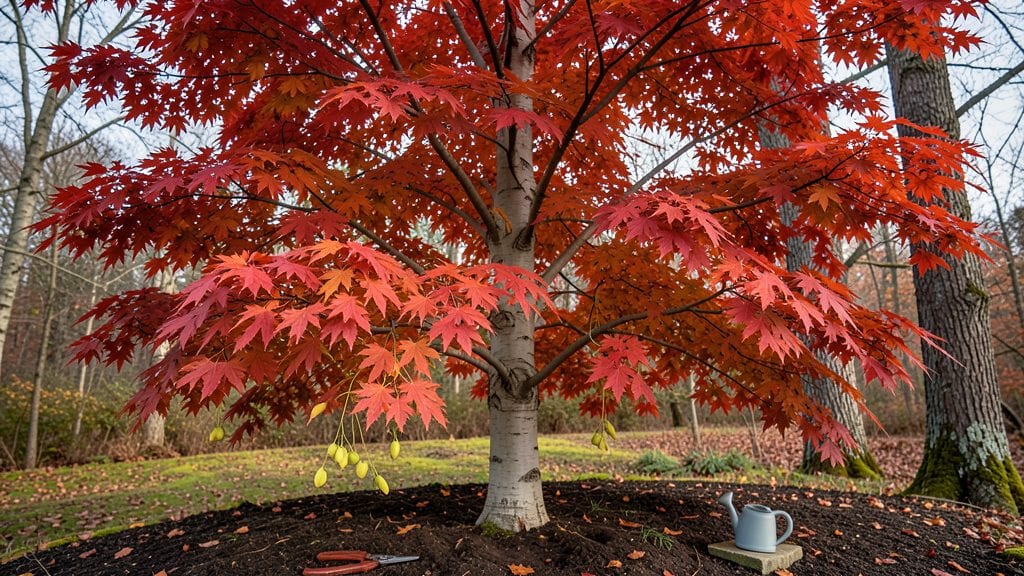
Pennsylvania's forests hold some of the most iconic maple trees in the country, and planting your own native varieties means tapping into that same hardy heritage. 🌳 The Sugar Maple and Red Maple aren't just beautiful—they're the backbone of Pennsylvania's landscape, offering brilliant fall color, shade for summer afternoons, and even syrup potential if you're ambitious.
These trees thrive in PA's climate when you match them with the right soil, sunlight, and care routine.
Most native maples prefer well-drained soil with a slightly acidic pH, which you'll find naturally in many Pennsylvania forests. They handle full sun to partial shade, making them adaptable to both rural acres and urban streets.
The key is choosing the right variety for your space—Sugar Maples grow large (up to 70 feet) while Red Maples stay slightly more compact, perfect for smaller yards. Both varieties are disease-resistant when planted in the right conditions.
You'll see rapid growth in the first few years, with those signature lobed leaves emerging bright green in spring and turning fiery red or gold by fall. These trees also provide year-round benefits: summer shade, winter structure for wildlife, and that unmistakable maple aroma when the sap starts flowing.
The biggest challenge? Giving them enough space to develop their strong root systems—something many urban plantings overlook.
Whether you're planting a single shade tree or a small grove, Pennsylvania's native maples deliver beauty, utility, and resilience. The secret is starting with healthy saplings from local nurseries and giving them consistent care during their first critical years. Ready to grow your own piece of Pennsylvania forest?
📚 In This Guide
- What you need
- Instructions
- Tips and common mistakes
- Wrapping up and next steps
What you need
- ● Maple tree seedlings or saplings: 1–3 native Pennsylvania varieties (e.g., Sugar Maple Acer saccharum, Black Maple Acer nigrum, or Red Maple Acer rubrum). Choose 1–2 year-old trees from a local nursery for best adaptation.
- ● Planting site: Sunlight: Full sun to partial shade (6+ hours of sunlight daily). Soil: Well-draining, slightly acidic (pH 5.0–7.0), and rich in organic matter. Space: 30–50 feet apart for mature trees (account for root spread!).
- ● Basic tools: Shovel or digging spade (for planting holes). Garden gloves (to protect your hands). Watering can or hose (with adjustable nozzle). Mulch (3–4 inches of wood chips or shredded bark).
- ○ Fertilizer (optional but recommended): Balanced 10-10-10 fertilizer or compost (apply at planting and annually in spring).
- ● Soil test kit (to check pH and nutrient levels).
- ● Tree stakes and ties (for young saplings in windy areas).
- ● Drip irrigation system (for consistent watering during dry spells).
- ● Pruning shears (for shaping and maintenance).
- ● Tree guards or cages (to protect from deer or small wildlife).
- ● Sap tapping kit (if harvesting syrup: spile, bucket, and tubing).
How to select and plant native maple trees in Pennsylvania
Here’s my go-to approach for choosing and establishing hardy maple varieties that thrive in PA’s climate.
🌱 Step 1: Choose the Right Maple Variety for Your Needs
Pennsylvania’s native maples include sugar maples (Acer saccharum), red maples (Acer rubrum), and silver maples (Acer saccharinum). For syrup production, sugar maples are the gold standard—their sap yields the sweetest harvest. If you want shade and year-round interest, red maples offer brilliant fall color and adapt well to urban areas.
Check your USDA hardiness zone (PA ranges from 5b-7a). Sugar maples prefer zones 3-8, while red maples handle zones 3-9. Silver maples grow faster but have weaker wood—best for wet soil or fast shade. I always plant sugar maples for syrup and red maples for curb appeal.
☀️ Step 2: Pick the Perfect Planting Spot
Maples need full sun to partial shade (at least 6 hours of direct light daily). In hot inland PA areas, afternoon shade helps prevent leaf scorch. Avoid low spots where water pools—maples hate soggy roots. Test your soil: ideal pH is 6.0-7.5, but maples tolerate 5.0-8.0 if drained well.
Space saplings 30-50 feet apart for mature size (sugar maples reach 50-75 feet tall). If planting near a house, red maples work better—they’re smaller and less invasive. I dig a hole twice as wide as the root ball but no deeper. Loosen the roots gently if they’re circling.
💧 Step 3: Plant and Water for Strong Establishment
Place the tree so the top of the root ball sits 1-2 inches above ground level—settling soil will bury it over time. Backfill with native soil (no amendments) and water deeply to remove air pockets. Mulch with 2-3 inches of wood chips, keeping mulch 6 inches away from the trunk to prevent rot.
Water 2-3 times per week for the first year, aiming for 1-2 gallons per inch of trunk diameter. Deep watering encourages roots to grow downward. Avoid overhead sprinklers—they spread disease. In PA’s winters, young trees need 10-15 inches of mulch to insulate roots from freeze-thaw cycles.
✂️ Step 4: Prune and Care for Long-Term Health
Prune in late winter or early spring before buds swell. Remove dead, diseased, or crossing branches first. Thin the canopy to improve airflow—maples are prone to fungal issues in dense foliage. Never remove more than 25% of the canopy in one season. I use clean, sharp pruners and seal larger cuts with pruning sealant.
Fertilize only if growth is slow after 2-3 years. Use a balanced 10-10-10 fertilizer in early spring. Over-fertilizing causes weak wood. Watch for aphids or scale insects—spray with horticultural oil if needed. Sugar maples may develop anthracnose fungus—remove infected leaves promptly to prevent spread.
Tips & tricks for perfect maple tree planting in Pennsylvania
Confession: I planted my first sugar maple in a low spot near a drainage ditch—it struggled for years. Here's what I learned the hard way about growing thriving maples in PA's climate.
Soil Drainage is Non-Negotiable: In Step 2, when choosing your planting spot, test drainage by digging a hole and filling it with water. If it doesn't drain within 24 hours, find another location. Maples absolutely hate soggy roots—this is the #1 reason they fail in PA's variable climate. I now always look for spots where water runs off within minutes, even if it means planting on a slight slope. The 6 hours of sunlight requirement is important, but proper drainage is even more critical.
Root Ball Position Matters: When planting in Step 3, that 1-2 inch elevation above ground level is crucial. I used to bury the root ball completely, thinking it would help with stability. What actually happens is the trunk buries itself over time, creating a weak point where diseases can enter. Use a level to check—your root flare (where roots meet trunk) should be visible above soil level after settling.
Winter Mulching Strategy: For those PA winters, the 10-15 inches of mulch recommendation in Step 3 is a game-changer. I used to think more mulch was better, but that actually smothers the roots. Instead, create a donut shape with mulch—pile it higher on the north and west sides where cold winds hit hardest, while keeping it thinner on the south and east. This protects roots from freeze-thaw cycles without suffocating them.
Pruning Timing Secret: The late winter/early spring pruning window in Step 4 is perfect for PA's climate. I learned this after accidentally pruning in summer and watching my maple develop fungal issues from the fresh cuts. If you must prune at other times, do it on a dry day when temperatures are above freezing—never when rain is forecasted. And always sterilize your pruners with rubbing alcohol between cuts to prevent spreading disease.
Pro Tips for Maple Trees In Pennsylvania
- Confession: I planted my first sugar maple in a low spot near a drainage ditch—it struggled for years.
- Soil Drainage is Non-Negotiable: In Step 2, when choosing your planting spot, test drainage by digging a hole and filling it with water.
- Root Ball Position Matters: When planting in Step 3, that 1-2 inch elevation above ground level is crucial.
Frequently asked questions
Got questions about growing, tapping, or enjoying Pennsylvania’s maple trees? Here are some of the most common queries—plus straightforward answers to help you thrive!
What’s the best time of year to tap maple trees in Pennsylvania?
Tap maple trees when temperatures fluctuate between 30–50°F during the day (typically late February to early April in PA). Use a diamond drill bit to avoid damaging the tree, and aim for sap flow when nights are cold but days warm up. Pro tip: Check local forecasts—consistent freeze-thaw cycles are key!
How do I identify sugar maples vs. other native PA maples?
Sugar maples (Acer saccharum) have opposite branching, 5-lobed leaves with serrated edges, and bright red/orange fall foliage. Compare them to red maples (3-lobed leaves, no serrations) or silver maples (asymmetrical leaves). Bonus: Only sugar maples produce high-quality syrup—so leaf shape matters!
Why isn’t my maple tree producing sap this year?
Sap flow can fail due to drought stress, tree age (young/small trees yield less), or improper tapping. Ensure your tree is at least 10–12 inches in diameter and tap only 1–2 spiles per tree. If sap is slow, try warming the bucket slightly or check for pests/disease (like maple wilt).
How much syrup can I expect from a single Pennsylvania maple tree?
A healthy sugar maple (30+ years old) yields 1–2 gallons of sap per tap, which boils down to ¼–½ pint of syrup. For a full gallon of syrup, you’ll need 40 gallons of sap—so tap 20+ trees or invest in a reverse osmosis system to speed up processing. Fun fact: PA’s hardwood forests make it a top syrup state!
Are there shade-tolerant maple alternatives if sugar maples struggle in my yard?
Yes! Try Norway maples (fast-growing, shade-loving) or Japanese maples (dwarf varieties for small spaces). For syrup potential, Black maples (similar to sugar maples) are a great backup. Just note: Norway maples are invasive—opt for ‘Columnare’ or ‘Crimson King’ cultivars instead.
Wrapping up and next steps
Pennsylvania’s maple trees offer a perfect blend of sweet rewards and natural beauty, whether you’re dreaming of golden syrup or a shady backyard retreat.
From the hardy Sugar Maple to the vibrant Red Maple, these native varieties thrive in PA’s climate—and with the right care, they’ll reward you for decades. 🌳
Ready to plant your own? Start small: research the best variety for your space, gather your tools, and take that first step toward a sweeter, shadier future. Your future maple grove awaits!