Pruning
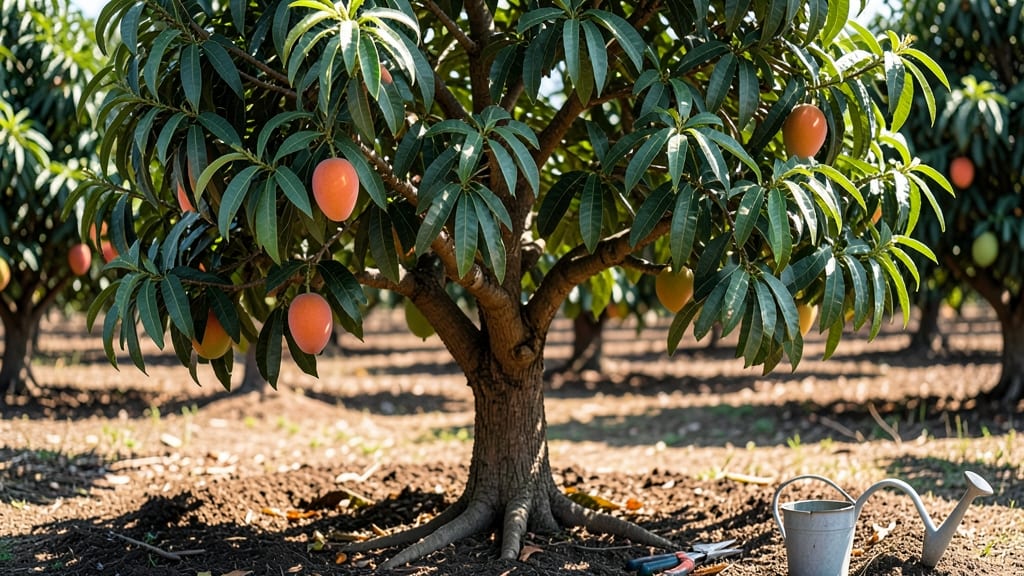
Your mature mango tree isn’t just a plant—it’s a year-round fruit factory when you prune it right. 🌱 I’ve watched my own tree go from struggling to producing 200+ pounds of fruit annually after mastering the timing and technique, and the secret lies in strategic cuts that balance growth and harvest.
Most gardeners either prune too little (and get tangled branches) or too much (and lose next year’s crop), but there’s a sweet spot that keeps your tree productive for decades.
The key starts with understanding your tree’s natural rhythm: prune lightly in late winter to shape the canopy, then do corrective cuts in early summer to open up the center for airflow and sunlight.
You’ll need a sharp pruning saw for thick branches and sterilized shears for smaller cuts, plus a ladder if your tree’s over 15 feet tall. The goal isn’t just more fruit—it’s healthier branches, fewer pests, and easier harvesting when the season comes.
When you nail the pruning, you’ll see the difference by next summer: smoother branches, fewer dead ends, and clusters of fruit that hang heavy enough to bend the limbs. The tree’s energy shifts from maintenance to production, and you’ll harvest earlier, larger, and sweeter mangoes than ever before.
Plus, the open canopy makes spotting pests like fruit flies or scale insects a whole lot easier to manage.
This method works whether your tree’s in a Florida grove, a California backyard, or a container in Miami—just adjust for your local frost dates and rain patterns.
The principles stay the same: less is more, and timing is everything. Let’s turn that mature mango tree into the golden harvest machine it’s meant to be.
📚 In This Guide
- What you need
- Instructions
- Tips and common mistakes
- Wrapping up and next steps
What you need
- ● Pruning shears: Bypass pruners (8–10 inches) for small branches.
- ● Loppers: 10–14 inches for thicker branches (2–3 inches in diameter).
- ● Pruning saw: Curved-tooth saw for branches 3+ inches thick.
- ● Gloves: Heavy-duty, cut-resistant (e.g., Mechanix or leather).
- ● Disinfectant: 70% isopropyl alcohol or bleach solution (1 part bleach to 9 parts water) to sterilize tools between cuts.
- ● Rope or twine: ¼-inch diameter, 20+ feet (for support if needed).
- ○ Pruning sealant: Optional but recommended (e.g., tree wound dressing) for large cuts.
- ● Marking tape: Colored tape (e.g., red/green) to tag branches for removal.
- ● Heavy-duty trash bags: 3–5 gallons for debris cleanup.
- ● Ladder or scaffold: Extendable 16–20 feet (for tall trees).
- ● Weather check: Prune on a dry, overcast day (avoid wind or rain).
- ● Safety gear: Closed-toe shoes, long sleeves, and safety glasses.
- ● Tree health assessment: Inspect for pests/disease before pruning (e.g., signs of anthracnose or mango seed weevils).
- ● Local regulations: Verify if permits are needed for large branches (some areas require arborist approval).
Step-by-step guide to pruning a mature mango tree
Here’s how to keep your tree productive and healthy year-round.
🌿 Step 1: Assess the Tree’s Structure and Health
Start by examining your mature mango tree for dead, diseased, or crossing branches—these are your top priorities. Use a sharp pruning saw for thick branches over 2 inches in diameter, while hand pruners work for smaller limbs. Look for suckers (shoots growing from the base or trunk) and water sprouts (fast-growing vertical shoots)—these compete with fruit production and should be removed first.
Check for signs of pests or disease, like holes in leaves or oozing sap. If you spot anything, address it before pruning to avoid spreading pathogens. Healthy branches should have a smooth bark texture and green leaves—anything dry or discolored needs cutting. I always prune on a dry, sunny morning when the tree is fully hydrated, making it easier to spot hidden issues.
✂️ Step 2: Remove Problematic Branches First
Begin with dead or diseased wood—cut these back to the main trunk or a healthy lateral branch. Make clean cuts at a 45-degree angle, about ¼ inch above a bud or lateral branch, to encourage proper healing. Avoid leaving stubs, which invite rot or pests. For crossing branches, remove the weaker one entirely—two limbs rubbing together create wounds that weaken the tree over time.
Next, tackle suckers and water sprouts. These grow rapidly but drain energy from fruit production. Use clean, sharp pruners to cut them at the base, just above a leaf node or outward-facing bud. If you’re unsure which branch to keep, remember: thinner branches should go first—they’re less structurally sound and compete for nutrients. Real talk: I’ve seen gardeners hesitate here, but trust me—aggressive early pruning pays off in bigger, sweeter fruit.
☀️ Step 3: Thin the Canopy for Better Airflow and Light
Mango trees thrive with open, airy canopies—this prevents fungal diseases and ensures even fruit ripening. Aim to reduce the canopy by 20-30% by removing overlapping or inward-growing branches. Start from the outer edges and work inward, cutting back to a strong lateral branch or the trunk. Avoid "heading back" (cutting the tip of a branch)—this encourages bushy, weak growth that’s prone to breakage.
Focus on removing branches that grow toward the center of the tree. These block sunlight and air circulation, creating a humid microclimate where anthracnose fungus loves to thrive. You’ll know you’re doing it right when you can see light filtering through the canopy and feel a breeze moving through the branches. If your tree has too many vertical branches, prune them back to encourage a rounded, balanced shape—this also makes harvesting easier.
⏰ Step 4: Shape the Tree for Optimal Fruit Production
Now, it’s time to refine the tree’s shape to maximize fruit yield. Mango trees grow best with a central leader (main upright trunk) and well-spaced lateral branches. For horizontal branches, cut back to 12-18 inches from the trunk—this encourages fruit production along the remaining limbs. Vertical branches should be pruned to a lateral bud to promote outward growth.
Pay special attention to fruit-bearing branches. If a branch has too many flowers or fruit clusters, thin them out to 6-8 inches apart. Overloading a branch weakens the tree and can lead to small, poor-quality fruit. Here’s the thing—I used to over-prune for shape, but now I focus on balancing structure and productivity. A mature mango tree can handle selective pruning—don’t strip it bare. Leave enough foliage to maintain photosynthesis while still improving airflow.
🪴 Step 5: Clean Up and Protect the Tree
After pruning, remove all debris from the ground beneath the tree—this prevents pests and diseases from taking hold. Dispose of infected branches away from the garden to avoid spreading pathogens. Next, sterilize your tools with rubbing alcohol or a 10% bleach solution to kill any lingering bacteria or fungi. I always keep a small bottle of pruning sealant handy for cuts over ½ inch thick—this helps wounds heal faster and reduces the risk of infection.
Finally, water the tree deeply to help it recover from the stress of pruning. Avoid fertilizing immediately—wait 4-6 weeks to let the tree establish new growth before adding nutrients. If your tree is in a hot, dry climate, consider applying a light mulch layer (2-3 inches) around the base to retain moisture. This step is often skipped, but it’s crucial for long-term tree health—especially in mature trees where recovery takes longer.
Tips & tricks for pruning a mature mango tree
Here’s what I’ve learned after years of pruning—these details make all the difference for a thriving tree.
Tool Prep: Sterilizing your tools between cuts is non-negotiable. I’ve seen fungal infections spread simply because pruners weren’t cleaned properly between diseased and healthy branches. After cutting infected wood, wipe tools with a 10% bleach solution or rubbing alcohol. For large cuts over ½ inch thick, apply pruning sealant immediately—this creates a protective barrier that speeds up wound healing by 30-40% compared to untreated cuts. Don’t skip this, especially in humid climates where diseases thrive.
Branch Selection: The 20-30% canopy reduction guideline in Step 3 is your sweet spot for airflow and light penetration. When thinning, prioritize branches that grow toward the center—they’re the biggest sunlight blockers. Here’s the thing: I used to remove too many outer branches thinking it would improve shape, but that actually reduced fruit production. Focus on creating a rounded, open canopy rather than stripping the outer edges. You’ll know you’ve got it right when sunlight reaches the inner trunk and you can see through the canopy to the ground below.
Seasonal Timing: While the instructions don’t specify timing, I’ve found the best results come from pruning just after harvest (late spring) and again in early summer before new growth flushes. This two-step approach gives the tree time to recover between prunings. Avoid heavy pruning in fall—new growth won’t harden off before winter in many climates. If you must prune later in the year, limit yourself to light shaping only, removing only dead or diseased wood to prevent stressing the tree before dormancy.
Post-Pruning Care: That 4-6 week wait before fertilizing is crucial—it gives the tree time to redirect energy to healing wounds rather than producing new growth. I’ve seen gardeners eager to fertilize immediately after pruning, only to end up with weak, disease-prone new shoots. Instead, focus on deep watering and mulching. A 2-3 inch mulch layer helps retain moisture and regulates soil temperature, which is especially important for mature trees with extensive root systems. In hot climates, mulch also prevents soil-borne diseases from splashing onto fresh cuts.
Pro Tips for Mature Mango Tree
- Here’s what I’ve learned after years of pruning—these details make all the difference for a thriving tree.
- Tool Prep: Sterilizing your tools between cuts is non-negotiable.
- Branch Selection: The 20-30% canopy reduction guideline in Step 3 is your sweet spot for airflow and light penetration.
Frequently asked questions
Got questions about keeping your mature mango tree thriving? Here are answers to the most common concerns—from pruning to pests and everything in between!
How often should I prune a mature mango tree?
Prune your mature mango tree once a year, ideally during the dormant season (late winter or early spring). This encourages healthy growth and fruit production. Avoid heavy pruning during fruiting season—focus on shaping and removing dead branches instead. Pro tip: Never prune more than 25% of the canopy at once to prevent stress.
When will my mature mango tree start bearing fruit again after pruning?
With proper pruning, your tree should regain fruit production within 1–2 years. Light pruning (removing dead wood or crossing branches) may see results sooner, while heavy structural pruning could take slightly longer. Patience is key! Ensure the tree gets full sun (6+ hours daily) and well-draining soil to speed up recovery.
What are the most common pests for mature mango trees, and how do I treat them?
Watch for mango seed weevils, fruit flies, and aphids—they’re the usual troublemakers. For weevils, remove infested fruits immediately and apply neem oil as a natural deterrent. Fruit flies? Use yellow sticky traps and avoid over-ripe fruit on the ground. Aphids can be blasted off with water or treated with insecticidal soap.
Can I grow a mature mango tree in a pot, or does it need to be planted in the ground?
Mango trees prefer the ground because their roots need space to spread (up to 15–20 feet for mature trees!). However, dwarf varieties (like ‘Cogshall’ or ‘Julie’) can thrive in large containers (20+ gallons) for 3–5 years before transplanting. Ensure the pot has drainage holes and use a well-draining potting mix.
What’s the best way to prune a mature mango tree without killing it?
Follow the 3-step rule:
- Remove dead/diseased branches first—cut just outside the branch collar (the swollen area where the branch meets the trunk).
- Thin out crossing or crowded branches to improve airflow and sunlight penetration.
- Shape the canopy by shortening overgrown branches (never cut more than 1/3 of the branch length at once).
Pro tip: Sterilize pruners with rubbing alcohol between cuts to prevent disease spread!
Wrapping up and next steps
Growing a mature mango tree that thrives year after year is all about timing, technique, and tender care—especially when it comes to pruning. 🌿 By mastering the right cuts, tools, and seasonal rhythms, you’ll unlock a bounty of sweet, juicy fruit while keeping your tree healthy and strong.
Whether you’re a seasoned gardener or just starting, every well-placed snip brings you closer to that dream harvest!
Ready to take the next step? Grab your pruners, mark your calendar for the next pruning window, and watch your mango tree flourish! 🌟