
Planting
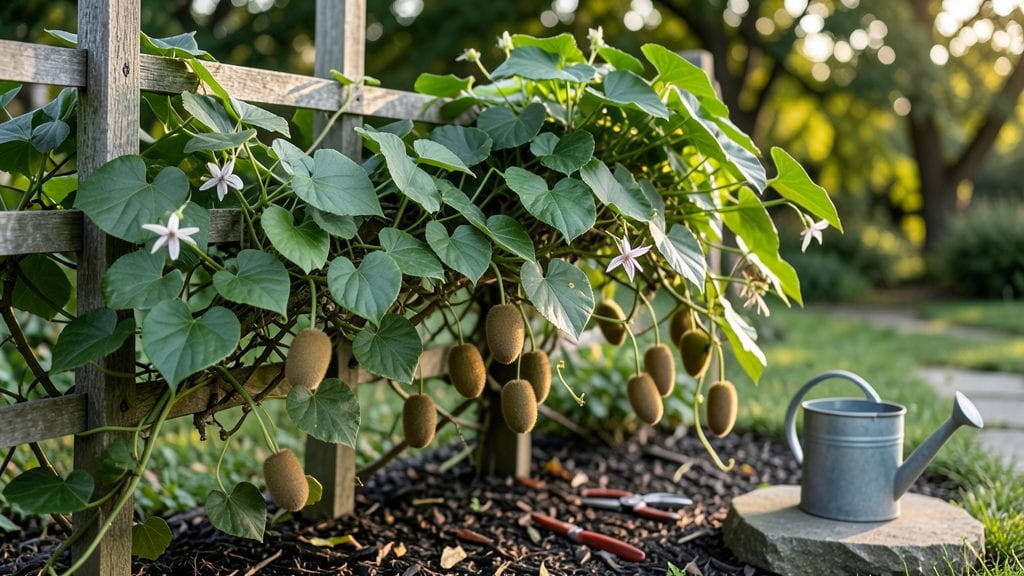
Planting a kiwi tree in the Pacific Northwest means unlocking sweet, tangy fruit from vines that thrive where most gardeners give up. 🌿 The hardy Actinidia arguta varieties like 'Issai' or 'Ken's Red' produce edible fruit without needing a pollinator, while traditional Actinidia deliciosa needs careful site selection and a male-female pair for pollination.
My first attempt with a single female plant left me with empty vines—until I learned the hard way about these critical differences.
You'll need a sunny spot with 6+ hours of light, well-draining soil, and sturdy support for vines that can climb 15-20 feet. The hardy kiwis adapt to cooler climates, while traditional kiwis demand shelter from winter winds.
I've found that trellises with 12-gauge wire work best for training vines, and mulching keeps roots cool in summer. The key is matching the variety to your microclimate—my 'Issai' produces fruit even in partial shade, while my neighbor's Actinidia deliciosa struggles in our zone 7 winters.
After planting, consistent watering for the first year establishes strong roots, and annual pruning in late winter keeps vines productive. You'll see your first fruit in 3-5 years, but the wait pays off with vines that outperform store-bought kiwis in flavor and texture.
The hardy varieties even handle occasional frost better than most fruit trees I've grown. For traditional kiwis, planting male and female vines within 50 feet ensures pollination—something I learned after watching my first female vine set no fruit.
Common challenges include powdery mildew on leaves and birds stealing fruit, but proper spacing and netting solve both. The hardy kiwis resist disease better, making them the best choice for beginners.
Once established, these vines become low-maintenance workhorses that produce fruit for decades. Start with the right variety, and you'll have homegrown kiwis that taste nothing like the grocery store versions.
📚 In This Guide
- What you need
- Instructions
- Tips and common mistakes
- Wrapping up and next steps
What you need
- ● Cold-hardy kiwi plant: Choose a Actinidia arguta (hardy kiwi) or Actinidia kolomikta variety (male and female plants needed for pollination). Start with 1 female vine and 1 male vine (or more for better fruit production).
- ● Well-draining soil: Aim for a mix of 60% topsoil, 30% compost, and 10% perlite or sand (kiwi vines hate soggy roots!).
- ● Organic mulch: 3–4 inches of wood chips, straw, or shredded bark to retain moisture and regulate soil temperature.
- ● Fertilizer: A balanced 10-10-10 or 5-10-10 organic fertilizer (apply 2–3 times per year, spring through early summer).
- ● Support structure: A strong trellis, arbor, or fence (at least 8–10 feet tall) to train the vigorous vines.
- ● Drip irrigation or soaker hose: Kiwi vines need consistent moisture, especially in the PNW’s dry summers.
- ● Garden trowel or spade (for planting).
- ● Pruning shears (sharp, bypass-style for clean cuts).
- ● Gloves (to protect from thorns—kiwi vines are spiky!).
- ● Measuring tape (to space plants 6–8 feet apart).
- ● String or twine (for tying vines to the trellis).
- ● Mycorrhizal fungi (increases root health—mix into planting hole).
- ● Row cover or frost cloth (for young plants in late spring/early fall).
- ● Kiwi vine food (specialized fertilizer with higher potassium for fruiting).
- ● Pest control: Neem oil or insecticidal soap (kiwi vines can attract aphids or spider mites).
- ● Garden journal (to track growth, pruning, and fruiting progress!).
Step-by-step guide for planting cold-hardy kiwi trees
Here's how to establish thriving kiwi vines in your Pacific Northwest garden.
🪴 Step 1: Select and Prepare the Planting Site
Choose a location with full sun exposure (at least 6-8 hours daily) and shelter from strong winds. Kiwi vines need sturdy support, so select a spot near a trellis or fence where they can climb 15-20 feet over time. The soil should be well-draining and slightly acidic, with a pH between 5.5 and 6.5. If your soil is heavy clay, amend it with 2-3 inches of compost and 1 inch of coarse sand to improve drainage.
Test your soil’s moisture retention by digging a 6-inch hole—if water pools or drains extremely slowly, add organic matter to loosen the texture. I always dig a 12-inch-deep trench along the trellis line to bury the vine’s roots horizontally, which encourages a stronger, more established plant. This mimics the vine’s natural growth habit in its native habitat.
🌱 Step 2: Plant the Bare-Root Vine Correctly
Plant your cold-hardy kiwi vine (like 'Issai' or 'Matua') in early spring, after the last frost date but before new growth begins. Soak the bare roots in lukewarm water for 1-2 hours before planting to rehydrate them—this prevents transplant shock. Dig a hole twice as wide as the root ball but no deeper, as kiwi roots are shallow and sensitive to burial.
Position the vine so the crown (where roots meet stem) sits just above soil level—burying it too deep can cause rot, while leaving it exposed risks drying out. Spread the roots outward in the hole, ensuring they’re not twisted or crowded. Backfill with native soil mixed with 1 cup of bone meal for phosphorus, which promotes root development. Water deeply to settle the soil and eliminate air pockets.
☀️ Step 3: Install Support and Train the Vine
Attach the vine to the trellis or fence immediately after planting using soft garden twine or flexible straps—this prevents wind damage and encourages upward growth. Start by securing the main stem at a 45-degree angle to promote branching. Kiwi vines are vigorous climbers, so train the primary shoot along the trellis while pinching back side shoots to 3-4 inches to encourage a stronger central leader.
Mulch the base with 3-4 inches of wood chips or straw, keeping it 6 inches away from the stem to prevent rot. This conserves moisture and regulates soil temperature, which is critical in the Pacific Northwest’s variable climate. Water deeply once a week during the first growing season, ensuring the soil stays consistently moist but not soggy. You’ll know you’re doing it right when the vine produces new leaves within 4-6 weeks—this signals successful establishment.
✂️ Step 4: Prune and Maintain for First-Year Growth
In late winter or early spring of the first year, prune the vine to remove any dead, weak, or crossing branches. Kiwi vines are self-pollinating if planted as a single variety (like 'Issai'), but if using separate male and female plants, ensure they’re within 50 feet of each other for cross-pollination. Cut back any suckers growing from the base to redirect energy into the main vine.
Fertilize lightly in early spring with a balanced 10-10-10 formula, applying ½ cup per vine. Avoid heavy nitrogen, which encourages leafy growth at the expense of fruit. Monitor for pests like aphids or spider mites, which thrive in dry conditions. Spray the undersides of leaves with neem oil if you spot signs of infestation—kiwi vines are sensitive to harsh chemicals, so organic solutions work best.
Tips & tricks for planting cold-hardy kiwi trees
Planting a kiwi vine might seem daunting, but these practical insights will help you avoid common pitfalls and set your vine up for success from day one.
Site Selection Strategy: The 6-8 hours of full sun requirement is non-negotiable—kiwi vines are heavy feeders that need maximum sunlight to produce fruit. I've found that planting near a south-facing fence maximizes sunlight exposure in the Pacific Northwest's often cloudy climate. Also, choose a location where the trellis won't cast shadows on the vine during peak growing hours (10 AM to 4 PM).
Root Preparation Technique: That 1-2 hour soak for bare roots is crucial—it's not just about hydration, but also about helping the roots absorb water through their entire length. I like to add a splash of seaweed extract to the water for extra nutrients during this rehydration phase. After soaking, gently shake off excess water before planting to prevent waterlogging the roots.
First-Year Maintenance: The 4-6 week window for new leaf production is your best indicator of success. If you don't see new growth by week 7, check for three potential issues: insufficient water (soil should be moist 2 inches down), poor drainage (roots may be rotting), or overly competitive weeds (they steal nutrients). A simple soil test can confirm if your pH is still in that critical 5.5-6.5 range.
Long-Term Support System: Don't underestimate the importance of that 15-20 foot trellis height. Kiwi vines grow aggressively—some varieties can reach 30 feet if unchecked. Install your trellis at planting time and use flexible ties that will accommodate the vine's growth without restricting it. I've seen vines break free from rigid supports when they reach maturity, so choose materials that can stretch as the vine grows.
Pro Tips for Plant Kiwi Tree
- Planting a kiwi vine might seem daunting, but these practical insights will help you avoid common pitfalls and set your vine up for success from day one.
- Site Selection Strategy: The 6-8 hours of full sun requirement is non-negotiable—kiwi vines are heavy feeders that need maximum sunlight to produce fruit.
- Root Preparation Technique: That 1-2 hour soak for bare roots is crucial—it's not just about hydration, but also about helping the roots absorb water through their entire length.
Frequently asked questions
Got questions about growing your own kiwi tree in the Pacific Northwest? You're not alone! Here are answers to some of the most common queries to help you get started on your delicious, cold-hardy kiwi adventure.
Can kiwi trees survive the cold winters in the Pacific Northwest?
Varieties like Actinidia arguta (hardy kiwi) and Issai are perfect for the PNW, tolerating temperatures as low as -15°F (-26°C). Just plant them in a sheltered spot, like near a south-facing wall or fence, and mulch heavily in winter for extra protection.
How long does it take for a kiwi tree to bear fruit?
Patience is key! Most hardy kiwi trees take 2–3 years to establish and 3–5 years to produce fruit, depending on growing conditions. Female vines need a male pollinator nearby (unless you choose a self-pollinating variety like Issai). Plan ahead—your kiwi feast won’t happen overnight!
Do I need two kiwi trees to get fruit?
It depends! Traditional kiwi varieties (like Actinidia deliciosa) require separate male and female plants for pollination. However, Issai kiwi is self-fertile, meaning one plant is enough for fruit. Check your variety before planting—saving you time and space!
What pests or diseases should I watch for with kiwi trees?
Kiwi trees are generally low-maintenance, but keep an eye out for aphids, spider mites, and powdery mildew in humid PNW climates. Prune for airflow, spray affected areas with neem oil, and ensure proper watering to prevent stress. A healthy vine fights off most issues!
Can I grow kiwi trees in containers, or do they need to be planted in the ground?
While kiwi vines thrive in the ground, they can grow in large containers (at least 15–20 gallons) if you live in a rented space or have limited yard room. Use well-draining soil, provide a sturdy trellis, and move pots indoors during freezing winters. Just expect slightly smaller yields!
Wrapping up and next steps
Growing a cold-hardy kiwi tree in your Pacific Northwest garden is not only rewarding but also delicious! 🌱 With the right variety—like Issai or Arctic Kiwi—and a few simple steps, you’ll soon be harvesting sweet, tangy fruit straight from your backyard. Don’t wait for spring to start—plant now and enjoy the journey!
Ready to take the next step? Pick your favorite variety, grab your tools, and get planting! 🌟 Your future kiwi harvest starts today.