Container Gardens
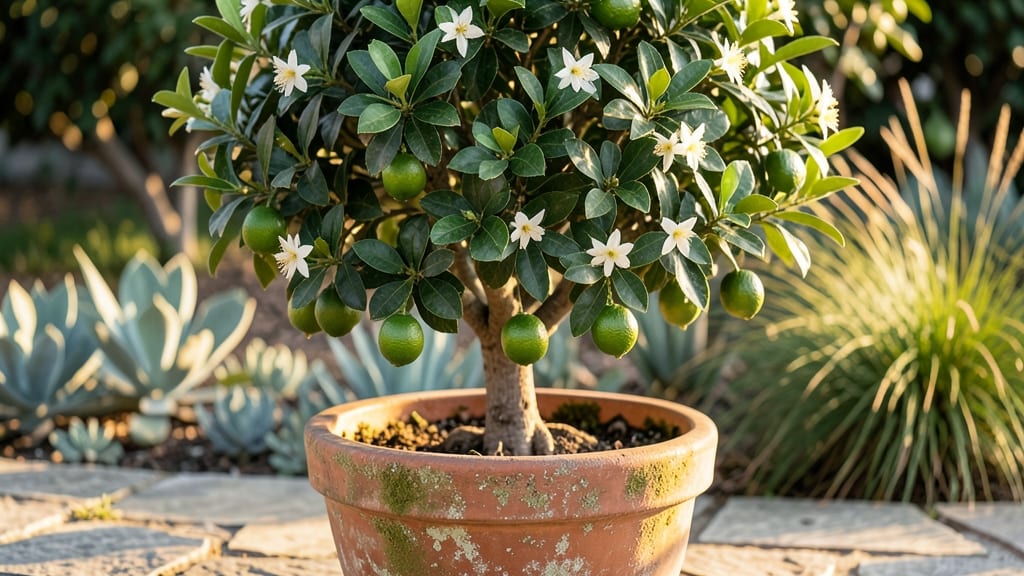
A potted lime tree isn't just a houseplant—it's a year-round citrus harvest you can move with you, whether you're on a balcony in Miami or a patio in Phoenix. 🌱 The secret lies in matching the right container, soil, and sunlight to the tree's tropical roots.
My first attempt failed when I ignored drainage, but now I've got a five-gallon pot producing limes year after year.
You'll need a 12-15 inch diameter pot with drainage holes, well-draining citrus mix, and a sunny spot that gets 6-8 hours of light daily. Lime trees thrive in 60-85°F temperatures, so move them indoors when frost threatens.
Water when the top inch of soil feels dry, but never let them sit in soggy soil—root rot is the silent killer of potted citrus.
By winter, you'll be harvesting bright green limes that ripen to golden perfection, and the fragrant white blossoms in spring make the effort worth it. Prune lightly after harvest to encourage bushier growth, and fertilize monthly with citrus-specific food. The best part? These trees live for decades with proper care.
Adapt this setup for dwarf varieties in small spaces or standard trees on patios—just adjust pot size and sunlight exposure. Whether you're growing for fruit, foliage, or that tropical vibe, this method delivers. Let's get your container ready for planting!
📚 In This Guide
- What you need
- Instructions
- Tips and common mistakes
- Wrapping up and next steps
What you need
- ● Lime tree (Citrus aurantifolia): Choose a dwarf variety (e.g., 'Mexican Lime' or 'Tahiti Lime') for containers. Tip: Look for a 1-3 gallon tree from a reputable nursery.
- ● Container: A 5-gallon or larger pot with drainage holes (minimum 18" diameter for mature trees). Pro tip: Terracotta or fabric pots work best!
- ● Well-draining potting mix: A blend of 60% citrus-specific soil, 30% perlite/pumice, and 10% compost (avoid garden soil—it compacts!).
- ● Drainage layer: 2-3 inches of gravel or ceramic shards at the pot’s base.
- ● Fertilizer: Slow-release citrus fertilizer (e.g., Osmocote or Miracle-Gro Citrus Food).
- ● Liquid feed (e.g., fish emulsion or citrus-specific liquid fertilizer).
- ● Gloves & trowel for planting.
- ● Watering can with a rose attachment (gentle watering = happy roots!).
- ○ Mulch: 2-3 inches of bark or pine needles (optional but helps retain moisture).
- ● Support stake (if your lime tree grows tall—bamboo stakes work well).
- ● Pruning shears (sterilized with rubbing alcohol).
- ○ pH test kit (optional but helpful—lime trees love 6.0-7.0 pH).
- ● Sunlight: A south- or west-facing spot with 6+ hours of direct sun daily (or a grow light for indoor setups).
- ● Temperature: Keep your tree in 60-85°F zones (protect from frost!).
- ● Patience! Dwarf varieties may take 2-5 years to bear fruit, but container-grown trees fruit faster than in-ground ones.
Step-by-step guide to growing a thriving potted lime tree
Here’s how to cultivate a productive citrus tree in containers—with fruit year after year.
🌱 Step 1: Select the Right Variety and Pot
Choose a dwarf lime variety like ‘Meyer’ or ‘Improved Meyer’—they’re compact enough for containers while still producing sweet, abundant fruit. The 5-gallon pot you’ve selected is perfect for a young tree, offering enough root space without becoming unwieldy. Ensure it has multiple drainage holes to prevent root rot, which is the #1 killer of potted citrus.
Fill the bottom 2 inches with gravity sand or perlite for drainage. This layer prevents water from pooling at the roots while allowing excess moisture to escape. I always use a terracotta pot for my lime tree—it breathes better than plastic and helps regulate soil moisture naturally.
🪴 Step 2: Prepare the Soil and Plant the Tree
Mix 3 gallons of citrus-specific potting soil with 1 gallon of perlite to improve aeration. Citrus trees hate soggy roots, so this blend ensures water drains freely while retaining enough moisture. Fill the pot 1 inch below the rim, leaving room for watering.
Remove the lime tree from its nursery pot and gently loosen the roots if they’re circling. Place it in the center of your prepared pot, ensuring the root flare (where the roots meet the trunk) sits just above the soil line. This prevents the trunk from burying and rotting over time. Backfill with the soil mix, pressing lightly to eliminate air pockets.
☀️ Step 3: Position for Maximum Sunlight and Warmth
Lime trees need full sun—at least 6-8 hours daily—to thrive and produce fruit. Place your pot in the sunniest spot on your patio, balcony, or deck. South-facing windowsills work in a pinch, but most homes don’t get enough intensity there. If you’re in a cooler climate, move the tree indoors near a south-facing window during winter.
Citrus trees are tropical and prefer warmth year-round. Keep soil temperatures above 60°F—colder roots struggle to absorb nutrients. Use a heating mat in winter if your evenings dip below 55°F, or wrap the pot in bubble wrap to insulate roots. Watch for yellowing leaves in winter; this is often a sign of cold stress.
💧 Step 4: Water and Fertilize for Year-Round Fruit
Water deeply every 5-7 days, allowing the top 2 inches of soil to dry out between waterings. Overwatering is the fastest way to kill a potted lime tree—always check moisture with your finger before watering. In summer, you may need to water every 3-4 days, especially if the pot feels light when lifted.
Feed your lime tree monthly with a balanced citrus fertilizer (10-10-10 or 8-3-9) during the growing season (spring to fall). Reduce to every 6-8 weeks in winter when growth slows. I like to use a slow-release fertilizer pellet mixed into the soil at planting—it feeds the tree steadily for 3-4 months without the risk of burning roots.
✂️ Step 5: Prune and Care for Long-Term Health
Prune your lime tree once a year in late winter or early spring before new growth begins. Remove dead, diseased, or crossing branches first, then thin out overcrowded growth to improve airflow. Aim to shape the tree into an open vase form, which allows sunlight to reach all branches—critical for fruit production.
Watch for pests like aphids or scale on the undersides of leaves. Spray with neem oil at the first sign of infestation—it’s organic, effective, and won’t harm the tree if used correctly. If you notice small holes in leaves, it’s likely citrus leafminer; treat immediately with insecticidal soap to prevent spread.
Tips & tricks for perfect potted lime tree care
Between us, these simple tricks will help you avoid the most common pitfalls and keep your potted lime tree thriving for years. The difference between a struggling plant and a fruit-bearing beauty often comes down to these small details.
Drainage Layer Matters: That 2-inch layer of gravel or perlite at the bottom of your 5-gallon pot isn't just decoration—it's your first line of defense against root rot. I learned this the hard way after losing two trees to soggy soil. For extra insurance, consider adding a layer of landscape fabric above the drainage layer to prevent soil from washing down and clogging the holes. This simple step keeps your tree's roots happy and healthy year-round.
Soil Temperature Monitoring: Keeping soil temperatures above 60°F is critical, but how do you know when it's too cold? I use a simple soil thermometer inserted 2 inches deep—it's the only reliable way to check. If you notice leaves yellowing in winter, that's your tree's way of saying "it's too chilly down here!" At the first sign of cold stress, move the pot to a warmer location or use a heating mat. Remember, citrus roots can't absorb nutrients properly below 60°F, which directly impacts fruit production.
Watering Technique: The "lift test" is my go-to method for determining when to water. Simply pick up the pot—if it feels light, it's time to water. This works better than checking soil moisture because it accounts for the entire root ball's needs. For that 5-7 day watering schedule, I aim to water deeply until water runs freely from the drainage holes. This ensures the entire root system gets hydrated, not just the top layer. Overwatering is the silent killer of potted citrus, so always let the top 2 inches dry out between waterings.
Fertilizer Timing: That monthly feeding schedule during growing season is non-negotiable for fruit production, but there's a trick to avoid burning roots. I always water my tree thoroughly 24 hours before applying fertilizer—this gives the roots time to recover if any salt buildup occurs. For the slow-release pellets, I mix them into the top 2 inches of soil at planting time, then add a fresh batch every 3-4 months. This steady nutrient supply is what gives my trees that extra boost for abundant fruit production.
Pro Tips for Potted Lime Tree
- Between us, these simple tricks will help you avoid the most common pitfalls and keep your potted lime tree thriving for years.
- Drainage Layer Matters: That 2-inch layer of gravel or perlite at the bottom of your 5-gallon pot isn't just decoration—it's your first line of defense against root rot.
- Soil Temperature Monitoring: Keeping soil temperatures above 60°F is critical, but how do you know when it's too cold?
Frequently asked questions
Got questions about growing a potted lime tree? You’re not alone! Whether you’re a beginner or just want to troubleshoot, here are answers to the most common queries to help your citrus dream thrive.
What’s the best type of lime tree for containers?
For potted growing, Key lime (Citrus aurantifolia) or Meyer lemon-lime hybrids are top picks—they’re compact, cold-hardy (down to 20°F!), and produce fruit reliably. Avoid dwarf varieties unless labeled for containers, as they may outgrow their pots quickly.
How long does it take for a potted lime tree to bear fruit?
Patience is key! With proper care (sunlight, water, and fertilizer), expect flowers in 1–2 years and fruit in 2–3 years. Dwarf varieties may fruit faster (as early as 1 year), but larger trees take longer. Pro tip: Hand-pollinate flowers with a small brush if bees are scarce!
Why are my lime tree leaves turning yellow?
Yellow leaves usually signal overwatering or nutrient deficiency. Check the soil—it should dry out slightly between waterings. Feed with a citrus-specific fertilizer every 4–6 weeks, and ensure the pot has drainage holes. Bonus: Yellow edges? It might be underwatering or salt buildup from tap water.
Can I grow a lime tree indoors year-round?
Yes! Place your potted lime tree near a south-facing window (6+ hours of sunlight daily) or use grow lights. In winter, keep temps above 50°F—lime trees hate drafts. Rotate the pot weekly for even growth, and watch for spider mites (common indoors). Pro tip: Move it outdoors in spring/summer for a fruit boost!
What can I do if my potted lime tree isn’t fruiting?
Try these fixes:
- More sunlight: Move to a sunnier spot or supplement with grow lights.
- Better pollination: Gently shake branches or use a paintbrush on flowers.
- Fertilizer tweak: Switch to a high-phosphorus formula (like 10-30-20) to encourage blooming.
- Prune strategically: Trim leggy growth to redirect energy to fruit production.
Wrapping up and next steps
Growing a potted lime tree is a rewarding journey that brings fresh, tangy fruit right to your doorstep—literally! 🌱 With the right care, you’ll enjoy year-round citrus, vibrant greenery, and a touch of tropical charm in even the smallest spaces.
Whether you’re a seasoned gardener or a beginner, this container-friendly recipe makes it simple to cultivate your own sunshine in a pot.
Ready to take the next step? Start by selecting your favorite lime variety and gathering your supplies. Then, roll up your sleeves and plant your potted lime tree today—your future harvest is waiting! 🍋✨