
Pruning
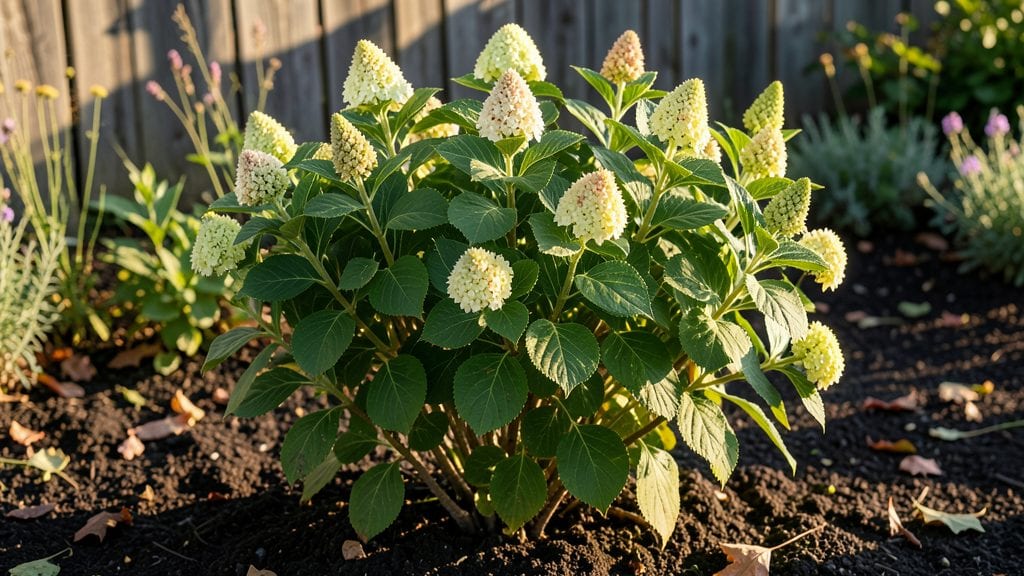
Transforming your Pacific Northwest yard with Quickfire Hydrangeas Tree starts with understanding its bold upright form and late-season blooms. 🌿 This isn’t your grandmother’s shrub—it’s a tree-sized hydrangea that thrives in cooler climates and keeps flowering until frost.
The secret to its dramatic height and vibrant blooms lies in pruning at the right time, which I’ll break down step by step.
What makes Quickfire special is its foolproof growth habit: it grows 12-18 inches per year, stays disease-resistant, and handles our region’s damp winters like a champ. You’ll need well-draining soil, morning sun and afternoon shade, and a pruning schedule that keeps it compact yet full of blooms.
No fancy tools—just sharp pruners and a little patience.
By late summer, you’ll be rewarded with football-sized flower clusters that turn from green to pink and finally deep purple. The best part? These blooms arrive just as other hydrangeas fade, giving your garden a second showstopper.
Prune correctly now, and you’ll enjoy year-round interest—even the winter skeleton adds charm.
Whether you’re dealing with a young sapling or a mature tree, the same principles apply. We’ll cover when to prune, how much to cut back, and what to do if your Quickfire starts looking leggy. Let’s get those blooms popping!
📚 In This Guide
- What you need
- Instructions
- Tips and common mistakes
- Wrapping up and next steps
What you need
- ● Pruning shears: Bypass pruners (sharp, 6-8" blades) – 1 pair (for clean cuts on small branches).
- ● Loppers: Bypass or anvil type (18-24" handles) – 1 pair (for thicker branches up to 2" diameter).
- ● Pruning saw: Curved-tooth or folding saw – 1 (for branches >2" thick).
- ● Disinfectant: 70% isopropyl alcohol or rubbing alcohol – small bottle (to sterilize tools between cuts).
- ● Gloves: Heavy-duty gardening gloves (cut-resistant) – 1 pair (protects hands from thorns and debris).
- ● Twine or zip ties: Natural jute or plastic – small roll (for securing branches during pruning).
- ● Marking twine or paint: Colored twine or pruning paint – small amount (to mark branches for removal).
- ● Bucket or tarp: – 1 (for collecting pruned branches and debris).
- ● Ladder (if needed): Sturdy, extendable – 1 (for reaching higher branches safely).
- ● Water source: Hose or watering can – 1 (to clean tools and hydrate the tree post-pruning).
- ● Pruning sealant: Tree wound dressing – small tube (for sealing large cuts, though many experts debate its necessity).
- ● Handheld leaf blower: – 1 (to clear debris from the area post-pruning).
- ● Notebook & pen: – 1 each (to sketch your tree’s structure or note pruning decisions).
- ● Safety glasses: – 1 pair (to protect eyes from flying debris).
- ● Knee pads: – 1 pair (for comfort if working on the ground).
Step-by-step Pacific Northwest pruning for Quickfire hydrangeas
Here's the fast-track method I've used for years to keep Quickfire hydrangeas blooming nonstop in our rainy climate.
✂️ Step 1: Time Your First Cut for Late Winter Dormancy
Wait until mid-February to early March—after the worst winter storms but before new growth begins. This timing ensures you're pruning dormant wood while avoiding late-season frost damage that could blacken fresh cuts. Look for brown, leafless stems that feel dry to the touch.
Grab your sterilized pruners and make your first sweep. Remove any dead, diseased, or crossing branches first—they compete with healthy growth and invite pests. I like to start at the outer canopy and work inward, so I can see the plant's natural shape emerge as I go.
Here's the thing—Quickfire hydrangeas bloom on new wood, so you don't need to worry about cutting back old flower stems. That means you can be aggressive with your first pruning without sacrificing blooms. Just avoid cutting into the thick, woody center of the plant—this creates an impenetrable core that never gets sunlight.
✂️ Step 2: Shape for Airflow and Light Penetration
After removing the obvious deadwood, step back and visualize the plant's ideal vase shape. Quickfire hydrangeas naturally grow in a rounded form, so I aim for a 30-45 degree angle when cutting back branches. Use your pruners to trim branches back to just above an outward-facing bud—this encourages growth in the direction you want.
Pay special attention to the inner canopy. Thin out 20-30% of the oldest stems at the base to improve airflow. This prevents fungal diseases that thrive in the damp Pacific Northwest climate. If you see mushy, discolored stems, cut those out immediately—they're signs of botrytis, a common hydrangea killer.
Don't worry about being perfect here. Quickfire hydrangeas are forgiving. If you accidentally cut back too much, the plant will bounce back with vigorous new growth. Just remember: never leave stubs. Always cut just above a bud or branch junction to prevent water from pooling and rotting the wound.
⏰ Step 3: Summer Maintenance for Continuous Blooms
About 6-8 weeks after your first pruning, you'll see new growth emerge. This is when you'll want to do a light maintenance trim throughout the summer. Look for overly leggy stems that are growing toward the center of the plant—these need to go to maintain that open vase shape.
Here's my summer rule: never cut more than 1/3 of the plant's foliage at once. Quickfire hydrangeas produce blooms on current season's growth, so you want to keep plenty of leaves for photosynthesis. I make small cuts as I walk around the plant, removing only the longest, weakest stems that aren't contributing to the overall shape.
Real talk: This is where most people mess up. They see a few straggly branches and go overboard with the pruners. Don't do that. Think of summer pruning as gentle shaping, not a major renovation. And always sterilize your pruners between cuts—hydrangeas are particularly susceptible to bacterial infections from dirty tools.
✂️ Step 4: Final Light Pruning Before Winter
In late October to early November, do one final light pruning to clean up any deadheading and remove any weak, crossing branches that might have developed over the summer. This final trim helps the plant enter winter in good shape and reduces the workload for next year.
I also like to do a light thinning of the oldest stems at the base—just a few here and there—to keep the plant's energy focused on new growth. Look for stems that are thicker than a pencil and have been around for several years. These are the ones that need to go to maintain the plant's vigor.
This is the moment that matters: cover the base of the plant with 2-3 inches of mulch after your final pruning. The mulch protects the roots from winter temperature swings and retains moisture during our dry summer months. Just don't pile it against the stems—keep it 2-3 inches away from the trunk to prevent rot.
Tips & tricks for perfect Quickfire hydrangeas pruning
These quick, practical tips will help you master the art of pruning Quickfire hydrangeas without the guesswork.
Timing Secret: The mid-February to early March window is non-negotiable for our Pacific Northwest climate. If you're unsure about exact timing, check for brown, leafless stems that feel dry—this is your cue. I've learned the hard way that pruning too early can expose tender growth to late frosts, while waiting too long risks missing the dormant wood phase. Mark your calendar now to avoid this common mistake.
Tool Technique: Sterilizing your pruners between cuts is absolutely critical—especially in our damp climate where fungal diseases like botrytis thrive. I keep a small bottle of rubbing alcohol handy and wipe down my blades after every 3-4 cuts. For the 20-30% thinning in Step 2, I work in sections: outer canopy first, then inner branches. This systematic approach prevents accidental over-pruning and helps me visualize the plant's natural shape emerging.
Summer Pruning Strategy: When you see new growth emerge about 6-8 weeks after your first pruning, resist the urge to go overboard. Remember the 1/3 rule: never remove more than one-third of the foliage at once. I like to make small cuts throughout the summer, focusing only on the longest, weakest stems growing inward. Think of it as sculpting rather than hacking—this maintains the plant's ability to photosynthesize while encouraging that perfect vase shape.
Mulching Mastery: That final 2-3 inch layer of mulch after your late October pruning is your plant's winter blanket. I've found that using cedar mulch works particularly well in our region—it resists decomposition and provides natural pest deterrence. The key is placement: keep it 2-3 inches away from the trunk to prevent rot while still protecting those vulnerable roots from temperature swings. This simple step makes all the difference in spring recovery.
Pro Tips for Quickfire Hydrangeas Tree
- These quick, practical tips will help you master the art of pruning Quickfire hydrangeas without the guesswork.
- Timing Secret: The mid-February to early March window is non-negotiable for our Pacific Northwest climate.
- Tool Technique: Sterilizing your pruners between cuts is absolutely critical—especially in our damp climate where fungal diseases like botrytis thrive.
Frequently asked questions
When is the best time to prune my Quickfire hydrangea into a tree shape?
The ideal window is late winter or early spring (February–March in the PNW), before new growth starts. This ensures you’re cutting back old wood while leaving next year’s blooms intact. Avoid pruning in fall—it can stimulate tender new growth that won’t survive winter. Pro tip: If you missed the window, prune in early summer (June) but expect fewer blooms that season.
Why aren’t my Quickfire hydrangeas blooming after pruning?
Quickfires bloom on new wood, so aggressive pruning in the wrong season (like fall) can cut off potential blooms. If you pruned too late, wait until next year—new stems will sprout from the base. For immediate blooms, prune lightly in late winter (just shape the tree form) and fertilize with acidic, balanced fertilizer (10-10-10) in early spring. Yellow leaves? Check your soil pH—Quickfires thrive in acidic soil (5.2–6.0).
How do I maintain the tree shape long-term without killing the plant?
Think of it like haircuts—regular light pruning beats one heavy trim! Every year, remove:
- Dead or crossing branches (use clean, sharp shears!)
- Up to ⅓ of the oldest stems at the base to encourage new growth
- Suckers sprouting from the ground (they drain energy)
Can I prune Quickfire hydrangeas in the PNW’s rainy season?
Yes, but time it right! Rainy weather softens wood, making cuts cleaner—but avoid pruning during heavy downpours or when branches are wet (increases disease risk). If you must prune in wet conditions, sterilize tools with rubbing alcohol and seal cuts with pruning sealant (optional for hydrangeas, but helpful in humid PNW climates). Best bet: Prune on a dry, overcast day to reduce stress on the plant.
What’s a good alternative if my Quickfire hydrangea struggles with tree pruning?
If shaping into a tree feels too intense, try these low-maintenance alternatives:
- Standard shrub form: Let it grow naturally—Quickfires thrive as lush, rounded bushes with minimal pruning.
- Espalier style: Train branches along a fence or trellis for a horizontal tree effect with less height.
- Switch to ‘Endless Summer’ hydrangeas: These bloom on old and new wood, giving you more flexibility in pruning timing.
Wrapping up and next steps
Transforming your Quickfire Hydrangeas Tree into a year-round blooming beauty is totally within reach—with the right pruning know-how! 🌸 By mastering the Pacific Northwest blueprint, you’ll unlock lush, vibrant blooms that keep your garden stunning from spring to winter. Remember: timing, technique, and consistency are your best friends.
Ready to take the next step? Grab your pruners, mark your calendar, and start with a light trim in early spring—your hydrangeas will thank you! Need a refresher? Bookmark this guide or share it with fellow PNW gardeners for a blooming success.
Happy pruning—your garden’s showstopper awaits! ✂️🌿