
Pruning
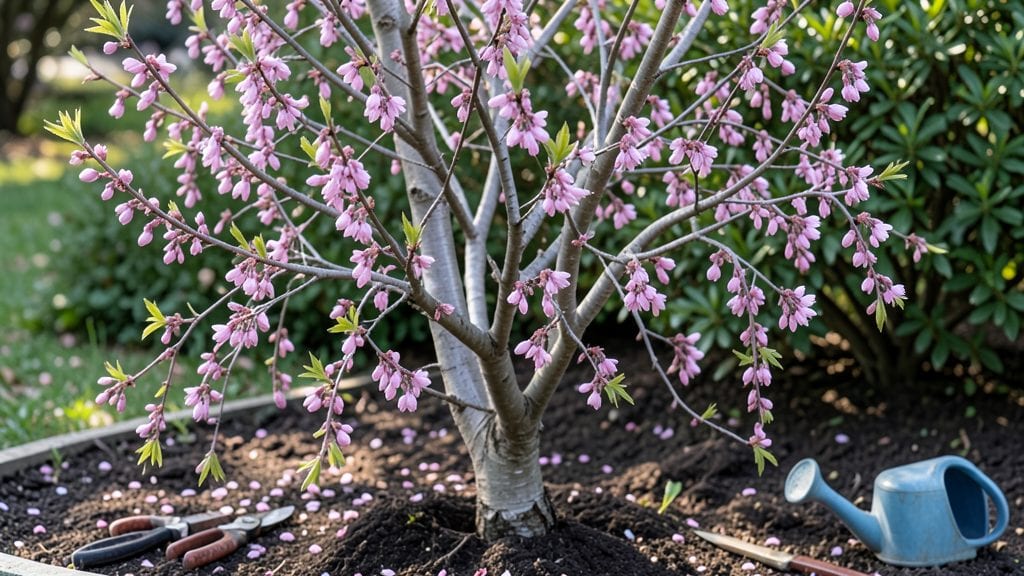
That first flush of Rising Sun Eastern Redbud blooms in late winter—pink-purple clouds against bare branches—is what makes this tree the Pacific Northwest’s hidden spring gem. I’ve watched mine transform my yard from a winter graveyard to a showstopper before tulips even think about waking up.
The secret lies in mimicking its natural habitat: moist but well-drained soil, morning sun, and protection from harsh afternoon winds that can scorch delicate new leaves.
This isn’t a fussy tree. Plant it in partial shade where summers stay cool, and give it 20-30 feet to stretch its elegant branches. The soil? Rich in organic matter but never soggy—think forest floor, not swamp.
Water deeply once a week after planting, then let nature take over. Prune only to shape or remove dead wood, and you’ll reward yourself with 6-8 weeks of nonstop color before the leaves even emerge.
What you’ll end up with is a tree that feels like a living painting: heart-shaped leaves turning golden in fall, bark that peels like paper in winter, and that magical spring show that turns heads.
Even in Zone 6’s cold snaps, this cultivar holds its blooms better than most redbuds. The only challenge? Keeping squirrels from nibbling the buds—though a simple chicken wire cage solves that.
Perfect for small yards, urban courtyards, or as a focal point near patios where you can watch the show from your morning coffee spot. Let’s get yours growing strong.
📚 In This Guide
- What you need
- Instructions
- Tips and common mistakes
- Wrapping up and next steps
What you need
- ● Pruning shears: Bypass pruners (4-6 inch blades) for small branches (1/4" to 1" diameter). Example: Felco F-2 or Corona Tools.
- ● Loppers: 1 pair (8-10 inch blades) for medium branches (1" to 2" diameter). Example: Fiskars PowerGear or Bahco.
- ● Pruning saw: 1 curved or bow saw for thick branches (2"+ diameter). Example: Felco F-1 or Corona CS-5.
- ● Gloves: Heavy-duty gardening gloves (leather or reinforced) to protect hands from thorns and rough bark.
- ● Disinfectant: 70% isopropyl alcohol or a 10% bleach solution (1 part bleach to 9 parts water) to sterilize tools between cuts.
- ○ Pruning sealant (optional but recommended): Tree wound sealant (e.g., Tanglefoot Tree Wound Pruning Seal) for cuts larger than 1/2".
- ● Bucket or bag: 1 gallon-sized bucket or heavy-duty trash bag for collecting pruned branches.
- ● Ladder (if needed): Sturdy, extendable ladder (e.g., 10-12 ft) with non-slip feet for accessing higher branches. Safety tip: Always have a spotter!
- ● Notebook & pencil: For mapping out cuts and noting observations (e.g., branch health, direction of growth).
- ● Hand saw: For stubborn, thick branches that resist the pruning saw.
- ● Extension pole pruners: For reaching high branches without a ladder (e.g., 6-10 ft pole).
- ● Tree paint: Pruning paint (e.g., TreeHelp) for sealing large cuts (controversial but some swear by it!).
- ● Camera: To document your tree’s progress before, during, and after pruning.
- ● First-aid kit: Just in case of minor scrapes or thorn pricks!
How to plant and care for a rising sun eastern redbud tree
Here’s my straightforward approach to growing this stunning Pacific Northwest native—frost-hardy and packed with spring color.
Choose the Perfect Planting Spot
Pick a location with partial shade to full sun—this tree thrives with 4-6 hours of sunlight daily, especially in hotter afternoons. The Rising Sun Eastern Redbud handles light shade better than full sun, which can scorch its delicate leaves. I always check the site’s microclimate first—nearby buildings or large trees can cast unexpected shade.
Ensure the soil drains well; this tree hates soggy roots. If your yard has heavy clay, amend the area with 2-3 inches of compost before planting. The spot should also allow the tree to reach its mature height of 20-30 feet without crowding structures or other plants. A slight slope helps prevent water pooling around the base.
Dig the Hole and Prepare the Root Ball
Dig a hole twice as wide as the root ball but no deeper—this prevents the tree from settling too low. The top of the root ball should sit 1-2 inches above ground level to avoid rot. I use a shovel to loosen the sides of the hole, which helps roots spread into surrounding soil more easily.
Gently remove the tree from its container and inspect the roots. If they’re circling tightly, tease them apart with your fingers. Place the tree in the hole so the root flare (where roots meet the trunk) is visible above the soil line. Backfill with native soil mixed with 1-2 inches of compost to encourage healthy growth.
Water Deeply and Mulch Properly
Water the tree thoroughly immediately after planting—10-15 gallons should soak the root zone completely. You’ll know it’s enough when water drains out the bottom of the hole. This step is critical; dry soil stresses young roots.
Apply 2-3 inches of mulch (wood chips or shredded bark) around the base, keeping it 6 inches away from the trunk to prevent rot. Mulch helps retain moisture and regulate soil temperature. Replenish mulch annually as it breaks down. Avoid over-mulching—too much can suffocate the roots.
Monitor Light and Water for the First Year
During the first growing season, check the soil weekly—water when the top 2-3 inches feel dry. The Rising Sun Eastern Redbud is drought-tolerant once established, but young trees need consistent moisture. Overwatering is just as harmful, so always let the soil dry slightly between waterings.
Watch for signs of stress: yellowing leaves may mean too much water, while crispy edges signal underwatering. If leaves scorch in summer, provide afternoon shade with a temporary shade cloth. This tree’s vibrant pink blooms appear in early spring, so avoid heavy pruning during dormancy—prune only after flowering if needed.
Tips & tricks for perfect rising sun eastern redbud planting
Here's what I've learned from years of growing these stunning Pacific Northwest trees—avoid these common pitfalls for a thriving specimen.
Lighting Strategy: While the 4-6 hours of sunlight is ideal, watch for afternoon shade during summer's hottest months. If your tree's leaves start curling or turning brown, it's getting too much direct sun—consider a temporary shade cloth for the afternoon. I've seen this happen in my own yard when planting near south-facing windows.
Root Preparation: The root flare should always be visible above ground level—this is where roots meet the trunk. If you bury it too deep, you risk suffocating the tree and causing rot. I use a small stake to mark the correct depth before planting, especially when working with larger root balls.
Watering Wisdom: Those 10-15 gallons of water should completely saturate the root zone, but don't assume your soil is absorbing it properly. I test by sticking my finger 6 inches down—if it's dry after 30 minutes, keep watering. This helps prevent the tree from settling too low in the hole during the initial watering.
Mulch Management: The 2-3 inches of mulch should never touch the trunk—this creates a moisture barrier that can lead to rot. I use a small rake to create a 6-inch gap around the base, then mound the mulch slightly higher at the outer edges to direct water away from the trunk.
Pro Tips for Rising Sun Eastern Redbud Tree
- Here's what I've learned from years of growing these stunning Pacific Northwest trees—avoid these common pitfalls for a thriving specimen.
- Lighting Strategy: While the 4-6 hours of sunlight is ideal, watch for afternoon shade during summer's hottest months.
- Root Preparation: The root flare should always be visible above ground level—this is where roots meet the trunk.
Frequently asked questions
Got questions about the Rising Sun Eastern Redbud Tree? You’re not alone!
Whether you’re a pruning pro or a newbie gardener, here are answers to the most common queries—so you can grow this stunning PNW beauty with confidence.
When is the best time to prune my Rising Sun Eastern Redbud?
The ideal time to prune is late winter to early spring (before buds swell but after harsh frosts). This timing ensures you don’t remove next year’s blooms while still shaping the tree. Avoid pruning in fall—it can stimulate late growth vulnerable to winter cold. Pro tip: Use sterilized tools to prevent disease!
Why aren’t my Rising Sun Eastern Redbud blooms as vibrant as expected?
Fewer or paler blooms often signal over-pruning, poor sunlight, or nutrient deficiencies. Ensure your tree gets 6+ hours of sun daily and prune lightly to maintain an open canopy. Fertilize in early spring with a balanced, slow-release formula. Bonus: Mulch around the base to retain moisture!
How cold-hardy is the Rising Sun Eastern Redbud compared to other redbuds?
This cultivar is zone 5-8 hardy, making it one of the most frost-resistant redbuds—perfect for the PNW’s chilly springs! While it tolerates temps down to -20°F, young trees may need winter protection (like burlap wraps) in their first few years. Fun fact: Its pink buds often peek through snow!
Can I grow a Rising Sun Eastern Redbud in a container?
Yes, but it’s challenging long-term due to its size (15–20 ft tall/mature). Start with a large, durable pot (3+ ft wide) and use well-draining soil. Prune roots annually to control growth, and move containers indoors during winter if temps drop below 10°F. Warning: Container-grown redbuds may bloom less reliably.
What should I do if my Rising Sun Eastern Redbud leaves turn yellow?
Yellowing leaves usually indicate overwatering, root rot, or nutrient imbalance. Check soil moisture—redbuds prefer consistently moist (not soggy) soil. If roots smell foul, trim affected areas and repot with fresh soil. For yellowing between veins, test for iron deficiency (common in alkaline soils) and amend with chelated iron.
Are there alternatives to Rising Sun if I want a similar but lower-maintenance tree?
If pruning feels daunting, consider ‘Forest Pansy’ Eastern Redbud (deep purple leaves) or ‘Whitewater’ Redbud (white blooms, slightly smaller). For a no-fuss option, try Japanese Maple ‘Bloodgood’—it’s drought-tolerant and thrives in shade. Remember: No tree replaces the Rising Sun’s spring drama!
Wrapping up and next steps
The Rising Sun Eastern Redbud Tree is a stunning, frost-resistant gem that brings vibrant color and life to the Pacific Northwest’s landscapes. With its early spring blooms and low-maintenance care, it’s the perfect addition for gardeners eager to embrace nature’s beauty without the fuss. 🌸
Ready to transform your outdoor space? Start by gathering your tools and scheduling your first pruning session—your tree (and your neighbors!) will thank you. Happy gardening! 🌿