
Pruning
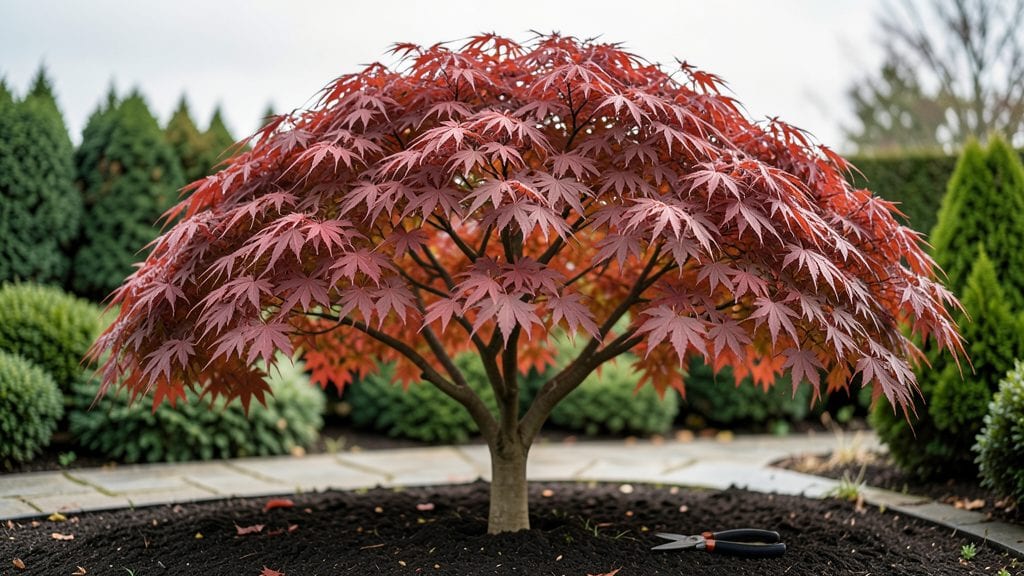
Pruning a scarlet maple tree (Acer palmatum 'Bloodgood') isn't just about trimming—it's about sculpting a living masterpiece that steals the show in your Pacific Northwest garden. 🌿 The right cuts transform its natural elegance into a bold focal point, with fiery red foliage that turns heads year-round.
I’ve shaped mine into a graceful arch over my patio, and the way it frames my morning coffee spot in autumn light? Pure magic.
This tree thrives on light shaping, not brutal pruning—think of it like giving it a stylish haircut rather than a buzz cut. Focus on removing crossing branches first, then open the canopy to let sunlight dance through those signature palmate leaves.
The key is timing: late winter or early spring when the tree’s dormant but ready to burst into new growth. Even in our rainy PNW climate, it bounces back with vigor, proving it’s a frost-resistant star.
What you’ll end up with is a tree that’s both dramatic and delicate—its layered branches create depth, while the vibrant foliage pops against evergreens or soft perennials. Pair it with hostas for contrast or boxwoods for structure, and watch how it anchors your garden like a living sculpture.
The best part? Every season offers a new show: spring’s fresh green, summer’s subtle glow, and autumn’s fiery climax.
For those chilly PNW winters, a light mulch layer protects roots while keeping the drama intact. And if you’re worried about over-pruning? Don’t—scarlet maples are forgiving. Start small, step back often, and let the tree’s natural beauty guide your hand. Your garden’s centerpiece is waiting to be perfected.
📚 In This Guide
- What you need
- Instructions
- Tips and common mistakes
- Wrapping up and next steps
What you need
- ● Pruning shears: Bypass pruners (for cuts up to ½ inch thick) – sharp, high-quality, and sterilized (e.g., Felco or Fiskars).
- ● Loppers: 1 pair (for branches ½ to 1½ inches thick). Look for ratcheting or bypass designs for precision.
- ● Pruning saw: 1 curved-tooth saw (for branches 1½+ inches thick). Replace blades if dull.
- ○ Extension pole: 6–10 ft (for high branches). Optional but game-changing!
- ● Gloves: Heavy-duty, cut-resistant (e.g., Mechanix or gardening gloves).
- ● Disinfectant: 70% isopropyl alcohol or 10% bleach solution (1 part bleach to 9 parts water) to sterilize tools between cuts.
- ○ Pruning sealant: Optional (e.g., Tanglefoot Tree Wound Pruning Seal) for large cuts >2 inches in diameter.
- ● Ladder: Sturdy, non-slip (e.g., aluminum extension ladder, 12–16 ft tall). Never stand on the top 3 rungs!
- ● Safety gear: Safety glasses, long sleeves, and closed-toe shoes.
- ● Timing: Prune in late winter to early spring (before buds swell) or summer (after flowering). Avoid fall in the PNW—fungal risks spike!
- ● Weather: Choose a dry, calm day (no rain for 24 hours before/after pruning).
- ● Tree assessment: Study the canopy for dead, crossing, or diseased branches first. Sketch a rough plan!
- ● Cleanup supplies: Heavy-duty trash bags (for debris) and a wheelbarrow (if removing large branches).
- ○ Optional: A notebook to track cuts and progress.
How to prune a scarlet maple tree for a strong Pacific Northwest canopy
Here's the straightforward approach I use to keep these stunning trees healthy and vibrant through PNW winters.
✂️ Step 1: Time Your Pruning for Late Winter Dormancy
Prune your scarlet maple between mid-February and early March when the tree is fully dormant but before new buds swell. This timing prevents heavy sap flow and gives the tree time to heal before spring growth begins. The PNW's mild winters mean you have a slightly longer window than in colder climates.
Look for tight, brown buds along the branches—these signal dormancy. Avoid pruning when temperatures dip below 20°F, as cold stress weakens the tree's ability to heal wounds. If you miss this window, wait until late spring after all leaves have emerged, but you'll sacrifice some of the tree's energy reserves.
✂️ Step 2: Remove Dead, Diseased, or Crossing Branches First
Start by eliminating any branches that are dead, diseased, or rubbing against others. Use sharp bypass pruners for branches under ½ inch thick, and a pruning saw for thicker limbs. Cut just outside the branch collar—the swollen area where the branch meets the trunk—to promote proper healing.
I always scan the canopy first, looking for brown, brittle branches or those with peeling bark or oozing sap. Crossing branches create wounds that invite pests and disease, so remove them completely at their point of intersection. Never leave stubs—this creates entry points for fungal infections that thrive in the PNW's damp climate.
☀️ Step 3: Thin the Canopy for Better Airflow and Light Penetration
Selectively remove 10-20% of the tree's branches to improve light penetration and airflow. Focus on branches growing inward or downward that block sunlight from reaching the lower canopy. A well-thinned scarlet maple develops brighter fall foliage and produces more vibrant spring flowers.
Step back frequently and visualize the tree's natural shape. Remove branches that create dense clusters—these are prime spots for fungal diseases in our rainy season. Aim to maintain an open, vase-like structure that lets sunlight reach the ground below. For young trees, limit thinning to 5-10% to avoid stressing the developing canopy.
✂️ Step 4: Shape the Tree While Preserving Its Natural Form
Scarlet maples have a graceful, upright growth habit, so avoid heavy structural pruning. Instead, refine the silhouette by selectively shortening branches that grow too vigorously. For lateral branches, cut back to an outward-facing bud to encourage outward growth and a fuller appearance.
Here's the thing—scarlet maples respond poorly to severe pruning. Never remove more than 25% of the canopy in a single season, and avoid "topping" the tree by cutting the main trunk. Instead, focus on refining the outer edges and removing only what's necessary. The tree's signature red foliage develops most intensely on branches that receive full sun, so prioritize branches that block light from reaching others.
💧 Step 5: Clean Up and Protect the Tree After Pruning
Remove all pruned branches and debris from the area to prevent fungal spores from infecting fresh cuts. Sterilize your tools with 70% isopropyl alcohol between cuts to avoid spreading disease. For larger wounds over ½ inch thick, apply wound dressing to protect against fungal infections common in the PNW's damp climate.
Water the tree deeply after pruning to help it recover. Scarlet maples have deep root systems, so aim for 1-2 inches of water per week during the growing season. The first few weeks after pruning are critical—watch for wilting leaves or yellowing foliage, which can signal stress. If you see these signs, reduce watering slightly and avoid fertilizing until the tree shows new growth.
Tips & tricks for perfect scarlet maple tree pruning
Timing and technique make all the difference with these iconic PNW trees—here's how to avoid common mistakes that can stress your scarlet maple.
Timing Secret: The mid-February to early March window is critical because scarlet maples enter dormancy later than many trees in the PNW. I've learned this the hard way—pruning too early can trigger sap flow, while waiting too long risks encouraging new growth before the tree has fully recovered from winter. Check for those tight, brown buds as your primary indicator rather than relying solely on the calendar. If you're unsure, a quick scratch test works: scrape a small section of bark—if it's green underneath, wait a few more weeks.
Tool Precision: Using the wrong tool can create jagged cuts that take years to heal. I always keep a pair of sharp bypass pruners for branches under ½ inch and a pruning saw for thicker limbs. The key is making clean cuts just outside the branch collar—this swollen area contains healing cells that help the tree recover. If you're working with larger branches, consider using a three-cut method to prevent tearing: make your first cut about a foot from the trunk, then a second cut slightly further out, and finally your clean cut just outside the collar. This prevents bark from tearing.
Canopy Thinning Strategy: When aiming for that 10-20% thinning in Step 3, focus on branches that grow inward or downward first—they're the biggest light blockers. I visualize the tree's natural vase shape and remove branches that create dense clusters, which are prime spots for fungal diseases in our rainy climate. For young trees, be extra gentle—limiting to 5-10% thinning prevents stress while still improving airflow. Remember, the goal is to create an open structure that lets sunlight reach all parts of the canopy, which is especially important for maximizing that signature red foliage we all love.
Post-Pruning Care: After you've finished pruning, don't just walk away—proper cleanup is just as important as the cuts themselves. I always sterilize my tools between cuts with 70% isopropyl alcohol to prevent spreading disease, and I remove all debris from the area. For larger wounds over ½ inch, applying wound dressing creates a protective barrier against the fungal infections that thrive in our damp climate. The first few weeks after pruning are critical, so I monitor for wilting leaves or yellowing foliage as signs of stress. If I see these, I reduce watering slightly and avoid fertilizing until new growth appears.
Pro Tips for Scarlet Maple Tree
- Timing and technique make all the difference with these iconic PNW trees—here's how to avoid common mistakes that can stress your scarlet maple.
- Timing Secret: The mid-February to early March window is critical because scarlet maples enter dormancy later than many trees in the PNW.
- Tool Precision: Using the wrong tool can create jagged cuts that take years to heal.
Frequently asked questions
Got questions about pruning your scarlet maple tree? You’re not alone! Here are some of the most common concerns—and answers—to help you keep your PNW frost-resistant beauty thriving.
When is the best time to prune a scarlet maple in the Pacific Northwest?
The ideal window is late winter to early spring (February–March), just before buds swell but before new growth starts. This timing minimizes stress and reduces disease risk. Avoid pruning in fall—it can encourage late-season growth vulnerable to frost damage.
How much can I trim back a scarlet maple without harming it?
You can safely remove up to 25% of the tree’s canopy in a single year, but avoid over-pruning. Scarlet maples are resilient, but aggressive cuts (like topping) can weaken the tree or reduce its stunning fall color. Focus on structural shaping and removing dead/diseased branches first.
Will pruning help my scarlet maple survive harsh PNW winters?
Pruning alone won’t make it frost-proof, but proper timing and technique reduce winter stress. Remove crowded branches to improve airflow, and avoid heavy pruning in late summer/fall, which can stimulate tender growth that freezes. Mulch the base and water deeply before winter for extra protection.
Can I prune a young scarlet maple the same way as a mature one?
No! Young trees (under 5 years) need light, strategic pruning—focus on removing water sprouts, crossing branches, and low-hanging limbs to encourage strong structure. Mature trees can handle more aggressive shaping, but always prioritize health over aesthetics.
What should I do if my scarlet maple’s leaves turn yellow or drop after pruning?
Yellowing or premature leaf drop can signal stress, disease, or improper cuts. Check for:
- Ragged cuts (use sharp tools and seal larger wounds with pruning sealant).
- Fungal signs (like powdery mildew) on new growth—treat with copper fungicide if needed.
- Over-pruning—give the tree time to recover before trimming again.
Pro Tip:
Always sterilize your tools between cuts (rubbing alcohol or bleach solution) to prevent spreading disease. Scarlet maples are tough, but a little prevention goes a long way!
Wrapping up and next steps
The scarlet maple tree isn’t just a stunning addition to your Pacific Northwest landscape—it’s a low-maintenance, frost-resistant star that thrives with the right care. By mastering pruning techniques, you’ll ensure vibrant foliage, robust growth, and a canopy that steals the show year after year. 🌿✨
Ready to level up your green thumb? Start by scheduling your next pruning session—whether it’s for shaping, health, or seasonal maintenance. Grab your tools, follow the steps you’ve learned, and watch your scarlet maple flourish like never before! 🌟