
Pruning
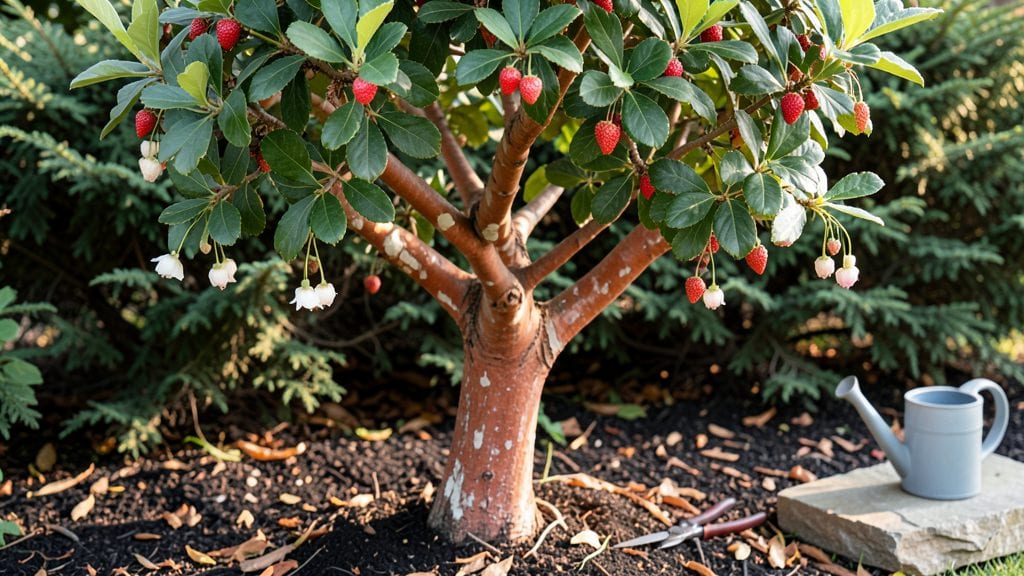
Pruning your strawberry tree (Arbutus marina) transforms it from a scraggly shrub into a year-round showstopper—and the Pacific Northwest’s coastal climate makes it perfect for this.
The key is timing: late winter or early spring, just as new growth begins, while avoiding heavy cuts that stress the tree. I’ve watched mine go from sparse branches to a lush, peeling-bark masterpiece with hundreds of blooms by summer, thanks to this simple approach.
You’ll need sharp pruning shears, gloves (the bark’s sticky resin stains!), and a clear day to assess the tree. Focus on removing dead, crossing, or inward-growing branches first—they’re the easy wins.
Then thin out crowded areas by about 25%, opening the center for better airflow and light. The goal isn’t perfection but balance, so don’t overthink it.
What you’ll end up with is a tree that blooms spring through fall, its pink flowers giving way to edible (but tart) berries that birds adore. The exfoliating bark adds texture year-round, and the pruning itself becomes a ritual—like giving your tree a spa day.
Just avoid cutting into old wood (it won’t regrow), and you’re golden.
This method works equally well for coastal gardens in California or Oregon, where Arbutus marina thrives in well-draining soil and full sun. Even urban yards with mild winters can pull it off—just adjust watering in summer droughts. Ready to turn your tree into a Pacific Northwest stunner?
📚 In This Guide
- What you need
- Instructions
- Tips and common mistakes
- Wrapping up and next steps
What you need
- ● Bypass pruning shears – Sharp, high-quality shears (e.g., Felco or Fiskars) to make clean cuts without crushing branches.
- ● Loppers – For thicker branches (½"–1.5" diameter)—look for bypass-style loppers with a 4–6 ft. reach for taller trees.
- ● Pruning saw – For branches over 1.5" thick (e.g., a bow saw or folding pruning saw with a fine-tooth blade).
- ● Ladder or step stool – Sturdy, extension ladder (12–16 ft.) or a stable step stool for safety (Arbutus marina can grow 20–30 ft. tall!).
- ● Disposable gloves – Nitrile or leather gloves to protect against thorns and sap.
- ● Rubbing alcohol (70% or higher) – For sterilizing tools between cuts to prevent disease spread.
- ○ Sealing wax or pruning paint – Optional but helpful for larger cuts (>2" diameter) to prevent fungal infections.
- ● Trash bags or bucket – For collecting pruned branches (compost or dispose of diseased material).
- ● Hand pruners with ratchet – Eases repetitive cutting for dense foliage.
- ● Pole pruner – For high branches without climbing.
- ● Tree wound dressing – Alternative to sealing wax (e.g., Tanglefoot Tree Wound Pruning Seal).
- ● Notebook & pencil – To sketch your tree’s shape before pruning for guided cuts.
- ● Safety glasses – Protects eyes from debris, especially when using a saw.
How to prune a strawberry tree (Arbutus marina) for Pacific Northwest beauty
This evergreen gem thrives with strategic cuts—here’s how to keep it blooming all year.
Time Your Pruning for Optimal Growth
Prune your Arbutus marina in late winter or early spring, just as new growth begins. This timing ensures you remove dead wood while encouraging fresh spring blooms. Avoid pruning in fall—new growth won’t harden off before winter’s chill, leaving branches vulnerable to cold damage.
Look for branches that have finished flowering but show no new buds. These are safe to remove. Healthy branches will have smooth, green bark and small, tight buds along their length. If you prune too early, you risk cutting off next year’s blossoms before they form.
Remove Dead, Diseased, or Crossing Branches
Start by eliminating any dead, broken, or diseased branches first. These are easy to spot—they’ll be brown, brittle, or peeling, with no signs of life. Use sharp, clean pruners to make cuts just outside the branch collar (the swollen area where the branch meets the trunk). This prevents unsightly stubs and promotes faster healing.
Next, target crossing or rubbing branches. These compete for sunlight and nutrients, weakening the tree. Remove the smaller of the two branches, cutting back to a healthy lateral branch or bud. Always cut at a 45-degree angle just above an outward-facing bud to encourage proper regrowth and an open canopy.
Thin the Canopy for Airflow and Light
Arbutus marina benefits from an open, airy structure. Focus on thinning out crowded branches to improve airflow and sunlight penetration. Aim to remove about 20-30% of the total foliage—this encourages stronger growth and more abundant blooms. Start at the outer edges and work inward, removing branches that are growing inward or downward.
When thinning, avoid cutting back to stubs. Instead, prune to a lateral branch or bud that’s growing in the direction you want the tree to fill. This maintains the natural shape while promoting healthy regrowth. Step back frequently to visualize the tree’s silhouette—your goal is an open, balanced form that lets light reach the center.
Shape for Structure and Bloom Display
Use this opportunity to refine the tree’s shape. Strawberry trees naturally grow with a rounded, slightly irregular form, but you can enhance their beauty by pruning to emphasize their natural silhouette. Remove any branches that spoil the symmetry or grow in awkward directions. Cut just above a bud that’s facing outward to encourage new growth in the right direction.
For larger branches, consider making a three-cut method to avoid tearing the bark. First, make an undercut about 6-12 inches from the trunk. Then, cut from the top side, leaving a small stub. Finally, remove the stub by cutting just outside the branch collar. This technique prevents bark from peeling and reduces the risk of disease.
Clean Up and Monitor for Recovery
After pruning, rake up and dispose of all debris—this prevents fungal diseases from taking hold in the wet Pacific Northwest climate. Sterilize your pruners with rubbing alcohol between cuts to avoid spreading pathogens. Once finished, water the base of the tree deeply to help it recover from the stress of pruning.
Monitor the tree over the next few weeks for signs of new growth. Healthy branches will sprout fresh leaves within 4-6 weeks. If you notice any oozing sap or slow healing, apply a thin layer of pruning sealant to larger cuts (though most small cuts heal fine without it). Avoid overwatering—Arbutus marina prefers well-draining soil and can suffer from root rot if soggy.
Tips & tricks for pruning your strawberry tree
Pruning an Arbutus marina might seem intimidating, but these targeted insights will help you achieve that perfect Pacific Northwest bloom display every season.
Timing is Everything: The late winter to early spring window is non-negotiable for this Mediterranean native adapted to our climate. I've seen too many gardeners prune in fall, only to have their new growth freeze back during our wet winters. Look for those telltale signs of finished blooms with no new buds—these branches are ready for removal. The tree's natural dormancy period makes this the perfect time for stress-free pruning that won't disrupt its flowering cycle.
Precision Cutting Technique: That 45-degree angle isn't just aesthetic—it's crucial for proper healing. When you make your cuts just outside the branch collar, you're not just preventing ugly stubs; you're creating an ideal surface for callus formation. For larger branches, the three-cut method prevents bark tearing that can invite disease. I've made the mistake of rushing this step, and the resulting peeling bark took months to heal properly. Take your time—this is where professional results begin.
Canopy Thinning Strategy: The 20-30% foliage reduction guideline might seem arbitrary, but it's based on the tree's natural growth patterns. You're essentially mimicking the light conditions of its native Mediterranean habitat. Start at the outer edges because these branches often grow more vigorously and can shade the interior. Step back frequently to visualize the silhouette—this is where your artistic eye comes into play. I've learned that removing just a few strategic branches can make a dramatic difference in both airflow and bloom abundance.
Post-Pruning Care: The 4-6 week recovery period is your window to monitor progress. That deep watering isn't just about hydration—it's helping the tree establish new root growth to support its pruned structure. I've noticed that trees pruned in our Pacific Northwest's cooler springs often show new growth slightly later than those pruned in warmer microclimates. This is normal, but if you don't see any signs after 6 weeks, it might indicate stress from either over-pruning or poor soil conditions.
Pro Tips for Strawberry Tree Arbutus Marina
- Pruning an Arbutus marina might seem intimidating, but these targeted insights will help you achieve that perfect Pacific Northwest bloom display every season.
- Timing is Everything: The late winter to early spring window is non-negotiable for this Mediterranean native adapted to our climate.
- Precision Cutting Technique: That 45-degree angle isn't just aesthetic—it's crucial for proper healing.
Frequently asked questions
about pruning your Arbutus marina (strawberry tree) in the Pacific Northwest—because even pros need a little guidance!When is the best time to prune my strawberry tree?
The ideal time is late winter to early spring (February–March) before new growth begins. This helps avoid disturbing blooming flowers or attracting pests. Light pruning can also happen in summer after flowering to shape the tree, but avoid heavy cuts then.
How much can I trim back my Arbutus marina?
You can safely remove up to 1/3 of the tree’s height in one session, but avoid over-pruning. Focus on dead, diseased, or crossing branches first. Strawberry trees are resilient, but excessive cuts may delay flowering. Pro tip: Thin out interior branches to improve airflow and sunlight penetration!
What should I do if my tree isn’t blooming after pruning?
If your Arbutus marina skips flowers, check these:
- Light: Ensure it gets full sun (6+ hours/day)—partial shade reduces blooms.
- Soil: Test for acidic soil (pH 5.0–6.5); amend with pine bark or sulfur if needed.
- Age: Young trees (under 5 years) may need patience—they bloom best when mature.
- Fertilizer: Apply a balanced, slow-release fertilizer in early spring.
Does pruning protect my strawberry tree from PNW rain and wind?
Pruning strategically helps! Remove weak, rubbery, or wind-damaged branches to reduce storm risks. Also, thin the canopy to allow water to drain quickly and prevent fungal issues (like Phytophthora). Mulch around the base to protect roots from heavy rains.
Can I prune my strawberry tree in fall?
Fall pruning is not recommended because it stimulates new growth that may freeze in winter or attract pests. If you must prune, do so early fall (September) for minor adjustments, but avoid heavy cuts. Save major pruning for dormant season (winter).
What’s a good alternative if my Arbutus marina isn’t thriving?
If your tree struggles with disease, pests, or poor growth, consider these PNW-friendly alternatives:
- Madrona (Arbutus menziesii) – Similar evergreen, drought-tolerant.
- Oregon Grape (Mahonia aquifolium) – Hardy, low-maintenance, and pollinator-friendly.
- Holly (Ilex aquifolium) – Thrives in shade and offers year-round interest.
Wrapping up and next steps
The strawberry tree (Arbutus marina) is a stunning addition to the Pacific Northwest landscape, offering year-round beauty with its peeling bark, vibrant blooms, and edible fruit.
By mastering the right pruning techniques—like timing, tool care, and shaping—you’ll keep your tree thriving and full of life. Don’t let fear of pruning hold you back!
Ready to take the next step? Grab your tools, mark your calendar, and give your strawberry tree the care it deserves. With a little practice, you’ll be the envy of the neighborhood with a blooming, healthy tree that keeps giving back all year. 🌿✨