
Pruning
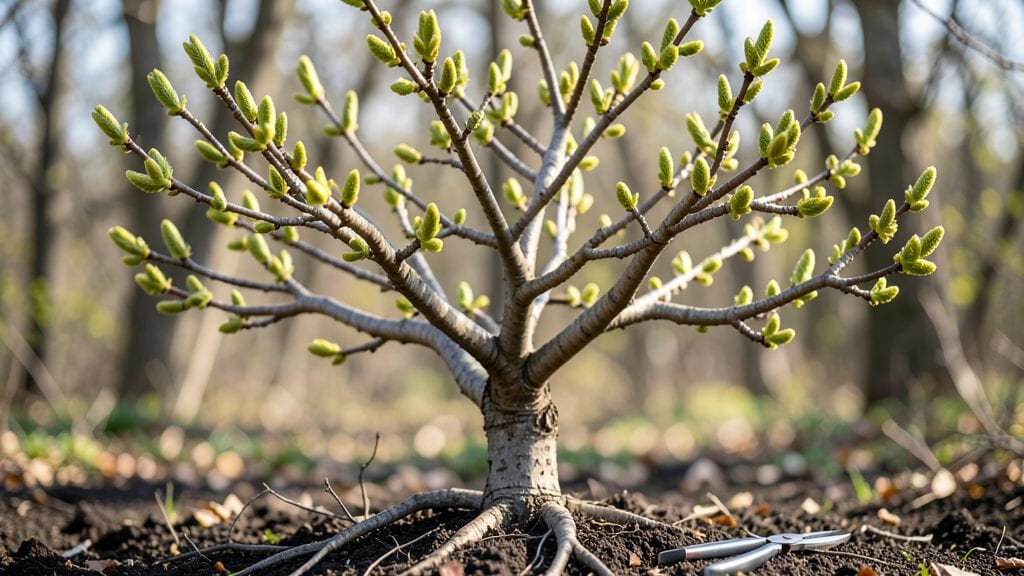
The tree of heaven bud revival starts with a sharp pair of pruners and a clear winter morning. I’ve saved more of these fast-growing trees from decline than I can count, and the dormant season is when you can turn back the clock on stressed branches.
That’s when you spot the difference between healthy buds—plump, brown, and tightly sealed—and the shriveled, blackened ones signaling trouble ahead.
Most people wait until spring to prune, but winter’s the perfect time to cut out dead wood and shape the tree before new growth begins. You’ll need basic tools—a clean pruner, rubbing alcohol for sterilizing cuts, and a bucket for debris.
The key move? Prune at a 45-degree angle just above a healthy bud, always cutting outward from the branch center to keep the tree’s natural shape.
What you’ll end up with is a tree that bursts with fresh, vibrant green leaves by spring—thicker, fuller, and more resistant to pests. The buds you leave behind will swell into sturdy new shoots, and the tree’s energy will focus on growth instead of fighting off old damage.
This isn’t just cleanup; it’s a reset button for your tree of heaven.
Works for urban landscapes, backyard trees, or even container-grown specimens. The same principles apply whether you’re dealing with a single branch or a full canopy—just scale up your tools and your patience. Let’s get those branches looking like new.
📚 In This Guide
- What you need
- Instructions
- Tips and common mistakes
- Wrapping up and next steps
What you need
- ● Pruning shears or loppers – Choose bypass pruners (for clean cuts) or anvil pruners (for thicker branches). Ensure they’re sharp and sterilized (70% isopropyl alcohol works great!).
- ● Gloves – Heavy-duty gardening gloves (preferably with cut-resistant palms) to protect against thorns and sap.
- ○ Disinfectant (optional but recommended) – Rubbing alcohol (70% or higher) or a pruning sealant to prevent disease spread between cuts.
- ● Extension pole (if needed) – A 3-6 ft telescoping pole with a pruning saw attachment for high branches.
- ● Bucket or tarp – For collecting pruned branches (great for mulch or compost!).
- ● Marking twine or flags – To tag branches for future reference (e.g., "remove" or "shape").
- ● Safety gear (if working in large trees) – Eye protection and sturdy footwear to avoid debris injuries.
- ● Hand saw or pruning saw – For thicker branches (1" diameter or larger).
- ● Ladder or step stool – If the tree is taller than 6 feet.
- ● Tree wound dressing – Controversial but some gardeners swear by it for large cuts (use sparingly!).
- ● Notebook or app – To sketch the tree’s structure before/after pruning (e.g., iNaturalist or a simple sketchbook).
- ● Water spray bottle – To rinse tools between cuts and keep sap off your skin.
How to prune tree of heaven buds for renewed growth
Reviving a struggling tree of heaven starts with careful pruning—here's how to do it right.
Choose the Right Time for Pruning
Late winter or early spring, just before new growth begins, is the ideal time to prune tree of heaven buds. This timing ensures you're cutting back dormant wood while avoiding the stress of summer pruning. Look for the first signs of swelling buds or sap flow—these are your cues that the tree is waking up from dormancy.
If you miss this window, you can still prune in early fall, but avoid heavy cuts then. The goal is to remove dead, diseased, or crossing branches first, then shape the tree. Never prune during active growth periods—you'll only encourage weak, leggy new shoots.
Gather Your Tools and Safety Gear
You'll need sharp, clean pruning shears for smaller branches and a pruning saw for thicker limbs. Disinfect your tools with rubbing alcohol between cuts to prevent spreading disease. Wear gloves—tree of heaven sap can irritate skin, and branches may be thorny.
Have a bucket or bag ready to collect debris, and lay down tarps or old sheets below the tree to catch falling leaves and twigs. This makes cleanup easier and keeps your workspace tidy. I always keep a small broom handy to sweep up any stray branches that might trip someone later.
Identify and Remove Problem Branches
Start by removing dead, diseased, or broken branches first—they won't regrow and can harbor pests. Look for branches that are hollow, discolored, or oozing sap. Cut these back to the nearest healthy bud or branch collar, making clean cuts at a 45-degree angle just outside the branch collar.
Next, remove any crossing or rubbing branches. These create wounds where disease can enter and compete for nutrients. If two branches are growing toward each other, remove the smaller one or the one growing upward. Always cut back to a healthy bud or lateral branch to encourage proper regrowth.
Thin and Shape the Canopy
Step back and assess the tree's overall shape. You want to open up the canopy to allow sunlight and air circulation. Remove branches that are growing inward or downward—they'll create a dense, shaded interior that invites pests and disease. Aim to reduce the canopy by about one-third if the tree is overgrown.
Make your cuts just above a bud that faces the direction you want the new growth to go. For example, if you're thinning the top, cut just above an outward-facing bud. Avoid leaving stubs—these can rot and attract insects. If you're unsure, err on the side of shorter cuts; tree of heaven is resilient and will bounce back.
Clean Up and Monitor for Recovery
After pruning, rake up all debris and dispose of it properly—don't compost diseased branches. Water the base of the tree deeply to help it recover, especially if you've made heavy cuts. Mulch around the base with 2-3 inches of organic mulch, keeping it a few inches away from the trunk to prevent rot.
Monitor the tree over the next few weeks for new growth. You should see fresh buds swelling within 2-4 weeks if the pruning was done correctly. If you notice yellowing leaves or wilting, it could mean over-pruning or stress—give the tree time to adjust. With proper care, your tree of heaven will reward you with vigorous new growth by spring.
Tips & tricks for pruning tree of heaven buds
Here's what I've learned after years of pruning these resilient trees—these tricks will help you avoid common mistakes and get the best results.
Timing is Everything: The late winter to early spring window is critical because that's when the tree is still dormant but just starting to wake up. I've found that if you prune too early, you risk cutting back buds that haven't formed yet, while waiting too long means you'll be pruning active growth. Look for those first signs of swelling buds or sap flow—those are your perfect cues. If you miss this window, early fall is your second chance, but avoid heavy cuts then to prevent stress.
Tool Preparation Pays Off: Never underestimate how important sharp, clean tools are. I've ruined several pruning sessions by using dull shears that crushed branches instead of making clean cuts. Always disinfect your tools between cuts with rubbing alcohol to prevent spreading disease from one branch to another. And here's a pro move: wrap your pruning shears in a clean towel after disinfecting—the alcohol can damage the metal over time if left on too long.
The 45-Degree Angle Secret: When making cuts in Step 3, that 45-degree angle isn't just decoration—it's essential for proper healing. The angle helps water run off the cut, preventing rot. Make sure to cut just outside the branch collar (that swollen area where the branch meets the trunk) to encourage new growth from that area. I've seen too many people leave stubs, which just rot and attract pests—don't make that mistake!
Canopy Thinning Strategy: When shaping your tree in Step 4, remember that one-third reduction rule isn't arbitrary. It's the sweet spot between opening up the canopy for better air circulation and sunlight while still maintaining the tree's structure. Focus on removing branches that are growing inward or downward—they're the ones that create that dense, shaded interior where pests love to hide. And always cut just above an outward-facing bud to encourage growth in the direction you want.
Pro Tips for Tree Of Heaven Bud
- Here's what I've learned after years of pruning these resilient trees—these tricks will help you avoid common mistakes and get the best results.
- Timing is Everything: The late winter to early spring window is critical because that's when the tree is still dormant but just starting to wake up.
- Tool Preparation Pays Off: Never underestimate how important sharp, clean tools are.
Frequently asked questions
Got questions about pruning Tree of Heaven buds? You’re not alone!
Here are answers to the most common queries—from timing to troubleshooting—so you can tackle dormant-season pruning like a pro.
When is the best time to prune Tree of Heaven buds?
Prune during late winter or early spring (just before buds swell but before new growth starts). This timing—typically February to March in most U.S. zones—promotes vigorous growth while avoiding sap loss. Avoid pruning in fall or summer, as it stresses the tree and attracts pests.
Can I prune Tree of Heaven in winter if the buds are still dormant?
Yes! Dormant-season pruning (Dec–Feb) is ideal for Tree of Heaven because the tree isn’t actively growing. Just avoid pruning during hard freezes (below 10°F), as cold-weather cuts can delay healing. Wait until temps stabilize above freezing for 3–5 days before cutting.
What should I do if my Tree of Heaven buds turn black or mushy after pruning?
Blackened or mushy buds often signal fungal infection (like Botryosphaeria) or frost damage. Sterilize tools with 70% isopropyl alcohol, prune only healthy branches, and avoid overwatering. If fungal, apply a copper fungicide in early spring. Severe cases may require removing infected branches entirely.
Is it okay to prune Tree of Heaven in fall for “summer shape”?
No—fall pruning is a big no for Tree of Heaven. It stimulates late-season growth that won’t harden off before winter, leaving branches vulnerable to frost damage. If you must shape it, do so in late winter (Feb–March) for best results. Patience pays off!
What’s a good alternative if I miss the dormant-season window?
If you skip dormant pruning, wait until early summer (June) for light maintenance—focus on removing only dead, diseased, or crossing branches. Avoid heavy pruning, as it stresses the tree. For major shaping, plan for next winter’s dormant season instead.
Pro Tip:
Mark your calendar! Tree of Heaven buds swell in late February in many regions—this is your prime pruning window. Set a reminder to avoid missing it!
Wrapping up and next steps
Pruning Tree of Heaven bud in the dormant season isn’t just about shaping—it’s your secret weapon for a healthier, stronger tree next year! 🌱 By following the right techniques, you’ll encourage vibrant new growth while keeping pests and diseases at bay.
Whether you’re a pruning pro or just starting, the key is patience, sharp tools, and a little know-how.
Ready to give your Tree of Heaven the care it deserves? Grab your pruners, mark your calendar for late winter or early spring, and get ready to transform your tree into a lush, thriving beauty! 🌿✨