
Planting
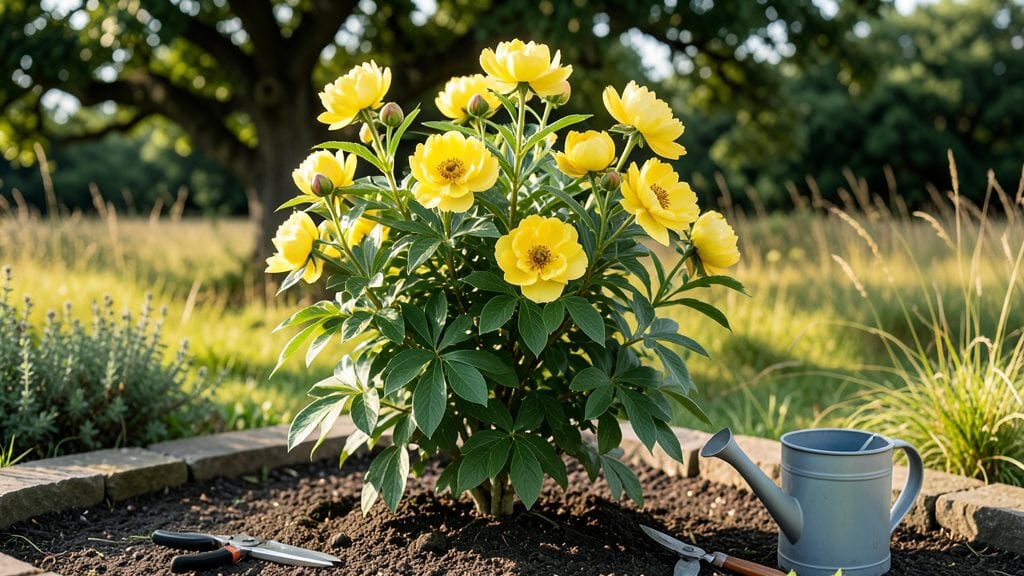
The yellow tree peony plant thrives in the Pacific Northwest, offering frost-resistant blooms that burst into color when spring finally arrives. 🌸 I’ve watched mine push through snowmelt, unfurling golden-yellow blossoms that last weeks longer than their herbaceous cousins.
The secret lies in its roots—deep, sturdy, and built to handle our damp winters and dry summers.
This isn’t your average peony. While most need perfect soil and constant moisture, the yellow tree peony thrives with minimal fuss—drought tolerance once established, late blooms that escape late frosts, and pest resistance that keeps deer and slugs away.
Plant it where it gets morning sun and afternoon shade, and you’ll get bold, dinner-plate blooms that turn heads every May.
You’ll love how it outperforms other peonies—no flopping stems, no wilting in heat, and no need for staking. The flowers even perfume the air with a sweet, honeyed scent that lingers for days.
Prune back dead stems in early spring, and watch it reward you with years of drama with almost no effort.
Perfect for woodland gardens, cottage-style beds, or as a striking focal point near patios. Once planted, it’s a decades-long investment—my 15-year-old tree peony still delivers like it’s brand new. Ready to make yours the star of your garden?
📚 In This Guide
- What you need
- Instructions
- Tips and common mistakes
- Wrapping up and next steps
What you need
- ● Yellow Tree Peony Tubers: 1–3 tubers (depending on desired size; larger tubers yield bigger blooms). Choose certified disease-free tubers from a reputable supplier.
- ● Well-Draining Soil: A mix of 60% garden soil, 30% compost, and 10% perlite/sand (for aeration). Aim for a pH of 6.0–7.0.
- ● Sunlight Spot: A location with full sun (6+ hours/day) and protection from harsh afternoon winds.
- ● Organic Mulch: 2–3 inches of wood chips or straw to retain moisture and regulate soil temperature.
- ● Garden Shovel or Trowel: For digging planting holes (12–18 inches deep and wide).
- ● Pruning Shears: For trimming dead foliage post-planting (sterilized with rubbing alcohol).
- ● Watering Can or Hose: With a gentle spray nozzle for hydration (avoid soaking the tubers).
- ● Garden Gloves: To protect hands from thorns and soil debris.
- ● Slow-Release Fertilizer: 5–10–10 NPK blend (sprinkle lightly around the base after planting).
- ● Frost Cloth: For young plants in early spring (PNW’s unpredictable frost!).
- ● Staking Supports: If planting in windy areas (bamboo stakes + twine).
- ● Soil Moisture Meter: To monitor watering needs (tree peonies hate soggy roots!).
Instructions for planting and caring for yellow tree peonies
Here’s how to establish these striking Northwest beauties for years of bold, frost-hardy blooms.
🪴 Step 1: Select the Perfect Planting Site
Yellow tree peonies thrive in partial shade—think 4-6 hours of morning sun with afternoon shade protection. In the Pacific Northwest’s cooler climate, they’ll tolerate full shade in hotter microclimates but bloom best with some light. Choose a spot with well-draining soil (they hate soggy roots) and shelter from strong winds, which can damage their delicate stems.
Dig a hole twice as wide as the root ball but no deeper—planting too deep smothers the crown and delays blooming. Loosen the roots gently if they’re circling, then position the plant so the top of the root ball sits just below soil level. This ensures proper airflow and prevents rot.
🌱 Step 2: Amend Soil and Plant with Precision
Mix 3 inches of compost into the native soil to improve fertility without compacting it. Tree peonies prefer slightly acidic to neutral soil (pH 6.5-7.5)—test your soil if you’re unsure. Avoid fresh manure or high-nitrogen fertilizers, which encourage leafy growth at the expense of blooms.
Backfill the hole with the amended soil, pressing lightly to remove air pockets but not compacting. Water deeply to settle the soil around the roots. Mulch with 2-3 inches of wood chips, keeping the mulch 6 inches away from the stem to prevent moisture buildup that can cause rot.
☀️ Step 3: Water and Monitor for First Season Success
Water once a week during the first growing season, aiming for 1-1.5 inches of water per session. Let the top 2 inches of soil dry out between waterings—overwatering is the fastest way to kill these hardy plants. Yellow tree peonies are drought-tolerant once established but need consistent moisture to root deeply.
Watch for new foliage in early spring—this signals the plant is settling in. Avoid fertilizing in the first year; the goal is root establishment, not flashy blooms. If leaves yellow, it’s often a sign of overwatering or poor drainage. Adjust your watering schedule and check the soil’s texture.
✂️ Step 4: Prune and Support for Long-Term Health
Prune dead or crossing branches in late winter (before new growth starts) to improve airflow. Never cut back healthy stems—they store energy for next year’s blooms. Use clean, sharp pruners to make cuts at a 45-degree angle just above a bud or branch junction.
Stake taller stems in early spring before buds swell, using 3-4 foot bamboo stakes tied loosely with soft twine. Tree peonies can grow 4-6 feet tall, and their heavy blooms need support. Remove stakes in late fall to avoid damaging the bark during winter.
⏰ Step 5: Winterize for Pacific Northwest Resilience
Yellow tree peonies are hardy to USDA Zone 4, but a thick layer of 4-6 inches of mulch (like shredded bark or straw) protects the crown from freeze-thaw cycles. In extreme cold snaps (below 10°F), wrap the base of the plant with burlap for extra insulation.
Resist the urge to prune in winter—wait until late February or early March when new growth is visible. This timing ensures you don’t accidentally cut off next year’s buds. With proper winter care, your tree peony will reward you with showstopping blooms for decades.
Tips & tricks for perfect yellow tree peony planting
These insider secrets will help you cultivate showstopping blooms that thrive in Pacific Northwest conditions.
Site Selection Wisdom: When choosing your planting location in Step 1, prioritize spots near mature trees or structures that provide natural afternoon shade. I’ve seen tree peonies planted in full sun wither after just two summers—those 4-6 hours of morning sun are non-negotiable for consistent blooming. Also, avoid low-lying areas where cold air settles, as this can damage the crown during winter's harshest months.
Soil Preparation Strategy: In Step 2, don't skip the soil test for pH—tree peonies are particular about their growing medium. I recommend using a simple soil test kit available at garden centers. If your soil tests below pH 6.5, amend with crushed limestone (about 1 pound per 100 square feet) and mix it into the top 6 inches of soil before planting. The 3 inches of compost mentioned is perfect, but for clay-heavy soils, consider adding perlite to improve drainage.
Watering Precision: The once-weekly watering in Step 3 requires careful measurement. Use a rain gauge or place a straight-sided container in your planting area to measure exactly 1-1.5 inches of water. In the Pacific Northwest's unpredictable climate, I’ve found that morning watering prevents fungal issues that can develop from evening moisture. The 2-inch dry soil test is crucial—stick your finger in the soil; if it feels dry at that depth, it's time to water again.
Winter Protection Insight: For extreme cold snaps below 10°F mentioned in Step 5, I recommend using a specialized plant wrap instead of just burlap. These wraps (available at garden centers) provide better insulation while allowing airflow. Also, consider adding a layer of straw mulch on top of your existing 4-6 inches—this creates an extra insulating blanket that can make all the difference in our region's freeze-thaw cycles.
Pro Tips for Yellow Tree Peony Plant
- These insider secrets will help you cultivate showstopping blooms that thrive in Pacific Northwest conditions.
- Site Selection Wisdom: When choosing your planting location in Step 1, prioritize spots near mature trees or structures that provide natural afternoon shade.
- Soil Preparation Strategy: In Step 2, don't skip the soil test for pH—tree peonies are particular about their growing medium.
Frequently asked questions
When is the best time to plant a yellow tree peony in the Pacific Northwest?
The ideal window is early fall (September–October) or early spring (March–April). Planting in fall gives roots time to establish before winter, while spring planting avoids frost stress. For the PNW’s mild, wet winters, fall is often the top choice—just avoid planting when the ground is frozen or soggy!
How cold-hardy is a yellow tree peony, and can it survive PNW winters?
Yellow tree peonies (like Paeonia ostii) are hardy to USDA Zones 5–9, making them perfect for the PNW’s chilly winters. They thrive in Zone 7–8 (Seattle, Portland, etc.) with no extra protection. Just mulch lightly in late fall to shield roots from extreme cold snaps. No fuss—just frost-resistant beauty!
Why aren’t my yellow tree peony buds opening, even though the plant looks healthy?
Bud blast (buds that swell but refuse to open) is common in tree peonies. Causes include late frosts (after buds swell), overcrowded roots, or too much nitrogen. Try pruning nearby plants for airflow, avoid heavy spring fertilizers, and protect buds with frost cloth if late frosts are forecasted.
Can I grow yellow tree peonies in containers, or do they need garden beds?
While they prefer garden beds for long-term growth, yellow tree peonies can thrive in containers for 3–5 years if given spacious pots (20+ gallons), well-draining soil, and winter protection (move to a sheltered spot or wrap the pot). Just know they’ll need larger pots yearly and may bloom less prolifically than in-ground plants.
What pests or diseases should I watch for with yellow tree peonies?
Tree peonies are generally pest-resistant, but keep an eye out for:
- Peony leaf blight (gray spots on leaves—remove infected foliage and improve airflow).
- Root knot nematodes (stunted growth—test soil and rotate crops if needed).
- Japanese beetles (rare but possible—handpick or use neem oil).
For the PNW, fungal issues are the main concern—space plants 3–4 feet apart and avoid overhead watering to prevent problems.
Wrapping up and next steps
The yellow tree peony plant is a stunning, low-maintenance gem that thrives in the Pacific Northwest’s cool climate, offering vibrant blooms and year-round interest. With its frost-resistant nature and striking starburst flowers, it’s the perfect choice for gardeners looking to add drama and color to their landscapes.
Whether you’re a beginner or a seasoned gardener, this hardy beauty makes plant care simple and rewarding!
Ready to bring this showstopper to your garden? Start by choosing the right spot—one with well-draining soil and partial shade—and follow the steps outlined above. Soon, you’ll be enjoying a sea of golden blooms that turn heads and fill the air with fragrance. Happy planting! 🌸✨