
Pruning
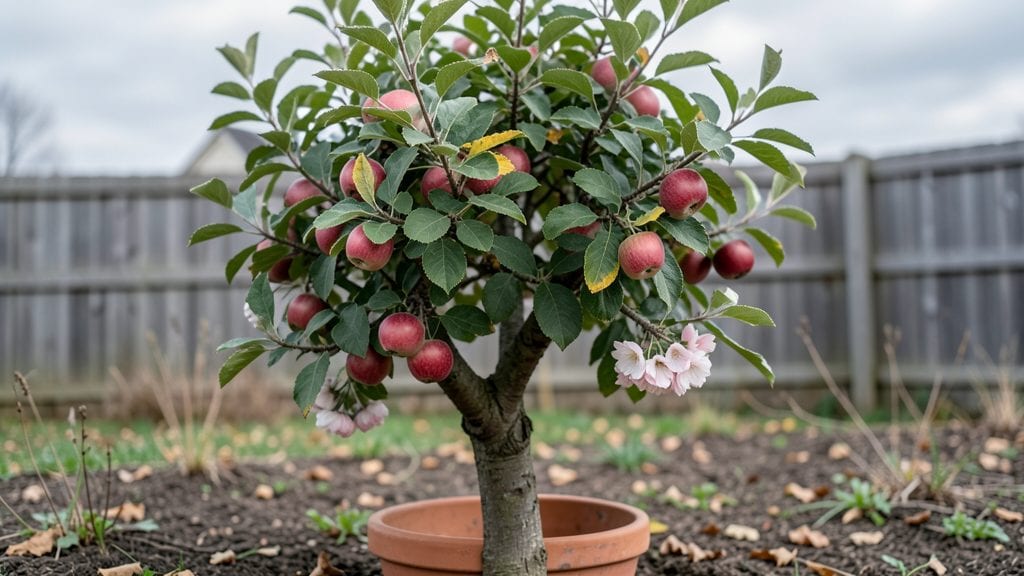
Growing an apple tree in a pot turns your balcony into an orchard—no backyard required. 🌱 I’ve watched my dwarf ‘Columnar’ apple tree produce fruit in 5-gallon pots, proving that space isn’t the limiting factor when you choose the right variety and container.
The key lies in dwarf rootstocks, proper drainage, and a few simple care adjustments that keep the tree happy year-round.
You’ll need a 15- to 25-gallon container (depending on the tree’s mature size), well-draining soil mix, and a spot that gets 6-8 hours of sunlight daily. Varieties like ‘Liberty,’ ‘GoldRush,’ or ‘Anna’ thrive in pots and produce sweet, manageable fruit.
The planting process is straightforward—just ensure the pot has drainage holes and you’re using a high-quality potting mix to prevent root rot.
With consistent watering, monthly fertilization, and annual pruning, you’ll harvest crisp apples within 3-5 years. The trees stay compact, making them perfect for patios, decks, or even sunny windowsills.
Winter care is minimal—just move the pot to a sheltered spot and protect it from freezing temperatures with burlap or a frost blanket.
Root binding and pests are the biggest challenges, but both are easy to manage with regular inspections and proper pot size. Once you master the basics, you’ll enjoy homegrown apples that taste better than anything from the store—and your neighbors will be jealous of your tiny orchard.
📚 In This Guide
- What you need
- Instructions
- Tips and common mistakes
- Wrapping up and next steps
What you need
- ● Dwarf apple tree sapling (choose a variety like ‘Columnar,’ ‘Columnar,’ or ‘Semi-Dwarf’—they’re perfect for containers!)
- ● Large container or pot (minimum 15-gallon capacity for young trees; upgrade to 25+ gallons as it grows). Tip: Ensure it has drainage holes!
- ● High-quality potting mix (use a blend designed for fruit trees or mix 60% well-draining soil with 30% compost and 10% perlite/sand).
- ● Slow-release fertilizer (look for one with a balanced NPK ratio like 10-10-10 or organic options like fish emulsion).
- ● Pruning tools: Bypass pruners (for clean cuts on small branches)
- ● Loppers (for thicker branches as the tree matures)
- ○ Sharp pruning saw (optional, for stubborn wood)
- ● Mulch (wood chips or straw to retain moisture and regulate temperature).
- ● Support stake or trellis (if your tree needs extra stability, especially in windy areas).
- ● Self-watering pot (to keep moisture levels consistent, especially for busy gardeners).
- ● Tree collar or protective wrap (to shield the trunk from sunburn or pests).
- ● pH testing kit (to monitor soil acidity—apple trees prefer 6.0–7.0).
- ● Organic pest control (neem oil or insecticidal soap for aphids or mites).
- ● Drip irrigation system (for automated, gentle watering).
Step-by-Step guide to growing a thriving potted apple tree
Here's how to cultivate a productive mini orchard in containers—no yard required.
🪴 Step 1: Select the Right Variety and Container
Choose a dwarf apple tree variety like 'Columnar' or 'Semi-Dwarf'—these stay compact at 6-8 feet tall and thrive in 5-15 gallon pots. The container must have drainage holes (or you'll drown the roots) and be at least 18 inches deep to accommodate spreading roots. I use fabric grow bags for my potted apples because they allow excess moisture to evaporate while preventing root circling.
Place a 2-inch layer of gravel or expanded clay pebbles at the bottom before adding soil. This creates a reservoir for water while preventing compaction. If your pot has no drainage, drill holes yourself—apple roots rot quickly in soggy conditions. Here's the thing: root health is everything for container fruit trees, so don't skimp on drainage.
🌱 Step 2: Prepare the Soil Mix for Optimal Growth
Fill the pot with a custom soil blend using 60% high-quality potting mix, 20% compost, and 20% perlite or coarse sand. This combination prevents compaction while providing nutrients. Apple trees need well-draining yet moisture-retentive soil—think of it as the Goldilocks of growing mediums. I always mix in 1 cup of bone meal at planting time to give roots a phosphorus boost for early establishment.
Water the mix thoroughly until it's evenly moist but not saturated. Press down lightly to remove air pockets, then let it sit for 24 hours before planting. This pre-watering step prevents transplant shock when you place the young tree in its new home. The soil should feel like a damp sponge—not dripping, but holding moisture when squeezed gently.
☀️ Step 3: Plant and Position for Maximum Sunlight
Dig a hole in the center of the pot twice as wide as the root ball but no deeper. Gently remove the tree from its nursery container and loosen any circling roots with your fingers. Position the tree so the graft union (the swollen area near the base) sits 1-2 inches above the soil line. This prevents the union from being buried, which can cause the tree to produce suckers instead of fruit.
Backfill with your prepared mix, pressing lightly as you go to eliminate air pockets. Water deeply until moisture runs from the drainage holes. Place your potted apple in a location that gets full sun (6-8 hours daily)—south-facing windows or patios work best. Real talk: partial shade leads to poor fruit set, so find the sunniest spot possible. If you're using a balcony, consider a rotating pot stand to ensure even light exposure all around.
💧 Step 4: Water and Fertilize for Consistent Production
Water your potted apple deeply every 2-3 days during the first month, then adjust based on soil moisture. Stick your finger 2 inches into the soil—if it feels dry, water until moisture reaches the bottom of the pot. Overwatering is the #1 killer of container fruit trees, so let the top 1-2 inches dry out between waterings. I use a self-watering pot for my apples to maintain consistent moisture without guesswork.
Fertilize every 4-6 weeks during growing season with a balanced 10-10-10 formula, halving the recommended dose. Apple trees need more potassium as they mature, so switch to a 5-10-10 formula in their second year. The key is consistency—don't skip fertilizing, but don't overdo it either. Yellowing leaves usually mean it's time to feed, but brown edges signal you're over-fertilizing.
✂️ Step 5: Prune and Maintain for Compact Growth
Prune your potted apple annually in late winter before buds swell. Remove dead, crossing, or inward-growing branches first, then thin the canopy to allow light penetration. Aim to keep the tree's shape open and vase-like—this prevents overcrowding and improves air circulation. I never cut more than 25% of the foliage in one season, as this stresses the tree and reduces fruit production.
Watch for suckers (vigorous shoots growing from the base) and remove them immediately. These compete with the main tree for nutrients. Thin fruit clusters to 4-6 apples per branch in the first year to ensure larger, higher-quality harvests. The goal is quality over quantity—smaller harvests mean bigger, tastier apples. Mulch the soil surface with 2 inches of organic mulch to retain moisture and regulate temperature.
Tips & tricks for perfect potted apple tree growth
These little details make all the difference when growing fruit-bearing trees in containers.
Drainage is Non-Negotiable: In Step 1, when setting up your container, double-check that drainage holes are large enough—apple roots need oxygen as much as they need water. If your pot lacks drainage, drill holes yourself (I use a 1/4-inch bit) and line the bottom with landscape fabric to prevent soil from washing out. The 2-inch gravel layer isn't just for looks—it creates crucial air space that prevents root rot, especially during those deep waterings in Step 4.
Soil Science Matters: The 24-hour pre-watering in Step 2 isn't just about convenience—it's about creating the perfect moisture balance before planting. After mixing your soil blend, compress it gently in the pot and let it settle. This mimics natural soil conditions and prevents transplant shock. Pro tip: Add a handful of worm castings to your mix for extra microbial activity that helps roots establish faster.
Sunlight Strategy: When positioning your tree in Step 3, think beyond just "full sun." South-facing windows get intense afternoon light, while east-facing spots provide gentler morning sun. For balcony growers, rotate your pot every 2-3 days to ensure even exposure—this prevents lopsided growth. The 6-8 hours of sunlight requirement is non-negotiable for fruit production, but quality matters more than quantity.
Fertilizer Timing: The 4-6 week feeding schedule in Step 4 works because it aligns with your tree's natural growth cycles. Start fertilizing in early spring when you see new leaves emerging, and stop in late summer to let the tree harden off before winter. I've found that switching to a 5-10-10 formula in the second year gives my trees that extra potassium boost they need for fruit development—just be careful not to exceed the recommended dose, as brown leaf edges are a sure sign of over-fertilization.
Pro Tips for Apple Tree In Pot
- These little details make all the difference when growing fruit-bearing trees in containers.
- Drainage is Non-Negotiable: In Step 1, when setting up your container, double-check that drainage holes are large enough—apple roots need oxygen as much as they need water.
- Soil Science Matters: The 24-hour pre-watering in Step 2 isn't just about convenience—it's about creating the perfect moisture balance before planting.
Frequently asked questions
Got questions about growing an apple tree in a pot? You’re not alone!
Here are answers to the most common concerns—from pruning to placement—to help you nurture your mini orchard with confidence.
How big can an apple tree grow in a pot?
Most dwarf or semi-dwarf varieties (like ‘Columnar’ or ‘Spindle’) stay 6–10 feet tall in pots, while standard trees can reach 15+ feet if pruned aggressively. Container size matters: 15–25 gallons for dwarfs, 30+ gallons for larger roots. Root-bound trees grow slower—repot every 2–3 years to avoid stunted growth.
When is the best time to prune an apple tree in a pot?
Prune twice a year for optimal health:
- Late winter/early spring (before buds swell): Remove dead wood, shape the tree, and open the center for airflow. This encourages fruit production.
- Summer (after harvest): Trim water sprouts (fast-growing vertical shoots) to redirect energy to fruit-bearing branches.
Can I keep an apple tree in a pot indoors?
Not ideal! Apple trees need sunlight (6+ hours/day) and fresh air. If indoors, place them near a south-facing window or use a grow light (12+ hours/day). For best results, move pots outdoors in spring/summer and bring them inside only if temps drop below 20°F (-7°C). Warning: Indoor air is often dry—mist leaves or use a humidifier to prevent browning.
Why isn’t my potted apple tree producing fruit?
Common culprits:
- Insufficient sunlight: Apple trees need full sun (6+ hours). Move to a sunnier spot or supplement with grow lights.
- Poor pollination: Plant two compatible varieties (e.g., ‘Honeycrisp’ + ‘Gala’) or hand-pollinate with a paintbrush.
- Overcrowded roots: Check for root-bound trees (roots circling the pot). Repot or prune roots gently with sterilized shears.
- Young age: Dwarf trees may take 3–5 years to bear fruit. Be patient!
How do I protect my potted apple tree from extreme cold?
Apple trees tolerate down to -10°F (-23°C) if dormant, but pots freeze faster than ground soil. Prevent damage with these steps:
- Wrap the pot in bubble wrap or insulation and cover the tree with a frost blanket.
- Move pots to a sheltered spot (e.g., against a wall) or bury the pot halfway in mulch or straw.
- Avoid watering before freeze—wet roots = ice damage. Resume watering in spring.
Wrapping up and next steps
Growing an apple tree in a pot is a rewarding way to enjoy fresh fruit—even in small spaces! With the right container, pruning techniques, and care, you can cultivate a thriving, compact tree that yields delicious apples year after year. 🌱🍏
Now that you’re armed with the blueprint for success, it’s time to roll up your sleeves and get growing! Start by selecting the perfect variety and pot, then follow your pruning and maintenance plan.
Before you know it, you’ll be harvesting your own homegrown apples—what’s not to love? Happy gardening!