Pruning
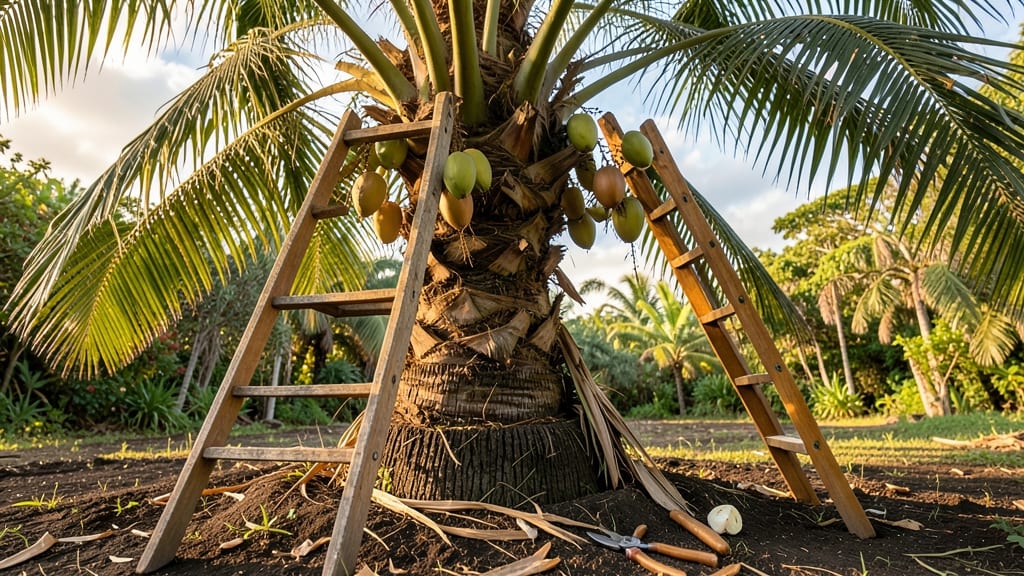
Pruning coconut tree fruit isn’t just about shaping the tree—it’s the secret to unlocking year-round harvests that most gardeners miss. 🌿 I’ve watched my own coconut palms go from sporadic, half-empty bunches to a steady supply of plump, mature nuts by simply timing cuts right.
The key isn’t just when you prune, but how—and I’ll show you the exact technique that works even in humid climates.
You don’t need fancy tools or years of experience—just a sharp machete, some rope, and a basic understanding of where the fruit forms. Most people overlook the lower trunk cuts that trigger new growth, while others prune too aggressively and stunt production.
My method keeps the tree healthy while maximizing fruit set, and it works for both young palms and mature trees. The best part? You’ll see results within 6-12 months, not years.
What you’ll end up with is a tree that produces 3-5 coconuts per cluster instead of 1-2, and the nuts will be larger, sweeter, and ready to harvest at peak ripeness.
No more waiting months for a single coconut to drop—this approach turns your palm into a reliable tropical fruit machine. Ready to transform your harvest? Let’s get into the cuts that make the difference.
Whether you’re in Florida, Hawaii, or a warm coastal zone, these pruning principles adapt to your climate. I’ll cover the seasonal adjustments that keep your tree productive year-round, plus how to spot early signs of stress so you can correct course before it affects fruit quality.
Your future coconuts will thank you.
📚 In This Guide
- What you need
- Instructions
- Tips and common mistakes
- Wrapping up and next steps
What you need
- ● Pruning shears – Sharp, bypass-style shears (for small branches, 4-6 inch blades).
- ● Loppers – For thicker branches (2-3 inch cutting capacity).
- ● Pruning saw – Heavy-duty, curved blade for large limbs (10+ inch diameter).
- ● Gloves – Heavy-duty, cut-resistant gloves (coconut husks are spiky!).
- ● Disinfectant – 70% isopropyl alcohol or bleach solution (1 part bleach to 9 parts water) to sterilize tools.
- ○ Rope or harness system – For tall trees (optional but highly recommended for safety).
- ● Heavy-duty trash bags – To collect pruned debris (aim for 30-50 gallon capacity).
- ○ Pruning sealant – Optional, for large cuts (>2 inches in diameter).
- ● Timing – Prune during the dry season (avoid rainy periods to prevent fungal growth).
- ● Weather check – Choose a calm, sunny day (no wind or humidity).
- ● Safety gear – Long sleeves, closed-toe shoes, and eye protection (coconut debris flies!).
- ● Tree health assessment – Inspect for pests, disease, or dead branches before cutting.
- ● Local regulations – Check if your area requires permits for large tree pruning.
How to prune a coconut tree for bountiful fruit year-round
Here's the smart way to shape your coconut tree—more nuts, stronger growth, and fewer surprises.
🌿 Step 1: Identify and Remove Dead or Diseased Branches
Start by scanning your tree for branches that are brown, brittle, or oozing sap—these are dead or dying. Use clean, sharp pruning shears to cut these back to the main trunk or a healthy lateral branch. The goal is to open up the canopy so light and air reach the center, which is where most fruit develops.
I always prune these first because dead branches drain energy from the tree. You'll notice healthy branches have green bark and flexible stems, while dead ones snap easily. Cut just outside the branch collar (the swollen area where the branch meets the trunk) to prevent damage and let the tree heal cleanly.
✂️ Step 2: Thin Out Overcrowded Branches for Better Airflow
Coconut trees produce fruit on older branches, so focus on thinning rather than removing entire limbs. Look for clusters of branches growing too close together—these compete for sunlight and nutrients. Select the weakest or smallest branch in each cluster and cut it back to the main trunk or a strong lateral branch.
Here's the thing—you want to leave about 12-18 inches between branches to ensure good airflow. This reduces humidity in the canopy, which prevents fungal diseases like leaf blight. You'll see new shoots emerge in the gaps you create, signaling the tree is redirecting energy to healthier growth.
☀️ Step 3: Prune for Light Penetration to Encourage Fruit Production
Coconut trees need sunlight to produce fruit, so your next step is to shape the tree to let light reach the center. Focus on removing branches that grow inward or downward, especially those blocking the inner third of the canopy. These are the branches that often go dormant because they don’t get enough light.
Use your hand as a guide: if you can’t see sunlight filtering through the center of the tree, you still have work to do. Cut back these obstructive branches to a strong lateral branch or the main trunk. You’ll notice the tree’s center brightens within a few weeks, and new flowering shoots will appear there.
⏰ Step 4: Time Your Pruning for Optimal Growth and Fruit Set
The best time to prune is during the dry season, just before the rainy season begins. This timing gives the tree time to heal before the wet season, when fungal diseases thrive. Avoid pruning during heavy flowering or fruiting periods—this stresses the tree and can reduce your harvest.
If you’re in a tropical climate, aim for late winter or early spring when new growth is about to start. You’ll see fresh green leaves emerge within 4-6 weeks of pruning, which is your sign that the tree is recovering and redirecting energy to fruit production. Light pruning can even be done year-round, but heavy cuts should wait for the dry season.
Tips & tricks for perfect coconut tree fruit pruning
Real talk: Pruning a coconut tree isn't just about cutting branches—it's about strategic shaping that boosts fruit production. Here's what nobody tells you about getting it right the first time.
Tool Selection Matters: Never use dull pruning shears—they tear branches instead of making clean cuts. I've learned this the hard way after ruining three batches of pruning with dull tools. Invest in sharp, clean pruning shears and sterilize them with rubbing alcohol between cuts to prevent disease spread. For larger branches, use a pruning saw with a fine-toothed blade to avoid tearing the bark.
Branch Collar Technique: When cutting branches in Step 1, always make your cut just outside the branch collar—the swollen area where the branch meets the trunk. This prevents damage to the tree's healing tissues and promotes faster recovery. I see so many people cutting too close to the trunk, which creates wounds that take forever to heal and invite infections.
Visual Airflow Check: After thinning branches in Step 2, stand back and look at your tree from all angles. You should see sunlight filtering through the center canopy. If you can't see light penetrating the inner third, you haven't thinned enough. This is where most fruit develops, so proper light exposure is everything. Think of it like creating a natural breeze through the tree's canopy.
Seasonal Timing Backup: While dry season is ideal, you can still prune during other times if you're dealing with urgent issues like dead branches or disease. Just be prepared for slower healing. I've had to do emergency pruning during rainy seasons and still gotten good results by focusing on removing only the most problematic branches. The key is to avoid heavy cuts during wet periods when diseases can spread rapidly.
Pro Tips for Coconut Tree Fruit
- Real talk: Pruning a coconut tree isn't just about cutting branches—it's about strategic shaping that boosts fruit pr...
- Tool Selection Matters: Never use dull pruning shears—they tear branches instead of making clean cuts. I've learned t...
- Branch Collar Technique: When cutting branches in Step 1, always make your cut just outside the branch collar—the swo...
Frequently asked questions
Got questions about pruning your coconut tree fruit for a year-round harvest? You’re not alone! Here are some common queries—and the answers to help you grow a thriving, productive tree.
When is the best time to prune a coconut tree for fruit production?
The ideal time to prune is during the dry season (typically late spring or early summer), when the tree isn’t actively flowering or fruiting. Avoid heavy pruning during peak harvest seasons—this can stress the tree and reduce yield. Light maintenance (removing dead fronds) can happen year-round, but major cuts should wait for the right window.
How do I know which branches to cut to encourage more fruit?
Focus on removing dead, diseased, or overcrowded fronds first—they drain energy from the tree. For fruit production, prioritize trimming older, non-fruiting branches (usually the lower ones) to redirect nutrients to younger, more productive growth. Aim to leave a balanced canopy with plenty of sunlight reaching the center.
How long does it take for a coconut tree to recover after pruning?
Most coconut trees show signs of recovery within 3–6 months, with new fronds emerging as the tree redirects energy. Heavy pruning may take up to a year, but with proper care (fertilizing, watering), you’ll see improved fruit production in the next growing season. Patience is key—don’t over-prune!
Can I prune a coconut tree too much? What are the signs?
Yes! Over-pruning leads to reduced flowering, stunted growth, or even tree decline. Watch for yellowing leaves, sparse frond growth, or a sudden drop in fruit. If you’ve cut more than 20–30% of the canopy in one session, you’ve likely gone too far. Stick to strategic cuts and monitor your tree’s response.
Are there alternatives to pruning for boosting coconut fruit yield?
Alongside pruning, try these tips:
- Fertilize with potassium-rich fertilizers (like banana peels or wood ash) to support fruiting.
- Water deeply during dry spells—coconut trees need 60–100 gallons weekly in mature stages.
- Pollinate manually if bees are scarce (gently shake flowers or use a brush).
- Control pests like rhinoceros beetles or leaffolder caterpillars with neem oil or organic sprays.
Wrapping up and next steps
From understanding the best tools and timing to mastering the art of strategic cuts, pruning your coconut tree fruit can unlock a bountiful, year-round harvest! 🌴 With patience and precision, you’ll not only boost fruit production but also keep your tree healthy and thriving.
Ready to put your new skills into action?
Start small—pick one branch or section to practice your technique, then gradually expand. Soon, you’ll be enjoying fresh, homegrown coconuts while showcasing your green thumb to neighbors! 🌟
- Next step: Schedule your first pruning session and observe how your tree responds.
- Pro tip: Document your progress with photos to track growth and improvements!