
Pruning
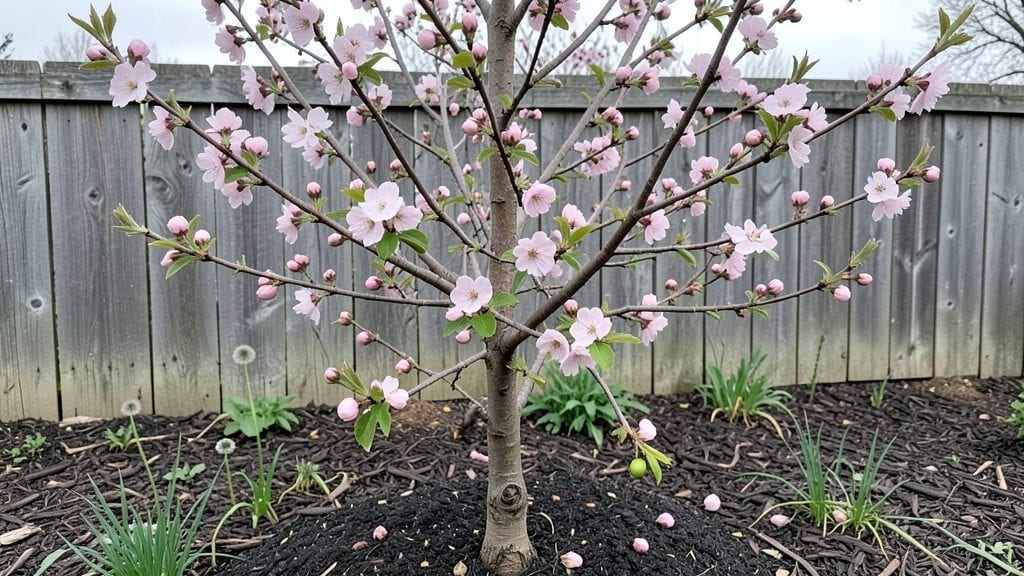
Fall pruning your crabapple tree isn't just about shaping—it's about preparing it to stand tall through Pacific Northwest winters. ✨ The right cuts now mean fewer broken branches after ice storms and a stronger framework for next year's blossoms.
My first attempt left half the tree looking like a lopsided umbrella, but I learned the hard way: timing and technique matter more than enthusiasm.
Start by removing dead or crossing branches first—they're the weak points that snap under snow or wind. Then, thin out the canopy to let light reach the center, where those signature pink blooms will burst in spring.
Use sharp pruners and clean cuts at a slight angle, about ¼ inch above a bud facing outward. The goal is a balanced shape that catches the eye without becoming top-heavy.
You'll end up with a tree that looks like it belongs in a postcard: sturdy branches arching gracefully, no awkward stubs, and a natural taper that resists winter damage. The fallen leaves will still create that signature autumn carpet, but the structure underneath will be unshakable.
Plus, the fruit you harvest this fall will taste sweeter when the tree isn't struggling to support weak branches.
Works for both young trees and mature specimens, though older trees might need a second session in early winter if the work feels overwhelming. The key is to prune before the first hard frost hits—typically by mid-October in most of the PNW.
Now grab those pruners before the leaves all fall!
📚 In This Guide
- What you need
- Instructions
- Tips and common mistakes
- Wrapping up and next steps
What you need
- ● Pruning shears (bypass type) – Sharp, clean, and sized for small to medium branches (7-10 inches). Quantity: 1.
- ● Loppers – For thicker branches (up to 2 inches in diameter). Quantity: 1.
- ● Pruning saw – A bow saw or pruning saw for branches larger than 2 inches. Quantity: 1.
- ○ Extension pole pruners – For high branches (optional but helpful). Quantity: 1.
- ● Gloves – Heavy-duty, cut-resistant gloves to protect your hands.
- ● Safety glasses – To shield your eyes from debris.
- ● Disinfectant (70% isopropyl alcohol or bleach solution) – To sterilize tools between cuts and prevent disease spread.
- ○ Tree wound dressing (optional but recommended) – A high-quality pruning sealant for larger cuts (e.g., Tanglefoot Tree Wound Pruning Sealer).
- ● Ladder or step stool – If your tree is taller than 6 feet. Ensure it’s stable and rated for your weight.
- ● Trash bags or bucket – For collecting fallen branches and debris.
- ● Pole saw – For very high or thick branches beyond ladder reach.
- ● Rope or harness – If working on extremely tall trees (safety first!).
- ● Marking spray or paint – To tag branches for removal before cutting.
- ● Work boots with ankle support – For stability on uneven ground.
- ● First-aid kit – Just in case of minor cuts or scrapes.
Step-by-step guide for pruning crabapple trees in fall
Here's the method I rely on to shape these trees for winter while keeping them healthy and stunning in the Pacific Northwest's chilly climate.
✂️ Step 1: Remove Dead, Diseased, or Damaged Branches
Start by identifying branches that are completely dead, showing signs of disease (like fungal spots or oozing sap), or physically damaged (broken, split, or cracked). These branches won't recover and can spread problems to healthy wood. Use sharp, clean pruning shears to make cuts just outside the branch collar—the swollen area where the branch meets the trunk.
I always cut at a slight angle to avoid leaving stubs that can rot. If a branch is larger than 2 inches in diameter, use a pruning saw instead. Work your way around the tree, removing these problematic branches first—they're the easiest to spot and the most urgent to address. You'll know you're doing it right when you're left with branches that look healthy and green underneath the bark.
✂️ Step 2: Thin the Canopy for Better Airflow
Crabapple trees need good airflow to prevent fungal diseases, especially in the damp Pacific Northwest climate. Look for branches that cross or rub against each other—these create wounds and invite infection. Also target branches growing straight upward (called "water sprouts") and those growing inward toward the center of the tree.
Make your cuts just above a outward-facing bud or branch. This encourages new growth in the right direction. I like to step back frequently to visualize the tree's shape—you're aiming for an open, vase-like structure that lets light reach the inner branches. Aim to remove about 20% of the tree's canopy in total during this step. You'll see a noticeable difference in how light filters through the branches when you're done.
✂️ Step 3: Shape the Tree for Winter Hardiness
Now focus on refining the tree's overall shape to help it withstand winter winds and snow. Start by shortening overly long branches by about one-third. Cut just above a bud that faces outward. For horizontal branches, make the cut at the branch collar. For upward-growing branches, cut back to a lateral branch that grows at a 45-degree angle or less from the trunk.
Pay special attention to the tree's lower branches—these often get weighed down by snow in winter. Shortening them prevents breakage. I like to create a natural, layered look with the largest branches at the bottom and progressively smaller ones toward the top. This mimics how these trees grow in the wild. When you're finished, the tree should look balanced from all sides, with no heavy concentrations of branches on one side.
⏰ Step 4: Clean Up and Protect the Tree
After pruning, remove all the debris from the ground around the tree. This prevents fungal spores from overwintering and infecting your tree next season. I use a tarp to collect all the clippings before bagging them for disposal or composting (only if disease-free). Sterilize your pruning tools with rubbing alcohol between cuts on different trees to prevent spreading disease.
Apply a thin layer of mulch around the base of the tree, keeping it about 3 inches away from the trunk. This helps protect the roots from freezing temperatures. Water the tree deeply before the first hard frost to ensure it's hydrated going into winter. You'll know you've done everything right when the tree looks clean, balanced, and ready to handle whatever winter throws at it in the Pacific Northwest.
Tips & tricks for pruning crabapple trees in fall
Fall pruning transforms your crabapple tree into a winter warrior—here's how to avoid common mistakes and get professional results.
Tool Prep is Everything: Sterilize your pruning shears with rubbing alcohol between every cut, especially when moving from diseased to healthy branches. I learned this the hard way after accidentally spreading fungal spores between branches. Also, sharpen your tools before starting—dull blades tear wood instead of making clean cuts, which invites infection. A quick test: if your shears struggle to cut through a pencil, they need sharpening.
Step 1 Visual Check: In Step 1, when removing dead branches, look for the classic "thrill test"—scratch the bark with your fingernail. If it's green underneath, it's alive; if it's brown, it's dead. For branches larger than 2 inches, make your cut just outside the branch collar at a 45-degree angle. This prevents water from pooling where the branch used to be, which would rot the wound.
Canopy Thinning Secret: When thinning in Step 2, focus on removing branches that grow inward or cross others—these are the biggest airflow killers. I use a simple trick: step back every 5-10 cuts and look at the tree through your fingers (like a venetian blind). This instantly shows you where light can't penetrate. Remember, you're aiming for that open vase shape, not a dense Christmas tree!
Winter Prep Finishing Touches: After pruning, don't forget to water deeply before the first hard frost—this helps the tree store moisture in its roots for winter. For extra protection in harsh Pacific Northwest winters, consider wrapping the trunk with tree wrap if you notice sun scald spots. And always leave that 3-inch mulch ring—it's like a cozy blanket for the roots!
Pro Tips for Crabapple Tree Fall
- Fall pruning transforms your crabapple tree into a winter warrior—here's how to avoid common mistakes and get professional results.
- Tool Prep is Everything: Sterilize your pruning shears with rubbing alcohol between every cut, especially when moving from diseased to healthy branches.
- Step 1 Visual Check: In Step 1, when removing dead branches, look for the classic "thrill test"—scratch the bark with your fingernail.
Frequently asked questions
Got questions about crabapple tree fall pruning in the Pacific Northwest?
Here are some common concerns—and clear answers—to help you tackle the job with confidence!
When is the best time to prune a crabapple tree in fall?
Prune your crabapple tree in late fall (November–early December) after leaves drop but before hard frosts. This timing minimizes disease risk and promotes strong growth. Avoid pruning too early—damp conditions can invite fungal infections. In the PNW’s mild climate, late fall is ideal for shaping without stressing the tree.
Will fall pruning harm my crabapple tree in cold climates?
Not if done correctly! Crabapple trees are frost-resistant, but avoid heavy pruning in extreme cold. Focus on light shaping (removing dead/diseased wood) rather than major cuts. In the PNW, where winters are wet but not brutally cold, fall pruning is safe. Just avoid pruning during frost—wait for dry, mild days.
How do I clean up crabapple branches after pruning?
Remove all pruned branches and debris immediately to prevent disease spread and pests. Burn or chip branches (if diseased), then sterilize tools with a 10% bleach solution. Rake up fallen leaves and dispose of them—this reduces fungal spores like apple scab, common in PNW crabapples.
Are there alternatives to fall pruning for crabapple trees?
Yes! You can prune in late winter (Feb–March) when the tree is dormant but before buds swell. However, fall pruning is preferred for shaping frost-resistant forms—it lets the tree heal before winter stress. Avoid summer pruning, as it can stress the tree and attract pests like borers.
What if my crabapple tree has blackened or oozing branches after pruning?
This could signal bacterial or fungal infection (e.g., silver leaf or fire blight). Act fast: Remove infected branches 6 inches below the damage, sterilize tools, and apply copper fungicide if needed. In the PNW’s damp climate, preventative pruning (thinning for airflow) helps avoid recurrence.
Wrapping up and next steps
Crabapple tree fall pruning is your chance to sculpt a stunning, frost-resistant masterpiece in the Pacific Northwest—one that thrives year after year! 🌳 By following the right techniques, timing, and tools, you’ll ensure your tree stays healthy, beautiful, and resilient against winter’s chill. The key? Patience, precision, and a little seasonal TLC.
Ready to transform your yard? Start by marking your calendar for late fall (November is ideal!) and gather your supplies. Then, roll up your sleeves—your crabapple’s future springtime glory starts with the cuts you make today! 🌟