
Pruning
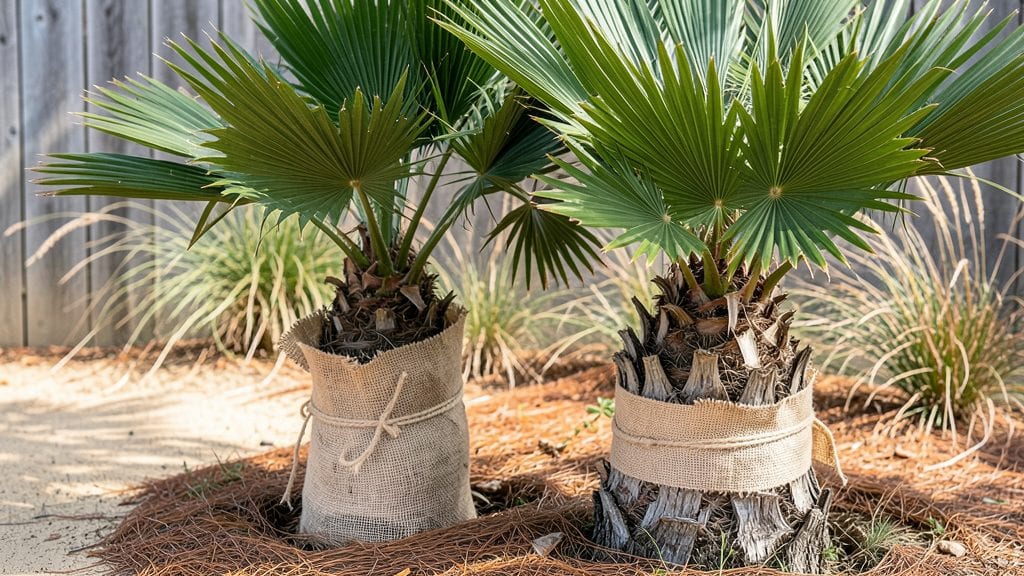
Wrapping palm trees for winter isn’t just about survival—it’s about giving your tropical beauty a fighting chance against frost. I’ve saved more palms than I’ve lost by mastering this foolproof technique, and the key is timing, breathable materials, and just enough insulation to make a difference.
The first year I tried, I used plastic sheeting and nearly suffocated the trunk—now I know better.
You’ll need burlap or frost cloth (never plastic), twine or zip ties, and cardboard tubes for trunk protection. Wrap the fronds first in dry burlap, then secure the trunk with tubes stuffed with straw or foam—this creates air pockets to trap warmth without trapping moisture.
The whole process takes about 30 minutes per tree, and the difference in spring is dramatic: no crispy fronds, no blackened trunks.
By spring, your palms will push out fresh fronds with vibrant green new growth, proof that the wrapping worked. Just remove the burlap as soon as daytime temps hit 50°F consistently, and watch your trees bounce back like nothing happened.
The secret? Monitoring the wrap weekly for mold or moisture buildup—those are the silent killers.
This method works for pindo, Mediterranean, and Canary palms alike, though smaller varieties need extra care. If you’re in Zone 8 or colder, double up on insulation—but avoid over-wrapping, or you’ll trap too much humidity and invite fungal issues. Trust me, your palms will thank you come spring.
📚 In This Guide
- What you need
- Instructions
- Tips and common mistakes
- Wrapping up and next steps
What you need
- ● Burlap or frost cloth: 1–2 rolls (enough to cover the entire palm, typically 5–10 feet per tree, depending on size). Choose breathable fabric to prevent moisture buildup.
- ● Plastic tree wrap or bubble wrap: 1–2 rolls (10–20 feet, depending on palm height). Opt for clear or white to reflect sunlight and reduce heat absorption.
- ● Twine or zip ties: 1 roll (for securing materials tightly without damaging the trunk). Avoid wire or anything that could cut into the bark.
- ● Pruning shears: 1 pair (to trim fronds or dead leaves before wrapping). Sterilize blades with rubbing alcohol for hygiene.
- ○ Stakes or wooden dowels: 2–4 (optional but helpful for supporting the wrap if the palm is tall or top-heavy). Use untreated wood to avoid chemicals.
- ● Insulating foam tubes: Pre-cut to fit around the trunk (great for younger palms or cold climates). Measure the trunk’s circumference first!
- ● Reflective paint or aluminum tape: Apply to the south-facing side of the wrap to bounce back sunlight and reduce heat stress.
- ● Mulch (straw or pine needles): Spread a 2–3 inch layer around the base (but not against the trunk) to insulate roots.
- ● Waterproof tape: To seal seams in the plastic wrap and keep out rain or snow.
Step-by-Step instructions for protecting palm trees in cold weather
Here’s my foolproof method for shielding palm trees without stressing the plant or overcomplicating the process.
Assess the Palm’s Size and Frost Risk
First, examine your palm’s height and trunk diameter—this determines how much protection it’ll need. Smaller palms under 6 feet tall with 2-inch trunks only need a light wrap, while mature palms over 15 feet with 6-inch trunks require full burlap or frost cloth coverage. Check your local frost forecast: if temperatures will dip below 28°F, you’re dealing with a critical freeze.
Palms are most vulnerable when soil temperatures drop below 32°F—this is when root damage starts. If your palm is in a pot, move it to a sheltered spot against a south-facing wall before wrapping. For in-ground palms, focus on the trunk and fronds first—they’re the weakest points during a freeze.
Gather the Right Wrapping Materials
You’ll need burlap sacks (the heavier, 12-ounce test kind), frost cloth (rated for 20°F), and plastic sheeting (6-mil thickness) for larger palms. Avoid cheap vinyl tarps—they trap too much moisture and can rot the trunk. For extra insulation, gather straw or pine needles to stuff around the base of the trunk.
Measure the palm’s trunk circumference and cut burlap to 2 feet wider than the trunk’s diameter—this ensures full coverage without gaps. If your palm has fronds, secure them with twine or landscape staples to prevent them from snapping under ice or wind. A fan or space heater placed nearby can also help circulate warm air around the trunk during a hard freeze.
Wrap the Trunk and Fronds Securely
Start at the base of the trunk and wrap the burlap vertically, overlapping each layer by 4-6 inches to block cold air. For palms over 10 feet tall, use frost cloth instead—it’s lighter and breathes better. Secure the wrap with landscape staples or twist ties every 12 inches, ensuring no gaps where cold air could seep in.
Next, fold the fronds inward (if they’re not already damaged) and tie them loosely with twine. This prevents them from flailing in wind or breaking under ice. If your palm has a crownshaft (the thick base where fronds emerge), wrap that area extra carefully—it’s the most sensitive to cold. Leave the top 6 inches of the palm exposed to allow some airflow and prevent rot.
Add Insulation and Monitor Through the Freeze
Stuff the base of the trunk with straw or pine needles to create a 4-inch-thick insulating barrier—this mimics natural mulch and keeps roots warmer. For potted palms, wrap the pot in bubble wrap or foam board to add an extra layer of insulation. If temperatures are expected to drop below 20°F, drape plastic sheeting over the burlap and secure it with bricks or stakes to trap heat.
Check your wrapped palm every 2-3 days during the freeze. If you see condensation inside the wrap, loosen it slightly to improve airflow—too much moisture can cause rot. If the ground freezes solid, add a thick layer of leaves or straw around the base to insulate the roots further. Once temperatures rise above 32°F, remove the wrap immediately to prevent overheating and fungal growth.
Tips & tricks for protecting palm trees in winter
Here's what I've learned from years of winterizing palms—these small adjustments make all the difference between a thriving plant and one that struggles to recover.
Size Matters: The 6-foot height and 2-inch trunk guideline in Step 1 is your starting point, but don't assume all palms in that range need identical treatment. Young palms with thin trunks might need an extra layer of frost cloth even if they're under 6 feet, especially if your forecast shows a prolonged freeze below 28°F. I've seen 5-foot palms with 1.5-inch trunks suffer more than expected because they weren't properly assessed for their specific vulnerability.
Material Selection Tip: When gathering materials in Step 2, prioritize breathability—especially for the 12-ounce burlap. Cheap burlap or plastic alternatives can create a greenhouse effect that actually harms the palm. I've had success using breathable landscape fabric as an alternative to frost cloth for medium-sized palms, as long as it's rated for at least 20°F temperatures. The key is maintaining that balance between insulation and airflow.
Critical Wrapping Technique: The 4-6 inch overlap in Step 3 isn't just about coverage—it's about creating an airtight seal against cold drafts. I learned this the hard way when a gap at the bottom of my largest palm's wrap let in freezing air that damaged the trunk. For extra security, especially on windy days, add a second layer of twine around the entire wrap after securing it with staples. This prevents the wrap from unraveling during storms.
Monitoring Strategy: The 2-3 day check-ins in Step 4 are crucial, but what you're actually looking for goes beyond just condensation. Pay attention to how the wrap feels—if it's damp to the touch but not visibly wet, that's normal. However, if you feel moisture inside the wrap, it's time to adjust immediately. I keep a small notebook by my wrapped palms to track temperature fluctuations and moisture levels, which helps me predict when adjustments will be needed.
Pro Tips for How Do You Wrap A Palm Tree For Winter
- Here's what I've learned from years of winterizing palms—these small adjustments make all the difference between a thriving plant and one that struggles to recover.
- Size Matters: The 6-foot height and 2-inch trunk guideline in Step 1 is your starting point, but don't assume all palms in that range need identical treatment.
- Material Selection Tip: When gathering materials in Step 2, prioritize breathability—especially for the 12-ounce burlap.
Frequently asked questions
about wrapping palm trees for winter—because even pros need a little clarity! Here are the answers to the most common questions to help you protect your tropical beauty like a pro.Do palm trees really need to be wrapped in winter?
It depends on your climate! If you live in USDA Zones 8-10 and experience light frosts (below 25°F), wrapping can prevent cold damage to fronds and trunk. In Zones 7 or colder, consider moving potted palms indoors or using heavy-duty burlap for extra insulation. Young or newly planted palms are especially vulnerable.
When is the best time to wrap a palm tree for winter?
Wrap your palm 2-3 weeks before the first frost (typically late fall, like October-November in most regions). This gives the burlap time to shield the tree from sudden cold snaps. Remove the wrap in early spring (March-April) once temperatures consistently stay above freezing to avoid trapping moisture.
Can I use plastic sheeting instead of burlap to wrap my palm tree?
No—avoid plastic at all costs! Plastic traps moisture, leading to mold, rot, or even frost burn. Burlap or frost cloth is breathable and allows air circulation while blocking wind and cold. For extra protection, layer burlap over a lightweight frame (like PVC pipes) to keep it off the trunk and prevent pests from nesting.
What if my palm tree’s fronds turn brown after wrapping?
Brown fronds can happen if the wrap is too tight (restricting airflow) or if the tree was already stressed before winter. Don’t panic! Trim dead fronds in late winter/early spring (after new growth appears). If browning spreads to the trunk, check for frost cracks—seal minor cracks with pruning sealant, but deep splits may need professional repair.
Are there palm tree varieties that don’t need winter wrapping?
Yes! Some cold-hardy palms like Windmill Palm (Trachycarpus fortunei) or Needle Palm (Rhapidophyllum hystrix) tolerate temps down to 5°F and may not require wrapping. Research your specific palm species—native or hybrid palms often need less protection than tropical varieties like Coconut or Date Palms.
How do I fix a wrap that’s falling off or blowing away?
Secure the wrap with landscape staples or soft twine (avoid wire, which can damage bark). For extra stability, use S-hooks or bungee cords to anchor the burlap to stakes around the tree. If the wind is relentless, consider a lightweight wire cage wrapped in frost cloth for added support.
Wrapping up and next steps
Wrapping your palm trees for winter is a simple yet effective way to shield them from frost and keep them thriving! 🌿 With the right materials—like burlap, frost cloth, or even cardboard—and a few easy steps, you’ll give your tropical friends the protection they deserve.
Remember, consistency is key: check your wrap regularly and adjust as needed.
Now that you’re armed with knowledge, take action this weekend—before the first frost hits! Start with just one palm, and soon, your entire yard will thank you. Happy wrapping, and may your palms stay lush and frost-free all season long! 🌟