
Pruning
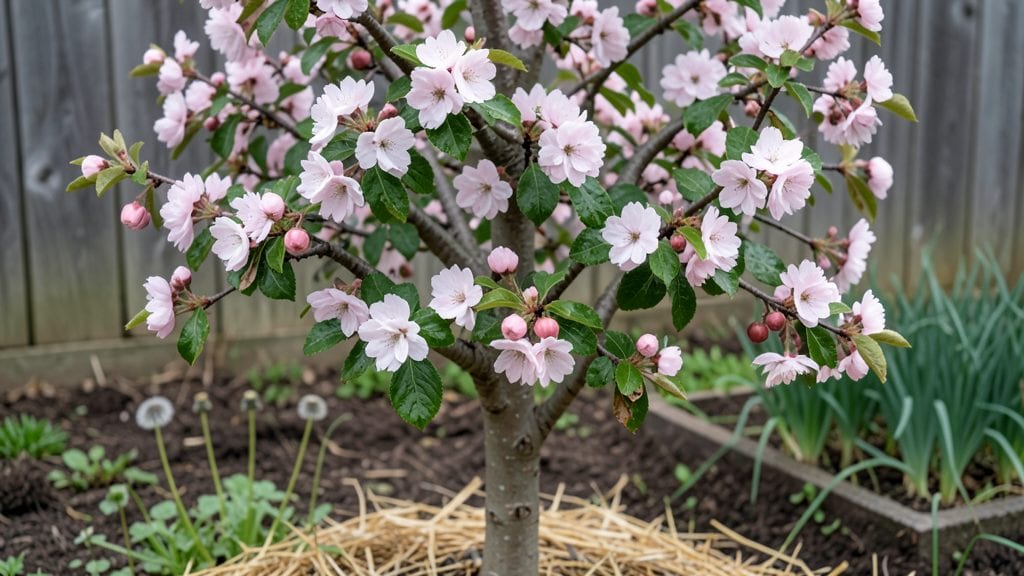
Strategic cuts now mean pink crabapple blooms that outlast spring frost every year. 🌸 I’ve watched these trees go from sparse, late-season flowers to bursting with frost-resistant pink blossoms by pruning at the right time—something that took me three seasons to master.
The key isn’t just when you cut, but how: thinning old wood and opening the center lets sunlight warm the buds earlier, while avoiding winter pruning prevents frost damage.
You’ll need sharp bypass pruners, a clean saw for thicker branches, and a clear day in late winter or early spring—before buds swell but after the worst cold passes.
Most pink crabapple varieties like ‘Pink Pearl’ or ‘Royalty’ respond best to moderate cuts (no more than 25% of the canopy), but the real secret is timing: prune when days are above freezing but before bees wake up.
This ensures blooms arrive early enough to beat late frosts while still attracting pollinators.
What you’ll end up with is a tree that blooms like a cloud of pink for weeks, even in cold climates. The flowers stay vibrant longer, fruit sets reliably, and the tree’s structure stays open—no more tangled branches blocking sunlight.
Plus, you’ll notice fewer pests and diseases creeping in through dense growth. The payoff? A showstopper that’s easier to maintain than you’d expect.
Works for both young trees and mature specimens, though older trees may need gradual thinning over a few years. If you’re in a windy area, focus on reinforcing the structure—crabapples hate breaking branches. Ready to transform that sparse winter skeleton into a spring spectacle?
📚 In This Guide
- What you need
- Instructions
- Tips and common mistakes
- Wrapping up and next steps
What you need
- ● Pruning shears: Bypass pruners (for cuts up to ½ inch thick) – sharp, clean, and disinfected (💡 Pro tip: Use rubbing alcohol or a 10% bleach solution to sterilize blades between cuts to prevent disease spread).
- ● Loppers: 1 pair (for branches ½ to 1½ inches thick) – look for ratcheting or bypass styles for precision.
- ● Pruning saw: 1 handheld saw (for branches 1½+ inches thick) – curved blade for clean cuts.
- ● Gloves: Heavy-duty, cut-resistant gloves (e.g., blank">mechanics or pruning gloves) – protects hands from thorns and rough bark.
- ● Ladder: Sturdy, extendable ladder (if tree is over 6 feet tall) – ensure it’s stable on level ground.
- ○ Pruning sealant: 1 small bottle (e.g., blank">Tanglefoot Tree Wound Pruning Seal) – optional but helpful for sealing large cuts (>1 inch) to prevent disease.
- ● Disposable bags: 1-2 heavy-duty trash bags – for collecting pruned branches.
- ● Rake or tarp: 1 small rake or tarp – to clean up debris afterward.
- ● Weather check: Prune on a dry, frost-free day (avoid pruning when temperatures are below 40°F or during wet conditions).
- ● Safety glasses: 1 pair – protects eyes from debris.
- ● Long sleeves/pants: Wear lightweight, long-sleeved clothing to avoid scratches from thorns.
- ● First-aid kit: Small kit with bandages and antiseptic – just in case.
- ○ Tree map or sketch: Optional but helpful – sketch your tree’s structure beforehand to plan cuts.
- ● Hand sanitizer or wipes: For cleaning hands between cuts.
- ● Tree pruning guidebook: Or a printed checklist for crabapple tree pink pruning specifics.
- ● Extension pole saw: If your tree is tall and dense.
- ● Mulch: Shredded bark or wood chips – add a 2-3 inch layer after pruning to protect roots.
Step-by-step guide to pruning pink crabapple trees for frost-resistant blooms
Revitalize your tree's growth and protect those delicate pink blossoms with these precise cuts.
✂️ Step 1: Time Your Pruning for Frost Protection
Prune your pink crabapple tree late winter or early spring, just as buds begin to swell but before any flowers appear. This timing ensures new growth hardens off before frost hits, giving those pink blooms the best chance to survive. Avoid pruning in fall—you'll encourage tender new shoots that won't tolerate winter freezes.
Check your local frost dates first. Most pink crabapple varieties need 4-6 weeks of warm weather after pruning to properly heal. If you're in a colder zone, wait until after the last frost date—better late than too early.
🌿 Step 2: Remove Dead, Diseased, and Crossing Branches
Start by cutting out any branches that are dead, diseased, or rubbing against others. Use sharp, clean pruners to make 45-degree cuts just outside the branch collar—the swollen area where the branch meets the trunk. These cuts prevent water from pooling and encourage faster healing.
Look for branches growing inward or crossing each other. These compete for sunlight and nutrients, weakening the tree. Remove at least 25% of these problematic branches first—this opens up the canopy so air circulates better, reducing frost damage to the center of the tree.
☀️ Step 3: Thin the Canopy for Better Frost Survival
Next, thin the outer branches to let sunlight reach the center. Aim to remove 10-20% of the total canopy, focusing on branches that are too dense or growing straight up. These vertical "water sprouts" are frost magnets—they freeze solid in winter and can snap under ice weight.
Make your cuts just above an outward-facing bud. This encourages new growth that angles away from the center, creating a more open, frost-resistant structure. Step back often to visualize the tree's shape—you're not just cutting, you're sculpting for resilience.
⏰ Step 4: Shape for Airflow and Frost Resistance
Now refine the tree's shape by shortening overlong branches. Never cut back more than one-third of a branch's length—this prevents shock and ensures the tree can still photosynthesize enough to recover. Focus on branches that are too long or growing at awkward angles.
Leave the strongest, most vigorous branches—these will produce the most pink blooms and support the tree's structure. Avoid heavy pruning on young trees; they need all their energy to establish roots. For mature trees, this shaping step is key to preventing frost damage in the center where blooms often form.
Tips & tricks for perfect pink crabapple pruning
Here's what nobody tells you about transforming your pink crabapple into a frost-proof beauty—these tricks make all the difference.
Timing Secret: The late winter/early spring window is critical because those pink buds need time to harden off before frost arrives. I learned this the hard way after pruning too early and watching tender shoots freeze solid. Check for swollen buds—when you see them, that's your cue. For colder zones, wait until after your last frost date, even if it means delaying slightly. The extra week of warm weather makes all the difference for healing.
Tool Technique: Your pruners are your most important tool—keep them sharp and clean to make precise cuts. I use a small pruning saw for thicker branches over 1 inch in diameter, and always sterilize my tools with rubbing alcohol between cuts. This prevents spreading diseases between branches. For the 45-degree cuts, imagine slicing a pie—just outside the branch collar, not flush with it. This simple detail keeps your tree healthy for years.
Visualization Hack: Before making any cuts, step back and look at your tree from all angles. The goal is to create an open vase shape that lets sunlight and air reach the center. I like to sketch a rough outline in the air first—this helps me visualize how branches will grow. Focus on removing branches that grow straight up ("water sprouts") and those that cross or rub against others. These are the frost magnets you want to eliminate.
Recovery Strategy: After pruning, give your tree time to recover by avoiding heavy pruning on young trees. For mature trees, never remove more than one-third of a branch's length in one cut. I've seen trees go into shock from aggressive pruning—this can take years to recover from. If you're unsure, it's better to under-prune than overdo it. The tree's natural resilience will reward you with more vibrant pink blooms next season.
Pro Tips for Crabapple Tree Pink
- Here's what nobody tells you about transforming your pink crabapple into a frost-proof beauty—these tricks make all the difference.
- Timing Secret: The late winter/early spring window is critical because those pink buds need time to harden off before frost arrives.
- Tool Technique: Your pruners are your most important tool—keep them sharp and clean to make precise cuts.
Frequently asked questions
Got questions about pruning your crabapple tree pink variety to keep those stunning blooms thriving? Here are some of the most common queries—plus quick, actionable answers to help you prune like a pro!
When is the best time to prune my pink crabapple tree?
The ideal window is late winter to early spring (before buds swell but after frost risk). Avoid pruning in fall—it invites disease. For light shaping, you can also trim in summer after blooms fade, but avoid heavy cuts then. Pro tip: If you missed winter, wait until late spring, but prioritize removing dead/diseased branches first!
Can I prune my pink crabapple tree after a late frost?
Yes, but wait until the danger of frost has passed (typically 2–3 weeks after the last frost date in your zone). Late frosts can damage new growth—so if buds are already swelling, delay pruning until they’re safe. Focus on removing frost-damaged limbs (they’ll appear blackened or mushy) to prevent rot.
How much can I cut back without harming the tree?
For young trees, limit cuts to 15–25% of the canopy per year. Mature trees can handle up to 30% if done gradually. Avoid "topping" (cutting flat across)—it weakens the tree and reduces blooms. Instead, target:
- Dead, crossing, or rubbing branches
- Suckers at the base
- Overcrowded limbs to improve airflow
Why aren’t my pink crabapple blooms as vibrant after pruning?
Fewer blooms often mean over-pruning or cutting back flower buds (which form on old wood). Solution: Prune sparingly in spring—focus on structure, not flower removal. If buds are gone, they’ll return next year! For extra pink power, fertilize lightly in early spring with a balanced 10-10-10 formula.
Are there pink crabapple alternatives if mine struggles with frost?
Try these frost-resistant (and equally stunning) varieties:
- ‘Dolgo’ Crabapple – Thrives in zones 3–8, disease-resistant, bright pink blooms.
- ‘Sargent’ Crabapple – Cold-hardy (zone 4), white-pink flowers, compact size.
- ‘Adirondack’ Crabapple – Zone 4, deep pink blooms, great for pollinators.
Wrapping up and next steps
Reviving your crabapple tree pink blooms through strategic pruning isn’t just about technique—it’s about patience, observation, and a little extra love for your frost-resistant beauty. 🌸 By mastering the right cuts, timing, and tools, you’ll not only encourage vibrant spring flowers but also strengthen your tree’s resilience for years to come.
Now that you’re armed with the know-how, roll up your sleeves and give your tree the care it deserves—your future blossoms will thank you!
Ready to take the next step? Start small—prune just one section this season, monitor its response, and refine your approach. For even more inspiration, explore local gardening forums or consult a certified arborist to tailor your strategy further. Happy pruning! ✂️🌿