Trees
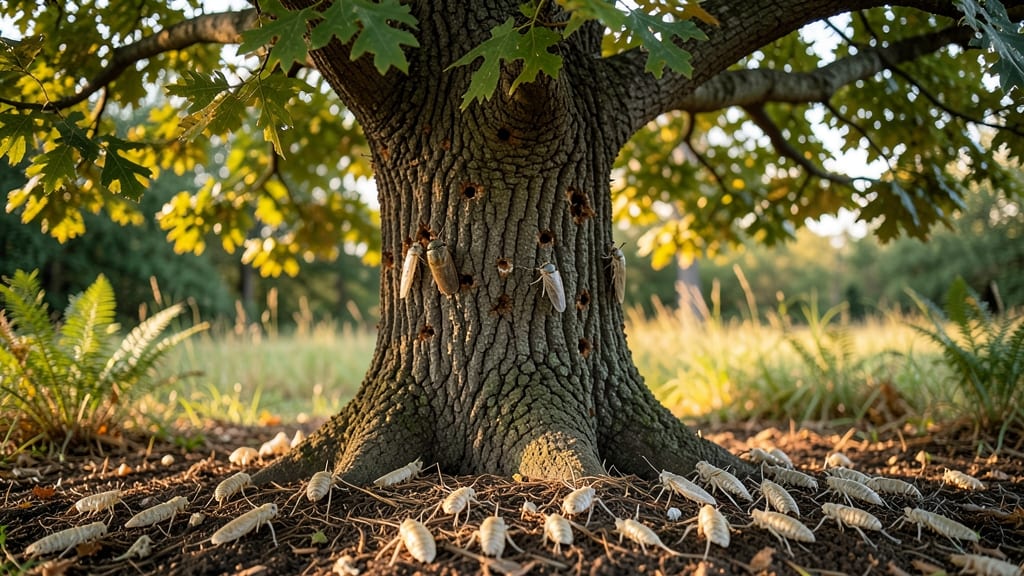
Cicadas don’t harm trees the way you might fear—their root feeding is usually harmless to mature trees, but young saplings can suffer when populations explode. I’ve watched entire neighborhoods buzz with these giant insects every 13 or 17 years, and while they’re loud, they’re rarely destructive.
The confusion comes from their lifecycle: adult cicadas don’t eat at all, but their nymphs feed underground for years before emerging.
Most trees shrug off cicada activity, especially oaks, maples, and hickories, which have deep roots that nymphs can’t reach. The real risk is to shallow-rooted plants like young fruit trees or newly transplanted shrubs, where feeding can stress roots.
Think of it like a temporary lawnmower in your garden—annoying, but not catastrophic unless you’ve got delicate plants.
If you’re worried, monitor for wilting leaves or sudden dieback in young trees during outbreaks. A light mulch layer can deter nymphs, and watering deeply keeps roots resilient.
For high-value trees, wrapping trunks with fine mesh (like hardware cloth) can block emerging adults—but most trees bounce back just fine once the cicadas move on.
Professional help isn’t usually needed unless you’ve got a nursery full of seedlings or a rare specimen at risk. Nature handles the rest: predators like birds and wasps keep cicada populations in check long-term. The key is knowing which trees to watch closely—and which can take the buzzing in stride.
📚 In This Guide
- What you need
- Instructions
- Tips and common mistakes
- Wrapping up and next steps
What you need
- ● Garden gloves – 1 pair (nitrile or leather, size medium to large for comfort).
- ● Hand trowel or small shovel – For gently inspecting soil and roots (6-8" blade length).
- ● Magnifying glass or loupe – 10x magnification to spot cicada nymphs or damage up close.
- ● Watering can or hose with a gentle spray nozzle – For hydrating trees post-inspection.
- ● Notebook and pen – To record observations (tree species, damage location, cicada sightings).
- ● Pruning shears (sterilized) – Small bypass pruners (2-4" blades) for trimming affected branches only if necessary.
- ○ Soil probe or augur – 12-18" long to check root zones for nymph activity (optional but helpful).
- ● Tree identification guide or app (e.g., PictureThis or iNaturalist) – To confirm tree species and susceptibility.
- ● Pesticide (beneficial nematodes or imidacloprid) – Only use as a last resort and follow label instructions carefully.
- ● Mulch (organic, 2-3 inches thick) – To protect roots and retain moisture (avoid piling mulch against the trunk!).
- ● Camera or smartphone – For documenting damage before/after treatment.
- ● Local extension service contact – A quick Google search for your county’s Cooperative Extension office can provide expert advice.
Understanding cicada damage: how to protect your trees
Here's what you need to know about these noisy insects and their impact on tree health.
Identify the Cicada Species in Your Area
Not all cicadas pose the same threat. Brood X, the periodic cicadas, emerge every 17 years and can cause noticeable damage due to their sheer numbers. These insects feed on tree sap, but their real concern comes from their root-feeding larval stage—which lasts 2-5 years underground. In contrast, annual cicadas appear yearly and rarely cause significant harm.
Look for exoskeletons on tree trunks or emergence holes in the soil near your trees. If you're in a known Brood X zone, expect a massive emergence this year. Check local agricultural extensions for emergence maps—they're often updated annually.
Assess Tree Vulnerability Based on Species and Health
Young, stressed, or already weakened trees are the most vulnerable to cicada damage. Oak, maple, and fruit trees are particularly susceptible because their root systems are shallow and easily disrupted. Healthy, mature trees with deep roots can often tolerate cicada feeding without long-term harm.
Examine your trees for signs of stress: yellowing leaves, thinning canopies, or sparse new growth. These are red flags that cicadas could push an already struggling tree over the edge. If your tree is already dealing with drought, disease, or poor soil, it's at higher risk.
Monitor for Early Damage Signs
The first sign of cicada damage is often wilting leaves during the day, even when the soil is moist. This happens because cicada larvae disrupt root function, reducing the tree's ability to absorb water. Later, you might notice small holes in the soil near the base of the tree—these are where larvae emerge.
Check the underside of leaves for black, tar-like excrement (frass), a common sign of sap-feeding insects. While cicadas themselves don’t leave frass, their presence often coincides with other pests that do. If you see newly hatched cicadas clustering on tree trunks, they’re likely feeding on sap, which can weaken the tree over time.
Implement Protective Measures for High-Risk Trees
If your trees are at high risk, water deeply once a week to help them withstand stress. Deep watering encourages deeper root growth, which cicada larvae are less likely to reach. Avoid overwatering, though—soggy soil attracts more pests and can drown roots.
Consider mulching with 2-3 inches of organic mulch (like shredded bark) around the base of the tree. This helps regulate soil temperature and retains moisture, giving the tree a better chance of surviving larval feeding. Just keep the mulch 6 inches away from the trunk to prevent rot.
Act Only If Necessary—When to Intervene
Most trees recover just fine after cicadas emerge. Only treat for cicadas if you see wilting, leaf drop, or signs of root damage. Overusing pesticides can harm beneficial insects and disrupt the ecosystem. If intervention is needed, systemic insecticides applied to the soil can target larvae, but timing is critical—apply them before larvae hatch in late spring.
For severe cases, consult an arborist who can assess the tree’s health and recommend targeted treatments. Remember, cicadas are a natural part of the ecosystem, and their populations are carefully balanced. Unless your tree is already struggling, nature usually handles the cleanup.
Tips & tricks for protecting trees from cicada damage
Here's what nobody tells you about keeping your trees safe during cicada season.
Timing is Everything: The 2-5 year larval stage is when cicadas do the most damage, so focus your protective efforts during these years. If you're in a Brood X zone, you'll see massive emergences every 17 years, but the real threat happens underground long before that. Monitor your soil for emergence holes starting in late spring—this is when larvae become adults and leave the roots.
Tree Species Matters More Than You Think: Oak, maple, and fruit trees are the most vulnerable because their shallow root systems make them easy targets for cicada larvae. If you have these trees, prioritize them during the 2-5 year larval period. Healthy mature trees with deep roots often recover just fine, but stressed trees can be pushed over the edge by cicada feeding.
Don't Overlook the Soil: The 2-3 inches of organic mulch around your tree's base isn't just decorative—it creates a protective barrier that regulates soil temperature and retains moisture. This helps trees withstand the stress of cicada feeding. Just remember to keep mulch 6 inches away from the trunk to prevent rot, which can create additional problems for already stressed trees.
Watering Strategy Makes All the Difference: Deep watering once a week is more effective than frequent shallow watering, especially during the 2-5 year larval stage. This encourages deeper root growth that cicada larvae are less likely to reach. Avoid overwatering—soggy soil attracts more pests and can drown roots, making trees even more vulnerable to cicada damage.
Pro Tips for Do Cicadas Harm Trees
- Here's what nobody tells you about keeping your trees safe during cicada season.
- Timing is Everything: The 2-5 year larval stage is when cicadas do the most damage, so focus your protective efforts during these years.
- Tree Species Matters More Than You Think: Oak, maple, and fruit trees are the most vulnerable because their shallow root systems make them easy targets for cicada larvae.
Frequently asked questions
Got questions about cicadas and your trees? You’re not alone! Here are some of the most common concerns—and the answers you need to keep your yard safe and healthy.
Do cicadas kill trees?
Not directly! While periodical cicadas (like Brood X) lay eggs in tree branches, their feeding on tree roots—brood X cicadas specifically—can stress younger, weaker trees. Mature trees usually bounce back. The real threat? Overpopulation during emergence years, which can weaken roots if left unchecked.
When is cicada season most dangerous for trees?
Timing matters! Cicadas emerge in late spring/early summer (May–June in the U.S.), and their egg-laying peaks in June–July. This is when trees are most vulnerable—especially if they’re already stressed by drought or disease. Pro tip: Monitor your trees in late May for early signs of stress.
How do I know if cicadas are harming my tree?
Watch for these red flags:
- Wilting leaves (even with water) or yellowing foliage.
- Hollow branches or black, frass-like debris (egg casings).
- Slowed growth or dieback (dead branches).
Can I prune branches to protect trees from cicada eggs?
Yes! Prune newly hatched egg slits (tiny, slit-like marks on branches) in late June–July to remove eggs before they hatch. Focus on small branches (under ½ inch thick)—they’re most at risk. Warning: Avoid heavy pruning in peak summer heat; do it on a cool, cloudy day.
Are there natural ways to deter cicadas without pesticides?
Try these eco-friendly tricks:
- Encourage predators: Birds (like woodpeckers) and wasps eat cicadas. Add birdhouses or native plants to attract them.
- Mulch heavily around tree bases to strengthen roots and deter egg-laying.
- Water deeply during droughts to boost tree resilience.
Wrapping up and next steps
So, do cicadas harm trees? The short answer is usually not—their root feeding is more of a nuisance than a threat to healthy, mature trees. 🌳 While young saplings or stressed trees may show signs of decline, most established trees bounce back once the cicadas emerge.
If you're concerned, focus on tree health first: watering, mulching, and proper care will go further than worrying about cicadas.
Ready to take action? Monitor your trees during peak cicada seasons, but don’t panic—nature’s cycle is part of the ecosystem’s rhythm. 🌿 For extra peace of mind, consult a local arborist to assess your trees’ resilience. Happy gardening!