
Propagation
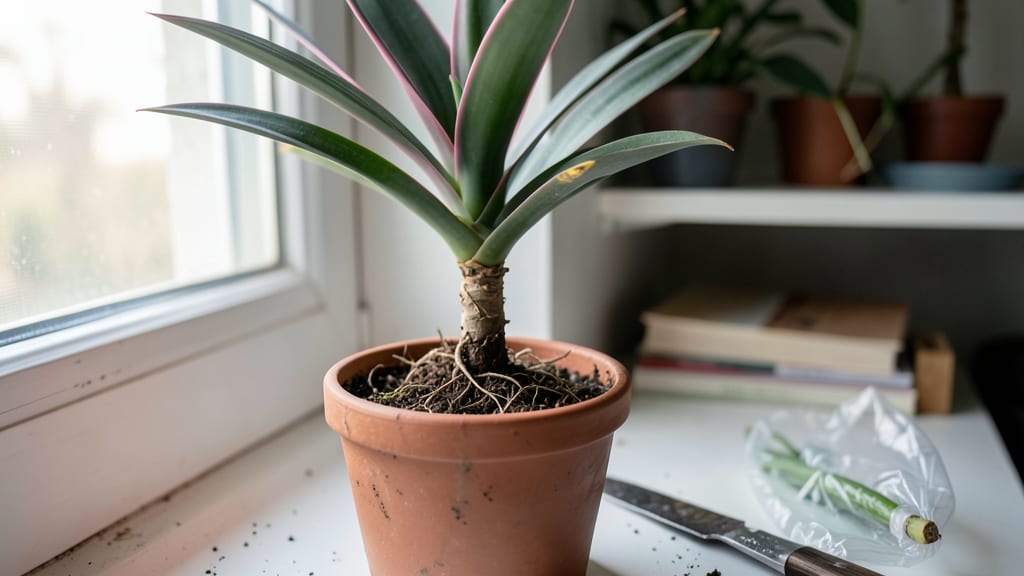
Dragon tree propagation is easier than you’d expect—just grab a sharp knife, a little patience, and watch your Dracaena marginata multiply. 🌱 I’ve turned my overgrown plant into thriving new ones using this exact method, and you can too.
The key is cutting at the right spot, letting it callus properly, and keeping humidity high until roots form.
You’ll need just three supplies: a clean knife or pruners, a small pot with well-draining soil, and a plastic bag to trap moisture. Timing matters too—spring or early summer gives the best results, when the plant has energy to focus on new growth instead of storing reserves.
What you end up with is a new dragon tree ready to thrive in its own pot within 8-12 weeks. The leaves stay crisp, the growth stays upright, and you’ll have a backup plant if anything happens to your original. No more buying expensive nursery plants—just propagate your own.
This method works for any Dracaena variety, from the classic marginata to the bold fragrans. Whether you’re filling gaps in your collection or sharing cuttings with friends, the process is foolproof once you know the tricks. Let’s get those cuttings rooted!
📚 In This Guide
- What you need
- Instructions
- Tips and common mistakes
- Wrapping up and next steps
What you need
- ● Mature dragon tree stem cuttings: 4–6 inches long (include 1–2 leaf nodes per cutting).
- ● Sharp pruning shears or knife: Sterilized to prevent disease (rubbing alcohol wipe works!).
- ○ Rooting hormone (optional but helpful): Powder or gel (e.g., Rootone or Clonex).
- ● Well-draining potting mix: Cactus/succulent mix or a blend of perlite + peat moss (50/50).
- ● Small pots or propagation trays: 4–6 inches in diameter (with drainage holes!).
- ● Clear plastic bag or humidity dome: To retain moisture (yogurt cups with holes work too!).
- ● Spray bottle: For gentle watering (avoid soaking!).
- ● Heat mat: Speeds up rooting (70–75°F ideal).
- ● Grow lights: If natural light is weak (LED or fluorescent).
- ● Charcoal granules: Adds to soil to prevent rot.
- ● Label markers: To track cuttings (trust us, they’ll look identical!).
Step-by-Step instructions for propagating dragon trees
Here's the foolproof way to multiply your dragon tree using stem cuttings—no fancy tools needed.
🌱 Step 1: Select and Prepare Healthy Stem Cuttings
Choose a mature stem with at least 3-4 leaves and a visible node where roots will form. Use clean, sharp pruning shears to make a 45-degree cut just below a node—this increases surface area for root growth. The stem should be 3-6 inches long, with the top leaves intact.
Let the cut end callous over for 1-2 hours at room temperature. This prevents rot when you place it in rooting medium. I usually set them on a paper towel while I prep everything else. Here's the thing—if the cut looks wet or oozy, let it dry longer. A dry, slightly glossy end is what you want.
💧 Step 2: Choose Rooting Medium and Plant Cuttings
Fill a small pot with well-draining cactus/succulent mix (or perlite and sand blend). Moisten it until damp but not soggy—you should feel slight resistance when squeezing. Stick your prepared cutting 1-2 inches deep into the mix, ensuring the node is buried. I like to use 4-inch pots for each cutting since they're small but stable.
Place the pot in a location with bright, indirect light—no direct sun yet. The goal is warmth and humidity without stressing the cutting. You'll know the medium is right when water drains freely from the bottom and the surface feels slightly cool to touch. Overwatering now will drown your cutting before roots even start.
☀️ Step 3: Create Ideal Conditions for Root Formation
Cover the pot with a clear plastic bag or propagation dome to maintain humidity. Dragon tree cuttings thrive in 70-75°F conditions, so a warm spot like a bathroom or kitchen windowsill works best. Mist the air inside the bag occasionally to keep it from fogging up completely—just enough to create a greenhouse effect.
Wait 4-6 weeks before checking for roots. You'll notice new growth at the top leaves first—that's your signal roots are forming below. Gently tug on the cutting after 6 weeks; if there's resistance, roots have taken hold. Real talk: some cuttings take longer, especially in cooler conditions. Don't rush it.
🪴 Step 4: Transition to Permanent Care
Once roots are 1-2 inches long, remove the plastic cover gradually over 3-5 days to acclimate the cutting to normal humidity. Water lightly only when the top 1 inch of soil feels dry—dragon trees hate soggy roots. After two weeks of normal care, you can repot into a slightly larger container with fresh cactus mix.
Place your new plant in bright, indirect light for the first month, then slowly introduce it to more sun. You'll see stronger growth when leaves develop a healthy, waxy texture. Here's where it gets fun—watch the new shoots emerge after a few months. That's your dragon tree establishing itself for years of growth.
Tips & tricks for perfect dragon tree propagation
Took me a while to figure these out, so here goes—your secret to foolproof dragon tree propagation without the guesswork.
Cutting Selection: In Step 1, focus on stems with vibrant green leaves and a firm, healthy appearance. Avoid stems that are woody or have brown spots—they won't root well. I've found that cuttings with 4 leaves strike the perfect balance between size and vitality. The node (that little bump) is where roots will emerge, so make sure it's clearly visible and undamaged.
Callusing Secret: That 1-2 hour callusing period in Step 1 is crucial for preventing rot. Place your cuttings on a clean paper towel in a dry, shaded spot. If your kitchen feels humid, extend the drying time to 3 hours—just until the cut end looks slightly glossy and dry to the touch. This step is often skipped, but it makes all the difference in root development.
Medium Moisture Test: For Step 2, squeeze your cactus mix before planting—it should feel like a damp sponge, not a wet rag. If water drips out when you press, it's too soggy. Dragon trees are drought-tolerant, so better to err on the dry side. I've seen cuttings fail because of overwatering during this critical stage. Use a pot with drainage holes to prevent waterlogging.
Lighting Insight: The bright, indirect light requirement in Step 3 is non-negotiable. East-facing windows work perfectly, while south-facing windows can scorch tender new growth. If you're using artificial grow lights, position them 6-12 inches above your cuttings and keep them on for 12-14 hours daily. Too much light too soon will stress your cuttings before they've had a chance to establish roots.
Pro Tips for Dragon Tree Propagation
- Took me a while to figure these out, so here goes—your secret to foolproof dragon tree propagation without the guesswork.
- Cutting Selection: In Step 1, focus on stems with vibrant green leaves and a firm, healthy appearance.
- Callusing Secret: That 1-2 hour callusing period in Step 1 is crucial for preventing rot.
Frequently asked questions
Got questions about propagating your dragon tree? You’re not alone! Here are some of the most common queries—plus straightforward answers to help you succeed.
When is the best time to propagate a dragon tree?
The ideal window is late spring or early summer, when the plant is actively growing. This gives your cuttings the best chance to root before winter dormancy. Avoid propagating in extreme heat or cold, as stress can hinder success.
How long does it take for dragon tree cuttings to root?
With patience (and the right conditions), dragon tree cuttings typically root in 4–8 weeks. Keep the soil moist but not soggy, and place them in bright, indirect light. Roots may form faster in a humid environment or with a rooting hormone.
Can I propagate a dragon tree from a leaf instead of a stem?
Nope! Dragon trees (Dracaena marginata) only root successfully from stem cuttings. Leaves lack the necessary vascular tissue to regenerate a new plant. Stick to healthy, woody stems for the best results.
Why is my dragon tree cutting rotting instead of rooting?
Overwatering or poor drainage is usually the culprit. Ensure your cutting’s base is just touching the soil (not buried) and use a well-draining mix like perlite or sand. Let the top inch of soil dry out between waterings to prevent rot.
Do I need special tools for dragon tree propagation?
Not necessarily! While sterilized pruners make clean cuts, you can use sharp scissors in a pinch. Focus on clean cuts (at a 45-degree angle) and avoid crushing the stem. A rooting hormone (optional) can boost success rates but isn’t mandatory.
Wrapping up and next steps
Mastering dragon tree propagation through stem cuttings is a rewarding journey that brings your green thumb to life! 🌱 With the right tools, patience, and these simple steps, you’ll soon be growing lush new plants from just a few snips.
Whether you’re a seasoned gardener or a curious beginner, this method opens doors to expanding your collection effortlessly.
Now that you’re armed with the know-how, grab those cuttings and get growing! Start small, stay consistent, and soon you’ll be sharing your thriving dragon trees with fellow plant lovers. Happy propagating! 🌿