Pruning
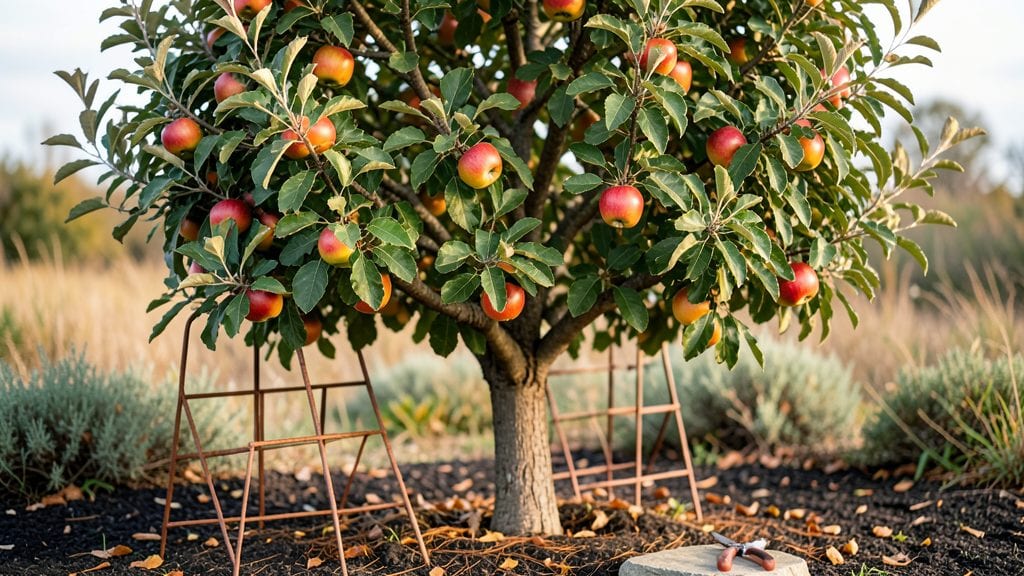
Growing a Honecrisp apple tree is like planting a sweet reward you’ll enjoy for decades—this crisp, honey-flavored variety thrives with minimal fuss while delivering fruit so good, neighbors will ask for cuttings. 🌱 The secret lies in its disease resistance, meaning fewer sprays and healthier trees, plus its ability to produce reliable harvests even in less-than-perfect conditions.
I’ve grown mine in partial shade without losing yield, and the first bite in September is worth every pruning session.
Start with well-draining soil and full sun (at least 6 hours daily), then space trees 20-25 feet apart to prevent overcrowding. Young trees need deep watering twice a week during dry spells, while mature trees handle drought better once established.
A balanced fertilizer in early spring jumpstarts growth, and pruning in late winter keeps the shape open for easy picking. The payoff? Trees mature in 5-7 years, and once they do, you’ll harvest 50-100 pounds of fruit per tree—enough to share (or can) for years.
Harvest time arrives in late September to early October when the skin turns golden-yellow with red blush, and the fruit releases easily from the tree.
Store them in a cool, dark place for 2-3 months to enjoy winter snacks, or use them fresh in pies, sauces, or straight from the tree. The real magic?
This variety resists common apple diseases like apple scab and fire blight, so you’ll spend less time spraying and more time tasting. Even my black thumb keeps this one alive—and delicious.
For troubleshooting, watch for codling moths (those pesky worms in apples) and apple maggots—both can be deterred with row covers or organic sprays like neem oil. If you see brown spots on leaves, it’s likely powdery mildew, but Honecrisp’s natural resistance usually keeps it mild.
Mulch around the base to retain moisture and suppress weeds, and you’re set for a low-maintenance, high-reward apple tree that’ll outperform most store-bought varieties. Ready to plant one?
📚 In This Guide
- What you need
- Instructions
- Tips and common mistakes
- Wrapping up and next steps
What you need
- ● Pruning shears – Sharp, bypass-style shears (for cuts up to ¾ inch thick). Example: Felco F-2 or Corona Tools.
- ● Loppers – For thicker branches (1–2 inches in diameter). Example: Fiskars PowerGear or Bahco.
- ● Pruning saw – For branches larger than 2 inches. Example: Fiskars X7 or Corona CS-9.
- ○ Hand pruners – Anvil-style for small cuts (optional backup).
- ● Disinfectant (70% isopropyl alcohol or bleach solution) – To sterilize tools between cuts and prevent disease spread.
- ● Garden gloves – Heavy-duty, cut-resistant gloves for safety.
- ○ Tree wound paint or pruning sealant – Optional but recommended for larger cuts (1+ inch diameter) to reduce disease risk.
- ● 5-gallon bucket or bag – For collecting pruned branches.
- ● Ladder or step stool – If your tree exceeds 6 feet in height.
- ● Pole pruner – For high branches without a ladder.
- ● Extension pole – To reach higher branches safely.
- ● Labeling tags – If you’re grafting or marking specific branches.
- ● Safety glasses – To protect against debris.
- ○ Tree growth regulator (optional) – For post-pruning care (e.g., hydrogen dioxide spray).
Step-by-step guide to planting and caring for a Honecrisp apple tree
This crisp, sweet variety thrives with the right approach—here’s how to set it up for success.
🌱 Step 1: Choose the Perfect Planting Site
Honecrisp trees need full sun—at least 6-8 hours daily—to develop their signature sweet-tart flavor. I always pick a spot with south-facing exposure and well-draining soil, since soggy roots invite fungal diseases. Test your soil’s pH (ideal is 6.0-6.5) and amend with compost if it’s heavy or clay-like.
Dig a hole twice as wide as the root ball but no deeper—burying the graft union too deep encourages weak growth. Loosen the roots gently if they’re circling the pot, then place the tree so the graft union sits 2-3 inches above soil level. This prevents rot while allowing the tree to establish strong roots.
☀️ Step 2: Plant and Water for Strong Establishment
Backfill the hole with native soil (not amended mix) to avoid disturbing the roots. Water deeply right after planting—about 1-2 gallons—to settle the soil and eliminate air pockets. Mulch with 3-4 inches of organic mulch (like wood chips) around the base, keeping it 6 inches away from the trunk to prevent rot.
For the first 2 weeks, water every 2-3 days until the soil feels 2 inches deep—Honecrisp trees are drought-tolerant once established, but young roots need consistent moisture. Avoid overhead watering once leaves appear; instead, water at the base to reduce fungal risks.
✂️ Step 3: Prune for Airflow and Fruit Quality
Prune in late winter or early spring before buds swell, removing dead, crossing, or inward-growing branches. I aim to keep the center open—this improves airflow and sunlight penetration, which Honecrisp trees crave for disease resistance. Cut back water sprouts (fast-growing vertical shoots) to redirect energy into fruit production.
Thin fruit clusters to 6-8 inches apart when they’re golf-ball sized—this ensures larger, sweeter apples. Overcrowded fruit leads to small, sour Honecrisp apples. Use sharp pruners and make cuts at a 45-degree angle just above a bud or branch collar.
🌿 Step 4: Fertilize and Monitor for Pests
Apply a balanced fertilizer (10-10-10) in early spring and again after harvest, following package rates. Honecrisp trees respond well to organic compost worked into the soil annually—this boosts soil health without burning roots. Avoid high-nitrogen fertilizers, which promote leafy growth at the expense of fruit.
Watch for apple maggots and codling moths—common pests that tunnel into fruit. Use row covers early in the season or apply neem oil as a preventive spray. If you spot aphids, blast them off with water or introduce ladybugs for natural control. Healthy trees resist most issues, but vigilance pays off.
⏰ Step 5: Harvest and Prepare for Winter
Honecrisp apples ripen late summer to early fall—wait until they’re fully colored and slightly soft to the touch. Twist gently to detach; if the stem resists, the fruit’s not ready. Store harvested apples in a cool, dark place (like a root cellar) for 2-3 months to develop peak flavor.
Before winter, wrap the trunk with tree guard to protect against rodents and freeze-thaw cycles. Mulch heavily (4-6 inches) to insulate roots. Prune again in late winter to remove any winter-damaged branches, then repeat the cycle for another bountiful harvest.
Tips & tricks for perfect Honecrisp apple tree care
Here's what nobody tells you about growing Honecrisp apples—these tricks make all the difference between a struggling tree and a fruit-bearing powerhouse.
Sunlight Strategy: While 6-8 hours of sun is the minimum, I've found Honecrisp trees reward you with sweeter fruit when they get 8+ hours of direct sunlight. Position your tree where it receives morning sun and afternoon shade in hot climates—this prevents sunburn on the fruit while maximizing photosynthesis. South-facing slopes work beautifully, but avoid low-lying areas where cold air collects.
Root Ball Technique: When planting, don't just drop the tree in the hole—gently tease apart the root ball if you notice circling roots. This encourages outward growth rather than a tangled mass. I also recommend soaking the root ball for 10-15 minutes before planting to jumpstart hydration. The 2-3 inch graft union elevation is non-negotiable—this prevents rot while allowing the tree to develop strong structural roots.
Watering Wisdom: The 2-week, every-2-3-days watering schedule is perfect, but I've learned to check soil moisture deeper than 2 inches. Use a screwdriver to probe 4-6 inches down—if it comes out dry, water again. Morning watering is ideal because it reduces fungal risks from overnight moisture. Once established, Honecrisp trees are drought-tolerant, but young trees need consistent moisture to develop strong root systems.
Pruning Pro Tip: When thinning fruit clusters to 6-8 inches apart, I recommend doing this in stages. First thin to 12 inches apart, then wait a week and thin again to your target spacing. This gives the tree time to adjust and reduces stress. The 45-degree angle cuts are crucial—they prevent water from pooling at the cut site, which can lead to rot or disease.
Pro Tips for Honecrisp Apple Tree
- Here's what nobody tells you about growing Honecrisp apples—these tricks make all the difference between a struggling tree and a fruit-bearing powerhouse.
- Sunlight Strategy: While 6-8 hours of sun is the minimum, I've found Honecrisp trees reward you with sweeter fruit when they get 8+ hours of direct sunlight.
- Root Ball Technique: When planting, don't just drop the tree in the hole—gently tease apart the root ball if you notice circling roots.
Frequently asked questions
Got questions about growing your own Honecrisp apple tree? You’re not alone! Here are some of the most common queries—plus straightforward answers to help you cultivate sweet, disease-resistant fruit like a pro.
How long does it take for a Honecrisp apple tree to bear fruit?
A young Honecrisp apple tree typically starts producing fruit 3–5 years after planting, though some may take up to 7 years, depending on climate and care. Patience pays off—these trees reward you with juicy, crisp apples that are worth the wait!
When is the best time to prune a Honecrisp apple tree for optimal harvest?
Prune your Honecrisp tree in late winter or early spring (before buds swell) to encourage strong growth and airflow. Avoid heavy pruning in fall, as it can stimulate new growth that’s vulnerable to frost. Pro tip: Remove dead, crossing, or crowded branches first to keep the tree healthy and productive!
Why are my Honecrisp apples cracking or developing brown spots?
Cracking often happens due to inconsistent watering or rapid growth spurts after dry spells. Brown spots may signal apple scab or powdery mildew—two issues Honecrisp is resistant to but not immune to. Thin fruit early in the season, improve airflow with pruning, and apply fungicide if needed.
Can I grow a Honecrisp apple tree in a warm climate like Texas or Arizona?
Yes! Honecrisp thrives in USDA Zones 4–8, making it suitable for warm climates—if planted in partial shade and given extra water during heatwaves. Choose a location with 6+ hours of sunlight and well-draining soil. Mulch heavily to retain moisture and protect roots from extreme heat.
Are Honecrisp apples self-pollinating, or do I need another apple tree?
Honecrisp trees are not self-pollinating, so plant a second variety like ‘Golden Delicious’ or ‘Fuji’ within 50 feet to ensure fruit set. Cross-pollination boosts yield and improves apple quality. Bonus: Many pollinators will thank you too!
What’s the best fertilizer for a Honecrisp apple tree?
Use a balanced, slow-release fertilizer (like 10-10-10) in early spring, followed by a low-nitrogen, high-potassium blend (5-10-10) in summer to support fruiting. Avoid over-fertilizing—Honecrisp trees prefer moderate nutrition over heavy feeding. Test soil annually for pH (ideal: 6.0–7.0).
Wrapping up and next steps
Growing a Honecrisp apple tree is a rewarding journey that blends resilience with sweet success! 🍏 With its disease-resistant fruit and year-round harvest potential, this variety is perfect for both beginners and seasoned gardeners.
Whether you're pruning for shape, health, or future harvests, remember that patience and care yield the best results.
Ready to take the next step? Start small—plant your tree, master the basics of pruning, and watch your orchard thrive! Share your progress with fellow gardeners or explore advanced techniques like grafting for even more variety. Your delicious, crisp apples are just a season away! 🌱