
Trees
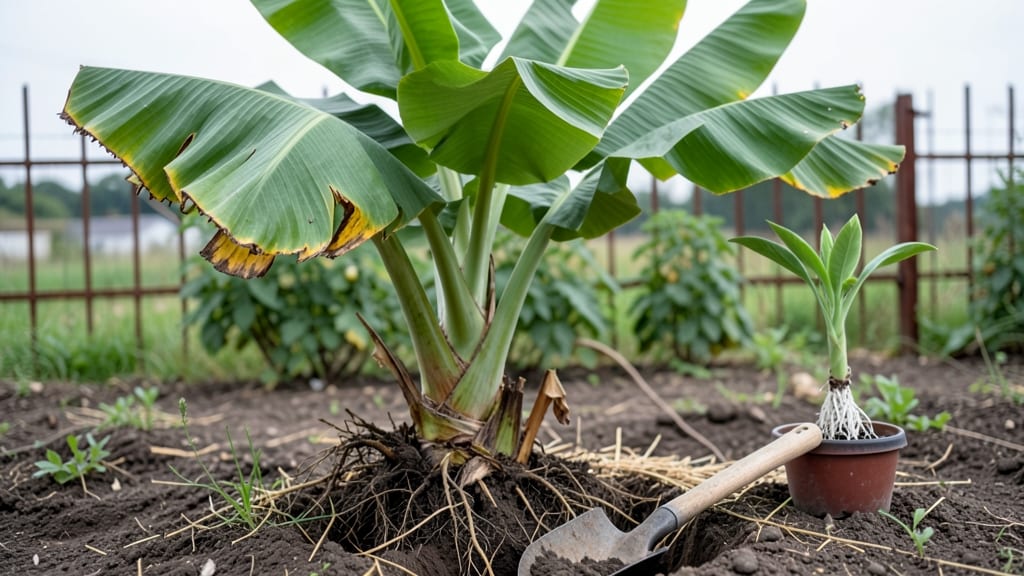
Replanting banana trees can double your harvest if you do it right. 🌱 The key is timing—wait until the soil warms to 65°F and new shoots appear, signaling the plant’s ready for a fresh start.
I’ve replanted overgrown banana trees in my backyard, and the difference in growth is night-and-day when you follow the proper steps.
You’ll need a shovel, compost-rich soil mix, and a sunny spot with shelter from strong winds. Banana trees thrive in well-draining soil with a pH between 6.0 and 7.5.
Dig a hole twice as wide as the root ball but no deeper, then loosen the roots gently before placing the tree in its new home.
After replanting, keep the soil moist but not soggy for the first 2-3 weeks while the roots establish. Mulch around the base to retain moisture and protect the roots from temperature swings. Within 6-8 weeks, you’ll see fresh fronds emerging—a sure sign your banana tree is settling in.
For cooler climates, replant in spring or early summer and choose cold-hardy varieties like ‘Dwarf Cavendish.’ In tropical zones, replant during the wet season when humidity helps roots recover faster. Patience is key—banana trees take time to rebound, but the payoff is worth it.
📚 In This Guide
- What you need
- Instructions
- Tips and common mistakes
- Wrapping up and next steps
What you need
- ● Banana suckers (pups): 1–3 healthy, mature suckers (6+ inches tall) from the parent plant.
- ● Shovel or trowel: A sharp, sturdy digging tool for planting and soil prep.
- ● Well-draining soil: 2–3 cubic yards of a mix of topsoil, compost, and perlite/sand (60:30:10 ratio).
- ● Organic fertilizer: A balanced, slow-release fertilizer (e.g., 10-10-10 NPK) or banana-specific fertilizer.
- ● Mulch: 1–2 inches of straw, wood chips, or pine bark to retain moisture and suppress weeds.
- ● Watering can or hose: With a gentle spray nozzle for hydration.
- ● Pruners or knife: For trimming excess leaves or roots.
- ○ Stakes (optional but helpful): 2–3 bamboo or wooden stakes (4–5 feet tall) + soft ties for support.
- ● Rooting hormone: To boost growth for stubborn suckers.
- ● Epsom salt: 1 tablespoon per gallon of water for magnesium boost.
- ● Drip irrigation system: For consistent moisture in hot climates.
- ● Soil pH test kit: To ensure pH is 5.5–7.0 (bananas prefer slightly acidic soil).
- ● Pest control (neem oil or copper fungicide): Preemptive strike against common banana pests.
Step-by-Step guide to replanting banana trees
Here's how to transplant banana plants with minimal stress and maximum success.
🪴 Step 1: Prepare the New Planting Site
Banana trees thrive in well-draining soil with a pH between 6.0 and 7.5. Choose a location that receives full sun (at least 6 hours daily) and has protection from strong winds. If your soil is heavy clay, amend it with 3-4 inches of compost mixed into the top 12 inches of soil to improve drainage and fertility.
Dig a hole that's twice as wide as the root ball but only as deep as the container the banana was growing in. This prevents burying the stem too deeply, which can cause rot. Loosen the sides of the hole with a shovel to encourage root spread when you plant.
🌱 Step 2: Carefully Remove and Prepare the Banana Plant
Water the banana plant 24 hours before transplanting to reduce root shock. Gently remove it from its current container by tipping it sideways and sliding the root ball out. If the roots are circling tightly, use a knife to loosen them—this prevents girdling as the plant grows.
Trim any damaged or overly long roots with clean, sharp shears. You’ll know the plant is ready when the root ball holds together when lifted. If it falls apart, it’s too dry—water it again and wait another hour before replanting.
☀️ Step 3: Transplant and Stabilize the Banana Tree
Place the banana plant in the hole so the top of the root ball sits 1-2 inches above ground level. This prevents water from pooling around the stem. Backfill the hole with the amended soil, pressing gently to remove air pockets but not compacting too firmly.
Create a 6-inch-wide berm around the base of the plant to catch water during irrigation. Stake the banana tree if needed—use 3-4 bamboo stakes tied loosely to the pseudostem to support it until the roots establish. Avoid tying too tightly, as bananas grow quickly and need room to expand.
💧 Step 4: Water and Mulch for Recovery
Water the replanted banana tree deeply immediately after transplanting to settle the soil and encourage root contact. Use 1-2 gallons of water per plant, applied slowly to avoid displacing the soil. Repeat this every 3-4 days for the first 2 weeks, then taper to once weekly once new leaves appear.
Apply a 3-inch layer of organic mulch (like wood chips or straw) around the base, keeping it 6 inches away from the stem. This retains moisture, regulates soil temperature, and suppresses weeds. Replenish the mulch as it breaks down to maintain coverage.
⏰ Step 5: Monitor and Support New Growth
Watch for new leaves emerging within 4-6 weeks—this signals successful root establishment. If the older leaves yellow or wilt slightly, it’s normal stress from transplanting. However, if the entire plant wilts or droops severely, it may need more water or shade temporarily.
Fertilize lightly 6 weeks after replanting with a balanced tropical fertilizer (10-10-10 or similar) to encourage recovery. Avoid heavy feeding immediately after transplanting, as it stresses the plant. Once established, bananas are heavy feeders, so plan to fertilize every 2-3 months during the growing season.
Tips & tricks for replanting banana trees
Real talk: Transplanting banana trees can feel intimidating, but these small adjustments make all the difference between a struggling plant and one that thrives.
Soil Preparation Secret: The 3-4 inches of compost mixed into the top 12 inches of soil isn't just about drainage—it's about creating a nutrient-rich environment that mimics the tropical conditions bananas love. I like to add a handful of worm castings to this mix for extra microbial activity, which helps roots establish faster. For heavy clay soils, consider adding perlite or coarse sand to improve aeration without compromising moisture retention.
Root Handling Technique: When loosening circling roots in Step 2, work gently but deliberately—think of it like untangling headphones. The goal is to create a loose, open root structure that can spread quickly. If you're dealing with a particularly dense root ball, soak it in water for 10 minutes before loosening to make the process easier. This hydration helps the roots become more pliable.
Staking Strategy: The 3-4 bamboo stakes mentioned in Step 3 should be positioned at a slight angle (about 45 degrees) rather than straight up. This creates a more stable support system that mimics natural wind patterns. Use soft plant ties or old t-shirts cut into strips to tie the stakes—they're less likely to cut into the pseudostem as the plant grows. I've seen banana trees with ties that dug into the stem develop rot, so this small adjustment prevents long-term damage.
Watering Wisdom: That initial deep watering with 1-2 gallons isn't just about settling the soil—it's about creating a moisture reservoir that helps roots establish. For the first 2 weeks, I recommend watering in the early morning so the foliage has time to dry before evening. This reduces the risk of fungal diseases that can stress newly transplanted plants. Also, avoid overhead watering if possible—direct water at the base to keep leaves dry.
Pro Tips for Replant Banana Trees
- Real talk: Transplanting banana trees can feel intimidating, but these small adjustments make all the difference between a struggling plant and one that thrives.
- Soil Preparation Secret: The 3-4 inches of compost mixed into the top 12 inches of soil isn't just about drainage—it's about creating a nutrient-rich environment that mimics the tropical conditions bananas love.
- Root Handling Technique: When loosening circling roots in Step 2, work gently but deliberately—think of it like untangling headphones.
Frequently asked questions
Got questions about replanting banana trees? You’re not alone—this tropical task can feel tricky! Below, we’ve rounded up the most common concerns to help you grow confidently.
When is the best time to replant banana trees?
The ideal time is during the early spring or late winter, when temperatures are mild (60–80°F). Avoid replanting in extreme heat or cold—banana roots are sensitive! If you’re in a tropical climate, aim for the dry season to reduce fungal risks.
How long does it take for a replanted banana tree to grow back?
Patience is key! With proper care, you’ll see new shoots (called pups) in 3–6 months. Full maturity and fruiting can take 1–2 years, depending on variety and conditions. Keep the soil moist and fertilize lightly to speed up growth.
Can I replant a banana tree from a store-bought bunch?
Unfortunately, no—store-bought bananas are sterile and won’t regrow. For propagation, you’ll need a mature plant with a pseudo-stem (the thick trunk) or healthy pups at the base. Save money by growing from seeds or divisions instead!
What should I do if my replanted banana tree turns yellow or wilts?
Yellowing leaves often signal overwatering or root rot. Let the soil dry slightly between waterings and ensure drainage. Wilting could mean underwatering or nutrient deficiency. Test soil pH (bananas prefer 5.5–7.0) and add compost or a balanced fertilizer.
Are there alternatives to replanting if my banana tree dies?
Yes! Try tissue culture propagation (for rare varieties) or seed germination (though seeds may not match the parent plant). If you’re in a cold climate, grow bananas in containers and move them indoors during winter. Some gardeners also experiment with air layering for stubborn stems.
Wrapping up and next steps
Replanting banana trees is a rewarding way to expand your tropical oasis—whether you’re reviving a struggling plant or multiplying your harvest! 🌱 By following these steps—selecting healthy suckers, preparing the right soil, and providing consistent care—you’ll set your new trees up for lush, productive growth. Remember, patience is key: banana trees thrive with time, so celebrate each small milestone along the way.
Now that you’re armed with the know-how, take the next step! Start with just one replanted sucker, monitor its progress, and soon you’ll be sharing your green thumb success—or even gifting homegrown bananas to neighbors. Happy replanting! 🍌✨