
How To
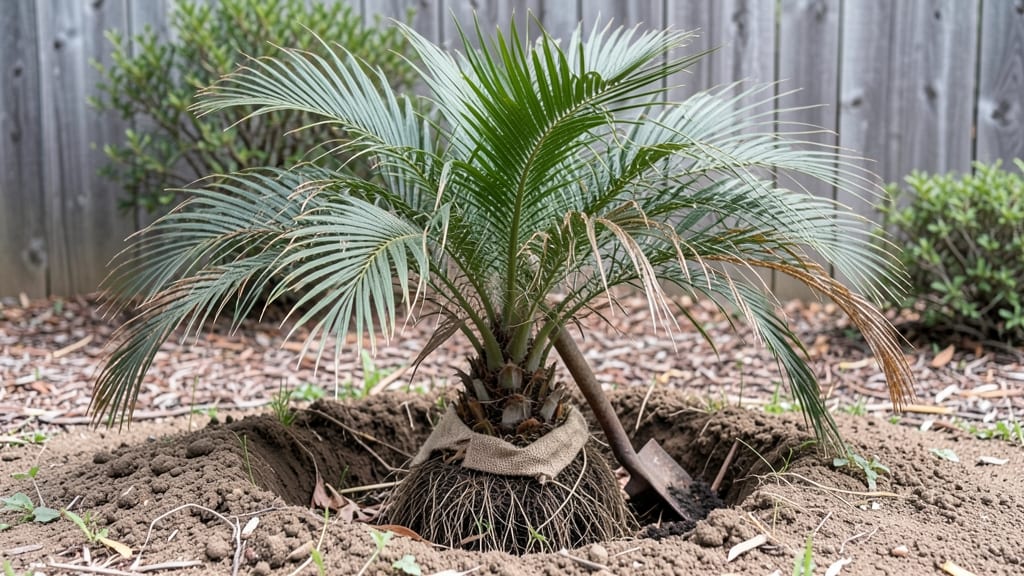
Transplanting palm trees without killing them starts with the right timing and tools—something I learned the hard way after losing my first Mexican fan palm to shock. The key is moving when temperatures stay mild, roots are hydrated, and you’ve prepped the new spot to mimic the old one.
Most palms hate soggy soil or sudden heat, so planning ahead saves weeks of recovery.
You’ll need a sharp shovel, burlap for root wrapping, a wheelbarrow, and a 5-gallon bucket of water per foot of trunk height. Dig the new hole twice as wide as the root ball but only as deep as the old planting depth—palms despise being buried too deep.
For species like dwarf palms, work fast; larger palms need extra root pruning to encourage regrowth.
📚 In This Guide
- What you need
- Instructions
- Tips and common mistakes
- Wrapping up and next steps
What you need
- ● Shovel or spade: A sharp, sturdy digging tool (18–24 inches wide) to excavate the root ball.
- ● Wheelbarrow or tarp: For transporting soil and the root ball (2–4 yards of capacity).
- ● Pruning shears or saw: To trim excess fronds or roots if needed (sterilized blades preferred).
- ○ Burlap or landscape fabric: 3–4 feet wide to wrap the root ball (optional but helpful for larger palms).
- ● Stakes and twine: 4–6 wooden or metal stakes (1–2 feet long) and twine to secure the palm temporarily.
- ● Garden hose with nozzle: For watering before, during, and after transplanting.
- ○ Mulch (optional): 2–3 inches of organic mulch (e.g., wood chips or bark) to retain moisture.
- ● Timing: Choose a cloudy day or early morning/late afternoon to reduce heat stress.
- ● Watering schedule: Soak the soil around the palm 2–3 days before transplanting to soften the root ball.
- ● New planting hole: Dig a hole 2–3 times wider than the root ball and just as deep.
- ○ Amendments (optional): Mix in compost or palm-specific fertilizer (e.g., 8-3-9 NPK ratio) into the backfill soil.
Step-by-Step instructions for transplanting palm trees safely
Here’s how I’ve successfully moved palm trees without losing them to transplant shock—tested over years of trial and error.
🌿 Step 1: Prepare the New Location Before Digging
Choose a spot with full sun exposure and well-draining soil—palms hate soggy roots. The new hole should be twice as wide as the root ball but only as deep as the container or root system. I always dig the hole first so I can check drainage by filling it halfway with water. If it doesn’t drain within 30 minutes, amend the soil with 3-4 inches of coarse sand or gravel at the bottom.
Palms are heavy, so clear a path to the new location. If moving a large specimen, consider renting a wheelbarrow or dolly—twisting the trunk can snap it. The key here is patience: rushing leads to broken roots or snapped trunks, and neither recovers well.
🪴 Step 2: Dig Up the Palm with Care
Start by watering the palm deeply 2-3 days before moving to reduce stress. On moving day, use a sharp shovel or spade to cut a clean circle around the trunk, 6-12 inches from the stem, depending on the palm’s size. For container palms, simply lift the pot—no digging needed. If the palm is in the ground, dig slowly and deeply to avoid severing roots.
Gently rock the palm back and forth to loosen the root ball while keeping the soil intact. If the root ball is too heavy to lift, slide a wide board or tarp under it to create a sled. Never drag the palm by the trunk—this causes irreversible damage. Once lifted, wrap the root ball in burlap or a tarp to hold moisture and protect roots during transport.
💧 Step 3: Plant the Palm Tree Properly
Lower the palm into the prepared hole, ensuring the top of the root ball sits level with the surrounding soil—never bury the trunk. Fill the hole with the original soil (or amended soil if needed) and tamp it down lightly in 2-inch layers to eliminate air pockets. Water deeply after planting to settle the soil and remove any gaps.
For large palms, use stakes and ties to support the trunk for the first 6-12 months—even mature palms can lean dangerously if not stabilized. Mulch the base with 2-3 inches of organic mulch, keeping it 6 inches away from the trunk to prevent rot. Avoid over-mulching; palms need airflow at the base.
☀️ Step 4: Water and Protect During Recovery
Water the palm deeply every 2-3 days for the first 2 weeks, then taper to once a week once new growth appears. You’ll know it’s recovering when bright green fronds emerge from the crown. Avoid overhead watering—it can cause fungal issues. Instead, use a soaker hose or drip irrigation to deliver moisture directly to the roots.
Shade the palm for the first 7-10 days with a lightweight cloth or temporary shade structure to reduce sun stress. Gradually expose it to full sun over 2-3 weeks. If temperatures exceed 90°F, mist the fronds lightly in the early morning to prevent scorching. Patience is critical—most palms show signs of recovery within 4-6 weeks if cared for properly.
Tips & tricks for transplanting palm trees safely
Moving palm trees without causing stress requires careful planning—and these tricks will help you avoid common pitfalls that lead to transplant shock.
Drainage Test: That 30-minute drainage check in Step 1 is non-negotiable. I’ve seen palms fail within weeks because the soil didn’t drain properly. If water pools after 30 minutes, you absolutely need to add that 3-4 inches of sand or gravel—don’t skip this, even if the instructions say "if needed." The roots will rot if they sit in soggy conditions.
Root Ball Protection: When wrapping the root ball in burlap or tarp during transport, leave the top open. This prevents suffocation from trapped moisture while still protecting the roots. I learned this the hard way after losing two palms to root rot during transport—always leave a small gap at the top for airflow.
Staking Strategy: For large palms needing stakes, use three stakes positioned at equal distances around the trunk rather than just two. This creates a more stable triangle support system. The stakes should be buried at a 45-degree angle, with the top tied loosely to allow for slight trunk movement—this mimics natural wind resistance and prevents stress cracks.
Recovery Timeline: Those 4-6 weeks of recovery aren't just a suggestion—they're critical. I’ve watched palms show new growth at 3 weeks only to wilt when exposed to full sun too soon. Gradually increase sun exposure over the full 2-3 weeks, even if the palm looks healthy. The roots need time to establish before the leaves can handle full sun intensity.
Pro Tips for Transplant Palm Trees
- Moving palm trees without causing stress requires careful planning—and these tricks will help you avoid common pitfalls that lead to transplant shock.
- Drainage Test: That 30-minute drainage check in Step 1 is non-negotiable.
- Root Ball Protection: When wrapping the root ball in burlap or tarp during transport, leave the top open.
Frequently asked questions
Got questions about transplanting palm trees? You’re not alone! Here are some of the most common concerns—and their solutions—to help you tackle the move like a pro.
What’s the best time of year to transplant palm trees?
The ideal window is during the cooler months—late fall, winter, or early spring—when temperatures are mild (50–75°F). Avoid extreme heat or frost, as palms are sensitive to shock. If you must transplant in summer, do it early in the morning or on a cloudy day to reduce stress.
How do I know if my palm tree is healthy enough to move?
Check for vibrant green fronds, minimal yellowing, and no signs of pests/disease (like brown spots or oozing sap). Avoid transplanting if the tree is recently stressed (e.g., drought, storm damage) or has root rot. A healthy tree will bounce back faster!
Can I transplant a palm tree in a pot, or is it better to dig it up?
Both methods work, but container palms (under 10 feet tall) are easier to move with their root ball intact. For larger palms, dig a wide trench around the base to loosen roots before lifting. Pro tip: Water the tree 2–3 days before transplanting to reduce root damage.
How long does it take for a palm tree to recover after transplanting?
Recovery time varies by species and size, but most palms show signs of regrowth in 4–12 weeks. Monitor for new fronds and avoid fertilizing for the first 3–6 months. Patience is key—some tropical palms take up to a year to fully stabilize!
What should I do if my palm tree wilts or turns brown after transplanting?
Don’t panic! Wilting often means transplant shock—water deeply (but not excessively) and shade the tree for 2–4 weeks. Brown fronds may be dead tissue; trim them carefully to encourage new growth. If the trunk softens or smells foul, it could signal root rot—act fast with fungicide.
| Quick Fixes for Common Issues | Action Steps |
|---|---|
| Yellowing fronds | Check watering habits (over/under-watering) and adjust soil nutrients. |
| Slow growth after transplanting | Apply a balanced palm fertilizer (low nitrogen) after 3 months. |
| Pests (spider mites, scales) | Spray with neem oil or insecticidal soap; repeat weekly. |
Wrapping up and next steps
Transplanting palm trees might seem daunting, but with the right prep, patience, and care, your tropical beauty can thrive in its new home! 🌴 Remember to dig deep, prune carefully, and keep it hydrated—these steps minimize shock and set the stage for long-term success.
Now that you’re armed with the know-how, grab your tools and give your palm the fresh start it deserves.
Ready to take the next step? Start by choosing the perfect spot—sunlight, soil, and space are key. Happy planting! 🌱