Pruning
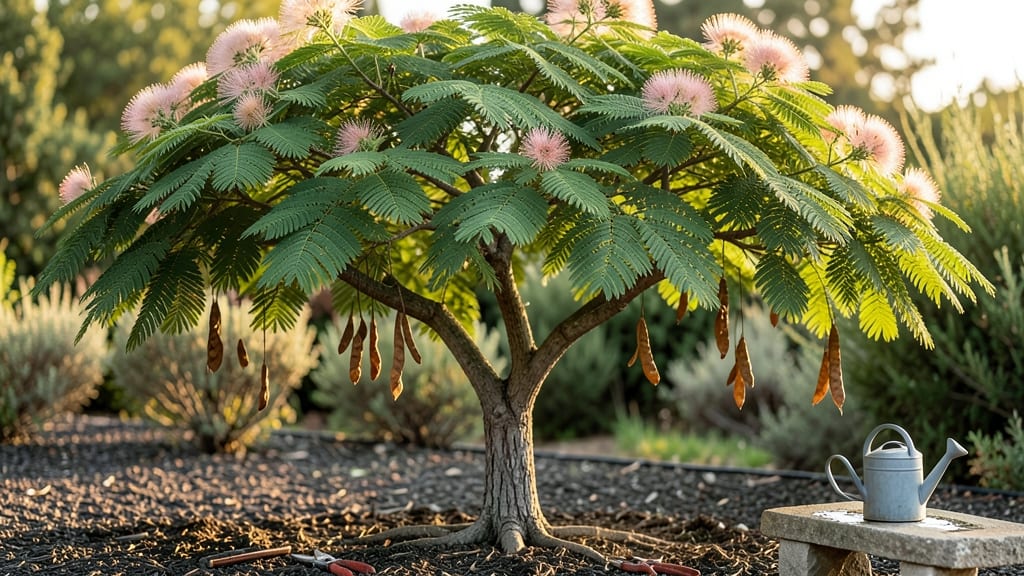
Growing a large mimosa tree in the Pacific Northwest means embracing its frost-resistant charm while unlocking its pink pom-pom blooms and fern-like foliage. I planted mine last spring, and within months, it became the showstopper of my yard—even through our damp winters.
The key isn’t just planting; it’s understanding how to prune for resilience and shape.
This tree thrives in well-draining soil and full sun, but it’s surprisingly adaptable to the PNW’s mild winters once established. Start with a 5-gallon container for young trees and plant in early spring or fall, giving roots time to settle before frost.
Water deeply once a week after planting, but once mature, it’s shockingly drought-tolerant—something I learned the hard way during a dry summer.
Pruning in late winter or early spring is where the magic happens. Cut back one-third of the previous year’s growth to encourage dense, bushy foliage and those iconic pink flowers. The result?
A tree that blooms earlier and more abundantly than neighbors’ mimosas, even after our frosty nights. Plus, the fern-like leaves add texture that no other tree in my yard can match.
For PNW gardeners, this tree is a foolproof choice—hardy, low-maintenance, and stunning. Whether you’re a beginner or a seasoned pruner, the secret lies in timing and a little strategic cutting. Let’s get your mimosa thriving!
📚 In This Guide
- What you need
- Instructions
- Tips and common mistakes
- Wrapping up and next steps
What you need
- ● Pruning shears: Bypass pruners (for small branches, 6–8" blades) – 1 pair
- ● Loppers: 8–10" bypass loppers (for medium branches, 1.5–2" cutting capacity) – 1 pair
- ● Pruning saw: Curved-tooth saw (for thick branches, 10–12" blade) – 1
- ● Extension pole: 6–10 ft telescoping pole (for high branches) – 1
- ● Gloves: Heavy-duty, cut-resistant gloves (for safety) – 1 pair
- ● Disinfectant: 70% isopropyl alcohol or bleach solution (1:9 water ratio) – small bottle
- ○ Pruning sealant: Optional (for large cuts, ½ pint) – 1 container
- ● Safety gear: Eye protection (goggles) and long sleeves/pants – 1 set
- ● Weather check: Prune on a dry, calm day (avoid frost or rain).
- ● Tree age/health: Mimosa trees (e.g., Albizia julibrissin) thrive with pruning every 2–3 years.
- ○ Optional: Ladder (for very tall trees, 12–15 ft) – 1, if needed
- ● Marking spray (for identifying cuts, 8 oz) – 1 bottle
- ● Tree bag (to collect debris, 30–50 gallon) – 1
Step-by-Step guide to cultivating a hardy mimosa tree in the Pacific Northwest
This is how I’ve successfully established frost-tolerant mimosa trees in cooler climates—pruning techniques that prevent winter dieback while encouraging lush growth.
Select and Prepare the Planting Site
Choose a location with full sun exposure (6+ hours daily) and well-draining soil. Mimosa trees thrive in slightly acidic to neutral soil with a pH between 6.0 and 7.0. The Pacific Northwest’s heavy clay soil often needs amendment—mix in 3-4 inches of compost and 1-2 inches of coarse sand to improve drainage before planting.
Dig a hole twice as wide as the root ball but only as deep. This encourages root expansion horizontally rather than settling too low, which can lead to waterlogging. Gently loosen the roots if they’re circling the root ball—this prevents girdling as the tree matures. I always water the hole thoroughly 24 hours before planting to help settle the soil.
Plant and Establish the Tree
Place the mimosa tree in the hole so the top of the root ball sits 1-2 inches above ground level. This prevents soil from washing over the graft union (if applicable) during heavy rains, which is common in the PNW. Backfill with native soil mixed with 1 part compost to encourage microbial activity in the root zone.
Water deeply immediately after planting to eliminate air pockets and settle the soil. Use 10-15 gallons of water to ensure moisture reaches the entire root system. Mulch with 3-4 inches of wood chips, keeping the mulch 6 inches away from the trunk to prevent rot. This mulch layer helps regulate soil temperature and retain moisture during the region’s frequent winter rains.
Implement Frost-Resistant Pruning Techniques
The key to mimosa survival in the Pacific Northwest’s Zone 7-8 winters is strategic pruning. Wait until late winter or early spring (February-March) when the tree is still dormant but before new growth begins. Remove dead, diseased, or crossing branches first, cutting back to the branch collar where the branch meets the trunk.
For structural shaping, prune to open the canopy and allow sunlight to penetrate to the lower branches. Mimosa trees naturally grow in a vase shape, so I focus on maintaining that form while removing water sprouts and suckers that emerge from the base. Avoid heavy pruning in fall—this stimulates new growth that won’t harden off before frost.
Maintain Through the Growing Season
Water deeply once a week during the first growing season, providing 15-20 gallons per tree to encourage deep root development. In the Pacific Northwest, where summer droughts can occur, drip irrigation is ideal—it delivers water directly to the root zone without wetting the foliage, reducing disease risk.
Fertilize lightly in early spring with a balanced 10-10-10 fertilizer, applying ½ pound per inch of trunk diameter. Over-fertilizing leads to soft, frost-sensitive growth. I also monitor for aphids and spider mites, common pests in mimosa trees. A neem oil spray applied in early summer prevents infestations without harming beneficial insects.
Winterize for Frost Protection
In the Pacific Northwest’s Zone 7-8, mimosa trees can handle 10-15°F temperatures without protection, but younger trees benefit from winter mulching. Apply an additional 2-3 inches of mulch around the base in late fall to insulate roots. Wrap the trunk of young trees with tree wrap or burlap to prevent sunscald, which can occur when winter sun hits frozen bark.
Prune out any dead or damaged branches in early spring after the last frost. This is also the time to thin the canopy if needed, ensuring air circulates freely to prevent fungal diseases. I’ve found that mimosa trees in the PNW reward patience—those established with proper pruning and care can live for decades and provide stunning spring blooms even in cooler climates.
Tips & tricks for cultivating a hardy mimosa tree in the Pacific Northwest
Here's what I've learned after years of trial and error with mimosa trees in our unpredictable PNW climate—these details make all the difference between a tree that thrives and one that struggles.
Soil Preparation is Non-Negotiable: The 3-4 inches of compost and 1-2 inches of coarse sand in Step 1 aren't just suggestions—they're essential for breaking up the Pacific Northwest's dense clay soil. I've seen trees fail within months when planted in unamended native soil. Test your soil's pH first; if it's outside 6.0-7.0, adjust with lime or sulfur before planting. The 24-hour pre-watering of the hole creates the perfect foundation for root establishment.
Pruning Timing is Critical: That February-March window in Step 3 exists for a reason—pruning too early stimulates new growth that won't harden off before winter, while waiting too long risks spreading diseases. Look for swollen buds that haven't yet broken; this is your visual cue. I always carry a small pruning saw and sterilize my tools with rubbing alcohol between cuts to prevent bacterial spread.
Watering Strategy Prevents Common Failures: The 10-15 gallons immediately after planting and weekly 15-20 gallons during the first season might seem excessive, but mimosa trees need deep, infrequent watering to develop strong root systems. In our region's summer droughts, I've found that drip irrigation systems set to run for 1-2 hours daily are far more effective than surface watering, which evaporates quickly and encourages fungal growth.
Winter Protection Goes Beyond Mulch: While the additional 2-3 inches of mulch in Step 5 helps, I've discovered that wrapping young trees' trunks with tree wrap creates a microclimate that prevents sunscald damage. For established trees, I also recommend placing a burlap screen on the south side to diffuse winter sun. The key is protecting both roots and trunk—mimosa bark is surprisingly sensitive to temperature fluctuations.
Pro Tips for Large Mimosa Tree
- Here's what I've learned after years of trial and error with mimosa trees in our unpredictable PNW climate—these deta...
- Soil Preparation is Non-Negotiable: The 3-4 inches of compost and 1-2 inches of coarse sand in Step 1 aren't just sug...
- Pruning Timing is Critical: That February-March window in Step 3 exists for a reason—pruning too early stimulates new...
Frequently asked questions
Got questions about growing and caring for a large mimosa tree in the Pacific Northwest?
You’re not alone! Here are answers to the most common concerns—from pruning tips to frost resilience and beyond.
How cold can a mimosa tree tolerate in the PNW?
A large mimosa tree (Albizia julibrissin) is surprisingly hardy! While young trees may need protection below 10°F (-12°C), mature specimens often survive down to -15°F (-26°C). In the PNW’s milder winters, mulch heavily and water deeply before frost to boost resilience. Pro tip: Prune damaged branches in early spring—new growth is tougher!
When is the best time to prune a mimosa tree in the PNW?
Prune your mimosa late winter to early spring (February–March) before new growth starts. Avoid heavy pruning in fall, as it stimulates tender shoots vulnerable to frost. Focus on removing dead, crossing, or weak branches first—mimosa trees respond well to shaping but can get "leggy" if over-pruned. Thin the canopy by 25% max to improve airflow and reduce disease risk.
Why are my mimosa tree’s leaves turning yellow?
Yellowing leaves are usually a sign of overwatering, nutrient deficiency, or fungal issues. Mimosa trees prefer well-draining soil—amend clay soil with compost. Check for anthracnose (brown spots) or powdery mildew (white coating) and treat with neem oil if needed. Underwatering can also cause stress, so water deeply 1–2 times per week in dry PNW summers.
Can I grow a mimosa tree in a container?
While possible, mimosa trees thrive best in the ground due to their massive root systems. If you must container-grow one, choose a 50+ gallon pot with drainage holes and use fast-draining soil. Expect slower growth and more frequent pruning. Warning: Container mimosas may struggle with winter cold—move pots to a sheltered spot or wrap the root ball in burlap for protection.
What’s a good alternative to mimosa for the PNW?
If mimosa’s invasive tendencies or frost sensitivity concern you, consider these PNW-friendly alternatives:
- Pacific Dogwood (Cornus nuttallii): Stunning blooms, native, and handles frost well.
- Oregon Ash (Fraxinus latifolia): Fast-growing, drought-tolerant, and great for pruning.
- Redbud (Cercis occidentalis): Compact, colorful, and cold-hardy.
Wrapping up and next steps
Growing a large mimosa tree in the Pacific Northwest is not only achievable but also rewarding—thanks to its frost-resistant nature and stunning blooms! With the right pruning techniques, you’ll keep it healthy, vibrant, and thriving for years.
Whether you’re a seasoned gardener or just starting, your efforts will pay off with a showstopping tree that adds beauty and value to your landscape.
Ready to take the next step? Mark your calendar for your first pruning session this fall—just follow the secrets shared here, and your mimosa will thank you with lush foliage and abundant flowers! 🌿✨