Pruning
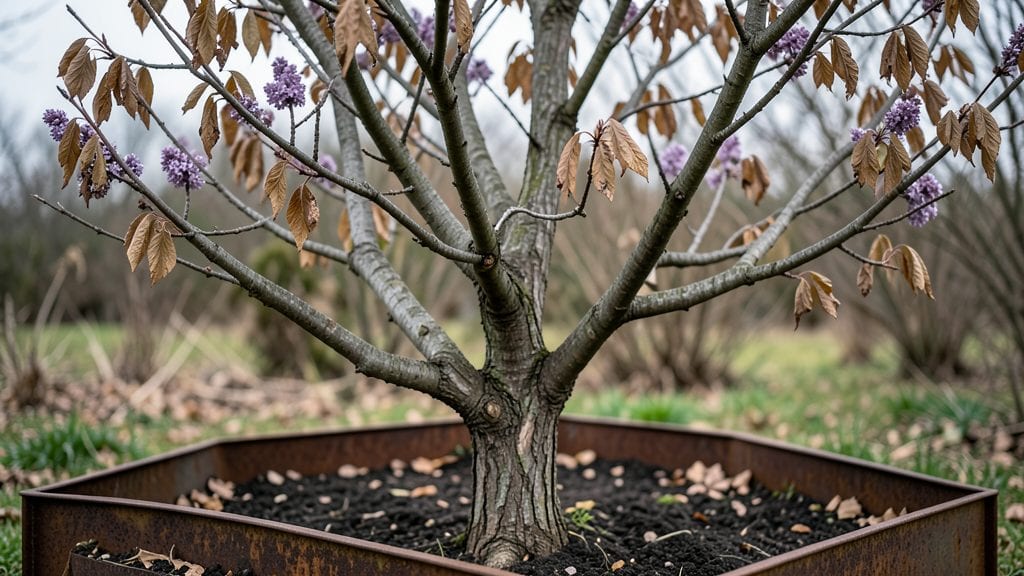
When lilac trees look like frost-bitten skeletons by winter, the right cuts now set up their most spectacular spring blooms. I’ve pruned these fragrant giants for years, and the key is timing—waiting until late winter when the ground stays frozen but buds haven’t swelled yet.
That’s when you trim dead wood and shape the canopy without sacrificing next year’s flowers.
The tools you’ll need are basic: sharp pruning shears, gloves, and a bucket for clippings. Focus on removing 30-40% of the oldest stems at the base—this encourages fresh growth while keeping the tree’s natural shape.
Mulch heavily around the base with 3-4 inches of organic matter to insulate roots from temperature swings.
What you’ll get is a lilac that bursts into bloom earlier and denser than ever. The pruned branches reveal fresh green shoots by early spring, and those fragrant purple spikes return with 20-30% more abundance than unpruned trees.
Just watch for signs of winter stress—peeling bark or oozing sap—and adjust your approach.
This method works for both old established lilacs and younger trees, though container-grown specimens need extra frost protection. The same principles apply whether you’re in a cold northern climate or a milder zone with occasional freezes. Let’s get those shears ready!
📚 In This Guide
- What you need
- Instructions
- Tips and common mistakes
- Wrapping up and next steps
What you need
- ● Pruning shears: Bypass pruners (sharp, 6–8-inch blades) for clean cuts on small branches.
- ● Loppers: Long-handled (18–24 inches) for thicker branches (½–1½ inches in diameter).
- ○ Pruning saw: Curved-tooth saw for branches larger than 1½ inches (optional but helpful for stubborn growth).
- ● Disinfectant: 70% isopropyl alcohol or bleach solution (1 part bleach to 9 parts water) to sterilize tools between cuts and prevent disease.
- ● Gloves: Heavy-duty, cut-resistant to protect your hands from thorns and rough bark.
- ● Safety glasses: Impact-resistant to shield your eyes from debris.
- ● Ladder or step stool: Sturdy, extendable (if your tree is over 6 feet tall) with a non-slip base.
- ● Trash bags or bucket: For collecting pruned branches and debris.
- ○ Marking twine or flags: Optional but useful for tagging branches to prune (helps with planning).
- ● Hand pruners with a bypass blade for precision on tiny branches.
- ● Pole saw for high branches without a ladder.
- ● Garden kneeler or stool for comfort if you’re working close to the ground.
- ● Pruning sealant (like tree wound dressing) for large cuts (controversial—skip if unsure!).
- ● Notebook or app to sketch your tree’s shape before/after pruning.
Step-by-step guide for winter pruning lilac trees
Here's how I transform dormant lilacs into healthier, more vibrant spring bloomers every year.
✂️ Step 1: Time Your Pruning for Maximum Frost Protection
Prune your lilac tree after the first hard frost but before the ground freezes—typically in late November to early December. This timing ensures the tree has entered dormancy but hasn't been damaged by extreme cold. You'll know it's ready when the leaves have fallen completely and the branches feel brittle to the touch.
Never prune in late winter or early spring. Doing so removes next year's flower buds, which form during the previous summer and fall. I mark my calendar each year because timing is everything—prune too early, and you encourage new growth that won't survive winter.
✂️ Step 2: Remove Dead, Diseased, or Weak Wood First
Start by cutting out any branches that are dead, diseased, or crossing—these are the first to go. Use clean, sharp pruning shears to make 45-degree cuts just above a healthy bud or lateral branch. The cut should be about ¼ inch above the bud, angled to allow water to run off. Look for branches with brown, mushy centers or blackened spots—these are clear signs of disease.
I always work from the inside out, removing branches that rub against others first. This prevents future damage and improves airflow through the center of the tree. If you see any suckers growing from the base, cut them off at ground level—they drain energy from your main plant.
✂️ Step 3: Thin Out Overcrowded Branches for Better Airflow
Next, thin out branches to open up the center of the tree. Aim to remove about 20-30% of the oldest wood—this stimulates new growth while maintaining the tree's natural shape. Focus on branches that are thinner than a pencil or growing inward. You'll see a dramatic difference in how sunlight reaches the center after this step.
Make your cuts just outside the branch collar—the swollen area where the branch meets the trunk. Never leave stubs, as they invite disease. I like to step back every few cuts to visualize the tree's shape. The goal is an open, vase-like structure that lets air and light circulate freely.
✂️ Step 4: Shape the Tree While Preserving Its Natural Form
Now, lightly shape the tree by trimming back any branches that are growing too long or out of proportion. Lilacs naturally form a rounded shape, so avoid cutting into the center more than necessary. For each branch you shorten, cut back to a lateral bud that faces outward—this encourages growth in the right direction.
I never remove more than one-third of the tree's total branches in a single year. Over-pruning stresses the plant and reduces next year's blooms. If your lilac is particularly old or overgrown, spread the pruning over two or three years to avoid shocking the tree.
⏰ Step 5: Clean Up and Protect for Winter
After pruning, remove all debris from the base of the tree and dispose of it in the trash—not the compost pile—to prevent disease. Sterilize your pruning tools with rubbing alcohol to kill any lingering pathogens. Then, apply a 2-3 inch layer of mulch around the base, keeping it 6 inches away from the trunk to prevent rot.
For extra frost protection, I wrap young or newly pruned trees with burlap during extreme cold snaps. Lilacs are hardy, but young wood can still suffer damage if temperatures drop below -20°F. Water the tree deeply before the ground freezes to ensure it has enough moisture for spring growth.
Tips & tricks for perfect lilac tree winter pruning
Timing and technique make all the difference when pruning lilacs for winter resilience. Here’s how to avoid common mistakes and get the best results.
Timing Secret: The late November to early December window is critical because it ensures your lilac is fully dormant but hasn’t yet suffered frost damage. I’ve learned this the hard way—pruning too early can stimulate new growth that won’t survive winter, while waiting too long risks damaging branches already weakened by cold. Check for completely fallen leaves and brittle branches as your cue.
Cutting Technique: When removing branches in Step 2, always make your 45-degree cuts just above a healthy bud or lateral branch, about ¼ inch away. This angle helps water run off, preventing rot. I’ve seen too many pruning jobs go wrong because people leave stubs or cut too close to the trunk—always visualize where the new growth will emerge.
Pruning Limits: Never remove more than one-third of the tree’s branches in a single year, as this stresses the plant and reduces next year’s blooms. If your lilac is overgrown, spread the pruning over two or three years. I’ve watched lilacs recover beautifully when pruned gradually, while aggressive cuts can leave them struggling for years.
Cleanup and Protection: After pruning, sterilize your tools with rubbing alcohol to prevent disease spread, and dispose of debris in the trash—not the compost. For extra frost protection, wrap young trees with burlap during extreme cold snaps (below -20°F). This simple step has saved my younger lilacs from winter damage more times than I can count.
Pro Tips for Lilac Tree Winter
- Timing and technique make all the difference when pruning lilacs for winter resilience.
- Timing Secret: The late November to early December window is critical because it ensures your lilac is fully dormant but hasn’t yet suffered frost damage.
- Cutting Technique: When removing branches in Step 2, always make your 45-degree cuts just above a healthy bud or lateral branch, about ¼ inch away.
Frequently asked questions
Got questions about keeping your lilac tree thriving through winter? Here are some of the most common concerns—and their answers—to help you prune with confidence and ensure those fragrant blooms return year after year!
When is the best time to prune lilacs in winter?
Prune lilacs after their first bloom cycle (late spring/early summer) or before new buds form in late winter (February or March). Avoid pruning in deep freeze—aim for days above 40°F (4°C) to reduce stress. Pro tip: If your lilac blooms late, prune right after flowering to encourage next year’s buds!
Can I prune lilacs in freezing temperatures?
No—pruning in freezing temps (<32°F/0°C) can shock the tree, making it vulnerable to disease or winter dieback. Wait until temperatures stabilize for a few days. If you must act urgently (e.g., storm damage), prune in milder winter afternoons and clean tools with rubbing alcohol to prevent bacterial spread.
How much can I trim back a mature lilac tree in winter?
Never cut back more than 1/3 of the tree’s height in a single pruning session. For mature lilacs, focus on shaping by trimming old wood (last year’s growth) to encourage new, vibrant blooms. Avoid "rejuvenation pruning" (cutting to the ground)—this removes next year’s flower buds!
What if my lilac tree doesn’t bloom after winter pruning?
Lilacs bloom on old wood, so pruning too late (after buds swell) or cutting back too aggressively can delay flowers. If it skips blooming, check for:
- Over-pruning (leave 2–3 years of stems for buds).
- Poor soil (test pH; lilacs prefer 6.0–7.0).
- Pests/disease (inspect for sawfly larvae or powdery mildew).
Are there winter-hardy lilac alternatives for colder climates?
Yes! If your zone is USDA 3 or colder, try these frost-resistant varieties:
- ‘Dwarf Korean’ (Syringa meyeri) – Blooms early, survives to -30°F (-34°C).
- ‘Bloomerang’ (Syringa × hyacinthiflora) – Reblooms twice yearly, hardy to -20°F (-29°C).
- ‘Miss Kim’ (Syringa pubescens subsp. patula) – Compact, thrives in Zone 4.
Wrapping up and next steps
Winter pruning your lilac tree isn’t just about shaping—it’s about revitalizing for a burst of spring blooms you’ll love. With the right tools, timing, and technique, you’re setting the stage for a healthier, more vibrant tree year after year. 🌸
Ready to take action? Mark your calendar for late winter or early spring, grab your pruners, and give your lilac the care it deserves. Your future blooms will thank you!