
Pruning
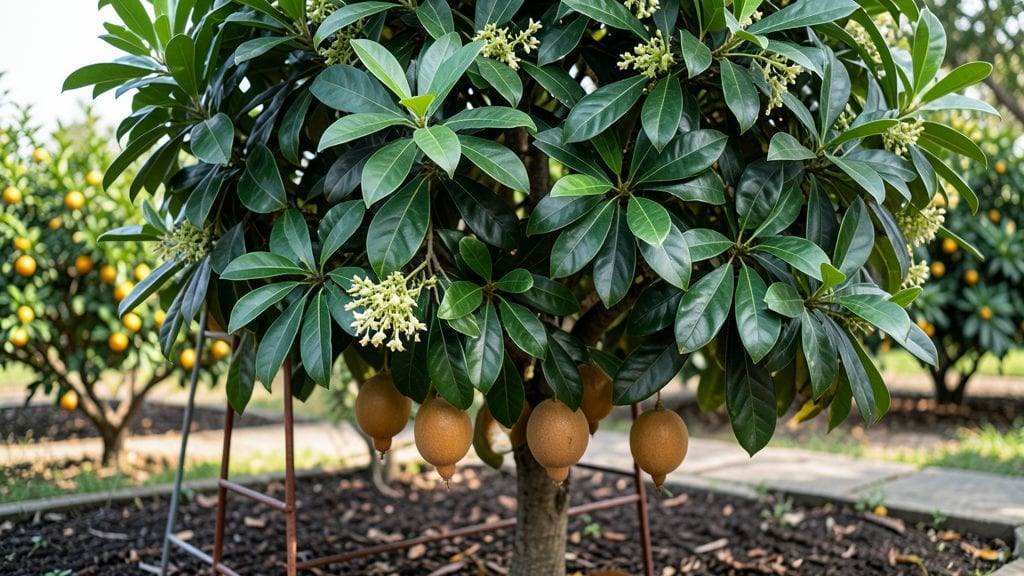
Growing a longan fruit tree starts with three simple pruning cuts that unlock year-round harvests—something I learned after my first tree produced just a handful of fruits. The secret lies in shaping the tree early to maximize sunlight exposure and airflow, which tropical fruit trees like longan crave.
Most gardeners overlook pruning until the tree is mature, but those first cuts in late winter set the stage for abundant fruit production.
You’ll need well-draining soil, a sunny spot with at least 6 hours of direct light daily, and a container at least 15 gallons if growing indoors or in cooler climates.
Longan trees thrive in USDA zones 10-12, but with proper care, container-grown trees can survive in zones 9 and even cooler areas during summer months. The key is mimicking their natural tropical environment—warmth, humidity, and consistent moisture without waterlogging.
By mastering those three pruning cuts, you’ll encourage stronger branches, more flowers, and fruit that ripens over an extended season. Imagine plucking sweet, translucent longans from your own tree—6-8 months after planting—instead of waiting years for store-bought imports.
The first harvest might be modest, but each year, the tree rewards patience with dozens of fruits per season.
Whether you’re planting in the ground or a large container, the same principles apply. Container growing lets you move the tree indoors during frost or extreme heat, giving you flexibility in nearly any climate.
Start small, prune smart, and soon you’ll be sharing longans with neighbors—the tropical fruit that tastes like lychee’s sweeter cousin.
📚 In This Guide
- What you need
- Instructions
- Tips and common mistakes
- Wrapping up and next steps
What you need
- ● Longan sapling: 1 healthy, disease-free tree (1–2 years old, grafted for best results).
- ● Pruning tools: 1 sharp bypass pruner (for clean cuts on small branches).
- ● 1 pair of loppers (for thicker branches, 1.5–2 inches in diameter).
- ● 1 pruning saw (for branches >2 inches thick).
- ● Disinfectant: 70% isopropyl alcohol or a copper-based fungicide (to sterilize tools between cuts).
- ● Garden gloves: 1 pair (cut-resistant for safety).
- ● Sealing wax or pruning paste: 1 small tub (to protect exposed cuts).
- ● Watering can or hose: (for post-pruning hydration).
- ○ Soil amendments (optional but helpful): Compost or well-rotted manure (5–10 lbs per tree).
- ● Slow-release fertilizer (e.g., 10-10-10 NPK, 1 lb per tree).
- ● Tree support: 1–2 stakes + soft ties (for young trees in windy areas).
- ● Mulch: Wood chips or straw (2–3 inches thick, to retain moisture).
- ● Pest control: Neem oil or insecticidal soap (for aphids/mites).
- ● Sunlight meter: (to check light exposure for optimal pruning timing).
- ● Camera or sketchbook: (to document cuts for future reference!).
How to prune a longan tree for continuous fruit production
Pruning isn't just about shaping—it's the secret to keeping your longan tree productive year-round. Here's how to make those three strategic cuts that boost fruit yield and tree health.
Remove Dead or Diseased Branches First
Start by inspecting the entire tree for branches that are brown, brittle, or showing signs of fungal infection like black spots or powdery residue. These branches won't recover and will drain energy from healthy growth. Use sharp, sterilized pruning shears to make clean cuts just outside the branch collar—the swollen area where the branch meets the trunk.
I always work from the bottom up, removing the worst offenders first. This prevents sap from running down healthy branches and potentially spreading disease. If you find a branch with more than 50% dead wood, remove the entire branch—don't leave stubs. The tree will heal cleaner and faster without them.
After cutting, dip your tools in rubbing alcohol to prevent cross-contamination. You'll know you're doing this right when the cuts look smooth and the tree's structure becomes immediately more open. This first cut sets the stage for everything else.
Thin Out Overlapping or Crossing Branches
Next, focus on branches that rub against each other or grow directly across from one another. These "crossing branches" create wounds that become entry points for pests and diseases. Choose the weaker of the two branches to remove—it'll be thinner, have fewer leaves, or show signs of slower growth. Make your cut at the branch collar just like before.
Here's the thing—thinning isn't about removing branches to let more light in (though that happens). It's about improving air circulation. A longan tree with good airflow stays healthier and produces fruit more consistently. You'll notice the tree's canopy opens up immediately after this step, revealing more of the inner branches.
Don't be afraid to be aggressive here. I've seen growers hesitate to remove branches they think might be "useful," but a tree can always grow new branches. The goal is to create a structure where sunlight reaches all parts of the tree, not just the outer edges. Aim to remove about 10-15% of the tree's total branches in this step.
Prune to Encourage Fruit-Bearing Wood
The third cut is where you shape the tree for maximum fruit production. Longan trees bear fruit on new growth, so you want to encourage vigorous, healthy branches. Look for branches that are growing inward or upward—these are competing with the main structure and won't produce much fruit. Cut these back to an outward-facing bud or side branch.
For branches that are too long, cut back to a point where the remaining branch is about 12-18 inches long. This length gives the tree enough energy to produce fruit without overloading any single branch. You'll see new shoots emerge from the cut areas within a few weeks—these are your future fruit-bearing branches.
Pay special attention to the tree's main scaffold branches—the thicker, sturdy branches that form the tree's skeleton. These should be spaced about 12-18 inches apart along the trunk. If you have too many competing for space, thin them out to leave the strongest ones. This ensures the tree puts its energy into producing high-quality fruit rather than supporting weak growth.
Clean Up and Monitor for New Growth
After making your cuts, gather all the pruned branches and dispose of them properly. If they're disease-free, you can compost them, but if there's any sign of infection, burn or trash them to prevent spreading spores. Sweep up any fallen leaves or debris from under the tree—they can harbor pests and diseases.
Now, keep an eye on the tree over the next few weeks. You should see new shoots emerging from the cut areas, especially where you pruned back to outward-facing buds. These new shoots are critical—they'll become the tree's fruit-bearing wood. Water the tree deeply after pruning to help it recover, but avoid overwatering, which can stress the tree.
This is also the time to adjust your fertilization plan. Since you've removed some of the tree's foliage, it'll need extra nutrients to support new growth. Apply a balanced, slow-release fertilizer about 4-6 weeks after pruning. You'll know you've done everything right when the tree bursts into new, vibrant growth within a month.
Tips & tricks for pruning your longan tree
These three essential strategies will transform your pruning from basic maintenance into a fruit-boosting routine that keeps your longan tree thriving year after year.
Timing is Everything: The best time to prune your longan tree is during its dormant season, typically late winter to early spring before new growth begins. This timing allows the tree to heal quickly and puts all its energy into producing fruit rather than recovering from wounds. If you must prune outside this window, avoid heavy pruning during hot weather, which can stress the tree and make it more susceptible to disease.
Tool Preparation Matters: Before you begin, sterilize your pruning shears with rubbing alcohol to prevent spreading disease between cuts. I've seen growers skip this step and end up with infected branches that spread problems throughout the tree. Also, make sure your tools are sharp—dull blades crush branches instead of making clean cuts, which slows healing and invites infection. A good rule of thumb is to sharpen your shears whenever they start feeling like they're "biting" into the wood.
Visual Cues for Proper Cuts: When making your cuts in Step 3, look for the outward-facing buds when pruning branches that are growing inward. These buds will grow into new branches that angle away from the center of the tree, allowing better sunlight penetration and air circulation. You'll know you've made the right cut when the remaining branch stump looks smooth and the cut is just outside the branch collar—this prevents water from pooling and causing rot.
Post-Pruning Care Strategy: After completing all four steps, apply a thin layer of pruning sealant to larger cuts (over ½ inch in diameter) to reduce water loss and prevent disease entry. While this isn't always necessary for longan trees, it's especially helpful in humid climates. Then, water deeply but avoid overwatering—the tree needs moisture to recover, but soggy soil can lead to root rot. Monitor for new growth within 3-4 weeks, which confirms the tree is responding well to pruning.
Pro Tips for Longan Fruit Tree
- These three essential strategies will transform your pruning from basic maintenance into a fruit-boosting routine that keeps your longan tree thriving year after year.
- Timing is Everything: The best time to prune your longan tree is during its dormant season, typically late winter to early spring before new growth begins.
- Tool Preparation Matters: Before you begin, sterilize your pruning shears with rubbing alcohol to prevent spreading disease between cuts.
Frequently asked questions
Got questions about growing and maintaining your longan fruit tree? Here are some common ones—plus quick answers to keep your tree thriving!
How often should I prune a longan fruit tree?
Prune your longan tree 3 times a year: late winter (to shape and remove dead wood), early summer (to encourage fruiting), and after harvest (to maintain airflow). Avoid heavy pruning during fruiting season—focus on light shaping instead. Pro tip: Use sterilized tools to prevent disease!
When is the best time to harvest longan fruit?
Harvest longans when the skin turns golden-brown and the fruit detaches easily with a slight twist (usually late summer to early fall, depending on your climate). Overripe fruit may split—pick them promptly! Store in a cool, dry place for up to 2 weeks.
Why aren’t my longan trees producing fruit?
Common reasons include young age (trees need 3–5 years to bear fruit), poor pollination (plant 2+ trees for cross-pollination), or nutrient deficiencies. Check for pests/diseases too! Boost fruiting with a balanced fertilizer (high in potassium) in spring.
Can I grow a longan tree in a pot?
Yes! Use a large container (15+ gallons) with drainage holes and well-draining soil. Longans thrive in warm climates (USDA Zones 10–12), so keep pots in full sun. Repot every 2–3 years and prune roots if they circle. Warning: Potted trees may fruit less than in-ground ones.
What pests should I watch for on longan trees?
Keep an eye out for aphids, mealybugs, and fruit borers. Treat aphids with soapy water; use neem oil for mealybugs. For borers, remove infested branches and apply beneficial nematodes. Regular pruning improves airflow, reducing pest risks!
Wrapping up and next steps
Growing a thriving longan fruit tree is absolutely within reach with the right care—and pruning is your secret weapon! 🌿 By mastering those three key cuts (structural, fruiting, and maintenance), you’ll unlock year-round harvests and a healthier tree.
Whether you’re a beginner or a seasoned gardener, every snip brings you closer to sweet, juicy rewards.
Ready to take the next step? Grab your pruners, study your tree’s growth patterns, and schedule your first pruning session this season. Your longan tree—and your taste buds—will thank you! 🍈✨