Trees
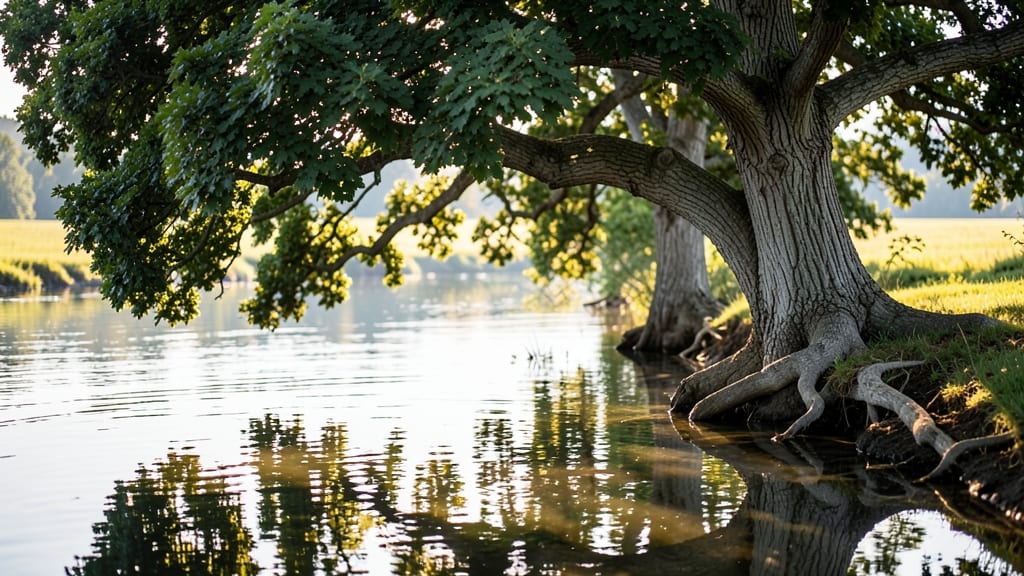
An oak tree by a river isn’t just a tree—it’s the Pacific Northwest’s answer to timeless, soul-soothing landscapes. 🌳 The way its gnarled roots tangle with the water’s edge and its branches sway over the current creates a scene straight out of a storybook.
This isn’t just about beauty; it’s about crafting a space where nature’s rhythm feels like home.
The magic happens when you pair the oak’s natural grandeur with the right companions. Native ferns unfurl along the bank, dogwoods bloom in the dappled shade, and wildflowers dance in the breeze—all thriving where the river’s moisture meets the oak’s deep roots.
The soil? Rich, loamy, and slightly damp—perfect for plants that love their feet wet but their leaves dry.
You’ll end up with a living postcard: a cool, shady retreat where birds nest in the branches, dragonflies skim the surface, and the air hums with the scent of damp earth and sun-warmed bark.
The oak’s canopy becomes a natural umbrella, filtering light just right for wildflowers and ferns to flourish beneath it.
Whether your riverbank is wide or narrow, the oak adapts—its roots anchoring the soil while its shade keeps the water cool. Start with one, and you’ll soon find the ecosystem weaving itself together around it, layer by layer. Here’s how to make it happen without a hitch.
📚 In This Guide
- What you need
- Instructions
- Tips and common mistakes
- Wrapping up and next steps
What you need
- ● Oak Tree: Seedling or sapling: 1-2 Quercus garryana (Oregon white oak) or Quercus lobata (valley oak), depending on your zone. Choose a 1-3 gallon container size for young trees or a 5-gallon minimum for faster establishment.
- ● Acorns (for propagation): 10-20 fresh acorns from a healthy, local oak tree (ensure they’re not treated with pesticides).
- ● Soil Amendments: 50 lbs compost or well-rotted leaf mold
- ● 10 lbs mycorrhizal fungi (boosts root health in riparian zones)
- ○ Optional: River sediment or sand (1-2 wheelbarrow loads) for drainage if your soil is heavy clay.
- ● Watering Supplies: 5-gallon watering can or drip irrigation kit (for consistent moisture)
- ● 100+ feet of soaker hose (to mimic riverbank hydration)
- ● Digging Tools: Shovel (18-inch round-point for planting, flat-edged for amending soil)
- ● Garden fork (for aerating compacted river-adjacent soil)
- ● Safety & Support: Work gloves (gardening-grade, water-resistant)
- ● Staking kit (2 5-foot bamboo stakes + tree tie straps for young saplings)
- ● Mulch (3-4 inches of wood chips or bark, keep 6 inches away from trunk)
- ○ Optional (But Helpful!): Soil pH test kit (target 6.0–7.5 for oaks)
- ● Tree pruners (bypass pruners for shaping)
- ● Wildlife deterrent (if planting near water: deer repellent or chicken wire for young trees)
- ● Location: Choose a spot within 100 feet of a water source (river, stream, or pond) with full sun (6+ hours/day) and well-draining soil. Avoid low-lying areas prone to flooding.
- ● Timing: Best planting season: Early spring (March–April) or fall (September–October) in the PNW.
- ● Acorn propagation: Fall sowing (stratification happens naturally over winter).
- ● Legal/Environmental: Check local regulations—some areas require permits for riparian planting or native species.
- ● Source acorns or saplings from local nurseries to ensure climate compatibility.
How to plant an oak tree along a Pacific Northwest riverbank
Here’s how to establish a sturdy, river-adapted oak that thrives for decades.
🌱 Step 1: Choose the Right Oak Species and Timing
The Pacific Northwest’s best riparian oaks are white oak (Quercus garryana) or Oregon white oak (Quercus garryana), both drought-tolerant and flood-resistant. Plant in early spring (March–April) when soil is workable but before summer heat arrives. Avoid fall planting—roots won’t establish before winter rains.
Here’s the thing—don’t plant near the water’s edge. Position the tree at least 30 feet from the riverbank to avoid erosion damage and root asphyxiation from seasonal flooding. Look for a slight elevated spot where water drains but doesn’t pool.
🪴 Step 2: Prepare the Planting Site and Hole
Dig a hole twice as wide as the root ball but no deeper—this prevents soil compaction around roots. Amend the native soil with 3 cubic feet of compost mixed into the top 12 inches of the hole’s backfill. Native soil is usually fine, but adding compost boosts microbial activity for faster root growth.
Real talk: If your site has compacted clay (common in river valleys), loosen the bottom of the hole with a shovel or root rake. Roots need to spread freely—don’t bury the root flare (the swollen area at the base of the trunk). It should sit 1–2 inches above ground level to prevent rot.
☀️ Step 3: Plant and Water for Immediate Stability
Place the tree in the hole, ensuring the root flare is visible above the soil line. Backfill with native soil, tamping gently in 3-inch layers to eliminate air pockets. Water deeply after planting—10 gallons—to settle the soil and encourage root contact.
Mulch with 3 inches of wood chips (keep mulch 6 inches away from the trunk to prevent rot). A 5-gallon watering can every 2–3 days for the first month keeps roots moist without drowning them. Oak seedlings are tough, but consistent moisture in their first year is critical.
✂️ Step 4: Protect and Monitor Through the First Year
Install a 4-foot-tall tree guard (made from wire mesh or plastic) to deter deer and rodents. In the PNW, deer browse young oaks aggressively—without protection, they’ll strip bark and kill the tree. Secure the guard firmly so it doesn’t sway in wind.
Check the soil moisture weekly. Oak roots extend 12–18 inches deep in their first year, so water when the top 6 inches of soil feel dry. Overwatering here is worse than underwatering—oaks hate soggy roots. If leaves yellow, it’s usually too much water, not too little.
Tips & tricks for planting an oak tree by the river
Let me save you the frustration of watching a young oak struggle—these are the hard-won lessons from years of planting along riverbanks.
Site Selection Secret: That 30-foot buffer from the riverbank isn't just a suggestion—it's non-negotiable. I've seen too many oaks planted too close drown during spring floods or get undercut by erosion. Look for that subtle elevation where water pools briefly after rain but drains within hours. The soil should feel moist but not soggy when you squeeze it.
Root Ball Prep: When you dig that hole twice as wide as the root ball, don't just scrape the sides—use your fingers to loosen the native soil along the edges. This creates a "root highway" for new growth. And here's what nobody tells you: If your root ball looks tightly bound, gently tease the roots apart at the bottom before planting. I've seen this double root establishment time in my own plantings.
Watering Wisdom: Those 10 gallons of water after planting aren't just for show—they're creating a moisture reservoir around the roots. But don't think you're done! The 5-gallon watering can every 2-3 days is critical during the first month. I learned this the hard way when a drought hit and my unwatered saplings struggled. Pro tip: Water in the morning so the roots have all day to absorb moisture before evening evaporation.
Pro Tips for Oak Tree By River
- Let me save you the frustration of watching a young oak struggle—these are the hard-won lessons from years of plantin...
- Site Selection Secret: That 30-foot buffer from the riverbank isn't just a suggestion—it's non-negotiable. I've seen ...
- Root Ball Prep: When you dig that hole twice as wide as the root ball, don't just scrape the sides—use your fingers t...
Frequently asked questions
Got questions about nurturing or appreciating an oak tree by the river? You’re not alone! Here are some of the most common inquiries—plus straightforward answers to help you care for (or simply admire) these majestic riparian giants.
How close to a river can an oak tree safely grow?
Oak trees thrive near rivers, but their roots need stability. Plant them at least 30–50 feet from the water’s edge to avoid erosion or flooding risks. If the soil is waterlogged, consider raised beds or well-draining amendments. Pro tip: Native oaks like garry oak or coast live oak are more flood-tolerant than non-natives.
Will an oak tree by the river attract pests or diseases?
Riparian oaks face unique challenges: root rot (from soggy soil), borers (drawn to stressed trees), and fungal infections (like oak wilt). Prune for airflow, avoid overwatering, and inspect bark annually for holes or oozing sap. Healthy soil = resilient trees—mulch with wood chips to deter pests.
How long does it take for an oak tree to mature near a river?
Oaks grow slowly—expect 20–30 years for full canopy shade in ideal conditions (sun, moisture, no competition). River oaks may take longer due to nutrient competition with aquatic plants. Patience pays off: Mature oaks live 200+ years and become Pacific Northwest landmarks!
Can I plant an oak tree by the river if I have a small yard?
Dwarf or semi-dwarf varieties like ‘Blue Horizon’ bur oak (30–40 ft tall) work well. Just ensure:
- Roots won’t invade septic/sewer lines (check local codes).
- Overhang won’t block sunlight for future homes.
- Soil is amended if compacted (add compost!).
What should I do if my oak tree’s leaves turn brown near the river?
Brown leaves often signal stress—common causes:
- Overwatering: Yellow/brown leaves + soggy soil = root rot risk.
- Underwatering: Crispy edges = thirsty tree (water deeply 1–2x/week in dry spells).
- Nutrient deficiency: Test soil; fertilize with low-nitrogen options (like 5-10-10) in early spring.
Wrapping up and next steps
An oak tree by a river isn’t just a picturesque sight—it’s a living testament to the Pacific Northwest’s harmony between strength and serenity. 🌳💧 These majestic giants thrive where land meets water, offering shade, wildlife habitat, and timeless beauty to any landscape.
Whether you’re dreaming of planting one or simply admiring their grandeur, their presence reminds us of nature’s resilience and grace.
Ready to bring this elegance to your own space? Start by researching native oak varieties suited to your region, then take the first step—visit a local nursery or consult an arborist. Your future riverside oasis awaits! 🌱✨