
Pruning
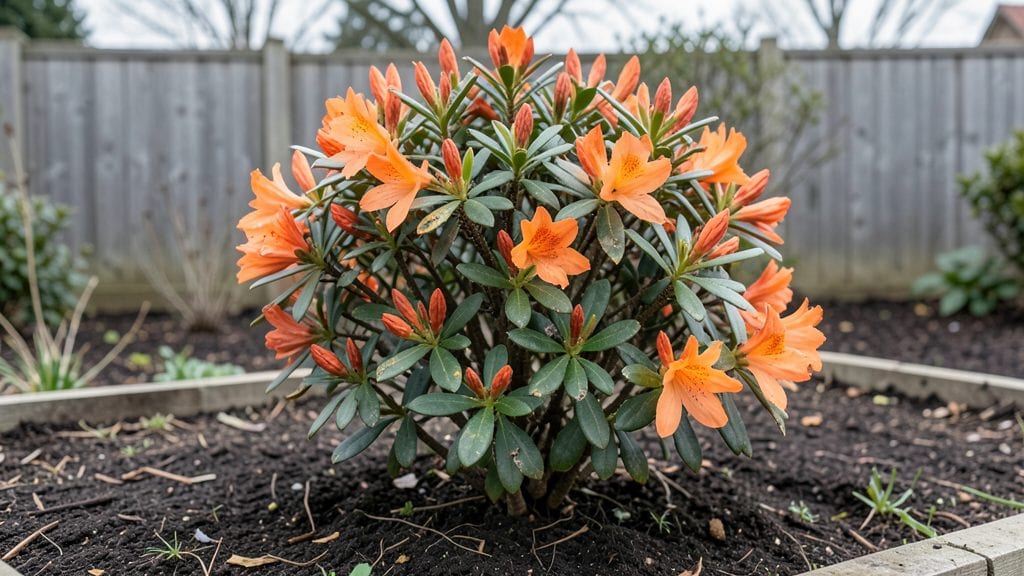
Growing an orange azalea tree that bursts with color year after year starts with just three strategic pruning cuts—something I perfected after my first azalea nearly lost its shape entirely.
The key isn’t just when you prune but how: shaping the branches to encourage dense growth while preserving those vibrant blooms. I learned the hard way that azaleas reward patience, not aggression.
These trees thrive in partial shade, where morning sun warms the leaves but afternoon shade prevents scorching. Your soil should be acidic (think pine needles or peat moss) and well-draining—azaleas hate soggy roots.
Water consistently but let the top inch dry between drinks, and you’ll avoid the dreaded leaf drop that plagues so many growers. The payoff? Clusters of fiery orange blooms from spring through fall, with proper care.
That third pruning cut—the one most gardeners skip—is where the magic happens. It’s not about cutting back hard; it’s about opening the center of the tree to let light reach the inner buds.
After my first attempt, I saw blooms I’d never noticed before, deeper in the branches. The result? A tree that looks like it belongs in a botanical garden, not just a backyard.
Whether you’re growing in a container on a patio or planting directly in the ground, the same principles apply. Just remember: azaleas bloom on old wood, so prune after flowering to avoid sacrificing next year’s blooms. Start with these basics, and you’ll have a showstopper that keeps giving for decades.
📚 In This Guide
- What you need
- Instructions
- Tips and common mistakes
- Wrapping up and next steps
What you need
- ● Pruning shears: Bypass pruners (for clean cuts on small branches, 3-4 inches in diameter). Recommended: Felco F-2 or Corona Tools Classic.
- ● Loppers: For medium branches (1-2 inches thick). Look for ratcheting loppers (e.g., Fiskars X27) for extra leverage.
- ● Pruning saw: For thick branches (2+ inches). A bow saw or pruning saw with a fine-tooth blade (e.g., Bahco Ergonomic) works best.
- ● Disinfectant: Rubbing alcohol (70% isopropyl) or a commercial pruning sealant (e.g., Tanglefoot Pruning Seal) to prevent disease spread.
- ● Gloves: Heavy-duty gardening gloves (e.g., Wolverine W1600) to protect against thorns and sap.
- ● Safety glasses: For eye protection (e.g., Homdox Safety Glasses).
- ● Ladder or step stool: Sturdy and tall enough to reach your tree’s highest branches safely. Pro tip: 💡 Use a harness and extension pole for very tall trees!
- ○ Trash bags or bucket: For collecting pruned branches (optional but helpful for cleanup).
- ● Pruning paint: For sealing large cuts (e.g., DAP Tree Seal).
- ● Sharpener: File or stone to keep blades razor-sharp.
- ● Notebook & pen: To sketch your tree’s shape or mark cuts before pruning.
- ● Hose with nozzle: To clean tools and remove sap post-pruning.
How to prune your orange azalea for nonstop color
These three strategic cuts keep your azalea blooming like clockwork all year.
✂️ Step 1: Time Your First Cut After Spring Bloom
Wait until your azalea finishes flowering in late spring before making your first cut. This timing ensures you don't remove next year's flower buds, which form on old wood. Look for spent blooms to drop completely—about 4-6 weeks after peak bloom—before reaching for the shears.
Focus on removing any dead, crossing, or crowded branches first. These cuts improve airflow and reduce disease risk. I like to make clean cuts just above a leaf node or outward-facing bud. Never cut into the center of the plant—this creates a dense, shaded interior that discourages new growth.
For shape, remove no more than one-third of the plant's height in this first pruning. You'll see fresh, vibrant foliage emerge within 2-3 weeks as the plant responds to the improved structure.
✂️ Step 2: Light Summer Trim to Encourage New Growth
About 6-8 weeks after your spring pruning, give your azalea a second light trim in early summer. This encourages a fresh flush of growth that will produce fall blooms. Look for any branches that are growing inward or rubbing against others—these are your targets.
Use sharp, clean shears to make angled cuts just above a leaf node. Avoid cutting back to bare wood—always leave some foliage. I usually remove only the very tips of branches, about 2-4 inches at most. This stimulates branching while maintaining the plant's natural shape.
Water deeply after pruning to help the plant recover. You'll notice new shoots forming within 3-4 weeks, signaling successful stimulation of fall blooming.
✂️ Step 3: Final Winter Pruning for Next Year's Blooms
In late winter, just before new growth begins, do your final pruning. This is when you shape the plant for next year's display. Remove any dead, diseased, or weak branches completely. Also cut back any branches that grew too long during the previous season.
For shaping, I make my cuts just above a leaf node or outward-facing bud, always cutting at a 45-degree angle. This helps water run off the cut and prevents damage. Never remove more than one-third of the plant's height in this final pruning—this keeps the plant healthy and blooming.
The goal here is to create an open, airy structure that allows sunlight to reach all parts of the plant. You'll see fresh, new growth beginning within 2-3 weeks of this final pruning, setting the stage for another spectacular bloom season.
Tips & tricks for perfect orange azalea pruning
These simple strategies will help you keep your azalea blooming beautifully year after year without the guesswork.
Timing is Everything: The 4-6 week window after peak bloom for your first cut is critical—this ensures you don't accidentally remove next year's flower buds. I've learned the hard way that cutting too early can leave your azalea looking bare for months. Mark your calendar after your spring blooms fade completely to remember this important deadline.
Shape Matters More Than You Think: When you're removing up to one-third of the plant's height in Step 1, focus on creating an open, airy structure rather than just making it smaller. Think of it like sculpting—you want sunlight to reach all parts of the plant. I like to imagine I'm creating a dome shape that allows air to circulate freely. This single approach makes all the difference in preventing fungal diseases.
Tool Maintenance You Can't Skip: Your pruning shears need to be as sharp as possible for clean cuts that heal properly. I sharpen mine before each pruning season and clean them with rubbing alcohol between cuts. Dull blades crush stems instead of making clean cuts, which can damage the plant and leave it vulnerable to infections. A little maintenance goes a long way in keeping your azalea healthy.
Recovery Signs to Watch For: After your summer trim, keep an eye out for those new shoots forming within 3-4 weeks—they're your signal that everything is working. If you don't see new growth after 4 weeks, your cuts may have been too severe. Remember, we're talking about removing just the tips (2-4 inches) in summer, not major branch removal. Patience pays off with these delicate plants.
Pro Tips for Orange Azalea Tree
- These simple strategies will help you keep your azalea blooming beautifully year after year without the guesswork.
- Timing is Everything: The 4-6 week window after peak bloom for your first cut is critical—this ensures you don't accidentally remove next year's flower buds.
- Shape Matters More Than You Think: When you're removing up to one-third of the plant's height in Step 1, focus on creating an open, airy structure rather than just making it smaller.
Frequently asked questions
Got questions about growing and maintaining an orange azalea tree? You’re not alone! Here are answers to the most common concerns—from pruning to pests—to help you keep your blooms vibrant and healthy all year.
When is the best time to prune an orange azalea tree?
The ideal time to prune is right after flowering (late spring to early summer). This ensures you don’t cut off next year’s buds while still shaping the tree for better airflow and blooms. Avoid heavy pruning in fall or winter, as it can stress the plant before dormancy.
Why are my orange azalea leaves turning yellow or dropping?
Yellowing leaves or leaf drop often signal overwatering, underwatering, or root issues. Check soil moisture—azaleas prefer consistently moist but well-draining soil. Pests like lace bugs or fungal diseases (like root rot) can also cause this. Inspect undersides of leaves and adjust care accordingly.
Can I prune an orange azalea tree in winter?
Light pruning (removing dead or damaged branches) is fine in late winter, but avoid heavy cuts. Winter pruning can stimulate new growth too early, which may freeze before spring. Save major shaping for post-bloom season to protect next year’s flowers.
What’s the difference between pruning for blooms vs. shape?
For blooms, focus on removing old wood (branches that flowered last year) to encourage new growth. For shape, trim back overgrown branches to open the center. Never cut more than ⅓ of the tree’s foliage at once—this can shock the plant.
Are there drought-tolerant alternatives to orange azaleas?
If your climate is dry, consider dwarf azaleas (like ‘Girard’s Pink’) or native shrubs like Rhododendron ‘PJM’ (evergreen) or Oakleaf Hydrangea. These handle heat better but still offer stunning blooms. Mulch heavily and water deeply (but less frequently) to mimic azalea-friendly conditions.
Wrapping up and next steps
Transforming your orange azalea tree into a vibrant, year-round beauty is totally within reach with the right pruning techniques! 🌸 By mastering those three key cuts—early spring shaping, post-bloom thinning, and late-summer cleanup—you’ll encourage lush growth and stunning flowers while keeping your tree healthy and happy.
Remember, consistency is key, and a little patience goes a long way.
Ready to take the next step? Grab your pruners, roll up your sleeves, and give your azalea the love it deserves. Watch it thrive—and enjoy the show! 🌿✨