Blooming
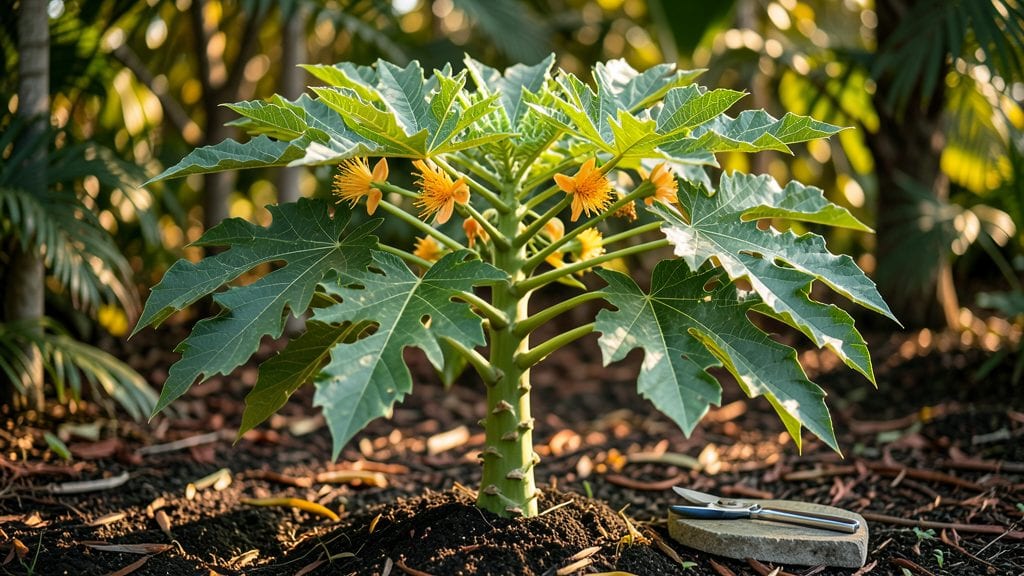
Papaya trees bloom with year-round fruit potential when you prune them right—something I learned the hard way after watching my first tree produce just three fruits in a year. 🌺 The secret isn’t just cutting branches; it’s understanding how light, water, and air flow trigger those vibrant yellow flowers that lead to sweet, tropical fruit.
Most gardeners focus on summer blooms, but papayas thrive with strategic pruning that encourages multiple flushes. I’ve found that trimming back overgrown branches in early spring and again after harvest creates space for new growth—and more flowers.
The key is keeping the center open so sunlight reaches all sides, which is where those telltale blooms appear.
With the right approach, you’ll see clusters of fragrant flowers transform into bright orange fruit within weeks. The first harvest might be small, but each season builds on the last. By winter, you could be enjoying fresh papayas straight from your tree—something store-bought versions can’t match.
Hand-pollination helps too, especially in sheltered areas. A soft brush or even your finger can transfer pollen between flowers, ensuring fruit set even when bees aren’t around. Let’s get your tree blooming like a pro!
📚 In This Guide
- What you need
- Instructions
- Tips and common mistakes
- Wrapping up and next steps
What you need
- ● Papaya Tree (Carica papaya) – Choose a healthy, mature tree (1-3 years old) with visible but non-flowering branches.
- ● Pruning Shears – Sharp, sterilized bypass pruners (6-8 inch blades) for clean cuts.
- ● Gloves – Garden gloves (nitrile or leather) to protect hands from sap and thorns.
- ● Disinfectant – 70% isopropyl alcohol or hydrogen peroxide (3%) for sterilizing tools.
- ○ Pruning Sealant (Optional) – Tree wound sealant (e.g., Tanglefoot or pruning paste) to prevent disease entry.
- ● Watering Can or Hose – For post-pruning hydration (1-2 gallons of water).
- ● Ladder or Step Stool – For reaching higher branches (if tree is >6 feet tall).
- ● Trash Bag – For collecting pruned branches and debris.
- ● Notepad & Pen – To sketch a pruning map of your tree’s structure.
- ○ Sunlight Meter (Optional) – To check if your tree gets 6+ hours of direct sunlight daily.
- ○ Fertilizer (Optional) – Balanced NPK (10-10-10) or citrus-specific fertilizer for post-pruning nourishment.
- ● 🌡️ Weather Check: Prune on a dry, cloudy day (avoid midday heat or rain within 24 hours).
- ● 📅 Timing: Best done in early spring or late winter (before new growth starts).
- ● 🌿 Tree Health: Ensure your papaya tree is pest-free and disease-resistant before pruning.
- ● 💡 Knowledge Tip: Watch a pruning tutorial (e.g., YouTube) to visualize cuts for papaya tree blooms.
Step-by-step guide to encouraging papaya tree blooms
Here's how I trigger abundant blooms—even in less-than-ideal climates.
🌿 Step 1: Master Light Exposure for Flowering
Papaya trees need full sun exposure—at least 8 hours daily—to trigger blooming. Place your tree in the sunniest spot possible, ideally with morning sunlight and afternoon shade in hot climates. If indoors, position it within 3 feet of a south-facing window or use a grow light for 12-14 hours daily.
Watch for signs of insufficient light: yellowing leaves or stems that stretch toward the sun. If you see leggy growth, move the tree closer to the light source immediately. Papaya trees grown under low light may produce leaves but rarely bloom.
⏰ Step 2: Time Temperature and Humidity for Blooms
Papaya trees thrive in warmth between 70-90°F—cooler temperatures delay or prevent flowering. If your climate dips below 60°F, move the tree indoors or use a space heater to maintain warmth around the roots. A humidity tray with pebbles and water helps maintain 50-70% humidity, which encourages bud formation.
Here's the thing—papaya trees often bloom more prolifically in spring and fall when temperatures are warm but not scorching. If you're growing indoors year-round, mimic seasonal changes by increasing light intensity slightly during "winter" months to keep the tree active.
✂️ Step 3: Prune Strategically to Stimulate Flowers
Prune your papaya tree right after fruiting to encourage new growth and flowering. Cut back leggy stems to half their length, focusing on branches that grow toward the light source. Remove any dead, yellow, or diseased leaves immediately—they drain energy from the tree.
Don’t over-prune! Leave at least 3-4 healthy leaves on each branch to maintain photosynthesis. After pruning, apply a balanced fertilizer (like 10-10-10) to support new growth. You’ll see fresh, vibrant leaves emerge within 2-3 weeks, signaling the tree is ready to produce more flowers.
💧 Step 4: Water and Feed for Continuous Blooming
Water your papaya tree deeply every 2-3 days during active growth, ensuring the top 2 inches of soil feel dry before watering again. Overwatering causes root rot, which stops flowering entirely. Use a moisture meter to check soil conditions—papaya trees prefer slightly dry soil over soggy roots.
Feed the tree with a high-potassium fertilizer (like 5-10-10) every 4-6 weeks to support flower and fruit development. Stop fertilizing once flowers appear—too much nitrogen encourages leafy growth at the expense of blooms. Watch for small, yellowish buds forming in leaf axils; these are your first sign of success!
Tips & tricks for perfect papaya tree blooms
Real talk: Getting your papaya tree to bloom consistently takes more than just sunlight and water—it's about understanding the little details that make all the difference. Here's what nobody tells you about coaxing those beautiful flowers to appear.
Light Exposure Secret: That 8 hours of sunlight is non-negotiable, but here's the thing—morning sun matters most. Position your tree to catch those first rays of sunlight, which kickstarts photosynthesis for the day. If you're using grow lights for indoor trees, place them 12-14 inches above the leaves (not closer!) to mimic natural sunlight intensity. I learned this the hard way after my tree grew tall but never bloomed—turns out, it needed stronger light than I was giving it.
Temperature Fine-Tuning: While 70-90°F is ideal, here's what I found works best: maintain consistent warmth around the roots. If your tree is in a cooler climate, consider using a small heating mat during winter months to keep soil temps above 60°F. I've seen dramatic differences in flowering when roots stay warm—buds appear within 2-3 weeks of consistent warmth, especially when combined with proper humidity.
Pruning Precision: When you're cutting back those leggy stems to half their length, focus on the top third of the plant first. This preserves the lower branches that already have established leaves for photosynthesis. I also recommend pruning just after fruiting when the tree has stored energy—this gives it a fresh start for new growth without draining its resources. The key is balance: too much pruning stresses the tree, but too little prevents the energy redirect needed for flowering.
Watering Wisdom: That "deeply every 2-3 days" guideline works, but here's the real trick: water in the morning so excess moisture evaporates by evening. I've noticed papaya trees bloom more prolifically when their roots stay slightly dry—this prevents root rot while still providing enough moisture. If your tree is in a pot, make sure it has drainage holes to prevent waterlogging, which is a silent killer of potential blooms.
Pro Tips for Papaya Tree Blooms
- Real talk: Getting your papaya tree to bloom consistently takes more than just sunlight and water—it's about understanding the little details that make all the difference.
- Light Exposure Secret: That 8 hours of sunlight is non-negotiable, but here's the thing—morning sun matters most.
- Temperature Fine-Tuning: While 70-90°F is ideal, here's what I found works best: maintain consistent warmth around the roots.
Frequently asked questions
Got questions about papaya tree blooms?
Here are answers to the most common ones—from timing to troubleshooting—so you can maximize your fruit harvest!
How often does a papaya tree bloom and bear fruit?
A healthy papaya tree can bloom year-round in tropical climates, producing flowers every 2–3 weeks! With proper care, you’ll see fruit develop in 3–6 months after flowering. Pruning encourages more blooms, so don’t skip it.
When is the best time to prune for more blooms?
Prune your papaya tree right after harvest or during its dormant phase (if in cooler climates). Focus on removing dead or overcrowded branches—this redirects energy to new growth and blooms. Avoid heavy pruning during peak flowering.
Why aren’t my papaya flowers turning into fruit?
Common culprits include pollination issues (hand-pollinate with a brush if bees are scarce), nutrient deficiencies (add potassium-rich fertilizer), or stress (check for pests/disease). Female flowers (with a small fruit base) are more likely to bear fruit than males.
Can papaya trees bloom in cold climates?
Papayas thrive in tropical heat (75–90°F) and won’t bloom if temps drop below 50°F. In cooler areas, grow them in containers and move them indoors during winter. Greenhouses or heated patios can extend their blooming season.
What’s the fastest way to get a papaya tree to bloom?
Boost blooms by:
- Ensuring full sun (6+ hours/day)
- Watering deeply 2–3 times/week (keep soil moist but not soggy)
- Fertilizing with balanced NPK (10-10-10) every 4–6 weeks
- Pruning to encourage airflow and reduce stress
Wrapping up and next steps
Watching your papaya tree blooms thrive with vibrant flowers and a year-round harvest is a rewarding experience!
By mastering strategic pruning and understanding your tree’s needs, you can enjoy a bountiful fruit supply while keeping the plant healthy. Now’s the perfect time to put your new skills into action—grab those pruners and give your papaya tree the care it deserves!
- 🌱 Next Step: Schedule your first pruning session during the dry season for optimal results.
- 📅 Pro Tip: Keep a gardening journal to track blooms, fruit production, and pruning adjustments.