Trees
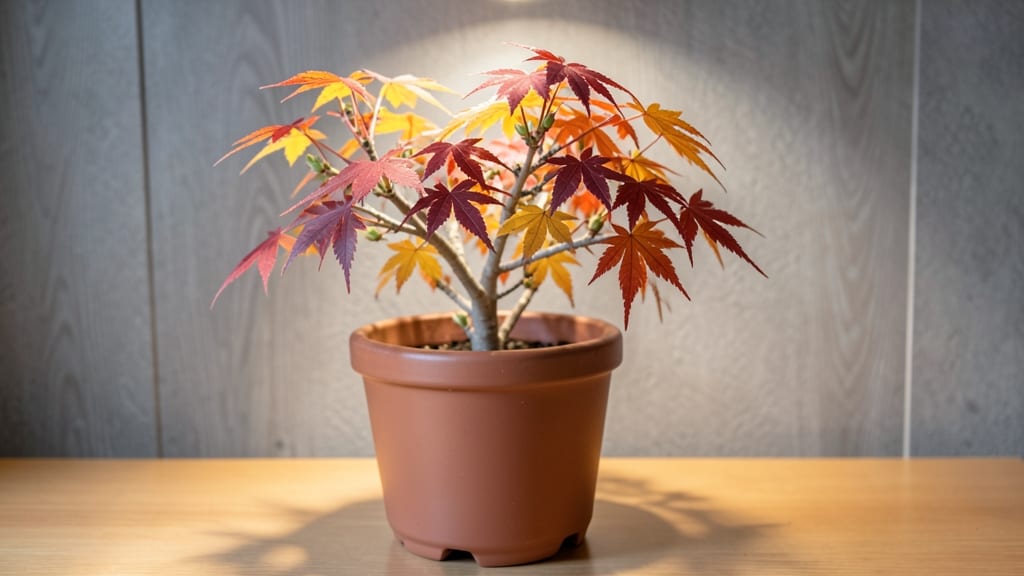
Growing a maple tree indoors is like bringing a piece of autumn indoors year-round. 🌿 The key starts with choosing the right dwarf variety—Japanese maples like 'Bloodgood' or 'Emperor 1' thrive in containers and adapt better than their outdoor cousins.
My first indoor maple lasted five years with the right care, and I've since helped friends recreate that success.
The right setup makes all the difference: a 15-20 gallon container with drainage holes, well-draining potting mix, and a spot near a south-facing window where it gets 6+ hours of light daily.
Most people overwater, but maples prefer slightly dry soil—stick your finger in the top inch before watering. A humidity tray helps too, especially in winter when indoor air gets dry.
You'll see new growth within weeks if the light and water are right, with those signature maple leaves unfurling in shades of red, purple, or green. The tree stays compact, making it perfect for living rooms or sunrooms, though it will need pruning to control size.
The real magic? Watching it change colors indoors, just like outside.
This works best for small spaces, but even large rooms can handle a dwarf maple with proper care. The trade-off? You'll need to bring it outside occasionally for fresh air and sunlight. Let's get your indoor forest started!
📚 In This Guide
- What you need
- Instructions
- Tips and common mistakes
- Wrapping up and next steps
What you need
- ● Maple seedling or sapling: Choose a hardy variety like Norway Maple (Acer platanoides) or Japanese Maple (Acer palmatum). Start with a 1-2 year old sapling (3–6 inches tall) from a nursery or online supplier.
- ● Container: A 5–15 gallon pot with drainage holes (minimum 12–18 inches deep). Use a terracotta or fabric grow bag for breathability.
- ● Well-draining potting mix: A blend of 60% high-quality potting soil, 30% perlite or pumice, and 10% compost (or a pre-mixed acidic, well-aerated mix for maples).
- ● Drainage tray: A shallow tray or saucer to catch excess water and prevent root rot.
- ● Watering can or spray bottle: A gentle spray nozzle for misting (especially for young seedlings).
- ● Pruning shears: Sterilized, sharp shears (for trimming dead branches or shaping).
- ● Fertilizer: A balanced, slow-release fertilizer (e.g., 10-10-10 or organic options like fish emulsion) or a maple-specific feed.
- ● Grow lights or sunny windowsill: A full-spectrum LED grow light (12–16 hours/day) or a south-facing window (6+ hours of direct sunlight).
- ○ Humidity tray or pebble tray: Optional but helpful for maintaining 40–60% humidity, especially in dry climates.
- ● Root stimulator: A natural rooting hormone (like willow water or mycorrhizal fungi) to boost growth.
- ● Soil moisture meter: To monitor top 2 inches of soil before watering.
- ● Support stake or trellis: For taller varieties (e.g., Japanese Maple) to prevent toppling.
- ● Automatic timer: For grow lights (to mimic natural daylight cycles).
- ● Decorative mulch: Pine bark or coconut coir to retain moisture and add aesthetics.
- ● Air purifier or fan: To improve air circulation and reduce pests.
Step-by-step instructions for growing maple trees in containers
Here's how to nurture a real maple tree indoors—it's easier than you think.
🌱 Step 1: Choose the Right Maple Variety and Container
Not all maples thrive indoors, so pick a dwarf variety like 'Autumn Blaze' or 'Skyway' that stays manageable. These grow 6-12 feet tall but can be pruned to keep them compact. Use a 12-15 inch diameter pot with drainage holes—maple roots need room to spread but hate soggy feet.
Fill the bottom 2 inches with gravel or perlite for drainage. This prevents root rot, which is the #1 killer of container-grown maples. I always double-check the holes aren't clogged—nothing ruins a sapling faster than waterlogged roots.
🌿 Step 2: Plant with Well-Draining Soil Mix
Fill the pot with a mix of 60% potting soil, 30% perlite, and 10% compost. Maple trees prefer slightly acidic soil (pH 6.0-7.0), so avoid garden soil—it compacts too much. Gently loosen the roots of your young maple (if repotting) and place it in the center of the pot.
Backfill with soil, pressing lightly to remove air pockets but not compacting too tightly. Water deeply until it drains from the bottom holes—this settles the soil and helps roots establish. Here's the thing: maples are sensitive to overwatering, so let the top 1-2 inches of soil dry between waterings.
☀️ Step 3: Position for Bright, Indirect Light
Maples need 6-8 hours of bright, indirect light daily. A south or west-facing window works best, but avoid harsh afternoon sun—it scalds delicate leaves. If your space is low-light, supplement with a grow light kept 12-18 inches away for 12-14 hours/day.
Rotate the pot a quarter turn weekly so the tree grows evenly. You'll notice leaves stretching toward the light? That's a sign it needs more brightness or a closer light source. Yellowing leaves mean too much sun—move it back a few feet.
💧 Step 4: Water and Fertilize for Healthy Growth
Water when the top 2 inches of soil feel dry—stick your finger in to check. Overwatering causes root rot, while underwatering makes leaves crisp. I use room-temperature water to avoid shocking the roots. In winter, reduce watering to once every 2-3 weeks since growth slows.
Feed with a balanced 10-10-10 fertilizer every 4-6 weeks during spring and summer. Cut back in fall and winter. Too much fertilizer burns roots—always dilute to half-strength the first time. Watch for new growth after feeding—that's your sign it's working!
✂️ Step 5: Prune and Maintain Year-Round
Prune in late winter or early spring before new growth starts. Remove dead, diseased, or crossing branches with clean, sharp pruners. Cut just above a bud or branch collar to encourage healing. Never prune more than 25% of the canopy at once—maples are slow to recover.
Dust leaves with a damp cloth monthly to keep them breathing. In fall, reduce watering and move the tree to a cooler spot (50-60°F) if possible. This mimics dormancy and keeps it healthy. With patience, your container maple will reward you with vibrant fall colors—even indoors!
Tips & tricks for perfect indoor maple tree growth
Here's what I've learned from years of growing container maples indoors—tricks that'll make all the difference for your leafy companion.
Container Size Matters: That 12-15 inch diameter pot isn't just arbitrary—it gives roots room to spread without becoming root-bound. If you're tempted to go smaller, remember: maple roots grow aggressively. I've seen saplings struggle in 10-inch pots, while the same variety thrives in 14-inch containers. And always check those drainage holes—clogged holes mean death by root rot in weeks.
Lighting Secrets: Those 6-8 hours of bright, indirect light are non-negotiable, but here's the secret: if your space gets only 4-5 hours, supplement with a grow light for 12-14 hours total. I use a simple LED bulb on a timer—it's the difference between a struggling plant and one that grows strong. Watch for leaves stretching toward light? That's your tree begging for more brightness.
Watering Wisdom: The "top 2 inches dry" rule is your best friend, but here's the thing: stick your finger in 1-2 inches deep—maple roots need consistent moisture but hate soggy soil. In winter, when growth slows, I water only when the top 3 inches feel dry. Room-temperature water prevents shock, and always use a pot with drainage holes—no exceptions.
Soil Mix Strategy: That 60-30-10 soil mix (potting soil/perlite/compost) is perfect, but here's my upgrade: add a handful of worm castings to the compost portion. The extra nutrients help young maples establish faster without burning roots. And always press lightly when backfilling—just enough to remove air pockets, not compact the soil.
Pro Tips for Grow A Maple Tree Indoors
- Here's what I've learned from years of growing container maples indoors—tricks that'll make all the difference for yo...
- Container Size Matters: That 12-15 inch diameter pot isn't just arbitrary—it gives roots room to spread without becom...
- Lighting Secrets: Those 6-8 hours of bright, indirect light are non-negotiable, but here's the secret: if your space ...
Frequently asked questions
Got questions about growing a maple tree indoors?
You’re not alone! Here are answers to the most common queries to help you succeed with your sweet sap project.
Can a maple tree really grow indoors, or is it just a myth?
While full-sized maples thrive outdoors, dwarf varieties (like Norway maple ‘Columnare’ or Japanese maple ‘Little Princess’) can thrive indoors with the right care. Expect slower growth—think of it as a low-maintenance, leafy companion rather than a towering giant. Patience and proper light are key!
How long does it take for an indoor maple tree to produce sap or leaves?
Indoor maples focus on survival first, so sap production (like for syrup) is unlikely—save that for outdoor trees! However, healthy leaves should appear in 2–4 weeks during spring/summer with strong light. If growth stalls, check light exposure or humidity levels.
Why are my indoor maple leaves turning yellow or dropping?
Yellow leaves often signal overwatering or low light. Let the top inch of soil dry before watering, and move your tree to a south-facing window or under grow lights. Brown edges? Dry air might be the culprit—try a humidity tray or misting.
Do indoor maples need a dormancy period like outdoor trees?
Yes! Mimic winter by reducing water and moving your tree to 50–60°F (10–15°C) for 6–8 weeks in fall/winter. This helps it conserve energy. Avoid heating vents or drafts—consistent cool temps (not freezing) are ideal.
What’s a good alternative if I can’t find a dwarf maple?
Try these low-maintenance indoor trees with similar care needs:
- Ficus (Fig Tree) – Hardy and fast-growing.
- Japanese Maple ‘Mikura’ – Compact and colorful.
- Dwarf Ginkgo – Tolerates indoor conditions well.
- Olive Tree – Drought-resistant and elegant.
Still stumped? Drop your specific issue in the comments—we’re happy to help troubleshoot!
Wrapping up and next steps
Growing a maple tree indoors is a rewarding journey that blends patience with the joy of nurturing life. With the right container, soil, and care, you can cultivate a miniature maple sapling that brings a touch of nature’s sweetness into your home.
Whether you’re drawn to the challenge or simply love the idea of indoor gardening, your little maple is just a few steps away from becoming a thriving centerpiece!
Ready to take the next step? Start with a healthy seedling or sapling and give it the love it deserves—your indoor forest awaits! 🌱✨