
Pruning
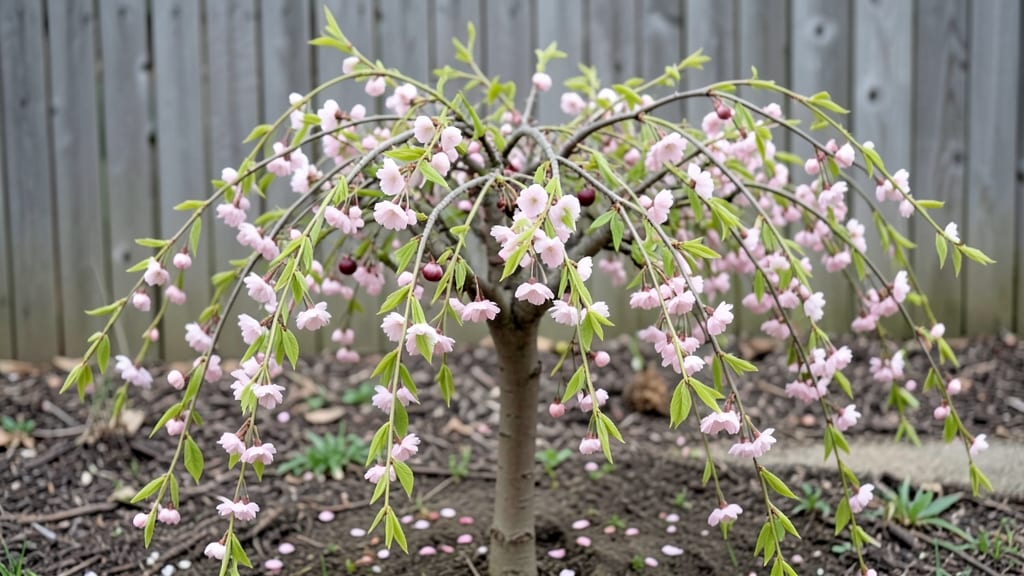
A pink cascade cherry tree turns any Pacific Northwest garden into a springtime masterpiece with its dramatic pink blossoms that spill like a waterfall. I planted mine near the patio last year, and now it’s the first thing guests notice—those cascading flowers create a soft, romantic backdrop for outdoor gatherings.
The tree’s natural shape makes it perfect for small yards, where it adds height and movement without overwhelming the space.
Pruning keeps those blossoms abundant and the shape elegant. I focus on frost-resistant cuts in late winter, shaping the branches to encourage dense growth where the flowers will cascade.
The key is opening the canopy slightly so light reaches the inner branches—this prevents bare spots and keeps the tree looking lush year-round. Even in cold winters, the tree bounces back with vibrant new growth by early spring.
Pair it with dwarf conifers for contrast or bleeding hearts at its base for a cottage-garden feel. The tree’s glossy leaves stay attractive even after blooms fade, and its cascading habit makes it ideal for entryways or mixed borders.
In summer, the foliage provides shade, while the branches create a stunning silhouette against the sky.
For best results, plant it where it gets full sun to partial shade—this ensures those pink blooms stay bold and the tree thrives in the Pacific Northwest’s mild, wet climate.
The tree’s low-maintenance nature makes it a dream for busy gardeners, yet it delivers high-impact beauty that transforms any landscape.
📚 In This Guide
- What you need
- Instructions
- Tips and common mistakes
- Wrapping up and next steps
What you need
- ● Pruning shears: Bypass pruners (sharp, clean, and rated for 1.5-inch cuts). Example: Felco F-2 or Corona Bypass.
- ● Loppers: For thicker branches (up to 2-inch diameter). Example: Fiskars 24-inch PowerGear.
- ● Pruning saw: Curved-tooth saw for branches over 2 inches (avoid tearing bark!).
- ● Disinfectant: 70% isopropyl alcohol or bleach solution (1 part bleach to 9 parts water) to sterilize tools between cuts.
- ● Gloves: Heavy-duty gardening gloves (nitrile-coated for grip and protection).
- ○ Pruning sealant: Tree wound paint (optional but recommended for cuts larger than ½-inch to prevent disease). Example: Dyna-Gro Tree Wound Pruning Seal.
- ● Ladder or step stool: Sturdy, non-slip (extendable if tree is 10+ feet tall).
- ● Trash bags: Heavy-duty for debris (aim for 2–3 bags depending on tree size).
- ● Water spray bottle: Small (8–16 oz) for cleaning tools mid-pruning.
- ● Safety gear: Safety glasses and long sleeves (to protect from thorns or sap).
- ● Marking twine: Colored twine to flag branches for removal (great for complex pruning!).
- ● Pruning guide: Measuring tape (for tracking branch length) or a pruning reference chart.
- ● Compost bin: For recycling small pruned branches (if your tree isn’t disease-prone).
Frost-resistant pruning techniques for Pacific Northwest Pink Cascade cherries
Here’s how to shape your tree for vibrant blooms while protecting it from PNW’s chilly springs.
Time Pruning for Late Winter Dormancy
Prune your Pink Cascade cherry during late winter dormancy—specifically 6-8 weeks before your area’s last frost date. In the Pacific Northwest, this typically lands in February or early March, when the tree is still bare but temperatures hover around 35-45°F. Pruning too early risks exposing fresh cuts to harsh winter freezes, while waiting too long risks encouraging early growth that frost can damage.
Use sharp, clean pruning shears to make cuts just outside the branch collar—the swollen area where the branch meets the trunk. This ensures the tree seals the wound properly and minimizes disease risk. I always make my cuts at a 45-degree angle to help rainwater shed away from the cut surface. Avoid cutting into old wood or leaving stubs, as these invite rot and weaken the tree’s structure.
Remove Dead, Diseased, or Crossing Branches First
Start by removing any dead, diseased, or damaged branches—these are easy to spot as they’re brown, brittle, or devoid of buds. Next, target crossing or rubbing branches, which create wounds and weaken the tree’s overall health. These branches often grow inward, creating friction that can strip bark and expose the tree to pests and pathogens.
If you’re unsure whether a branch is dead, scratch the bark with your fingernail. If green tissue appears beneath, the branch is still alive. If it’s dry and crumbly, it’s dead and should be removed entirely. I also look for sucker growth—those vigorous, often vertical shoots sprouting from the base or trunk. These compete with the main structure for nutrients, so prune them back to the ground.
Thin the Canopy for Better Airflow and Light Penetration
Pink Cascade cherries thrive when their branches receive even sunlight and airflow, so aim to open up the canopy by removing about 20-30% of the smaller, interior branches. Focus on branches that grow toward the center of the tree, as these often become overcrowded and lead to poor fruit set or weak blooms. Thin by cutting branches back to their origin point—never leave stubs.
For a more natural, cascading shape, shorten the outer branches by about one-third to encourage bushier growth and more abundant flowering. Avoid heavy pruning on young trees, as this can stress them. Instead, prioritize structural balance—ensure the tree isn’t top-heavy or leaning too much in one direction. A well-balanced canopy also helps the tree recover faster from frost damage by distributing energy evenly.
Shape for Frost Resistance and Blooms
To protect your Pink Cascade cherry from late frosts—a common issue in the PNW—prune to encourage a lower, more compact growth habit. This allows the tree to flower earlier in the season when the risk of frost is lower. Start by selecting 3-5 strong, well-spaced branches to serve as the main scaffold. Remove any branches that grow straight upward, as these are more vulnerable to frost damage and can create a weak structure.
Next, prune back the tips of remaining branches to promote lateral growth. This creates a fuller, bushier tree that can bloom more uniformly and recover better from frost. Avoid over-pruning, as this can reduce the tree’s ability to produce flowers the following season. Instead, focus on refining the shape—think of it like sculpting a living work of art. The goal is a tree that’s strong, open, and resilient to the PNW’s unpredictable weather.
Clean Up and Apply Post-Pruning Care
After pruning, collect and dispose of all debris—this includes cut branches, leaves, and any diseased material. I always use sterilized pruning shears and a disinfectant spray between cuts to prevent spreading disease. Once the area is clear, apply a layer of mulch around the base of the tree, keeping it 2-3 inches thick but 6 inches away from the trunk to prevent rot.
Water the tree deeply to help it recover from the stress of pruning. In the Pacific Northwest, where winters can be wet and springs unpredictable, consistent moisture is key. Avoid fertilizing immediately after pruning, as this can encourage new growth that’s vulnerable to frost. Instead, wait until late spring or early summer to apply a balanced, slow-release fertilizer to support the tree’s recovery and flowering.
Tips & tricks for frost-resistant pruning of Pacific Northwest Pink Cascade cherries
Here's how to elevate your pruning game and ensure your Pink Cascade cherry thrives in the PNW's unpredictable climate.
Branch Collar Precision: When making cuts in Step 1, focus on the branch collar—the swollen area where the branch meets the trunk. This is the tree's natural healing point, and cutting just outside it prevents damage to the protective layer. I've seen many gardeners accidentally cut into the collar, which creates entry points for diseases like silver leaf fungus. Use a sharp pair of pruning shears and make clean cuts at a 45-degree angle to ensure proper sealing.
Temperature Timing: The 35-45°F temperature range mentioned in Step 1 is ideal because it balances dormancy with workability. If temperatures drop below 35°F, the tree's sap slows down, making cuts heal more slowly. Conversely, above 45°F, the tree may start to wake up prematurely. Check your local frost date and plan your pruning accordingly—this is particularly important in the PNW where late frosts are common. I always verify the forecast for the week after pruning to ensure no unexpected cold snaps occur.
Canopy Thinning Strategy: In Step 3, when aiming to remove 20-30% of interior branches, prioritize those growing toward the center. These branches create dense areas that trap moisture and reduce airflow, creating perfect conditions for fungal diseases. I like to visualize the tree's skeleton—remove branches that would block light from reaching the inner structure. This not only improves fruit quality but also helps the tree recover more quickly from potential frost damage by allowing sunlight to warm the center.
Post-Pruning Care: After completing all pruning steps, the deep watering mentioned in Step 5 is crucial for recovery. The tree's root system needs to compensate for the stress of pruning, and consistent moisture helps maintain the tree's vigor. I've found that applying mulch within 2-3 inches of the trunk (but not touching it) creates a microclimate that helps regulate soil temperature, which is especially beneficial during the PNW's temperature swings. This simple step can make a significant difference in the tree's ability to bounce back from pruning.
Pro Tips for Pink Cascade Cherry Tree
- Here's how to elevate your pruning game and ensure your Pink Cascade cherry thrives in the PNW's unpredictable climate.
- Branch Collar Precision: When making cuts in Step 1, focus on the branch collar—the swollen area where the branch meets the trunk.
- Temperature Timing: The 35-45°F temperature range mentioned in Step 1 is ideal because it balances dormancy with workability.
Frequently asked questions
Got questions about your Pink Cascade Cherry Tree? You’re not alone! Whether you’re a first-time pruner or a seasoned gardener, these answers will help you keep your tree thriving in the Pacific Northwest’s unique climate. Let’s dive in!
When is the best time to prune a Pink Cascade Cherry Tree?
The ideal time to prune is late winter or early spring, just before new growth begins (typically February–March in the PNW). This timing promotes healthy blooms for spring and summer while avoiding late-season pruning, which can stimulate tender growth vulnerable to frost. Avoid heavy pruning in fall, as wounds may not heal before winter.
How cold can a Pink Cascade Cherry Tree tolerate?
Pink Cascade Cherries are highly frost-resistant, handling temperatures down to -15°F (-26°C) once established. Young trees (under 3 years) may need winter protection (like burlap wraps) if your zone dips below -10°F (-23°C)3–4 inches deep and 6 inches away from the trunk.
What’s the difference between pruning for blooms vs. shape?
Prune for blooms by removing dead, crossing, or overcrowded branches to improve airflow and sunlight. For shape, focus on thinning out 1/3 of the oldest wood every 3 years to encourage new growth. Avoid cutting back into old wood—this reduces next year’s flowers! Use sharp bypass pruners for clean cuts.
Why aren’t my Pink Cascade Cherries blooming?
Common culprits include:
- Over-pruning: Heavy cuts reduce next year’s flower buds.
- Poor sunlight: These trees need 6+ hours of sun daily.
- Young age: Trees under 5 years may not bloom yet.
- Frost damage: Late frosts can kill flower buds.
Can I grow a Pink Cascade Cherry Tree in a container?
Yes, but it’s challenging due to their size (20–30 ft tall). Use a large (20+ gallon) container with drainage holes and a well-draining soil mix. Prune aggressively to control height, but expect fewer blooms than in-ground trees. Move containers indoors or to a sheltered spot if temps drop below 10°F (-12°C).
Wrapping up and next steps
The Pink Cascade cherry tree is a stunning addition to Pacific Northwest gardens, offering vibrant blooms and resilience against frost—when pruned with care. By following the right techniques, you’ll encourage healthier growth, breathtaking flowers, and long-term vitality.
Now’s the perfect time to roll up your sleeves, grab your tools, and give your tree the love it deserves!
Ready to transform your outdoor space? Start by scheduling a pruning session this fall or early spring, and watch your Pink Cascade cherry tree thrive for years to come. 🌸✂️