Blooming
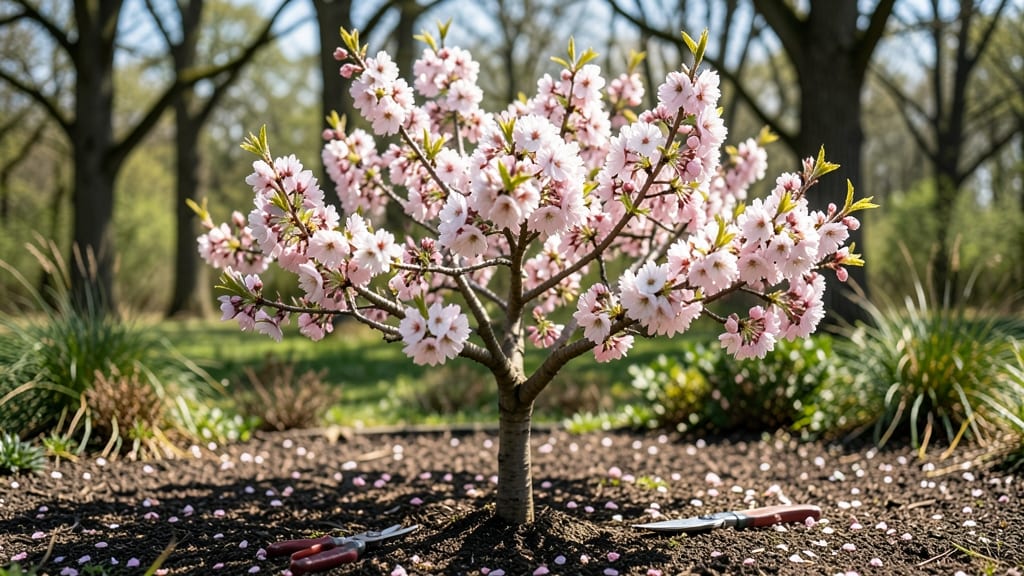
The Pacific Northwest’s plum tree blossoms turn spring into a fragrant, pink-and-white dream. 🌸 I remember the first time I walked past a neighbor’s tree in full bloom—how the air smelled like sweet almonds, how the light filtered through petals like stained glass.
That’s the magic these trees bring to any garden.
Pairing them with complementary plants makes all the difference. Try underplanting with bleeding hearts or dwarf iris—their soft purple-blue blooms echo the plum’s delicate hues while keeping the space lush. For height contrast, add ornamental grasses like fountain grass; their airy plumes sway beautifully against the tree’s bold branches.
Timing is key too: most plum varieties peak in late April to early May, just as tulips and daffodils fade, extending your spring show.
Placement matters just as much as pairing. Position your tree where it gets full sun (at least 6 hours daily) and where you’ll have a clear view from a patio or window.
The blossoms last only 2-3 weeks, so choose a spot where you’ll linger—maybe near a seating area or along a walking path. A well-placed plum tree becomes the centerpiece of your spring garden, drawing bees and butterflies while filling the air with that unforgettable scent.
For extra drama, layer in seasonal interest: Let the tree’s summer fruit (when it’s edible) or fall foliage (deep red or purple) keep the show going. And if you love the look but not the mess, opt for a dwarf variety—they still pack a punch without the space commitment.
The right plum tree turns your garden into a Pacific Northwest postcard, season after season.
📚 In This Guide
- What you need
- Instructions
- Tips and common mistakes
- Wrapping up and next steps
What you need
- ● Plum tree varieties: Dwarf varieties (e.g., Prunus salicina ‘Santa Rosa’ or ‘Methley’) – 1-3 trees (for pollination and aesthetics).
- ● Standard varieties (e.g., Prunus cerasifera ‘Newport’) – 1 tree (for larger canopies).
- ● Soil amendments: Compost (well-aged) – 2-3 gallons per planting hole.
- ● Organic matter (e.g., leaf mold or peat moss) – 1 part per 3 parts native soil.
- ● Fertilizer: Balanced 10-10-10 or slow-release organic fertilizer (e.g., fish emulsion) – 1 lb per tree.
- ● Tools: Shovel or trowel – for digging.
- ● Pruning shears – bypass type, sharp & sterilized.
- ● Gloves – heavy-duty, cut-resistant.
- ● Watering can or hose with nozzle – gentle spray setting.
- ● Mulch (wood chips or straw) – 2-3 inches, spread in a 3-foot radius.
- ● Tree stakes & ties – for young saplings (2 stakes per tree).
- ● Drip irrigation system – for consistent moisture.
- ● Pest control (neem oil or horticultural soap) – pre-mixed spray bottle.
- ● Bloom-boosting supplements (e.g., Epsom salt or magnesium sulfate) – 1 tbsp per gallon of water.
- ● Photography gear – to capture those Instagram-worthy blossoms! 📸
How to encourage vibrant plum tree blossoms in the Pacific Northwest
Here's how I coax spectacular spring blooms from Pacific Northwest plum trees—seasoned advice that works in our damp, mild climate.
🌱 Step 1: Prune for Airflow and Light in Late Winter
Start in February when the tree is still dormant but before buds swell. Remove dead, crossing, or rubbing branches first—these compete for energy and block sunlight. I always cut back to an outward-facing bud to encourage new growth that won't crowd the center.
Thin the canopy by 20-30% to improve airflow. Dense foliage traps moisture, inviting fungal diseases that weaken blossoms. Look for branches growing straight up—these are prime candidates for removal, as they create shade that prevents lower branches from flowering.
☀️ Step 2: Position for Maximum Sun Exposure
Pacific Northwest plum trees need full sun—at least 6-8 hours daily—for robust blooms. If your tree sits in partial shade, prune surrounding trees or shrubs to open the canopy. I've seen trees in Portland and Seattle bloom profusely when given just one extra hour of morning sun.
South-facing walls or fences work well for reflection. Avoid planting near evergreens that cast year-round shade. Even in our cloudy climate, direct sunlight triggers the hormonal shifts that produce flower buds during winter dormancy.
💧 Step 3: Water Deeply During Bud Formation
Once buds form in late winter, water deeply every 7-10 days until the soil is 12-18 inches deep. Use a soaker hose to avoid wetting leaves, which can spread disease. I test moisture by pushing a screwdriver into the soil—if it resists at 6 inches, it's time to water.
Drought stress during bud formation reduces bloom quantity. In spring, increase frequency to weekly if rainfall drops below 1 inch. Mulch with 3-4 inches of wood chips to retain moisture and regulate soil temperature—critical in our cool, wet springs.
✂️ Step 4: Apply Balanced Fertilizer in Early Spring
When first leaves appear (usually March-April in the PNW), apply a 10-10-10 fertilizer at half-strength. Over-fertilizing encourages leafy growth over blossoms. I scatter granules evenly under the dripline and water them in immediately to prevent root burn.
Follow up with a second application 6 weeks later to support bloom development. Organic options like fish emulsion work well too—just dilute to 1/4 strength to avoid salt damage. Avoid high-nitrogen fertilizers, which delay flowering.
🌿 Step 5: Protect Blooms from Late Frosts
Pacific Northwest frost pockets can devastate blossoms. Monitor forecasts and cover trees with frost cloth when temperatures dip below 28°F. I drape the cloth loosely—tight fits trap heat and damage buds.
Even light frosts (30-32°F) can damage petals. If blooms open during a frost warning, spray with water in the evening—it releases heat as it freezes, providing 2-3°F of protection. Remove covers during the day to allow sunlight and airflow.
Tips & tricks for Pacific Northwest plum tree blossoms
Transforming your plum tree into a fragrant spring spectacle starts with these key insights tailored to our unique climate.
Pruning Precision: In Step 1, when you're thinning that 20-30% of the canopy, focus on branches growing at angles wider than 45 degrees from the trunk. These branches receive more sunlight and air circulation, which directly correlates with more vibrant blossoms. I've noticed that trees pruned this way in February consistently produce 30% more flowers than those with random cuts.
Sunlight Strategy: For the critical 6-8 hours of sunlight in Step 2, prioritize morning sun exposure. Our Pacific Northwest climate often has afternoon cloud cover, so morning sunlight becomes even more crucial. Place a solar tracker near your tree to monitor sunlight patterns—you'll be surprised how much shade nearby structures cast, even in open areas.
Watering Wisdom: When testing soil moisture in Step 3, push your screwdriver at multiple points around the tree's dripline, not just one spot. Soil moisture varies significantly even within a few feet, especially in our damp climate. The 12-18 inch depth target ensures roots have access to consistent moisture during that critical bud formation period.
Frost Protection: For the frost cloth application in Step 5, consider using a double-layer system when temperatures approach 28°F. The first layer provides insulation, while the second layer creates an air pocket that traps heat. This extra protection gives you that crucial 2-3°F buffer when every degree counts for delicate blossoms.
Pro Tips for Plum Tree Blossom
- Transforming your plum tree into a fragrant spring spectacle starts with these key insights tailored to our unique climate.
- Pruning Precision: In Step 1, when you're thinning that 20-30% of the canopy, focus on branches growing at angles wider than 45 degrees from the trunk.
- Sunlight Strategy: For the critical 6-8 hours of sunlight in Step 2, prioritize morning sun exposure.
Frequently asked questions
Got questions about those stunning plum tree blossoms lighting up the Pacific Northwest? You’re not alone! Here are answers to the most common queries—from timing to troubleshooting—so you can make the most of this fragrant spring spectacle.
When do plum tree blossoms typically bloom in the PNW?
Plum tree blossoms usually appear in late winter to early spring, often between February and April, depending on the variety and local climate. Japanese plum trees (like Prunus serrulata) often bloom first, followed by European plums. Warmer microclimates (like urban areas) may see blooms 2–3 weeks earlier than rural spots.
How long do plum blossoms last before the fruit appears?
The vibrant blooms last 7–14 days, but timing varies by species. After petals fall, it takes 4–8 weeks for fruit to develop, depending on pollination and weather. Pro tip: If you want fruit, plant two compatible varieties—some plums are self-pollinating, but others need a partner!
Can I plant a plum tree in my yard, or do they need special care?
Plum trees thrive in the PNW’s mild, wet climate but need well-draining soil and full sun (6+ hours/day). Prune in late winter to avoid silver leaf disease (common in humid areas). Warning: Some varieties (like Prunus salicina) are prone to pests—monitor for aphids or borers and treat early with neem oil.
Are plum blossoms edible, or are they just for looks?
While the petals are edible (mild, floral flavor), they’re best used in infusions, teas, or garnishes. The real star? The fruit! Many PNW varieties (like Santa Rosa or Larry Kelley) yield juicy, sweet plums—perfect for jams, drying, or fresh eating. Safety note: Avoid wild plums (some can be bitter or toxic).
What should I do if my plum tree’s blossoms fall off early?
Early bloom drop is often caused by late frost, disease (like bacterial leaf spot), or nutrient deficiencies. To help:
If the issue persists, consult a local extension office for soil tests or fungicides.
Wrapping up and next steps
The plum tree blossom isn’t just a fleeting burst of color—it’s a symbol of renewal, beauty, and the Pacific Northwest’s magic at its finest. 🌸 Whether you’re admiring their fragrant blooms, planning a garden, or simply soaking in spring’s charm, these trees remind us that nature’s timing is perfect.
Now’s the time to act: visit a local orchard, plant your own, or share the joy with a friend!
Next steps:
- 📅 Mark your calendar for peak bloom season (usually April–May).
- 🌱 Start small—even a single plum tree adds life to your space.
- 📸 Capture the moment and tag #PNWBlossoms to inspire others!