
Pruning
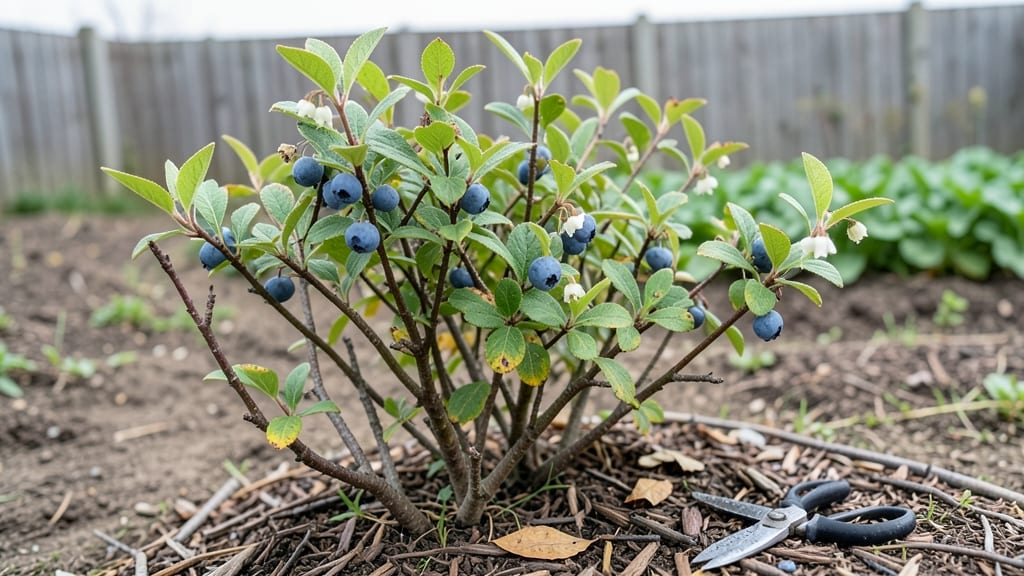
Pruning blueberry trees isn’t just about shaping bushes—it’s the secret to doubling your harvest every year. 🌿 I learned this the hard way after my first season of neglect left me with sparse berries and tangled branches.
The right cuts at the right time transform a struggling bush into a fruit-producing powerhouse.
You only need three basic cuts—removing dead wood, thinning crowded branches, and shaping for airflow—and a few simple tools: sharp pruners, loppers for thicker branches, and gloves to protect your hands. Most pruning happens in late winter or early spring, but summer trimming keeps bushes productive all season long.
What you’ll end up with is a neat, open-centered bush that produces larger, sweeter berries year after year. The key is timing: prune when the tree is dormant for major cuts, but don’t skip summer maintenance to encourage new growth. Your bushes will thank you with bushels of fruit.
This method works for both southern highbush and northern lowbush varieties, though timing shifts slightly based on your zone. Whether you’re a first-time pruner or refining your technique, these steps will keep your blueberries thriving for decades.
📚 In This Guide
- What you need
- Instructions
- Tips and common mistakes
- Wrapping up and next steps
What you need
- ● Pruning shears: Bypass pruners (for small branches, 1/4"–3/8" thick)
- ● Loppers: For medium branches (3/8"–2" thick); opt for a 20–24" reach for comfort
- ● Hand saw: Pruning saw with a 7–10" curved blade for thick branches (2"+)
- ● Disinfectant: 70% isopropyl alcohol or 1-part bleach to 9-parts water (sterilize tools between cuts)
- ● Gloves: Heavy-duty, cut-resistant gloves (e.g., mechanics’ or gardening gloves)
- ○ Sharpie or marker: For labeling branches (optional but helpful for tracking cuts)
- ● Timing: Prune in late winter/early spring (before buds swell) or summer (post-harvest). Avoid pruning in fall—it invites pests!
- ● Weather: Choose a dry, calm day (humidity <60%) to prevent fungal spread
- ● Safety gear: Safety glasses (if cutting large branches) and long sleeves/pants
- ● Cleanup supplies: Heavy-duty trash bags (for debris) and a wheelbarrow (if hauling branches)
- ● Pruning sealant: Tree wound paint (controversial but useful for large cuts >2")
- ● Ladder: Extendable (for tall bushes, 6–10 ft)
- ● Spray bottle: With water + mild soap (to clean tools mid-prune)
- ● Pruning guide: Printed diagram of blueberry bush anatomy (for reference)
Step-by-Step guide to pruning blueberry trees for maximum fruit
Here's the method I've used for years to keep my blueberry bushes productive—and it works every time.
✂️ Step 1: Late Winter Pruning for Structure and Airflow
This is your most critical cut. Wait until late winter when the tree is still dormant but buds are starting to swell. You'll know it's time when the ground thaws enough to work the soil. I use clean, sharp pruners to make cuts at a 45-degree angle about ¼ inch above a bud—this prevents water from pooling and rotting the stem.
Remove dead, diseased, or crossing branches first. These are easy to spot—they're brown, brittle, or growing inward toward the center. Aim to open up the center of the bush so sunlight reaches all the way in. You want the strongest branches to form a vase-like shape, with the widest part near the top. Don't worry about removing too much—blueberries thrive when you cut back 25-30% of the oldest wood each year.
Watch for water sprouts—those are the fast-growing, vertical shoots that pop up everywhere. Snip them off at the base immediately. These little energy vampires drain resources from fruit production. After this cut, your tree will look a little bare, but trust me—it's setting up for a better harvest.
☀️ Step 2: Summer Light Pruning to Encourage Fruit Production
About 6-8 weeks after flowering, do a quick summer check. This isn't about heavy pruning—just a light trim to keep the tree healthy. Look for overly vigorous shoots growing from the base or lower trunk. These often produce little to no fruit. Thin them out, leaving just 2-3 of the strongest per cluster.
Remove any suckers growing from the roots. These are the thin, fast-growing shoots that pop up around the base. They compete with the main plant for nutrients and water. Snip them off at ground level. Also, check for small, weak branches that aren't producing well. Cut these back to a stronger bud or remove them entirely if they're not bearing fruit.
Here's the thing—blueberries are self-pollinating, but they still need good airflow. If you notice clusters of branches growing too tightly together, gently spread them apart. You don't need to cut here, just encourage better spacing. This summer pruning keeps the tree balanced and focused on fruit production rather than just leafy growth.
✂️ Step 3: Post-Harvest Cleanup for Next Year's Growth
After you've harvested your blueberries, take 10-15 minutes for a final cleanup. Remove any dead or dying branches that might have missed the winter pruning. These can harbor pests and diseases over winter. Also, trim back any overly long or leggy branches that didn't produce well this year. Cut them back to a strong lateral branch or bud.
Pay attention to the outer edges of the bush. If you see branches growing outward that aren't producing well, cut them back to encourage more growth toward the center. Blueberries produce fruit on wood that's 2-4 years old, so you're essentially shaping the tree to keep a mix of old and new wood. This ensures a steady crop year after year.
Finally, give the base of the tree a good mulch layer—about 2-3 inches of organic mulch. This protects the roots over winter and keeps weeds down. Avoid piling mulch right against the trunk, though. Keep it 2-3 inches away to prevent rot. This final step sets your tree up for another great harvest next season.
Tips & tricks for perfect blueberry tree pruning
Here's what nobody tells you about keeping your blueberry bushes thriving—these are the secrets that separate a decent harvest from a bumper crop.
Cutting Angle Matters: In Step 1, when you're making those 45-degree cuts about ¼ inch above a bud, think of it like opening an umbrella—this angle helps water run off rather than pool at the cut. I've seen too many pruners make flat cuts that collect moisture and lead to rot. Use a clean, sharp pruner to make crisp cuts that heal faster. This isn't just about looks; it's about long-term tree health and fruit production.
The 25-30% Rule: Don't be afraid to remove up to 30% of the oldest wood each year during your late winter pruning. Blueberries are unique because they produce fruit on wood that's 2-4 years old, so you're not just maintaining shape—you're actively encouraging new, productive growth. I learned this the hard way by being too conservative with my cuts; now I aim for that 25-30% target every winter to keep my bushes productive.
Summer Pruning Timing: That 6-8 week window after flowering is your chance to do a quick health check rather than heavy pruning. Look for those overly vigorous shoots growing from the base—they're often the ones stealing energy from fruit production. I've found that removing just 2-3 of the strongest shoots per cluster makes all the difference in redirecting the plant's energy toward berry production rather than leafy growth.
Mulch Placement Precision: When you're adding that 2-3 inch layer of organic mulch in Step 3, keep it 2-3 inches away from the trunk. This might seem like a small detail, but it prevents rot by allowing air to circulate around the base. I've seen many gardeners pile mulch right against the trunk, which can actually harm the tree over time. Think of it like giving your tree a cozy blanket that's just the right distance away.
Pro Tips for Pruning Blueberry Trees
- Here's what nobody tells you about keeping your blueberry bushes thriving—these are the secrets that separate a decent harvest from a bumper crop.
- Cutting Angle Matters: In Step 1, when you're making those 45-degree cuts about ¼ inch above a bud, think of it like opening an umbrella—this angle helps water run off rather than pool at the cut.
- The 25-30% Rule: Don't be afraid to remove up to 30% of the oldest wood each year during your late winter pruning.
Frequently asked questions
Got questions about pruning blueberry trees? You’re not alone!
Here are answers to the most common concerns—from timing to tools—to help you keep your bushes thriving and productive.
When is the best time to prune blueberry bushes?
Prune blueberries twice a year: late winter/early spring (before buds swell) for major cuts, and summer (after harvest) for light shaping. Avoid pruning in fall—it invites pests and diseases. For southern climates, prune in dormant season (Dec–Feb) to avoid frost damage.
Do I need special tools to prune blueberries?
Basic hand pruners work for small branches, but for larger stems, use loppers or a pruning saw. Sterilize tools with rubbing alcohol between cuts to prevent bacterial or fungal spread. A sharp blade ensures clean cuts—no jagged edges that slow healing.
What if I skip pruning? Will my blueberries still grow?
Yes, but expect smaller yields and crowded bushes. Pruning improves airflow, sunlight penetration, and fruit size. Without it, older canes dominate, reducing space for new growth. Think of it like a haircut—regular trims keep things healthy and productive!
My blueberry branches look dead—should I cut them?
Check for dry, brittle canes with no buds—these are dead and should be removed. Healthy canes have greenish-brown bark and buds. Cut dead wood back to live tissue (a green or white area) to encourage new growth. If many branches die, check for root rot or pest damage.
Can I prune blueberries in extreme heat or cold?
Avoid pruning during heatwaves (above 90°F)—stress weakens plants. In cold climates, prune after the last frost (when soil thaws). If you must prune in winter, do it on mild days (above 40°F) to prevent shock. Pro tip: Prune in early morning to reduce water loss.
What’s the difference between “thinning” and “heading back” blueberry canes?
| Thinning | Heading Back |
|---|---|
| Cutting entire canes back to the ground (for old, unproductive wood). | Trimming top growth to encourage bushier branches. |
| Best for rejuvenating mature bushes (every 3–5 years). | Used for shaping and stimulating new growth. |
Example: Thin 3–5 oldest canes yearly; head back only 10–20% of new growth in summer.
Wrapping up and next steps
Pruning your blueberry trees might seem like a daunting task, but with the right timing and techniques, you’ll be rewarded with bountiful harvests and healthier plants year after year! 🌱 Remember, the key is to focus on three strategic cuts—removing dead wood, shaping for airflow, and thinning crowded branches—to keep your bushes thriving.
Whether you’re a seasoned gardener or just starting out, a little effort now will pay off in delicious blueberries for seasons to come.
Ready to take the next step? Grab your pruners, mark your calendar, and start planning your pruning schedule today! Your future blueberry pies—and hungry birds—will thank you. 🍇