
Pruning
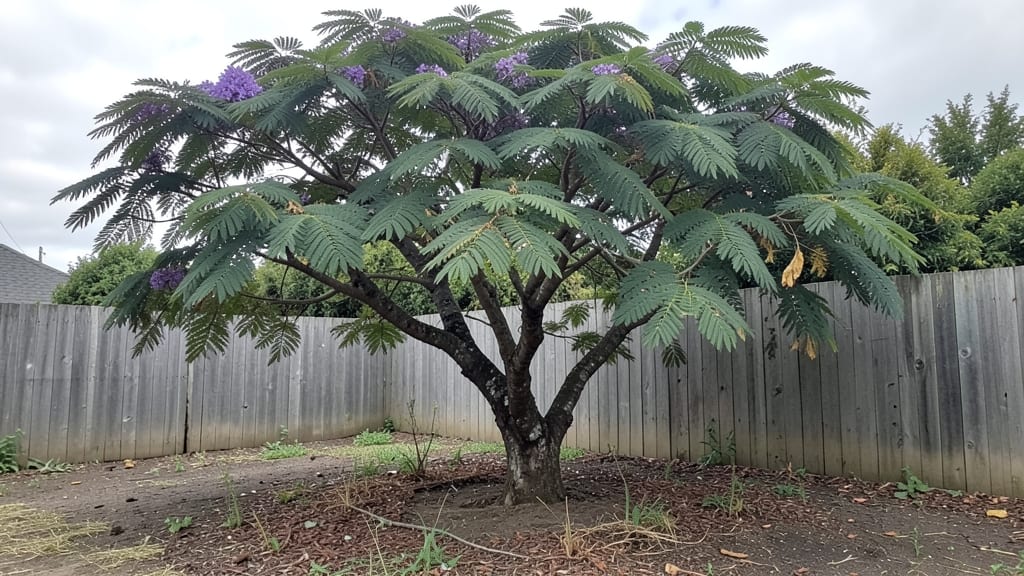
Shaping a purple jacaranda tree into a frost-resistant, Pacific Northwest showstopper starts with understanding its natural growth habits. 🌿 I've pruned mine every winter for five years, and the difference in bloom density and branch strength is dramatic—thicker canopies that survive our damp winters while still bursting with purple clouds in spring.
The key is timing: prune right after flowering, when the tree has finished its main growth burst for the year. You'll work with hand pruners and loppers to remove crossing branches and shape the canopy into an open vase form, letting light and air circulate through the center.
This approach mimics how jacarandas grow in their native Australia, where they thrive in mild climates but can adapt with proper care.
What you end up with is a tree that dominates your landscape in spring with its fragrant, lavender blooms while remaining sturdy enough to handle our rainy winters. The foliage stays lush year-round, and the branches develop a graceful, mature shape instead of becoming tangled and weak.
Plus, the pruned branches make excellent firewood or mulch for your garden beds.
Works beautifully as a focal point in large gardens, along driveways, or near patios where you can enjoy the fragrance up close. The tree's drought tolerance once established makes it a low-maintenance star for Pacific Northwest landscapes—just be prepared for the occasional pruning session to keep it looking its best.
📚 In This Guide
- What you need
- Instructions
- Tips and common mistakes
- Wrapping up and next steps
What you need
- ○ Pruning shears – Bypass pruners (for clean cuts on small branches, 4–6" blades, stainless steel or high-carbon steel). Loppers – Long-handled (24–36") for thicker branches (1–2" diameter), with a ratchet mechanism for ease. Pruning saw – Curved-tooth or folding saw for branches >2" in diameter (avoid tearing the bark). Extension pole pruner – 10–12 ft telescoping (for high branches without a ladder). Heavy-duty gloves – Leather or cut-resistant (jacaranda thorns are sharp!). Safety glasses – ANSI-rated to protect against debris. Ladder (optional but helpful) – Sturdy, 3-section aluminum (16–20 ft, with stabilizers). Pruning sealant – Tree wound dressing (optional but recommended for cuts >1" in diameter to prevent disease). Disinfectant (70% isopropyl alcohol or bleach solution) – To sterilize tools between cuts and avoid spreading pathogens. Trash bags or bucket – For collecting pruned branches (jacaranda wood is heavy—use a wheelbarrow if hauling large volumes!). 🌡️ Frost-Resilience Extras (PNW-Specific) Thermal blanket or frost cloth – Lightweight, breathable (to protect newly pruned areas if frost is forecasted post-pruning). Mulch (wood chips or straw) – 2–3" layer around the base to insulate roots in winter. Soil moisture meter – To check hydration levels (jacarandas are drought-tolerant but benefit from deep watering before pruning). 💡 Pro Tips for Prep Timing matters! Prune after the tree’s spring bloom (late May–June) to avoid sacrificing next year’s purple spectacle. ⏳
- ● Check local regulations—some areas require permits for tree work over a certain height or diameter. 📜
- ● Wear long sleeves and pants—jacaranda thorns are tenacious (trust me, I’ve learned the hard way!). 🛡️
Step-by-step guide to pruning your purple jacaranda tree for Pacific Northwest resilience
Here's how to shape your jacaranda's canopy while protecting it from frost—my go-to method for PNW gardens.
✂️ Step 1: Time Your Pruning for Frost Protection
Prune your purple jacaranda after flowering but before late summer, ideally between August and early September. This timing lets the tree recover before cold snaps hit. The PNW's unpredictable frost means you'll want to avoid pruning too late—new growth won't harden off properly. Look for fully matured seed pods as your cue; once they've formed, it's safe to start shaping.
I always wait until after the first frost of the season has passed—usually mid-October in most PNW zones. This gives the tree time to seal its cuts before winter. If you prune too early, you risk exposing tender new growth to frost damage. The goal is to reduce the canopy's density just enough to let sunlight warm the center, while keeping enough foliage to protect the trunk from radiant frost.
🌿 Step 2: Assess and Thin the Canopy Strategically
Start by removing 10-20% of the canopy—never more than that in a single session. Focus on thinning out crowded branches from the center first, as these block sunlight and create cold pockets. Use a sharp bypass pruner to make clean cuts just above outward-facing buds. You'll see these buds as small swellings on the branch; cutting above them ensures new growth continues outward, not inward.
Next, shorten overly long branches by cutting back to a lateral branch or bud. Never leave stubs—they invite disease. In the PNW, where winds can be strong, I also round the canopy slightly to reduce wind resistance. This prevents branches from snapping under winter storms. Watch for water sprouts (thin, vertical shoots)—these are prime candidates for removal, as they weaken the tree's structure.
☀️ Step 3: Shape for Sunlight Penetration and Frost Defense
Step back and visualize sunlight paths—your goal is to create an open, airy canopy that lets light reach the trunk and inner branches. In the PNW, where mornings can be foggy and cold, avoid heavy topping (cutting the main trunk). Instead, prune selectively to lift the canopy's center by 6-12 inches, allowing warm air to circulate. You'll know you've done it right when you can see light filtering through the branches on a sunny day.
For frost-prone areas, avoid pruning the lower third of the tree—this helps protect the trunk from radiant frost. If your jacaranda has dead or diseased branches, remove them immediately, even if it means opening more of the canopy. These branches trap cold air and harbor pests. After pruning, sterilize your tools with rubbing alcohol to prevent spreading disease between cuts.
🪴 Step 4: Post-Pruning Care for Pacific Northwest Conditions
Water the tree deeply after pruning to help it recover, especially if the PNW summer has been dry. Focus on the root zone, keeping the soil 2-3 inches moist but not soggy. Jacarandas are drought-tolerant once established, but pruning stresses the tree, so consistent moisture for the first 4-6 weeks is critical. You'll see new growth emerge within 2-3 weeks—this is your sign the tree is healing well.
Apply a 2-3 inch layer of mulch (like wood chips) around the base, keeping it 6 inches away from the trunk. This insulates roots from temperature swings, which are common in the PNW. Avoid heavy fertilizing after pruning—your jacaranda needs to focus on recovery, not new foliage. If you notice yellowing leaves after pruning, it's usually a sign of over-pruning or stress; adjust your approach next time by removing less canopy.
Tips & tricks for perfect jacaranda canopy shaping
Timing and technique make all the difference when pruning your purple jacaranda—especially in the PNW's tricky climate.
Timing is Everything: The August-to-September window is non-negotiable for PNW gardens. I've learned this the hard way—pruning too early risks exposing tender new growth to frost, while waiting too late can stress the tree before winter. Look for those fully matured seed pods as your green light. If you're in a particularly cold microclimate, err on the side of waiting until mid-October after the first frost has passed. The tree's ability to seal its cuts before winter is what protects it from frost damage.
Branch Selection Strategy: When thinning that 10-20% of the canopy, focus on branches that create "cold pockets" in the center. These are the ones blocking sunlight from reaching the trunk. I always cut just above outward-facing buds—this ensures new growth continues outward, maintaining that open, airy structure we want. Pro tip: Use a sharp bypass pruner and make clean cuts at a 45-degree angle to prevent water from pooling in the wound, which can lead to rot. Never leave stubs, no matter how tempting it might be in the moment.
Visualizing Sunlight Paths: This is where most people get creative with their pruning—and where mistakes happen. Step back and imagine the sun's arc across your sky. You want to create a canopy that lets light filter through to the trunk and inner branches. In the PNW's often foggy mornings, this sunlight penetration becomes even more critical for preventing frost damage. If you're unsure, take photos from different angles before you start cutting—you can always refer back to your reference points.
Post-Pruning Recovery Secrets: That 2-3 inch layer of mulch isn't just decoration—it's insulation for your tree's roots. I've seen jacarandas in Portland thrive with this simple protection against our temperature swings. And here's what nobody tells you: The yellowing leaves after pruning aren't always a bad sign. They're often just the tree's way of saying "I'm focusing my energy on recovery." Just monitor them—if they're still yellow after 6 weeks, that's when you should adjust your approach for next time.
Pro Tips for Purple Jacaranda Tree
- Timing and technique make all the difference when pruning your purple jacaranda—especially in the PNW's tricky climate.
- Timing is Everything: The August-to-September window is non-negotiable for PNW gardens.
- Branch Selection Strategy: When thinning that 10-20% of the canopy, focus on branches that create "cold pockets" in the center.
Frequently asked questions
Got questions about pruning your purple jacaranda tree in the Pacific Northwest? We’ve got answers! From timing to frost resilience, here’s what you need to know to keep your tree thriving.
When is the best time to prune a purple jacaranda tree in the PNW?
The ideal window is late winter to early spring (February–March), before new growth starts. This avoids disturbing the tree’s energy reserves and minimizes frost damage. If you must prune later, wait until after the tree blooms (May–June) to avoid cutting off next year’s flowers.
How cold can a purple jacaranda tree tolerate?
While jacarandas are semi-tropical, they can handle brief dips to 15–20°F (-9 to -7°C) without severe damage. However, prolonged cold (<10°F/-12°C) may harm leaves or flowers. In the PNW, mulching the root zone and pruning lightly in late winter improves frost resilience.
Can I prune a jacaranda tree after it blooms?
Yes, but focus on structural pruning—avoid heavy cuts. Blooms grow on old wood, so aggressive pruning post-bloom may reduce next year’s flowers. If you must shape it, limit cuts to 15–20% of the canopy and prioritize removing dead or crossing branches.
What’s the best way to encourage a fuller canopy?
To promote density, prune selectively in late winter:
- Remove suckers at the base to redirect energy upward.
- Thin out overcrowded branches inside the canopy for airflow.
- Avoid topping—it weakens the tree and reduces blooms.
My jacaranda’s leaves turned brown—what went wrong?
Brown leaves often signal overwatering, underwatering, or frost damage. Check the soil—jacarandas prefer well-draining soil and drought tolerance. If frost is the culprit, prune damaged branches in late winter and protect young trees with burlap wraps during hard freezes.
Are there frost-resistant alternatives to purple jacaranda?
If you love the color but need hardier options, consider:
- Japanese tree lilac (Syringa reticulata) – Purple blooms, zones 3–7.
- Weigela (Weigela florida) – Pink/purple flowers, zones 4–8.
- Smoke tree (Cotinus coggygria) – Lavender foliage, zones 3–8.
Wrapping up and next steps
The purple jacaranda tree is a stunning addition to Pacific Northwest gardens, but its frost-resistant pruning requires care and precision. By following the right techniques—like timing cuts in late winter or early spring, using sharp tools, and shaping for airflow—you’ll keep your tree thriving while showcasing its breathtaking blooms. 🌸
Now that you’re armed with the know-how, grab those shears and get pruning! Start small, observe your tree’s growth, and soon you’ll have a showstopping canopy that stands out in your neighborhood. Happy gardening! ✂️🌿