
Pruning
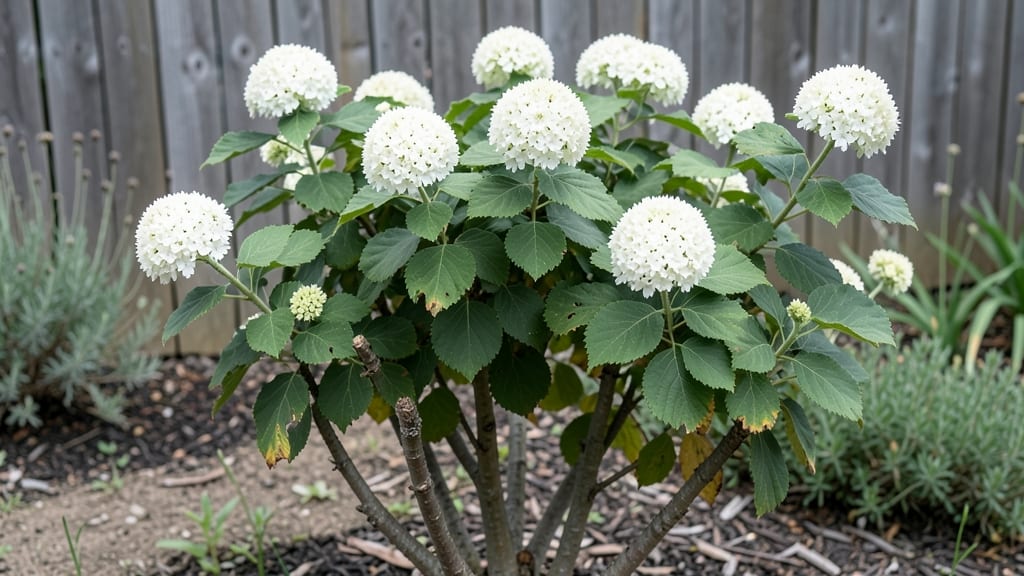
Browse these snowball tree pictures to see why my yard’s year-round white cloud of blooms feels like magic—my five-year-old tree delivers dreamy spring transformations every time. cottage-style retreat. The contrast against evergreens or dark foliage creates a striking visual that lasts for months.
These trees aren’t just pretty—they’re versatile. Use them as a bold focal point near patios, as a soft border along walkways, or even in containers for small spaces. Varieties like Viburnum opulus and Hydrangea arborescens offer different heights and bloom times, so you can mix and match for continuous interest.
The best part? Their rounded shape adds structure without overwhelming your landscape.
Imagine waking up to plump white clusters in spring, followed by glossy red berries in fall—nature’s own decoration. Snowball trees thrive in partial shade to full sun, making them adaptable to almost any yard.
With the right placement, they’ll be the standout star of your garden, drawing compliments and wildlife alike.
Whether you’re going for a classic English garden look or a modern minimalist vibe, these trees deliver. Let’s explore how to style yours for maximum impact—before you even plant the first one.
📚 In This Guide
- What you need
- Instructions
- Tips and common mistakes
- Wrapping up and next steps
What you need
- ● Pruning shears: Sharp, bypass-style shears (8–12" blade length) for clean cuts.
- ○ Loppers: 16–24" for thicker branches (optional but handy for mature trees).
- ● Pruning saw: Curved-tooth saw for large-diameter branches (if needed).
- ● Gloves: Heavy-duty, cut-resistant gloves to protect hands from thorns (common in some snowball varieties).
- ● Disinfectant: 70% isopropyl alcohol or rubbing alcohol to sterilize tools between cuts.
- ● Rag or paper towels: For wiping tools clean.
- ● Ladder or step stool: Sturdy, 6–10 ft tall (depending on tree height).
- ○ Garden twine or zip ties: For securing branches during pruning (optional).
- ● Hand pruners with a crimping tool: For sealing larger cuts and reducing sap loss.
- ● Tree pruning spray: Fungicide-based to prevent infections in open wounds.
- ● Camera or smartphone: With a macro lens or close-up mode to capture those snowball tree pictures!
- ● Notebook & pen: To sketch pruning plans or track growth stages.
- ● Safety glasses: Protect your eyes from debris (especially when using a saw).
How to plant and maintain a stunning snowball tree for year-round beauty
Here’s how to create that dreamy white canopy in your yard—simple steps for planting and nurturing a snowball tree.
🌱 Step 1: Choose the Perfect Planting Location
Snowball trees (Viburnum opulus) thrive in partial shade to full sun, but their signature blooms appear best with at least 4-6 hours of morning sunlight. Avoid deep shade—they’ll grow but produce fewer flowers. I always plant mine near a fence or patio where they’ll get dappled light and shelter from harsh afternoon winds.
Check your yard’s microclimates: A spot with well-draining soil and slightly acidic pH (6.0-7.0) works best. If your soil is heavy clay, amend it with 2-3 inches of compost before planting. Dig a hole twice as wide as the root ball but only as deep—planting too deep suffocates the roots and causes stress.
🪴 Step 2: Plant with Care for Strong Growth
Gently remove the snowball tree from its container and loosen any circling roots—this prevents girdling as it matures. Place it in the hole so the top of the root ball sits 1 inch above ground level. Backfill with native soil, tamping lightly to remove air pockets but avoiding compaction.
Water deeply right after planting to settle the soil and eliminate air gaps. Use 1-2 gallons of water for each plant, letting it soak in slowly. Mulch around the base with 2-3 inches of organic mulch (like shredded bark) to retain moisture and suppress weeds. Keep the mulch 6 inches away from the trunk to prevent rot.
☀️ Step 3: Provide Seasonal Care for Year-Round Interest
Snowball trees are low-maintenance, but spring and summer watering keeps them lush. Water once a week during dry spells, aiming for 1 inch of moisture per week. You’ll know it’s enough when the top 2 inches of soil feel slightly damp—not soggy. Overwatering leads to root rot, which weakens the plant and reduces flowering.
Fertilize lightly in early spring with a balanced 10-10-10 fertilizer (about 1/4 cup per tree). Avoid heavy feeding—snowball trees prefer lean soil. Prune in late winter or early spring to shape the tree and remove any dead or crossing branches. Cut just above a bud or lateral branch to encourage fuller growth.
✂️ Step 4: Protect and Prune for Long-Term Beauty
Watch for spider mites or scale insects in hot, dry summers—these pests target stressed trees. Spray with neem oil if you spot webbing or sticky residue on leaves. A healthy snowball tree should have vibrant green foliage and no signs of yellowing or wilting unless it’s a normal seasonal change.
In fall, remove any spent flower clusters but leave the seed heads for winter interest. Snowball trees develop red berries that persist into winter, adding color when little else is blooming. If a branch looks weak or diseased, prune it back to healthy wood—this encourages new growth and keeps the tree looking tidy.
Tips & tricks for perfect snowball tree planting
Real talk: The difference between a thriving snowball tree and one that struggles comes down to these small but critical details during planting and care.
Location is Everything: That 4-6 hours of morning sunlight in Step 1 isn't just a suggestion—it's non-negotiable for maximum blooms. I've seen trees in full afternoon sun get scorched leaves, while those with morning light develop those signature white clusters year after year. If your yard only offers partial shade, position the tree where it gets the most direct morning rays possible, even if it means planting near a north-facing wall.
Root Care Matters: When you loosen those circling roots in Step 2, take your time—this is where many planting failures begin. I've seen roots so tightly bound they actually girdled the trunk after just two years. Use your fingers to gently separate any roots that have wrapped around the root ball, being careful not to damage the main root structure. The goal is to encourage outward growth, not restrict it.
Watering Wisdom: Those 1-2 gallons of water after planting aren't just for show—they're establishing the moisture gradient the roots need to begin spreading. I recommend watering again after 3-4 days to prevent the soil from drying out completely. The key is to keep the soil consistently moist (not soggy) for the first month after planting, which mimics the natural conditions these trees prefer in their native habitats.
Seasonal Pruning Strategy: The late winter/early spring pruning in Step 3 is your chance to shape the tree's future growth pattern. I like to make my cuts just above a outward-facing bud—this creates branches that grow away from the center, allowing better air circulation and more sunlight penetration to the inner foliage. If you're unsure which buds are best, remember: the bud closest to the trunk will produce the strongest growth.
Pro Tips for Snowball Tree Pictures
- Real talk: The difference between a thriving snowball tree and one that struggles comes down to these small but critical details during planting and care.
- Location is Everything: That 4-6 hours of morning sunlight in Step 1 isn't just a suggestion—it's non-negotiable for maximum blooms.
- Root Care Matters: When you loosen those circling roots in Step 2, take your time—this is where many planting failures begin.
Frequently asked questions
Got questions about growing and maintaining your snowball tree? Here are some of the most common ones—plus quick answers to help you keep that dreamy white canopy thriving!
When is the best time to plant a snowball tree?
The ideal time to plant a snowball tree (Viburnum opulus) is in early spring or fall, when temperatures are mild. This gives roots time to establish before extreme heat or cold. Avoid planting in summer—drought stress can stunt growth. If you must plant in winter, choose a frost-free day and mulch heavily to protect roots.
How often should I prune my snowball tree?
Prune your snowball tree once a year, in late winter or early spring, before new growth begins. Focus on removing dead, diseased, or crossing branches to improve airflow and shape. Avoid heavy pruning—these trees bloom on old wood, so over-pruning can reduce next year’s flowers. Use clean, sharp tools to prevent damage.
Why aren’t my snowball tree’s flowers turning white?
If your tree’s blooms are pink, green, or sparse, it could be due to:
- Too much shade: Snowball trees need 6+ hours of sunlight daily for vibrant white flowers.
- Over-fertilizing with nitrogen: Too much nitrogen promotes leafy growth over flowers. Use a balanced 10-10-10 or 5-10-5 fertilizer instead.
- Stress from drought or poor soil: Ensure well-draining soil and consistent moisture (but not soggy roots).
If the issue persists, check for pests like aphids or fungal diseases, which can also dull blooms.
Can snowball trees survive in cold climates?
Snowball trees are hardy in USDA zones 2-7, making them perfect for cold climates. They tolerate down to -40°F (-40°C) and thrive in snowy winters. In extreme heat zones (8+), plant in partial shade to prevent leaf scorch. Mulch heavily in winter to protect roots from freeze-thaw cycles.
What are some good alternatives if I can’t grow a snowball tree?
If your climate or space doesn’t suit snowball trees, consider these white-flowering shrubs with similar charm:
- Japanese Snowball (Viburnum plicatum): Larger, layered blooms; zones 5-8.
- Dwarf Fothergilla (Fothergilla gardenii): Fragrant white flowers; zones 5-7.
- Mock Orange (Philadelphus spp.): Highly fragrant blooms; zones 4-8.
- Abelia (Abelia x grandiflora): Long-blooming white flowers; zones 6-9.
Each offers a unique texture and bloom time—great for year-round interest!
Wrapping up and next steps
Transforming your yard into a year-round winter wonderland with a stunning snowball tree isn’t just a dream—it’s a rewarding reality! 🌸 These picturesque trees bring effortless elegance and seasonal charm with minimal upkeep, making them a favorite for gardeners of all levels.
Whether you’re pruning for shape, health, or simply admiring their fluffy blooms, the key is patience and a little love.
Now that you’re armed with pictures, tips, and pruning know-how, why not take the next step? Browse snowball tree varieties or sketch a dream planting plan for your space. Your future self—and your neighbors—will thank you!