
Pruning
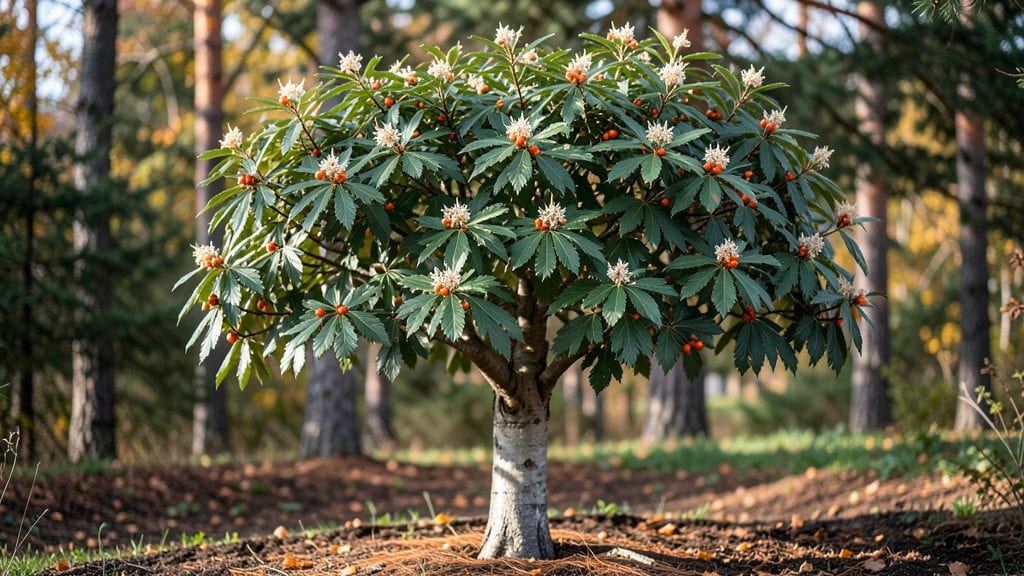
The rowan tree, or mountain ash, is the Pacific Northwest's underrated showstopper with its fiery fall foliage and clusters of bright red berries. 🌿 I planted mine three years ago after spotting one in a neighbor's yard—now it's the centerpiece of my garden, attracting birds and adding year-round interest.
This hardy tree thrives in zones 3-6, making it perfect for our rainy climate where many plants struggle.
Rowans grow 15-30 feet tall with a rounded shape, and their lobed leaves turn brilliant orange-red in autumn. The berries provide food for wildlife while adding a pop of color from late summer through winter.
Unlike true ashes, rowans have white spring flowers that create a stunning contrast before the berries appear—this dual-season display is what makes them so special.
They're surprisingly low-maintenance: plant in partial shade to full sun, tolerate poor soil, and need minimal pruning. Just avoid heavy clay unless amended, and watch for fire blight if your area gets humid summers.
The berries stay vibrant even after frost, giving your winter garden a much-needed lift when everything else looks dormant.
Perfect for small yards, woodland gardens, or as a specimen tree where you want year-round interest with minimal fuss. Once established, they're nearly indestructible—ideal for gardeners who want beauty without the upkeep. Here's how to get started with yours!
📚 In This Guide
- What you need
- Instructions
- Tips and common mistakes
- Wrapping up and next steps
What you need
- ● Pruning shears: Bypass pruners (sharp, 6–8" blades) for small branches (1/4" thick)
- ● Loppers: 8–12" bypass loppers for medium branches (1/4"–2" thick)
- ● Pruning saw: Curved-tooth saw for thick branches (>2" diameter)
- ● Disinfectant: 70% isopropyl alcohol or 10% bleach solution (1 part bleach to 9 parts water) to sterilize tools
- ● Heavy-duty gloves: Cut-resistant (ANSI A3-rated) to protect hands from thorns
- ● Safety glasses: Impact-resistant for debris protection
- ○ Pruning sealant: Optional but helpful for large cuts (>1" diameter) to prevent disease (e.g., Tanglefoot Tree Wound Pruning Sealer)
- ● Ladder or step stool: Sturdy, extendable for tall branches (ensure stability on wet PNW terrain!)
- ● Trash bags: Heavy-duty for collecting pruned branches (1–2 bags per session)
- ● Extension pole saw: For high branches without a ladder (10–12 ft reach)
- ● Rope or harness: For working on very large trees (safety first!)
- ● Tree wound dressing: Natural options like bee’s wax or linseed oil for traditionalists
- ● Notebook & pencil: To sketch pruning plans or track growth
- ● Water spray bottle: To clean tools mid-pruning and reduce sap buildup
Understanding the rowan tree: mountain ash mastery for Pacific Northwest gardens
This hardy, ornamental tree thrives in the PNW's climate—here's how to recognize and cultivate it.
🌱 Step 1: Identify the Rowan Tree's Key Characteristics
The rowan tree, also called mountain ash (Sorbus aucuparia), is a small deciduous tree reaching 15-25 feet tall. Its leaves are pinnate—5-7 pairs of oval leaflets—with serrated edges and a glossy finish. In spring, clusters of white, five-petaled flowers appear, followed by bright red berries that persist into winter, making it a standout year-round specimen.
Look for its zigzag branching pattern and dark, almost black bark as it matures. The berries are a dead giveaway—they're small, round, and packed with vitamin C, which is why birds adore them. If you see these features, you're likely dealing with a rowan tree. Real talk: It's often confused with true ash trees, but rowan belongs to the rose family, not the ash family.
☀️ Step 2: Assess Its Growing Conditions in the Pacific Northwest
The rowan tree thrives in USDA Hardiness Zones 3-6, making it perfect for the Pacific Northwest's cool, moist climate. It prefers full sun to partial shade, tolerating 6-8 hours of direct sunlight daily but also adapting to dappled shade in wooded areas. In the PNW, it handles coastal fog and occasional frost without issue.
This tree is remarkably adaptable to soil types—sandy, loamy, or clay—as long as it's well-draining. In the Pacific Northwest, where soil can be acidic, rowan does well in slightly acidic to neutral pH (6.0-7.0). It's drought-tolerant once established, but young trees appreciate consistent moisture during their first 2-3 years of growth. Here's the thing—it won’t thrive in waterlogged soil, so avoid low-lying areas where water pools.
🌿 Step 3: Recognize Its Ecological and Ornamental Value
The rowan tree is a pollinator magnet in late spring, when its flowers attract bees, butterflies, and other beneficial insects. The berries that follow provide food for birds like thrushes, waxwings, and robins, making it a wildlife-friendly addition to any garden. Its year-round interest—spring blooms, summer foliage, autumn color, and winter berries—makes it a standout ornamental.
In the Pacific Northwest, where native plants often dominate, rowan adds a touch of European charm without being invasive. It’s also low-maintenance, requiring minimal pruning unless you’re shaping it for a specific look. I like to prune in late winter to remove dead or crossing branches, which keeps the tree healthy and encourages new growth. The berries are edible for humans, too—though they’re tart and usually cooked into jellies or syrups.
✂️ Step 4: Prune and Maintain for Optimal Health
Prune rowan trees in late winter or early spring, before new growth begins. Remove any dead, diseased, or damaged branches first, then thin out the canopy to improve airflow and sunlight penetration. This tree responds well to pruning, so you can shape it into a standard tree or allow it to grow naturally. Avoid heavy pruning in autumn, as it can stimulate tender new growth that may be damaged by frost.
Fertilize young trees with a balanced, slow-release fertilizer in early spring to encourage strong root and shoot growth. Mature trees typically don’t need fertilizer unless they’re in poor soil. Mulch around the base with 2-3 inches of organic mulch, like wood chips or shredded bark, to retain moisture and suppress weeds. Keep the mulch 6 inches away from the trunk to prevent rot. Water deeply once a week during the first growing season, then taper off as the tree establishes itself.
Tips & tricks for perfect mountain ash cultivation in the Pacific Northwest
Between us, these are the secrets that'll help you transform your garden into a rowan tree sanctuary—without the guesswork.
Location Strategy: The 6-8 hours of sunlight mentioned in Step 2 is non-negotiable for optimal growth, but here's the thing: in the Pacific Northwest's variable climate, position your rowan where it gets morning sun and afternoon shade if your yard is particularly hot. This prevents leaf scorch while still maximizing photosynthesis. I've seen rowans in full sun thrive, but those in dappled light often show more vibrant fall colors.
Soil Preparation: While rowans adapt to various soil types, amending your native PNW soil with compost before planting makes all the difference. The 6.0-7.0 pH range mentioned is ideal, but if your soil tests lower, mix in some lime (sparingly) to prevent nutrient deficiencies. I always do a soil test first—it's the best investment for long-term tree health. For container growing, use a well-draining potting mix with perlite to prevent waterlogging.
Planting Timing: The instructions don't specify planting season, but here's what I've learned: spring and early fall are prime times for planting rowan trees in the PNW. Spring planting gives roots time to establish before summer drought, while fall planting allows roots to grow before winter dormancy. Avoid planting in late fall—you don't want tender roots exposed to winter cold before they've had time to harden off.
Winter Care: While rowans are hardy to Zone 3, young trees benefit from winter protection in exposed sites. Wrap the trunk with tree guard to prevent rodent damage, and mulch heavily (3-4 inches) around the base. The 6-inch clearance from the trunk mentioned is crucial—this prevents moisture buildup that can cause rot. In particularly harsh winters, consider wrapping the entire tree with burlap for extra protection against windburn.
Pro Tips for What Is The Rowan Tree
- Between us, these are the secrets that'll help you transform your garden into a rowan tree sanctuary—without the guesswork.
- This prevents leaf scorch while still maximizing photosynthesis.
- Soil Preparation: While rowans adapt to various soil types, amending your native PNW soil with compost before planting makes all the difference.
Frequently asked questions
Got questions about the rowan tree?
Here are answers to the most common inquiries about this resilient Pacific Northwest favorite—from care tips to seasonal quirks.
What’s the best time to prune a rowan tree?
Prune rowan trees in late winter or early spring (before new growth starts) to avoid stressing the tree. Avoid heavy pruning in fall, as it can encourage late-season growth vulnerable to frost damage. Light shaping in summer is fine, but keep it minimal to preserve the tree’s natural form.
Can I prune a rowan tree in wet Pacific Northwest weather?
Wait for dry conditions—wet soil or rain can slow healing and increase disease risk. If you must prune during damp spells, sterilize tools with rubbing alcohol and avoid cutting when leaves are wet. Rowan trees are tough, but moisture stress makes them more susceptible to fungal issues like powdery mildew.
How do I encourage more berries on my rowan tree?
Berries thrive with balanced pruning—remove dead or crossing branches but avoid over-thinning. Ensure the tree gets full sun (6+ hours/day) and well-draining soil. Young trees may take 3–5 years to bear fruit; patience pays off! Pro tip: Lightly fertilize in early spring with compost or a slow-release fertilizer.
Are rowan trees toxic to pets or wildlife?
Rowan trees are generally non-toxic to pets and wildlife, but the seeds and unripe berries may cause mild stomach upset if ingested in large quantities. Birds and deer love the berries, making rowans a great wildlife-friendly choice. Always monitor pets near new plantings to be safe.
How do I protect my rowan tree from Pacific Northwest wind?
Rowans handle wind well, but young trees benefit from staking or a windbreak (like a fence or shrubs) until established. Prune to reduce wind sail—trim tall, whip-like branches. Mature trees develop a sturdy, multi-stemmed form that naturally resists wind damage. Mulch the base to improve root stability!
Wrapping up and next steps
From its stunning foliage to its resilient nature, the rowan tree (or mountain ash) is a true gem for Pacific Northwest gardens. Whether you're drawn to its vibrant berries, ecological benefits, or low-maintenance charm, this tree offers beauty and practicality year-round.
Now that you’re equipped with the knowledge to care for it—especially how to prune it like a pro—why not plant one and watch your garden thrive?
🌿 Next step: Visit a local nursery, grab your pruning shears, and give this hardy tree a home in your outdoor space. Happy gardening! 🌱