Planting
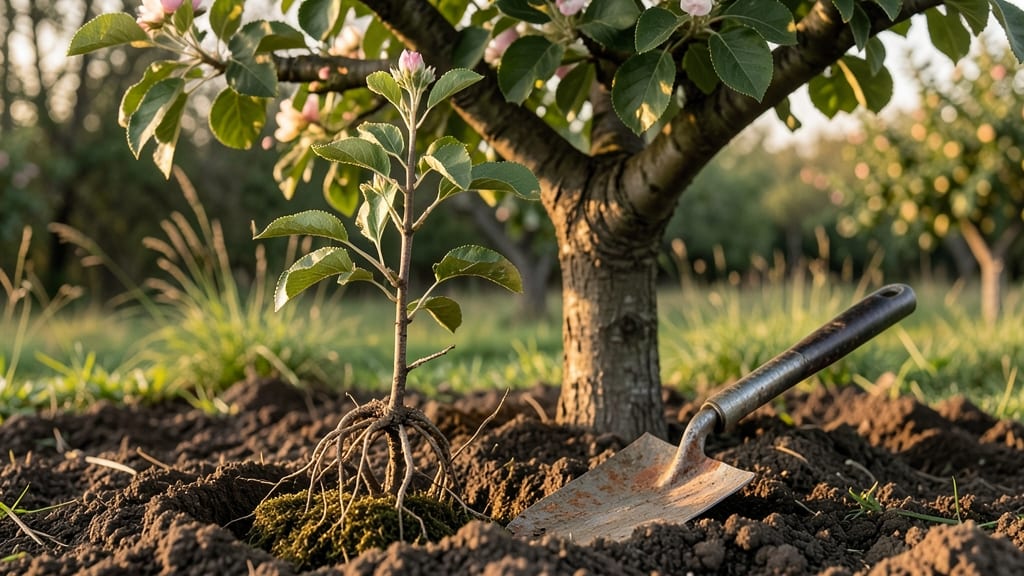
The best way to plant apple trees begins with a dormant-season sapling and a sunny spot where it can stretch its roots deep into the earth.
I’ve planted over a dozen apple trees now, and the ones that thrive share three things: well-draining soil, proper spacing, and a little patience during those first critical weeks.
The secret isn’t just digging a hole—it’s creating the right conditions so the tree’s roots can establish before spring’s first flush of growth.
Start with 2- to 3-year-old bare-root saplings from a reputable nursery, and choose a site with full sun (6+ hours daily) and protection from harsh winds. Amend heavy clay soil with compost or aged manure to improve drainage, and avoid planting in low spots where water pools.
My first mistake? Skipping soil prep—now I test the pH (aim for 6.0–7.0) and mix in organic matter before the first shovel hits the ground. A 12-inch-deep hole twice as wide as the root ball gives roots room to spread without circling.
Once planted, water deeply to settle the soil, then mulch with 3–4 inches of wood chips to retain moisture and block weeds. The first year is about consistent moisture, not heavy watering—think 1–2 inches per week, more in extreme heat.
By next spring, you’ll see new shoots, and within 3–5 years, your tree will bear fruit. The key? Avoid over-fertilizing early on; young trees need roots, not leaves.
This method works for standard trees, dwarf varieties, or even grafted rootstocks—just adjust spacing (12–25 feet apart for full-size trees). Whether you’re planting a single shade tree or a small orchard, these steps cut down on common pitfalls like girdling roots or poor airflow.
Ready to dig in? Let’s make sure your apple tree starts with the best possible foundation.
📚 In This Guide
- What you need
- Instructions
- Tips and common mistakes
- Wrapping up and next steps
What you need
- ● Apple tree sapling(s) – Choose disease-resistant varieties (e.g., Honeycrisp, Fuji, or Gala). Quantity: 1-3 trees (for cross-pollination, plant at least two different varieties).
- ● Shovel or spade – A round-point shovel (18-24 inches wide) works best for digging.
- ● Garden fork – For loosening compacted soil.
- ● Measuring tape – To mark planting depth and spacing.
- ● Well-draining soil mix – A blend of topsoil, compost, and perlite (or native soil amended with organic matter). Quantity: ~50 lbs per tree.
- ● Mulch (wood chips or straw) – 3-4 inches to retain moisture and suppress weeds.
- ● Staking materials – 2-3 wooden stakes (1-2 inches wide, 4-6 feet tall) + soft tree ties (avoid wire!).
- ● Watering can or hose with nozzle – A soaker hose is ideal for deep watering.
- ● Fertilizer (balanced or organic) – 10-10-10 or compost (avoid high-nitrogen until spring). Quantity: ~1 cup per tree.
- ● Pruning shears – Bypass pruners (sharp and clean) for trimming roots or branches if needed.
- ○ Planting hole frame or marker – Optional but helpful for shaping the hole uniformly.
- ● Root stimulator – A powder or gel to encourage root growth (e.g., Mycorrhizal fungi).
- ● Tree guard or wire cage – Protects young trees from rabbits or deer.
- ● Soil pH test kit – Apple trees thrive in slightly acidic soil (pH 6.0-6.5).
- ● Drip irrigation system – For automated watering in drier climates.
- ● Epsom salt (magnesium sulfate) – Helps if your soil is deficient in magnesium.
Step-by-step guide to planting apple trees for long-term success
Here’s how to plant apple trees the right way—so they grow strong, healthy, and productive for decades.
🌱 Step 1: Choose the Right Location and Prepare the Soil
Apple trees need full sun—at least 6-8 hours daily—and well-draining soil. I always pick a spot with southern exposure to maximize sunlight. Avoid low areas where water pools, as soggy roots lead to root rot and poor growth.
Test your soil’s drainage by digging a 12-inch hole and filling it with water. If it drains in less than 30 minutes, your soil is good. If not, amend it with 2-3 inches of compost or sand before planting. Apple trees thrive in slightly acidic soil (pH 6.0-7.0), so test your soil and adjust with lime or sulfur if needed.
🪴 Step 2: Dig the Hole and Plant at the Correct Depth
Dig a hole twice as wide as the root ball but no deeper than the container. Apple trees planted too deep struggle to establish properly. Gently remove the tree from its container and loosen any circling roots—this helps them spread outward instead of staying compacted.
Place the tree in the hole so the graft union (the bump where the scion was attached) sits 2-4 inches above soil level. Backfill with native soil mixed with 1-2 gallons of compost, tamping lightly as you go. Water deeply to settle the soil and remove air pockets. The root ball should sit 1-2 inches higher than the surrounding soil to prevent waterlogging.
☀️ Step 3: Mulch and Water for Strong Establishment
Spread 3-4 inches of organic mulch (wood chips or straw) in a 3-foot-wide ring around the tree, keeping it 6 inches away from the trunk. Mulch retains moisture, regulates soil temperature, and suppresses weeds—but never pile it against the trunk, as it can cause rot.
Water deeply right after planting (about 10-15 gallons) to encourage roots to spread. Then, water once a week for the first month, soaking the soil to a depth of 12 inches. You’ll know it’s enough when water runs out the drainage holes if planted in a container, or when the top 2 inches of soil feel moist. Avoid overwatering—apple trees are drought-tolerant once established.
✂️ Step 4: Prune for Shape and Airflow
Prune your apple tree right after planting to remove any broken or crossing branches. Use clean, sharp pruners to make cuts just above a bud or outward-facing branch. This encourages an open canopy that lets sunlight and air circulate, reducing disease risk.
Focus on shaping the tree into a central leader (one main trunk with branches spreading outward) or an open-center form (multiple branches from the base). Avoid heavy pruning—remove only 10-20% of the foliage at planting. The goal is to set the tree up for strong growth next spring, not to shape it completely now.
Tips & tricks for perfect apple tree planting
Planting apple trees right from the start means decades of fruit—here’s how to set yours up for success from day one.
Sunlight Secret: That 6-8 hours of daily sun isn’t just a recommendation—it’s non-negotiable for strong growth. If your yard gets less, consider a dwarf variety that can thrive in partial shade, though you’ll sacrifice some fruit production. I’ve seen trees in 5 hours of sun struggle after just three years, while those with full sun thrived. Mark the sunniest spot with stakes before digging.
Soil Test Wisdom: The 30-minute drainage test is your best friend. If water pools longer, don’t just guess—amend with compost or sand in layers. I’ve fixed too many soggy spots by mixing in 2-3 inches of compost first, then testing again. And that pH 6.0-7.0 range? Use a simple soil test kit from your garden center—it’s cheaper than watching your tree struggle for years.
Graft Union Placement: Keeping that graft union 2-4 inches above soil level prevents rot and ensures the tree grows true to its variety. I’ve seen beginners bury it too deep, which causes the tree to rot at the base. After planting, draw a line on your shovel handle at 2-4 inches—use it as a guide when backfilling. The root ball should sit 1-2 inches higher than surrounding soil to prevent waterlogging.
Watering Strategy: Those first 10-15 gallons after planting aren’t just for show—they encourage roots to spread outward. I use a garden hose with a slow setting to avoid disturbing the soil. After that, your weekly watering should soak to 12 inches deep, not just dampen the surface. A soil probe or even a long screwdriver helps check moisture levels—push it in and see if the top 2 inches feel moist.
Pro Tips for Best Way To Plant Apple Trees
- Planting apple trees right from the start means decades of fruit—here’s how to set yours up for success from day one.
- Sunlight Secret: That 6-8 hours of daily sun isn’t just a recommendation—it’s non-negotiable for strong growth. If yo...
- Soil Test Wisdom: The 30-minute drainage test is your best friend. If water pools longer, don’t just guess—amend with...
Frequently asked questions
Got questions about planting apple trees?
You’re not alone! Here are answers to the most common ones to help you grow a thriving orchard with confidence.
What’s the best time of year to plant apple trees?
Plant your apple trees in early spring (just before buds swell) or late fall (6–8 weeks before frost). Spring planting gives roots time to establish before summer heat, while fall planting lets them settle before winter dormancy. Avoid planting in extreme heat or freezing conditions.
How far apart should I space apple trees?
Spacing depends on the variety and rootstock:
- Dwarf trees (6–8 ft tall): 6–8 feet apart
- Semi-dwarf trees (10–12 ft tall): 12–15 feet apart
- Standard trees (15+ ft tall):** 20–25 feet apart
Why are my newly planted apple tree leaves turning yellow?
Yellowing leaves often signal overwatering, underwatering, or nutrient deficiency. Check soil moisture—it should be damp but not soggy. If roots are waterlogged, improve drainage. For yellowing between veins, test soil pH (ideal: 6.0–7.0) and amend with compost or fertilizer as needed.
Can I grow apple trees in containers?
Yes! Dwarf or semi-dwarf varieties thrive in large containers (at least 15–20 gallons). Use well-draining soil, a pot with drainage holes, and repot every 2–3 years. Place in full sun (6+ hours/day) and fertilize regularly. Just know yields may be smaller than in-ground trees.
Do apple trees need a pollinator to produce fruit?
Most apple trees are self-pollinating but produce more fruit with a pollinator nearby. Plant two compatible varieties (check labels) within 50–100 feet for cross-pollination. Honeybees and other pollinators help too—just avoid pesticides during bloom!
Wrapping up and next steps
Planting apple trees is a rewarding journey that blends patience with the joy of nurturing life.
By choosing the right variety, preparing the soil, and following proper spacing and care techniques, you’ll set the stage for a thriving orchard. Remember: healthy soil, thoughtful placement, and consistent attention are your best allies!
Now that you’re armed with the best way to plant apple trees, take that first step—whether it’s digging your first hole or sketching out your orchard layout. Your future harvests of crisp, juicy apples are waiting! 🍏🌱