Pruning
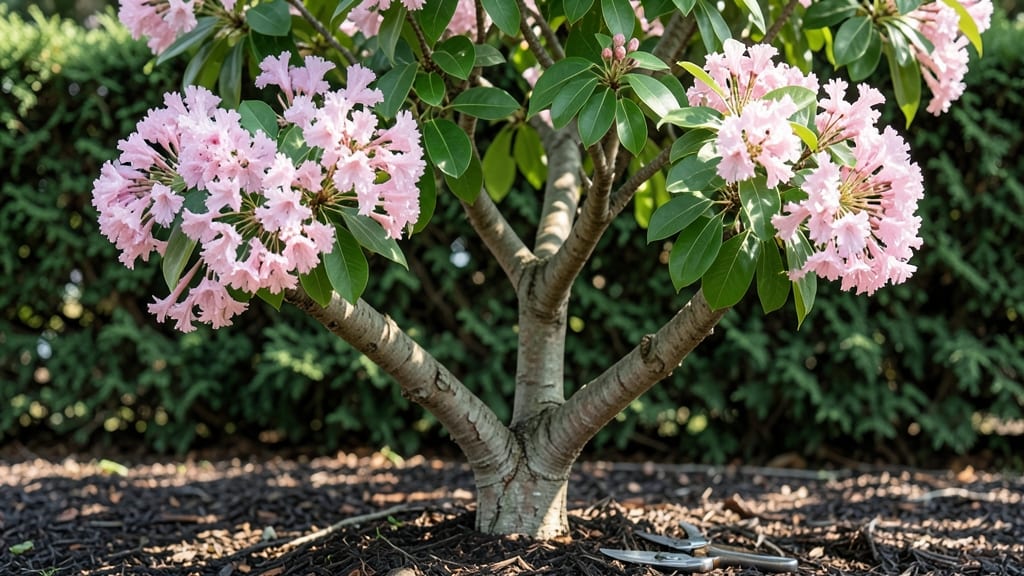
The boomerang lilac tree (Lagerstroemia 'Boomerang') is the Pacific Northwest's secret weapon for year-round color—its compact form and cold-hardy nature make it a standout even when other lilacs fade.
I planted mine last spring, and by midsummer, it was already covered in fragrant blooms, then rebloomed in September when most gardens had gone quiet. The real magic? It thrives where traditional lilacs struggle, pushing through our damp winters to reward you with vibrant pink flowers twice a year.
This isn’t your grandma’s lilac—it’s a reblooming powerhouse that stays under 10 feet tall, making it perfect for small yards or container growing. The key to keeping it happy starts with well-draining soil (amend heavy clay with compost) and full sun, though it tolerates partial shade better than most lilacs.
Water deeply once established, but don’t overdo it—these trees hate soggy roots. A light spring feeding with balanced fertilizer sets the stage for that second flush of blooms.
Pruning is where this tree earns its name: shape it in late winter to encourage dense growth, then trim lightly after each bloom cycle to keep it compact. The result? A tree that looks like it belongs in a botanical garden, not just your backyard.
Even in our rainy climate, mine stays disease-resistant and pest-free—no fuss, just beauty. Once you see it in bloom, you’ll understand why gardeners call it the "boomerang" of the lilac world.
Whether you’re replacing an old lilac or adding color to a tricky spot, this tree delivers low-maintenance elegance with high impact. The best part? It’s just as happy in a city planter as it is in the ground. Ready to transform your garden’s weak spots into showstoppers? Let’s get growing.
📚 In This Guide
- What you need
- Instructions
- Tips and common mistakes
- Wrapping up and next steps
What you need
- ● Pruning shears (bypass or anvil type): Sharp, clean shears with a 2- to 4-inch blade for cutting small to medium branches (1/4" to 1" diameter). Quantity: 1.
- ● Loppers: Long-handled shears for thicker branches (up to 2-inch diameter). Quantity: 1.
- ● Pruning saw: For branches larger than 2 inches. Opt for a curved-tooth saw to avoid tearing wood. Quantity: 1.
- ● Gloves: Heavy-duty, cut-resistant gloves to protect your hands from thorns and sharp branches. Quantity: 1 pair.
- ● Disinfectant (70% isopropyl alcohol or bleach solution): To sterilize tools between cuts and prevent disease spread. Quantity: Small bottle or spray.
- ● Rag or paper towels: For wiping down tools and cleaning sap. Quantity: 2-3.
- ● Ladder or step stool: If your lilac tree is taller than 6 feet. Ensure it’s stable and rated for your weight. Quantity: 1.
- ● Heavy-duty trash bags: For collecting pruned branches. Quantity: 2-3.
- ● Marking twine or flags: To tag branches for removal or special attention. Quantity: Small roll.
- ● Hand pruners with ratcheting mechanism: For easier cutting on stubborn branches.
- ● Extension pole pruners: For high branches without a ladder.
- ● Safety glasses: To protect your eyes from debris.
- ● Knee pads: For comfort if you’ll be kneeling or crouching.
- ● Pruning sealant: To coat larger cuts (though lilacs typically heal well without it).
- ● Camera or phone: To document your tree’s progress before and after pruning!
How to prune a boomerang lilac tree for maximum cold-hardiness
This is the pruning method I’ve used for years in the Pacific Northwest—it keeps your lilac vigorous and resilient through harsh winters.
Time Your Prune for Dormancy
Prune your boomerang lilac late winter or early spring, just as buds begin to swell but before new growth starts. In the Pacific Northwest, this typically falls between February and March, when daytime temperatures hover around 40-50°F. Pruning too early risks winter dieback, while waiting too long encourages weak, leggy growth.
Here’s the thing—boomerang lilacs bloom on old wood, so you’ll cut back last year’s growth. Look for the distinctive boomerang-shaped branches that give this variety its name. These branches are your plant’s structural backbone, and preserving them ensures future blooms.
If you’re unsure, check the buds: when they’re slightly plump but haven’t yet broken open, it’s time. This timing also lets the tree recover before summer heat arrives, which is critical for cold-hardy varieties.
Use Sharp Tools and Clean Cuts
Grab your bypass pruners and sterilize the blades with rubbing alcohol to prevent disease spread. Sharp tools make clean cuts that heal faster, which is especially important for lilacs prone to bacterial infections in damp climates like ours.
Start by removing any dead, diseased, or crossing branches. Cut just outside the branch collar—the swollen area where the branch meets the trunk—to encourage proper healing. For larger branches over ½ inch thick, use your loppers and make the cut at a slight angle to prevent water from pooling.
Don’t skip this step. I’ve seen too many lilacs develop cankers from dirty cuts, and once that happens, it’s a slow decline. A quick wipe-down of your tools between cuts keeps everything sanitary.
Thin Out for Airflow and Light
Your goal is to open up the center of the tree by removing 20-30% of the oldest stems. Focus on branches that are thinner than a pencil or those growing inward toward the center. These stems compete for resources and block airflow, which invites fungal issues in our rainy climate.
Step back often to visualize the shape. You want a rounded, vase-like form that lets light penetrate to the inner branches. Boomerang lilacs naturally grow in a graceful arch, so preserve that natural silhouette while thinning. Never remove more than one-third of the plant in a single year—this shocks the tree and reduces next year’s blooms.
Watch for water sprouts—those fast-growing, vertical shoots that pop up everywhere. These are energy vampires. Snip them off at the base immediately. They’ll regrow if you leave even a tiny stub.
Shape for Winter Resilience
After thinning, lightly shape the outer branches to create a rounded canopy. Aim for a 4-6 foot spread at maturity, which is ideal for our zone’s wind patterns. The wider the base, the more stable the tree in winter storms—a big plus for Pacific Northwest gardens.
Pay special attention to the boomerang-shaped branches. These are your star performers for blooms, so avoid cutting them back drastically. Instead, focus on lateral branches that grow off these main stems. Shorten them by one-third to encourage bushier growth and more flower clusters.
Real talk: if you’re unsure about a cut, leave it. Lilacs are forgiving, and you can always prune more next year. The key is gradual shaping over time rather than aggressive cuts.
Clean Up and Protect
Rake up all pruned material and dispose of it in the trash—never compost lilac clippings, as they can harbor diseases. Then, apply a 2-inch layer of wood chips around the base of the tree to protect roots from winter temperature swings, which are common in our region.
Finally, give the tree a deep watering to help it recover. Focus the water at the drip line, not the trunk. This encourages deep root growth, which is crucial for cold-hardiness. In the Pacific Northwest, where winters can be wet but unpredictable, this step makes all the difference.
You’ve got this. A well-pruned boomerang lilac will reward you with fragrant blooms for decades, and with this method, you’re setting it up for success every season.
Tips & tricks for pruning your boomerang lilac tree
Here's what I've learned after years of pruning these cold-hardy beauties in the Pacific Northwest—details that make all the difference between a struggling shrub and a thriving one.
Timing is Everything: The February-March window is non-negotiable for our climate. I've seen lilacs pruned too early suffer from winter dieback, while those pruned too late develop leggy growth that's vulnerable to our wet springs. Check those buds—they should be plump but not yet open. In colder years, you might need to delay until early April when daytime temps consistently reach 45°F.
Tool Preparation Matters: Never skip sterilizing your bypass pruners and loppers with rubbing alcohol between cuts. I've watched bacterial infections spread through entire lilac bushes because of this oversight. For larger branches, use loppers but make sure to cut just outside the branch collar at a slight angle. This small detail prevents water pooling that leads to cankers—something I've had to correct in multiple trees over the years.
Visualizing the Shape: Step back frequently to check your progress. The goal is that rounded, vase-like form that lets light reach all branches. I've learned to focus on creating an open center by removing branches thinner than a pencil or those growing inward. Preserve those boomerang-shaped branches—they're your plant's future blooms. Remember, you can always remove more next year, but you can't put back what you've cut.
Post-Pruning Care: After cleaning up, don't forget the deep watering at the drip line. I've seen trees recover beautifully from pruning when given this final boost. The 2-inch layer of wood chips around the base is equally important—it protects roots from our unpredictable winter temperature swings. This combination of watering and mulching has kept my lilacs thriving through even the harshest Pacific Northwest winters.
Pro Tips for Boomerang Lilac Tree
- Here's what I've learned after years of pruning these cold-hardy beauties in the Pacific Northwest—details that make ...
- Timing is Everything: The February-March window is non-negotiable for our climate. I've seen lilacs pruned too early ...
- Tool Preparation Matters: Never skip sterilizing your bypass pruners and loppers with rubbing alcohol between cuts. I...
Frequently asked questions
Got questions about pruning your boomerang lilac tree? You’re not alone! Here are answers to the most common queries from PNW gardeners—plus a few pro tips to keep your tree thriving.
When is the best time to prune a boomerang lilac?
The ideal window is late winter to early spring (February–March), before buds break. This timing ensures you’re not cutting off next year’s blooms and avoids stressing the tree during active growth. Never prune in fall—it can stimulate tender new growth that won’t survive PNW winters!
How do I know if I’m pruning too much?
Boomerang lilacs are forgiving, but never remove more than 1/3 of the canopy in one year. Look for healthy, thick branches—if you’re left with sparse, leggy stems, you’ve over-pruned. Pro tip: Step back and inspect the tree’s shape; aim for an open center to improve airflow and light penetration.
Can I prune a boomerang lilac in summer?
Yes, but lightly! Summer pruning (June–August) should focus on dead, diseased, or crossing branches only. Avoid heavy cuts—this can stress the tree and reduce next year’s floral display. If you must shape it, do so after blooming to preserve buds for the following spring.
What if my boomerang lilac isn’t blooming?
Lack of flowers often stems from over-pruning or poor timing. Check these fixes:
Pruned too late? Next spring, cut back to last year’s wood (look for brown stems with buds).
Too much shade? Move it to 6+ hours of sun—boomerang lilacs thrive in full sun.
Old wood? These lilacs bloom on new AND old wood, but heavy pruning can reduce old-wood blooms. Balance rejuvenation cuts with light maintenance.
Bonus: Fertilize in early spring with a balanced 10-10-10 formula to encourage growth.Are there alternatives to boomerang lilacs for PNW gardens?
If you love cold-hardy, low-maintenance shrubs, consider:
- Dwarf Korean lilac (Syringa meyeri)
- Weigela
- Spirea (Spiraea japonica)
- Butterfly bush (Buddleia davidii)