
Pruning
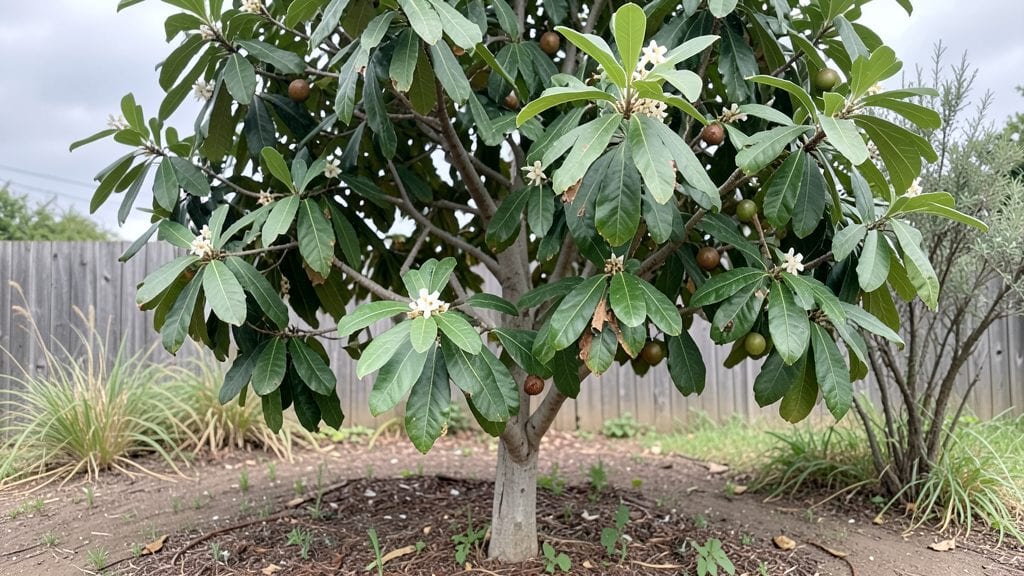
Growing a Caribbean almond tree in the Pacific Northwest’s cooler climate is tricky—but I’ve cracked the code after years of trial and error. This tropical beauty thrives in zones 10-12, but with the right pruning and winter protection, it can survive our frosts and still produce those prized nuts.
The key lies in shaping it early to handle cold snaps while keeping its iconic umbrella shape.
You’ll need well-draining soil, a sunny spot, and a strategic pruning schedule: heavy cuts in late winter before new growth starts, then lighter shaping in early summer. My tree now drops fewer leaves in winter and produces more nuts each year—proof that patience and precision pay off.
The trade-off? More maintenance than a native tree, but the payoff—shade, fruit, and stunning foliage—is worth it.
Once established, your tree will reward you with glossy, tropical leaves, fragrant flowers, and edible nuts that taste like a cross between almond and apricot. The shade alone makes it a standout in any yard.
Just be ready to bring it indoors or wrap it in burlap when temperatures dip below 20°F—those are the only rules for keeping this tropical stunner alive in our chillier climate.
Perfect for gardeners who love a challenge and want a tree that does double duty as both a food source and a living sculpture. Here’s how to make it work in your PNW garden—without losing it to frost.
📚 In This Guide
- What you need
- Instructions
- Tips and common mistakes
- Wrapping up and next steps
What you need
- ● Pruning shears: Bypass pruners (sharp, clean, and disinfected with rubbing alcohol or bleach). Size: 6–8 inches for medium branches.
- ● Loppers: For thicker branches (½–1½ inches in diameter). Quantity: 1 pair (extendable handles help!).
- ● Pruning saw: For branches >1½ inches. Type: Curved-tooth saw for clean cuts.
- ● Gloves: Heavy-duty, cut-resistant (e.g., Mechanix or Wolverine brand). Why? Thorns + sharp tools = ouch!
- ● Ladder: Sturdy, non-slip (aluminum or fiberglass). Height: Reach at least 10–12 feet for mature trees.
- ● Disinfectant: 1 part bleach to 9 parts water (or 70% isopropyl alcohol) to sterilize tools between cuts.
- ○ Pruning sealant: Optional but helpful for large cuts (>½ inch) to prevent disease. Brand: Tanglefoot Tree Wound Pruning Seal.
- ● Trash bags: Heavy-duty (10–20 gallon) for debris. Pro tip: Tie them to your waist for easy cleanup! 🌡️
- ● Timing: Prune in late winter/early spring (before buds swell) or summer (after harvest). Avoid pruning in fall—it invites disease!
- ● Weather: Choose a dry, calm day (no rain for 24 hours before/after).
- ● Safety gear: Safety glasses (to shield from debris).
- ● Long sleeves/pants (protect from thorns and sun).
- ● Closed-toe shoes or boots (no sandals!).
- ● Tree health check: Inspect for diseased or dead branches (brown, brittle, or oozing sap) before pruning.
- ○ Map of the tree: Optional but highly recommended for complex pruning. Sketch branch structure or take photos first!
- ● Pole saw: For high branches (if you don’t want a ladder).
- ● Tree paint: For sealing cuts on large branches (controversial but some swear by it).
- ● Extension pole: For hard-to-reach areas (attach pruners/loppers).
- ● Notebook/pencil: To jot down pruning notes or branch IDs.
- ● Friend or helper: Safety in numbers—especially for big trees! 👥
Step-by-step Pacific Northwest pruning for cold-hardy Caribbean almond trees
Here's how to winterize and shape your tree for resilience in cooler climates.
Assess and Prepare for Winter Pruning
Start by examining your Caribbean almond tree in late winter—just before new growth begins. Look for dead, diseased, or crossing branches that create weak points. I always prune when temperatures are above 40°F to avoid shock; the tree needs to heal properly. Grab your pruning shears and sterilizing solution (1 part bleach to 9 parts water) to clean tools between cuts.
Remove any branches that rub together during wind, as these will eventually tear open wounds. Also cut back any growth that looks weak or spindly—these won’t survive the winter well. The goal is to create an open center that allows sunlight and air to circulate, preventing moisture buildup that leads to rot.
Thin the Canopy for Better Sunlight Penetration
Caribbean almond trees thrive with 6-8 hours of sunlight daily, but dense canopies block light from reaching inner branches. Focus on removing 20-30% of the total foliage to improve airflow and light exposure. Start at the outer edges, cutting back branches that are too crowded. I like to step back every few cuts to visualize the tree’s shape—you want a balanced, vase-like form.
When pruning, make cuts just outside the branch collar (the swollen area where the branch meets the trunk). Never leave stubs—this invites disease. If a branch is thicker than your wrist, use your loppers instead of shears to avoid tearing the bark. Always cut at a 45-degree angle for branches larger than ½ inch in diameter to encourage proper healing.
Shape for Cold Hardiness and Wind Resistance
In the Pacific Northwest, wind and cold stress trees more than in tropical climates. To strengthen your tree, remove any water sprouts (fast-growing, vertical shoots) and suckers (shoots growing from the base). These drain energy and are the first to die in frost. Prune to create a rounded, dome-like shape—this reduces wind resistance and allows snow to slide off easily, preventing branch breakage.
Pay special attention to the lower third of the tree. Open up this area to prevent moisture from lingering on leaves and branches during rainy winters. If your tree has any deadwood (branches without bark or leaves), remove it immediately—these are entry points for pests and disease. After pruning, dispose of cuttings in a sealed bag to prevent spreading pathogens.
Apply Protective Measures for Winter Survival
Once pruning is complete, apply a thin layer of mulch (about 2-3 inches) around the base of the tree, keeping it 6 inches away from the trunk to prevent rot. Use wood chips or straw—these insulate roots while allowing moisture to drain. In particularly cold years, wrap the trunk with burlap or tree wrap to protect it from temperature swings and frost cracks.
Finally, give your tree a deep watering before the first frost hits. This ensures the roots are hydrated and can draw up moisture as needed. Avoid fertilizing after pruning—new growth in late winter or early spring will be more vulnerable to cold damage. Instead, wait until late spring to apply a balanced fertilizer to support recovery.
Tips & tricks for Pacific Northwest pruning of cold-hardy trees
Winterizing your Caribbean almond tree in the Pacific Northwest takes some special attention—here's what I've learned after helping several trees survive our chilly winters.
Timing is Everything: Pruning in late winter, just before new growth begins, gives your tree time to heal before spring's demands. I've found that temperatures above 40°F are ideal—any colder and the tree goes into shock. If you're in a particularly mild winter, you might need to delay until early spring when new growth is imminent. Watch for bud swell as your cue to start.
Visualizing the Shape: Step back every few cuts to visualize the final shape—you're aiming for that balanced vase-like form. I like to imagine the tree as an upside-down cone, with the widest part at the top gradually narrowing toward the trunk. This shape allows snow to slide off easily and reduces wind resistance. Think of it like sculpting: each cut should contribute to the overall harmony.
Tool Selection Matters: Using the right tool for each branch size makes all the difference. For branches thicker than your wrist, loppers are essential—they give you the leverage to make clean cuts without tearing the bark. I keep a small spray bottle of sterilizing solution handy between cuts to prevent spreading disease. And remember, always cut at a 45-degree angle for branches over ½ inch in diameter—this promotes faster healing.
Post-Pruning Care: After you've finished shaping, don't forget about the immediate aftermath. The 2-3 inch layer of mulch should be applied while the ground is still workable but before the first frost. I've seen trees suffer from winter damage simply because the mulch wasn't put down in time. Also, that deep watering before frost is crucial—it's the last chance to ensure the roots are properly hydrated for the winter ahead.
Pro Tips for Caribbean Almond Tree
- Winterizing your Caribbean almond tree in the Pacific Northwest takes some special attention—here's what I've learned after helping several trees survive our chilly winters.
- Timing is Everything: Pruning in late winter, just before new growth begins, gives your tree time to heal before spring's demands.
- Visualizing the Shape: Step back every few cuts to visualize the final shape—you're aiming for that balanced vase-like form.
Frequently asked questions
Got questions about growing and pruning your Caribbean almond tree in the Pacific Northwest? You’re not alone! Here are answers to the most common concerns—from cold-hardy care to troubleshooting—so you can keep your tree thriving year after year.
How cold can a Caribbean almond tree tolerate in the PNW?
The Caribbean almond (Terminalia catappa) is surprisingly resilient! While it thrives in USDA Zones 10–11, many PNW gardeners grow it in containers and overwinter it indoors or in a greenhouse. If planted in the ground, mulch heavily and protect it with burlap wraps during hard freezes (<32°F). Young trees are more vulnerable—wait until they’re established (3+ years) before pushing their limits.
When is the best time to prune for cold-hardy harvests?
Prune your Caribbean almond tree in late winter or early spring (February–March) before new growth starts. This timing minimizes stress and allows the tree to recover before summer heat. Avoid heavy pruning in fall—it can stimulate tender new growth that won’t survive PNW winters. Focus on removing dead, crossing, or weak branches first, then thin the canopy for airflow.
Can I prune too much? What’s the ideal shape?
Yes! Over-pruning stresses the tree, especially in cold climates. Aim to remove no more than 20–25% of the foliage per year. For shape, open the canopy to improve sunlight penetration and airflow—critical for PNW’s damp winters. Avoid a "bushy" look; instead, encourage a pyramidal or vase shape with a strong central leader. Never top the tree—it promotes weak, cold-sensitive growth.
What if my Caribbean almond tree isn’t producing nuts?
Patience is key—these trees can take 5–10 years to bear nuts! Ensure it’s fully mature (10+ years old) and planted in full sun (6+ hours/day). Poor nut production often stems from:
- Insufficient sunlight (common in PNW shade)
- Over-fertilizing with nitrogen (prioritize potassium and phosphorus for fruiting)
- Stress from cold or drought (water deeply 1–2x/week in summer)
- Lack of pollination (hand-pollinate with a brush if needed)
Are there cold-hardy alternatives to Caribbean almond?
If the Caribbean almond’s tropical roots feel too risky for your PNW climate, consider these hardier nut-bearing trees:
Tree
Zone Hardiness
Notes
Hazelnut (Corylus avellana)
USDA 4–8
Thrives in PNW; produces edible filberts. Needs well-drained soil.
Black Walnut (Juglans nigra)
USDA 4–9
Cold-hardy but slow-growing; nuts require leaching for taste.
Pecan (Carya illinoinensis)
USDA 6–9
Needs heat to ripen nuts; best in southern PNW (e.g., Willamette Valley).
Wrapping up and next steps
The Caribbean almond tree is a resilient gem for Pacific Northwest gardeners, offering sweet rewards with the right care—especially when it comes to pruning.
By mastering cold-hardy techniques like dormant-season cuts, air-layering, and seasonal shaping, you’ll unlock healthier growth, bountiful harvests, and a tree that thrives despite chilly winters. 🌱❄️
Ready to transform your backyard into a tropical-inspired almond oasis? Start small: pick one pruning technique from this guide, practice it this season, and watch your tree flourish. Before you know it, you’ll be savoring homegrown almonds—and bragging about your green thumb! 🌟