
Pruning
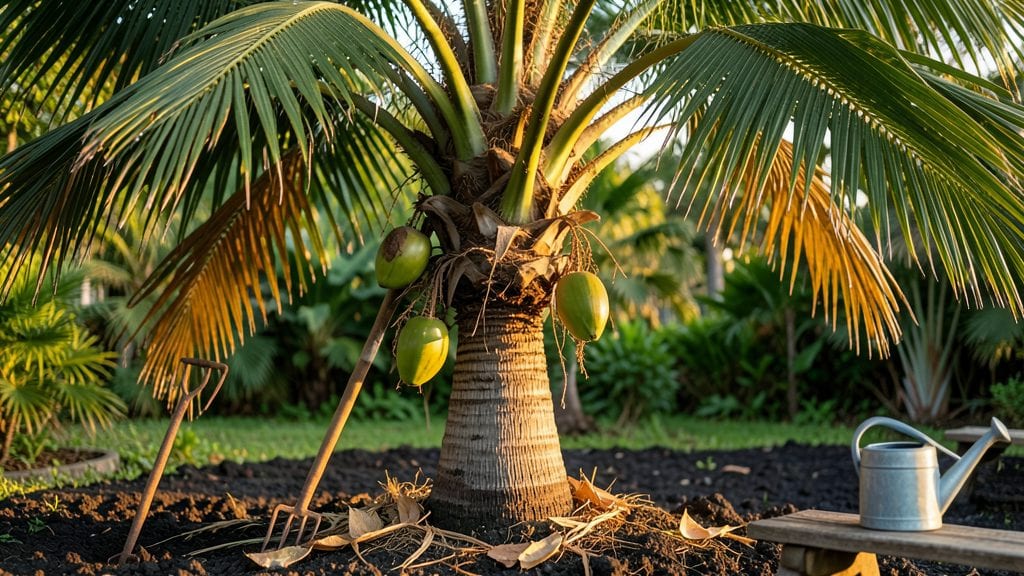
Growing an edible palm tree means fresh coconuts, dates, or sap straight from your yard—no grocery store required. 🌴 I planted my first coconut palm five years ago after watching the fruit fall from a neighbor’s tree, and now we harvest enough for smoothies, desserts, and even homemade oil.
The key isn’t just planting; it’s knowing when and how to prune to keep the tree productive year after year.
Most edible palms thrive in zones 9-11, but some—like the cold-hardy windmill palm—survive down to zone 7 with winter protection. You’ll need well-draining soil (think sandy loam mixed with compost) and full sun, but the real secret is strategic pruning to encourage fruit production.
My tree now yields 50+ coconuts annually because I learned to remove only the oldest fronds and never over-fertilize with nitrogen.
By late summer, you’ll see clusters of fruit forming, and with the right technique, you can extend harvests into fall. The sap from certain palms even makes a sweet syrup—though that takes patience.
Prune too much, and you stunt growth; too little, and pests move in. I’ll walk you through the exact timing and tools to balance both.
Whether you’re in Florida, California, or a warm microclimate elsewhere, these palms adapt surprisingly well. The biggest mistake? Assuming they’re low-maintenance—edible varieties need more attention than ornamental ones. Let’s get your tree set up for a harvest that’ll make your neighbors green with envy.
📚 In This Guide
- What you need
- Instructions
- Tips and common mistakes
- Wrapping up and next steps
What you need
- ● Palm tree seedlings or saplings: Choose from edible varieties like Borassus flabellifer (palmyra palm) or Cocos nucifera (coconut palm). Purchase from a reputable nursery or grow from seeds.
- ● Well-draining soil: Mix equal parts of sandy soil, loamy soil, and compost (or coconut coir for tropical climates). Aim for a pH of 5.5–7.0.
- ● Fertilizer: Balanced NPK (10-10-10) fertilizer for general growth.
- ● Potassium-rich fertilizer (0-0-50) to boost fruit production.
- ● Organic options like compost tea or fish emulsion for natural nourishment.
- ● Pruning tools: Sharp pruning shears (for small fronds).
- ● Heavy-duty pruning saw (for thicker stems or dead fronds).
- ● Sterilized knife or machete (for precision cuts).
- ● Safety gear: Thick gloves (to protect from sharp fronds).
- ● Safety goggles (to shield eyes from debris).
- ● Sturdy boots (for uneven terrain).
- ○ Support structures (optional): Bamboo stakes or tree ties (to stabilize young palms).
- ● Lightweight rope or netting (to manage heavy fronds).
- ● Climate suitability: Edible palms thrive in tropical or subtropical zones (USDA Zones 9–11). Ensure your area gets full sun (6+ hours daily) and minimal frost.
- ● Space: Mature palms need 20–30 feet of clearance (or more for tall varieties like coconut palms).
- ● Water access: A drip irrigation system or hose for deep watering (especially during dry spells).
- ● Patience: Edible palms take 3–7 years to bear fruit, depending on the variety.
Step-by-step guide to pruning your edible palm for year-round fruit
Here's how to maximize harvests while keeping your palm healthy and thriving.
🌿 Step 1: Identify the Right Pruning Season
Timing matters most for edible palms. Prune right after harvest season when the plant has finished fruiting but before new growth begins—typically late winter to early spring. This gives the palm time to recover before summer heat stress. Look for brown, dead fronds hanging limp at the base; these are your first targets.
I always check the weather forecast first. Prune on a calm, overcast day when temperatures stay between 60-75°F. Avoid pruning during drought or extreme heat, as the plant needs moisture to heal quickly. If you live in a warm climate, you might prune twice yearly—once in late winter and again after summer fruiting.
✂️ Step 2: Remove Dead and Damaged Fronds
Start with the obvious: any fronds that are completely brown, brittle, or hanging down are dead and should go. Use clean, sharp pruning shears or a pruning saw for thicker stalks. Cut at the base where the frond meets the trunk, making a clean cut at a 45-degree angle to prevent water from pooling.
Don't skip this step—dead fronds sap energy from the plant and can attract pests. Here's the thing: if you see yellowing fronds with some green still clinging to the edges, wait. Only remove fronds that are 100% brown and dry. Partial yellowing means the frond is still photosynthesizing and should stay until fully dead.
🌱 Step 3: Thin Out Crowded Fronds for Airflow
Edible palms like the peach palm or sugar palm produce fruit in clusters along the fronds. To maximize fruit production, thin out fronds that are growing too close together. Aim to leave 4-6 healthy, mature fronds spaced evenly around the plant. This improves airflow, reducing humidity-related diseases like fungal infections.
Focus on the older fronds near the base. These are less productive and can block light from reaching the younger, fruit-bearing fronds higher up. I like to work from the outside in, removing every other frond if necessary. Watch for fronds with heavy fruit loads—these are your keepers, even if they're slightly crowded.
☀️ Step 4: Prune for Fruit Production Zones
Edible palms produce fruit on the lower third of their fronds. To encourage more fruit, selectively prune back the tips of non-fruiting fronds. Cut back the top 12-18 inches of fronds that aren't bearing fruit, but leave the lower sections intact. This redirects the plant's energy toward fruit production in the remaining fronds.
Real talk: this step takes patience. Don't prune more than one-third of the fronds at a time, or you'll shock the plant. After pruning, fertilize with a balanced palm fertilizer (like 8-8-8) to support new growth. You'll see new fronds emerging from the crown within 4-6 weeks, signaling the plant is recovering well.
🪴 Step 5: Clean Up and Protect the Trunk
After pruning, remove all debris from the base of the plant. Leave the cut fronds on the ground for a day to allow any hidden pests to emerge, then dispose of them. Use a 1-inch layer of mulch around the base to retain moisture and suppress weeds. Avoid piling mulch against the trunk—keep it 3-4 inches away to prevent rot.
Inspect the trunk for any signs of damage or pests. If you see palm weevil borer holes (small, irregular openings), treat immediately with neem oil or systemic insecticide. A healthy trunk is your palm's lifeline—don't overlook this final check. Water deeply after pruning to help the plant recover, but avoid overwatering, which can lead to root rot.
Tips & tricks for perfect edible palm tree pruning
Between us, pruning an edible palm isn't just about cutting back - it's about strategic growth management that directly impacts your harvest. Here's what nobody tells you about getting it right.
Timing is Everything: The late winter to early spring window is critical because it lets your palm recover before summer's heat stress. I've seen palms struggle when pruned too early - new growth can't handle summer's intensity. If you're in a warm climate and prune twice yearly, time the second session after summer fruiting but before fall rains begin. The 60-75°F temperature range isn't just arbitrary - it's when the plant's healing processes work most efficiently.
Cutting Technique Matters: That 45-degree angle at the base isn't just for aesthetics - it prevents water from pooling where the frond meets the trunk, which can lead to rot. Use a sharp tool every time; dull blades crush fibers and create larger wounds that take longer to heal. I've made the mistake of using garden shears meant for flowers - they just don't cut through palm fronds cleanly enough.
Fruit Production Strategy: When you're pruning back the top 12-18 inches of non-fruiting fronds in Step 4, focus on removing the very tips where new growth emerges. This redirection of energy is what boosts fruit production in your remaining fronds. The key is patience - don't remove more than one-third of fronds at once, or you'll shock the plant. I've seen palms recover from light pruning in just 4-6 weeks, but aggressive pruning can take months to show results.
Pest Prevention: Leaving cut fronds on the ground for a day might seem counterintuitive, but it's a smart pest control tactic. Many palm pests hide in the fronds - letting them emerge and become visible makes them easy to spot and eliminate. After that 24-hour period, dispose of the fronds completely. This simple step has saved me from multiple infestations that would have been much harder to treat once established.
Pro Tips for Edible Palm Tree
- Between us, pruning an edible palm isn't just about cutting back - it's about strategic growth management that directly impacts your harvest.
- Timing is Everything: The late winter to early spring window is critical because it lets your palm recover before summer's heat stress.
- Cutting Technique Matters: That 45-degree angle at the base isn't just for aesthetics - it prevents water from pooling where the frond meets the trunk, which can lead to rot.
Frequently asked questions
Got questions about harvesting and maintaining your edible palm tree? Here are some of the most common ones—plus quick, practical answers to keep your palms thriving!
How do I know when my palm tree is ready to harvest?
Look for these signs: fronds should be fully mature (brown and dry at the tips), and the heart (or "cabbage") should be firm and compact. Young palms may take 3–5 years to produce edible hearts, depending on the species. Avoid harvesting if the tree is stressed (wilted or pest-damaged) or during extreme weather.
Is it safe to cut the palm heart myself, or should I hire a professional?
For small palms (under 10 feet tall), DIY is manageable with sharp tools and caution. Use a sterilized machete or pruning saw and wear gloves. For taller palms (15+ feet) or species like peach palm, hire a pro—safety first! Always cut 3–4 inches below the base of the heart to avoid damaging the growing point.
How often can I harvest palm hearts without killing the tree?
Most edible palms (like peach palm or rattan) can be harvested once every 1–2 years per frond. Over-harvesting weakens the tree—never take more than 20–30% of the total fronds at once. Let the tree recover between harvests, and fertilize with potassium-rich compost afterward to support regrowth.
What can I do with palm tree leaves if I can’t harvest the heart?
Don’t toss those fronds! Young, tender leaves can be cooked like asparagus or spinach, while mature leaves make great thatched roofs, brooms, or even palm sugar (toddy) in tropical regions. For pests, chop and compost leaves—never burn them (they release toxic fumes).
Why are my palm leaves turning yellow or brown before harvest time?
Yellowing/browning can signal overwatering, pests (like palm weevils), or nutrient deficiency. Check the soil (should be well-draining) and inspect for chewed fronds or sawdust-like frass. Treat with neem oil or systemic insecticide if pests are present. Adjust watering—palms hate soggy roots!
Can I grow an edible palm tree in a pot, or does it need ground planting?
Yes! Dwarf species (like pygmy date palm) thrive in 15–20 gallon pots with fast-draining mix (60% sand/40% peat). Larger palms (e.g., peach palm) need ground planting after 2–3 years. Move pots indoors if temps drop below 40°F—palms are tropical and frost-sensitive!
Wrapping up and next steps
Harnessing the bounty of an edible palm tree is a rewarding journey that blends patience, skill, and a touch of tropical magic. 🌴 By mastering the art of strategic pruning, you unlock year-round harvests of heart-of-palm, fruit, and even sap—turning your backyard into a sustainable treasure trove.
Whether you're a seasoned gardener or a curious beginner, every careful cut brings you closer to a self-sufficient, delicious future.
Ready to dive in? Start small—plant a sapling, study your tree’s signals, and take that first confident prune! Your kitchen (and taste buds) will thank you. What’s next? Grab your tools, roll up your sleeves, and let your palm tree feed your family—one harvest at a time.