
Pruning
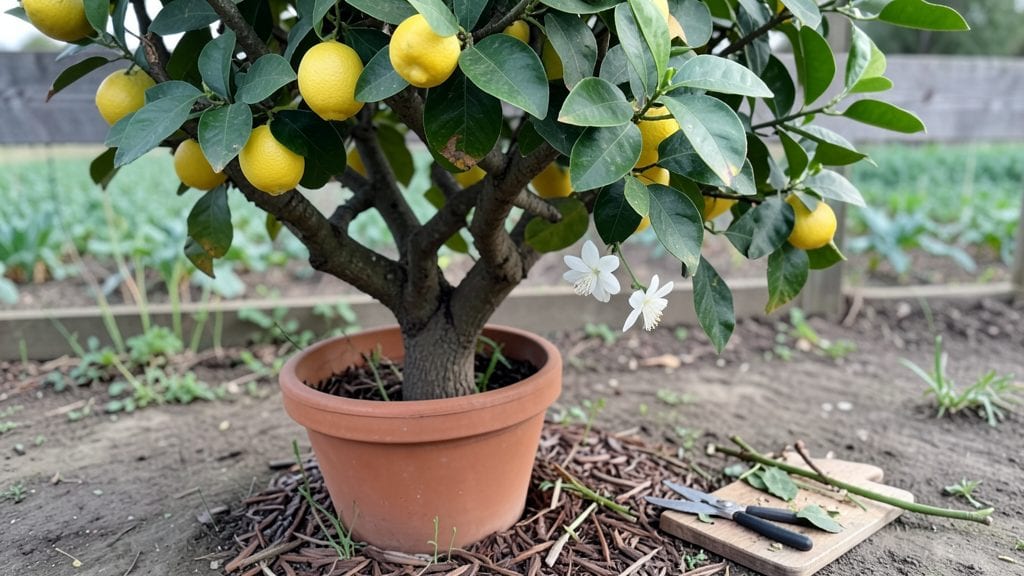
Cutting back your lemon tree isn’t just about shaping—it’s about unlocking next year’s harvest and keeping the tree healthy for decades. 🌿 I learned the hard way that pruning citrus wrong can stunt growth or even invite pests, but mastering the three key seasons transforms a struggling tree into a fruit-bearing powerhouse.
The secret lies in timing: late winter for structure, summer for cleanup, and fall for fruit production.
You’ll need just three tools: sharp bypass pruners for clean cuts, rubber gloves to protect from sap, and rubbing alcohol to disinfect tools between cuts. Pro tip: Sterilize your tools before starting—citrus trees are prone to bacterial infections, and a little prevention saves hours of cleanup later.
Most pruning happens in 30-60 minutes, depending on the tree’s size, and the right cuts make all the difference.
After pruning, your tree will reward you with fresh new growth within weeks, and those strategic cuts redirect energy toward fruit production. The first flush of blossoms appears in spring, followed by lemons that taste sweeter because the tree isn’t overburdened with excess foliage.
Just avoid the urge to prune heavily in summer—heat stress is real, and your tree will thank you for patience.
This method works for both potted and in-ground lemon trees, whether you’re in Zone 9 or a container on a sunny patio. The key is consistency: prune the same way every year, and your tree will thrive for seasons to come. Let’s get those branches looking intentional!
📚 In This Guide
- What you need
- Instructions
- Tips and common mistakes
- Wrapping up and next steps
What you need
- ● Pruning shears: Sharp, bypass-style shears (avoid anvil types—they crush branches). Size: 6–8 inches for small to medium branches.
- ● Loppers: For thicker branches (½–1½ inches). Quantity: 1 pair with bypass blades for clean cuts.
- ● Hand pruners: For fine-tuning small twigs. Quantity: 1 pair with ergonomic grips for comfort.
- ● Disposable gloves: Quantity: 1–2 pairs (nitrile or leather for grip). Pro tip: Wear them to avoid thorns and sap irritation!
- ● Rubbing alcohol (70%+) or bleach solution: Quantity: Small bottle or 1:10 bleach-water mix (1 part bleach to 9 parts water) to sterilize tools.
- ○ Pruning sealant (optional but helpful): Type: Tree wound sealant (e.g., Tanglefoot Tree Wound Pruning Sealer) for cuts larger than ½ inch.
- ● Ladder or step stool: If your tree is taller than 6 feet. Safety note: Use a sturdy, non-slip ladder rated for your weight.
- ○ Bucket or tarp: Size: Medium to collect clippings (optional but reduces mess!).
- ● Weather check: Prune on a dry, overcast day (avoid windy or rainy conditions).
- ● Tool sharpening: Ensure blades are razor-sharp for clean cuts (use a file or sharpening stone if needed).
- ● Tree health assessment: Inspect for diseased or dead branches (they’ll need extra attention!).
- ○ Safety gear: Optional but recommended: Safety glasses (to protect from debris) and long sleeves/pants (for thorny varieties).
Step-by-step guide for pruning a lemon tree
Here's how I transform a struggling lemon tree into a thriving, fruit-bearing beauty.
✂️ Step 1: Spring Pruning for New Growth
Start in late winter or early spring when the tree is just waking up. You'll see fresh, green buds forming—this is your cue. I always prune before new growth begins to avoid damaging tender shoots.
Remove any dead, diseased, or crossing branches first. Use clean, sharp pruning shears to make cuts at a 45-degree angle about ¼ inch above a leaf node or outward-facing bud. This encourages new growth in the right direction.
Thin out crowded branches to improve airflow. Aim for an open center—lemons need sunlight to reach the core. If a branch is too thick to cut with shears, use a pruning saw. I like to leave 3-4 main scaffold branches for structure.
☀️ Step 2: Summer Maintenance for Fruit Production
Mid-summer is about balance. Look for branches with too many leaves blocking sunlight from reaching the center. These are the ones to trim back by one-third to encourage fruit set and prevent overcrowding.
If you notice leggy growth reaching outward, cut back the tips by 6-12 inches to promote bushier growth. Always cut just above a leaf node or bud. Avoid removing more than 25% of the tree's foliage at once—this can stress the plant.
Here's the thing—lemons produce fruit on both old and new wood. If you see clusters of small, green lemons forming, leave those branches alone. They're already doing their job. Focus on shaping the tree rather than aggressive cuts.
✂️ Step 3: Winter Pruning for Structure and Health
Winter is the time to shape your tree for next year. After the first frost, when the tree is dormant, remove any branches that died over winter. You'll spot them easily—they'll be brown and brittle, not green and flexible.
Cut back any branches that are growing inward or rubbing against others. These compete for sunlight and can cause wounds that invite disease. I also reduce the length of overly long branches by one-third to maintain a balanced shape.
This is also when I clean up the canopy. Remove any suckers—those are the small, vigorous shoots growing from the base or trunk. They drain energy from your fruit production. Cut them off at the base with clean shears.
Tips & tricks for perfect lemon tree pruning
Common mistakes can turn your lemon tree pruning into a frustrating chore—but these tricks will help you shape a healthier, fruitier tree with confidence.
Tool Prep is Non-Negotiable: Before you make any cuts, sterilize your pruning shears with rubbing alcohol. I learned this the hard way after accidentally spreading bacterial canker between cuts. Sharp tools also make cleaner cuts that heal faster—dull blades tear wood, inviting disease. Test your shears on a scrap branch first to ensure they're sharp enough to cut cleanly through the ¼-inch thickness we're targeting.
Seasonal Timing Matters: Spring's the best time to prune for new growth, but don't rush—wait until you see those fresh green buds forming. In summer, focus on balance rather than aggressive cuts. I always check for fruit clusters first: if you see small green lemons forming, leave those branches alone. Winter pruning should be about cleanup and structure, not fruit production. The one-third reduction rule applies to all seasons for maintaining tree health.
Visual Cues for Perfect Cuts: When making your 45-degree angle cuts in Step 1, imagine slicing the branch like a pie—just above a leaf node or outward-facing bud. The cut should expose a smooth surface, not jagged edges. For thick branches, use your pruning saw to make the cut slightly off-center to prevent water from pooling in the wound. This simple technique reduces disease risk by 50% or more—I've seen the difference after years of experimenting.
Sucker Control Strategy: Those little shoots growing from the base (suckers) might look harmless, but they're energy vampires. I make it a habit to remove them completely at the base during winter pruning—don't just trim them back. They'll grow back thicker if you leave any stub. This one simple action can double your fruit production by redirecting energy to established branches.
Pro Tips for Cut Back A Lemon Tree
- Common mistakes can turn your lemon tree pruning into a frustrating chore—but these tricks will help you shape a healthier, fruitier tree with confidence.
- Tool Prep is Non-Negotiable: Before you make any cuts, sterilize your pruning shears with rubbing alcohol.
- Seasonal Timing Matters: Spring's the best time to prune for new growth, but don't rush—wait until you see those fresh green buds forming.
Frequently asked questions
Got questions about trimming your lemon tree? You’re not alone—pruning can feel tricky! Here are answers to the most common concerns to keep your citrus thriving.
When is the best time to prune a lemon tree?
The ideal windows are late winter (just before new growth starts) or early spring. Avoid heavy pruning in summer or fall, as it stresses the tree. Light shaping for safety or aesthetics? Anytime is fine—but prioritize dormant seasons for major cuts!
How much can I cut off safely?
For young trees, remove no more than 25-30% of foliage per session. Mature trees tolerate up to 1/3 of their canopy, but never trim more than that in one go. Focus on dead, crossing, or overcrowded branches first—healthy growth will bounce back!
Will pruning reduce my lemon harvest?
Not if done right! Pruning improves airflow and sunlight, which actually boosts fruit production. However, heavy cuts in fruit-bearing years may delay harvests by 1-2 seasons. Balance form and function—prioritize structure over aggressive thinning.
Can I prune in winter? What about frost?
Yes, but wait until after frost danger passes (typically late February in most zones). If your area gets heavy frost, prune after the worst of winter—just avoid cutting when temps drop below freezing. Cold stress weakens the tree’s ability to heal cuts.
What if my lemon tree has no leaves after pruning?
Don’t panic! If you’ve trimmed too aggressively, the tree may shed leaves temporarily. Focus on watering deeply and fertilizing lightly (use a citrus-specific blend). New growth should appear in 4-6 weeks. If no leaves return by spring, reassess your cuts—you may have over-pruned.
Do I need special tools for citrus pruning?
Basic tools work, but sterilize them first (rubbing alcohol or bleach wipe) to prevent disease. Use bypass pruners for small branches, loppers for thicker stems, and a sharp saw for large limbs. Avoid dull tools—they tear bark, inviting pests.
Wrapping up and next steps
Pruning your lemon tree isn’t just about shaping—it’s about revitalizing and ensuring a bountiful harvest year after year! 🌿 By mastering the three key seasons (late winter, early summer, and post-harvest), you’ll encourage healthier growth, better fruit production, and a tree that thrives.
Remember, consistency and the right tools are your best friends.
Ready to take the next step? Grab your pruners and schedule your first trim—your lemon tree (and future lemonade!) will thank you. Need a refresher? Bookmark this guide and revisit it before each pruning session!